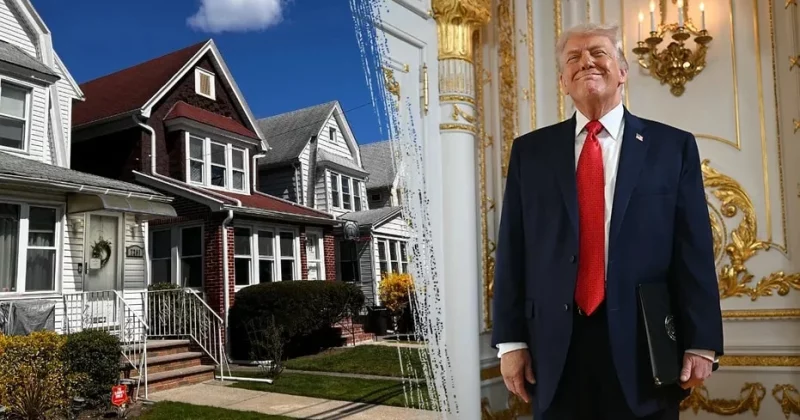
On January 20, 2026, President Donald Trump signed a sweeping executive order aimed at curbing the influence of large institutional investors in the American single-family housing market. The directive, issued on his first day in office, instructs federal agencies to immediately cease providing financial support, insurance, and securitization for bulk purchases of single-family homes by major corporations and Wall Street firms. The move represents a significant shift in federal housing policy, signaling an attempt to recalibrate the domestic real estate market in favor of individual homebuyers and families over corporate entities.
The executive order specifically targets the financial infrastructure that has allowed institutional investors to scale their portfolios rapidly over the last decade. By directing the Department of Housing and Urban Development (HUD), the Federal Housing Finance Agency (FHFA), and the Department of the Treasury to withdraw support for institutional bulk transactions, the administration seeks to remove the federal government’s implicit and explicit subsidies for corporate landlords.
The Mechanics of the Executive Order
While the President framed the order as a "ban" on Wall Street’s involvement in the housing market during his public remarks, the legal text of the document is more nuanced. Rather than an outright prohibition on the ownership of property by corporations, the order focuses on the "pipeline" of federal backing.
Under the new directives, federal agencies are prohibited from providing insurance or guarantees on loans used by large institutional investors to acquire single-family homes. Furthermore, the order restricts the ability of these firms to use government-sponsored enterprises (GSEs), such as Fannie Mae and Freddie Mac, to securitize portfolios of single-family rentals. In the past, the ability to package these rental incomes into federally backed securities allowed large firms to access low-cost capital, which they then used to outbid individual families in competitive markets.
The core of the order requires a fundamental pivot in agency policy:
- Elimination of Federal Guarantees: Large-scale investors—typically defined as those owning more than a specific threshold of units—will no longer have access to federally insured financing for new acquisitions.
- Securitization Restrictions: The FHFA is directed to ensure that GSEs do not facilitate the bundling of single-family rental mortgages into government-guaranteed bonds for institutional players.
- Prioritization of Individuals: Federal agencies are mandated to review and revise all existing programs to ensure that "first-look" programs and other purchasing advantages are strictly reserved for individual buyers and non-profit community organizations.
Historical Context: The Rise of the Corporate Landlord
The phenomenon of institutional investors buying single-family homes is a relatively recent development in the American economy, catalyzed by the 2008 financial crisis. Following the collapse of the housing bubble, millions of homes entered foreclosure. At the time, the federal government encouraged large private equity firms to step in and purchase these distressed assets to stabilize the market.
Between 2011 and 2017, firms like Blackstone (through Invitation Homes), American Homes 4 Rent, and Progress Residential amassed tens of thousands of properties. These firms transformed the "mom-and-pop" rental market into a sophisticated, technologically driven asset class. By 2024, estimates suggested that institutional investors owned approximately 500,000 single-family homes across the United States.
The impact was most acutely felt in "Sun Belt" cities. In markets such as Atlanta, Phoenix, and Charlotte, institutional investors at times accounted for nearly 30% of all single-family home purchases in a given quarter. Critics argue that this concentration of ownership led to artificial price inflation, making it nearly impossible for first-time homebuyers to compete against all-cash corporate bids. The 2026 executive order is a direct response to these long-standing grievances regarding the "financialization" of the American neighborhood.
Chronology of the Action and Upcoming Deadlines
The signing of the executive order on January 20, 2026, serves as the opening salvo in what the administration describes as a multi-stage housing reform plan.
- January 20, 2026: Executive Order signed, immediately halting new federal insurance and securitization approvals for institutional bulk buyers.
- January 25, 2026: HUD and FHFA expected to issue internal guidance to field offices regarding the implementation of "individual-first" purchasing policies for government-owned foreclosures.
- Mid-February 2026: The Department of the Treasury is scheduled to complete a comprehensive review of the institutional housing market. This review will analyze the tax advantages currently enjoyed by Real Estate Investment Trusts (REITs) and provide recommendations for potential legislative changes.
- March 2026: The administration has signaled it will present a formal legislative package to Congress, seeking to codify the executive order into permanent law and potentially introducing new taxes on large-scale rental portfolios.
Identifying the Loopholes: Cash and Build-to-Rent
Market analysts have quickly pointed out that while the executive order creates hurdles for institutional investors, it does not entirely eliminate their presence in the market. Several significant "loopholes" remain that could allow corporate capital to continue flowing into residential real estate.
The most prominent exception is the "all-cash" purchase. The executive order targets federally backed financing, but the largest Wall Street firms often have access to massive internal cash reserves or private lines of credit. If a firm does not require federal insurance or the use of Fannie Mae/Freddie Mac for securitization, the order does not legally prevent them from continuing their acquisition strategies.
Furthermore, the order specifically excludes "Build-to-Rent" (BTR) communities. These are developments where an entire neighborhood is constructed specifically to be operated as a rental enterprise. Because these developments add to the overall housing supply rather than depleting the existing stock of homes available for sale, the administration has chosen to spare them from the current restrictions.
Finally, the order is not retroactive. It contains no provisions for forced divestiture. Firms that already own hundreds of thousands of homes are permitted to keep them, and there is no mandated timeline for these entities to sell their existing holdings to individual buyers. This has led some housing advocates to argue that while the order stops the "bleeding," it does little to heal the existing "wounds" in the market.
Market Data and Geographic Impact
The scale of institutional ownership varies wildly by geography, which explains the political impetus behind the order. According to data from the mid-2020s, corporate ownership is heavily concentrated in specific metropolitan areas:
- Atlanta, GA: In certain zip codes, institutional investors owned upwards of 25% of the single-family rental stock.
- Charlotte, NC: Corporate buyers were responsible for roughly 1 out of every 5 home sales during the peak of the post-pandemic housing boom.
- Phoenix, AZ: Institutional activity was a primary driver of the rapid appreciation in home values, which saw some neighborhoods experience 40% year-over-year price increases.
Nationally, while institutional investors own less than 5% of all single-family homes, their influence is magnified because they target the "entry-level" or "starter home" price bracket. This is the exact segment of the market where first-time buyers and young families are most active. By removing the federal subsidies that lower the cost of capital for these firms, the administration hopes to reduce their competitive advantage in bidding wars.
Industry and Political Reactions
The reaction to the executive order has been sharply divided along ideological and economic lines.
Industry Groups: The National Rental Home Council (NRHC), which represents large-scale landlords, issued a statement expressing concern that the order could inadvertently hurt the very people it intends to help. "By restricting the flow of capital into the single-family rental market, the government risks reducing the supply of quality rental housing," the statement read. "Many Americans choose to rent single-family homes for the flexibility and amenities they provide. Cutting off financing for providers will only lead to higher rents for those who are not yet ready or able to buy."
Housing Advocates: Groups like the National Low Income Housing Coalition offered cautious praise but noted the limitations of the order. "Targeting the federal backing of these predatory investors is a necessary first step," said a spokesperson for a leading housing non-profit. "However, without addressing all-cash purchases and the lack of supply, the dream of homeownership will remain out of reach for many. We need the legislative follow-through promised for March."
Wall Street Analysts: Financial analysts suggest that the order may lead to a shift in how REITs operate. Instead of relying on public securitization markets, firms may pivot toward private credit and insurance companies for financing. While this would increase their cost of capital, it would allow them to bypass the restrictions laid out in the executive order.
Analysis of Economic Implications
The long-term efficacy of the executive order remains a subject of debate among economists. The primary goal is to lower the barrier to entry for individual homeowners. If institutional investors retreat from the market, the reduced competition for starter homes could lead to a cooling of price growth in high-activity markets like Atlanta and Phoenix.
However, there is also the risk of unintended consequences. If corporate landlords stop buying, and developers of Build-to-Rent communities are the only ones left with significant capital, the market could see a permanent shift toward "rentership" in new developments. Additionally, if the order leads to a sudden drop in demand for homes in certain areas, it could negatively impact the equity of current homeowners who rely on price appreciation for their net worth.
The Treasury review due in February will be a critical indicator of the administration’s next moves. If the review recommends removing the tax-exempt status of certain REIT income or suggests a "wealth tax" on large-scale residential holdings, the impact on Wall Street could be far more profound than the initial executive order.
Conclusion and Future Outlook
President Trump’s executive order of January 20, 2026, marks a definitive end to the era of federal encouragement for institutional single-family home ownership. By targeting the financial mechanisms of securitization and federal guarantees, the administration is attempting to dismantle the advantages that allowed corporate entities to dominate the housing market over the last decade.
While the order contains significant exemptions for all-cash buyers and existing portfolios, its symbolic and regulatory weight cannot be ignored. It sets the stage for a broader legislative battle over the role of corporate capital in the American Dream. As the Treasury prepares its mid-February report, all eyes will be on Washington to see if the administration follows through with structural changes that could permanently alter the landscape of American real estate. For now, the message to Wall Street is clear: the federal government is no longer interested in subsidizing the corporate takeover of the American neighborhood.