


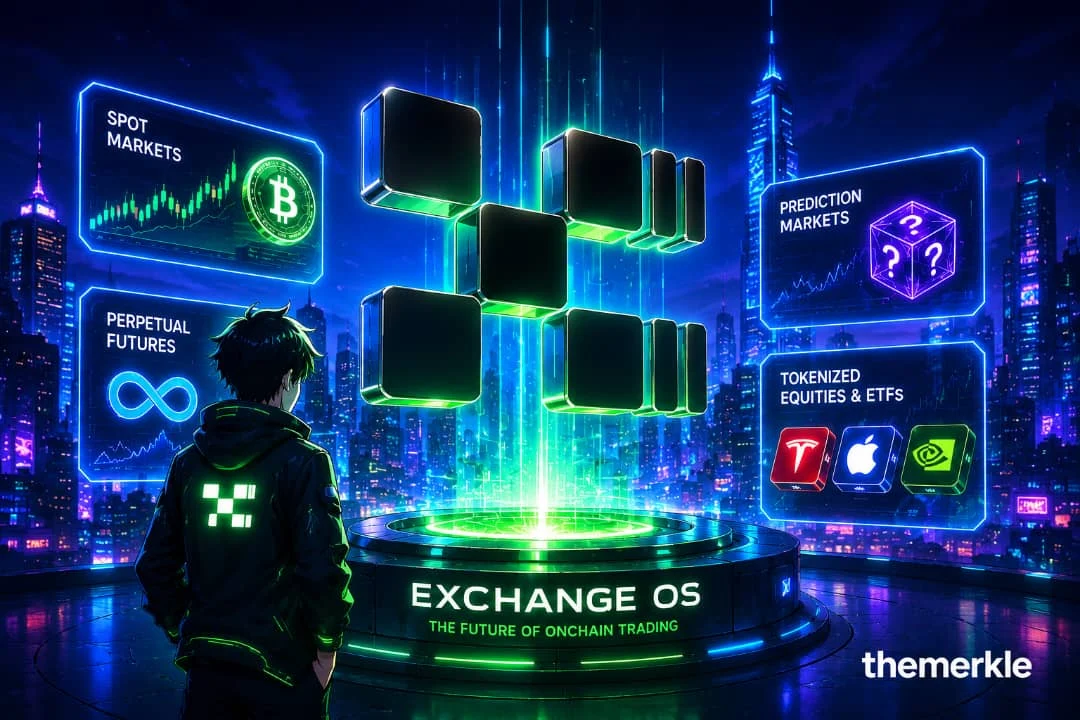
X Layer has introduced Exchange OS, a significant advancement designed to empower developers and institutions to rapidly deploy turnkey onchain trading venues without the arduous task of rebuilding complex exchange infrastructure from the ground up. This innovative infrastructure marks a pivotal moment in the evolution of decentralized finance (DeFi), offering an open-protocol, permissionless onchain system capable of supporting a diverse range of financial instruments, including spot markets, perpetual futures, and outcome-based prediction markets. The stated ambition for Exchange OS is to deliver institutional-grade execution systems, while simultaneously providing the flexibility and modular capabilities essential for Web3-native applications and the dynamic landscape of decentralized trading environments. This launch, which was highlighted through X Layer’s official channels, underscores a broader industry trend towards modularizing core exchange architecture into shared protocol layers, aiming to mitigate the substantial technical and operational overhead previously associated with launching new trading platforms.
The Evolution of Onchain Infrastructure: A Shift from Siloed Systems
The traditional approach to establishing a world-class trading platform, whether centralized or decentralized, has historically demanded a significant investment in time, capital, and specialized expertise. Teams often found themselves in the position of building nearly every critical component from scratch. This encompassed the development of intricate matching engines, robust margin systems, sophisticated liquidation protocols, secure settlement mechanisms, and comprehensive compliance tooling—each component requiring bespoke engineering and extensive auditing. This "build-from-scratch" paradigm, while fostering innovation in isolated instances, also led to significant duplication of effort, slower market entry for new participants, and a fragmented ecosystem where interoperability remained a persistent challenge. Industry estimates suggest that developing a fully functional, institutional-grade trading platform can easily span several years and incur costs running into tens of millions of dollars, creating a substantial barrier to entry for many potential innovators.
Exchange OS fundamentally inverts this relationship by establishing a common, neutral execution environment. It elevates core exchange functions to the protocol level, effectively transforming them into public infrastructure designed for reuse. This architectural shift means that developers leveraging Exchange OS can now concentrate their resources and creativity on differentiating aspects such as branding, asset listings, community engagement, and identifying unique market niches, rather than being bogged down by foundational backend development. This paradigm shift is poised to reduce the technical complexity and capital expenditure of launching onchain financial markets by several orders of magnitude. Through the use of the XIP deployment protocol, builders can deploy operational trading environments in a fraction of the time it would traditionally take, circumventing years of backend development cycles. This strategic move aligns with the growing demand for shared, composable infrastructure within the blockchain space, mirroring the efficiency gains seen in traditional software development with the advent of cloud computing and API-driven services.
Unified Architecture: Combating Fragmentation and Enhancing Capital Efficiency
One of the most compelling features introduced by Exchange OS is its multi-market segment wide unified account and margin architecture. This innovative design directly addresses a pervasive inefficiency within the current decentralized finance landscape. Today, DeFi is often characterized by fragmented liquidity and a multitude of entirely separate trading systems. Users are frequently compelled to bridge assets across multiple protocols, move collateral between disparate applications, and manage dozens of disjointed trading accounts to gain exposure to different types of markets—such as spot trading on one platform, perpetual futures on another, and lending/borrowing on a third. This constant movement of assets and collateral introduces friction, increases transaction costs (gas fees), and significantly diminishes capital efficiency, as collateral often sits idle in one protocol while needed elsewhere.
Exchange OS mitigates this friction by bundling together multiple execution environments under a single, standardized protocol architecture. Within this system, traders are empowered to transition seamlessly between spot markets, perpetual futures, and prediction markets without the need to physically move funds. This is achieved through a unified account structure with shared margin pools, allowing collateral to be utilized across different asset classes and trading environments concurrently. This capability enables more efficient capital utilization, as a single pool of collateral can back positions across various market segments, thereby reducing the overall capital required to maintain diverse portfolios. This model captures certain structural efficiency gains historically associated with traditional centralized financial infrastructure, such as cross-margin capabilities, while steadfastly maintaining the open, permissionless, and censorship-resistant nature inherent to blockchain-based markets. By removing the barriers of fragmentation, Exchange OS aims to enhance overall liquidity and improve price transmission across the ecosystem, fostering a more robust and interconnected financial environment.
Beyond Crypto: Integrating Prediction Markets and Tokenized Real-World Assets
Exchange OS is designed to be more than just a platform for traditional crypto trading products. A significant pillar of its long-term growth strategy encompasses outcome-based prediction markets and tokenized financial assets, hinting at a future where the platform could support a much broader spectrum of real-world financial instruments operating directly onchain. This development is particularly noteworthy as it signals further advances in blockchain infrastructure with respect to the ongoing industry trend away from a purely crypto-native speculative landscape and towards deeper integration with traditional representations of financial markets.
Prediction markets have witnessed substantial adoption within DeFi, allowing users to speculate on the outcomes of real-world events, ranging from elections and economic indicators to geopolitical incidents and sporting events. The direct integration of these markets into Exchange OS, alongside spot and perpetual trading, creates a more comprehensive and dynamic financial ecosystem. This integration simplifies access for users and potentially boosts liquidity for these nascent markets by co-locating them with more established trading venues.
Concurrently, tokenized equities and Exchange Traded Funds (ETFs) represent one of the most significant emerging narratives in digital asset finance. Major financial institutions, alongside blockchain developers, are actively exploring how traditional financial instruments can be brought onchain. The benefits are manifold: instant settlement (eliminating the T+2 or T+3 settlement cycles common in traditional markets), enhanced interoperability across different platforms, and the potential for programmable ownership structures that can automate compliance or distribution. Firms like Franklin Templeton have already launched tokenized money market funds, demonstrating the viability and institutional appetite for such innovations. Similarly, Centrifuge’s work in bringing Real-World Assets (RWAs) onchain highlights the broader movement towards digitizing illiquid assets and making them composable within DeFi. By positioning Exchange OS as infrastructure capable of supporting both crypto-native and tokenized real-world financial products, X Layer is targeting a much broader segment of future market activity. This open architecture is also expected to encourage developers building on top of the protocol layer to experiment with new asset classes and innovative trading mechanisms, further expanding the frontier of onchain finance.
Institutional Infrastructure Continues Moving Onchain
The launch of Exchange OS has garnered robust support from leading ecosystem partners, including OKX and Centrifuge, both of whom have emphasized the critical importance of common onchain infrastructure in underpinning the next era of financial markets. Advocates for this new paradigm highlight that while demand for onchain trading at scale has already been clearly demonstrated, infrastructure fragmentation remains a significant impediment to mass adoption, particularly for institutional players. The persistent need for institutions to self-build proprietary exchange systems is widely regarded as an expensive, technically challenging, and operationally inefficient endeavor.
This is precisely where Exchange OS offers a transformative solution: by converting fundamental exchange functionality into public, reusable infrastructure, it dramatically lowers the barrier to entry for sophisticated participants. Centrifuge, a pioneer in the tokenization of real-world assets, drew a parallel between Exchange OS’s model and its own long-held vision of an open financial infrastructure. This vision aims to underpin the tokenization of diverse assets, establish efficient distribution systems, and facilitate the creation of composable capital markets built natively onchain. This alignment underscores the shared conviction within the industry that modular, shared layers are essential for future growth.
This idea is a cornerstone of the broader picture in decentralized finance. The overarching trend within blockchain ecosystems is a definitive move away from isolated, single-purpose applications towards shared, modular infrastructure layers designed to service multiple participants simultaneously. This kind of shared-layer approach is anticipated to become increasingly crucial as institutional adoption of blockchain technology matures. Tier-1 financial institutions typically require highly scalable infrastructure, uniform settlement mechanisms, robust security, and optimized liquidity coordination before committing significant capital to blockchain ecosystems. Exchange OS positions itself precisely at the crossroads of traditional market structure and decentralized finance innovation, aiming to provide institutional-grade infrastructure while retaining the core tenets of permissionlessness and composability that define Web3.
Broader Impact and Implications for the Future of Finance
The introduction of Exchange OS represents a significant inflection point, signaling a maturation of the underlying technology and a strategic shift towards greater efficiency and inclusivity in digital financial markets. The implications of this development are far-reaching, affecting market participants from retail traders to global financial institutions.
Firstly, by drastically reducing the technical and financial barriers to entry, Exchange OS is likely to foster an explosion of innovation within the onchain trading space. Smaller teams and specialized fintech companies, previously sidelined by the prohibitive costs of building infrastructure, can now leverage this shared protocol to launch niche markets, experiment with novel trading mechanisms, and cater to underserved communities. This could lead to a more diverse and competitive landscape, ultimately benefiting end-users through better products and services.
Secondly, the unified account and margin architecture stands to significantly enhance market liquidity and capital efficiency. By allowing collateral to be used across various market segments without physical transfers, capital becomes more dynamic and less prone to fragmentation. This not only improves the overall user experience but also deepens liquidity pools, leading to tighter spreads and more robust price discovery, which are critical for attracting larger trading volumes and institutional participation. The ability to cross-margin across spot, futures, and prediction markets provides a level of sophistication previously only available in highly centralized, integrated trading platforms.
Thirdly, the explicit focus on tokenized real-world assets and robust compliance controls positions Exchange OS as a potential bridge between traditional finance (TradFi) and DeFi. As regulators globally grapple with how to supervise digital assets, infrastructure that inherently allows for the delegation of compliant controls, tailored to specific jurisdictions or institutional mandates, becomes invaluable. This foresight into regulatory requirements is crucial for attracting the vast pools of institutional capital that remain hesitant due to compliance uncertainties. Exchange OS could accelerate the tokenization trend, making it easier for a wider range of assets—from real estate and private equity to commodities and intellectual property—to be traded onchain, unlocking new forms of liquidity and ownership.
Finally, the strong support from ecosystem partners like OKX and Centrifuge validates the strategic direction of X Layer and underscores the industry-wide recognition of the need for such foundational infrastructure. This collaborative approach, where core functionalities are shared rather than repeatedly reinvented, is a hallmark of mature technological ecosystems. If the convergence between tokenized assets, prediction markets, and sophisticated onchain trading continues along its current trajectory, infrastructure layers like Exchange OS are poised to become the standard operating model for all digital financial markets. This encompasses both existing crypto-native asset classes and the burgeoning wave of future traditional asset classes that will inevitably migrate to the blockchain, heralding a new era of global, open, and efficient financial systems.
The launch of Exchange OS is not merely a product release; it represents a foundational shift in how financial markets are constructed and operated in the digital age. It is a testament to the ongoing evolution of blockchain technology, moving beyond its speculative origins to deliver tangible, institutional-grade solutions that promise to reshape the global financial landscape.














