


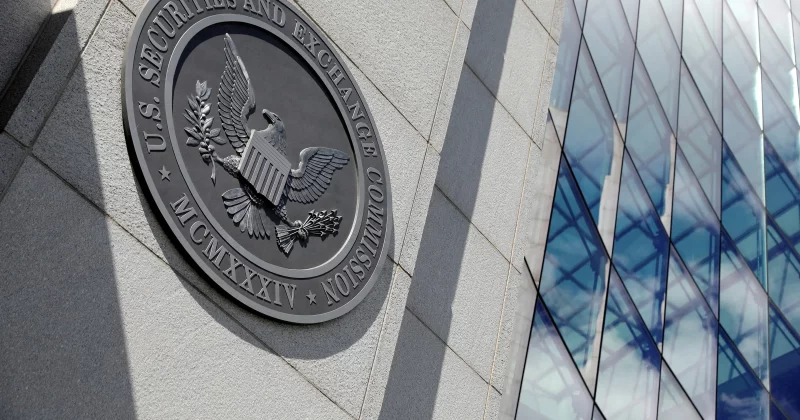
The U.S. Securities and Exchange Commission (SEC) has officially initiated the process to dismantle its first major attempt at regulating climate-related corporate reporting, signaling a definitive end to a years-long regulatory battle. On May 4, the agency submitted a proposed rulemaking titled “Rescission of Climate-Related Disclosure Rules” to the White House Office of Information and Regulatory Affairs (OIRA) for review. This administrative step is the most significant move to date in the formal unwinding of the climate disclosure framework, which was originally intended to standardize how public companies communicate environmental risks and carbon footprints to investors.
The move follows a period of intense legal and political volatility for the agency. Under the leadership of Chair Paul Atkins, the SEC is making it clear that the agency’s focus will return to traditional interpretations of financial materiality. This shift effectively voids the rules adopted on March 6, 2024, under former Chair Gary Gensler, which would have mandated that public companies disclose climate-related risks, transition plans, and specific categories of greenhouse gas emissions. While the rules were once hailed by environmental advocates as a watershed moment for corporate transparency, they never actually took effect, having been ensnared in a web of litigation almost immediately after their adoption.
A Chronology of Regulatory Ambition and Retreat
The path to the current rescission has been marked by rapid shifts in federal policy and judicial intervention. To understand the significance of the SEC’s recent filing, one must look at the timeline that transformed the rule from a cornerstone of the Biden-era regulatory agenda to a discarded proposal.
The process began in earnest in March 2022, when the SEC first proposed the climate disclosure rules. The proposal drew a record-breaking 24,000 comment letters from investors, corporations, trade associations, and advocacy groups. After two years of deliberation and significant scaling back—most notably the removal of "Scope 3" emissions reporting—the final rules were adopted in March 2024.
However, the victory for proponents of the rule was short-lived. Within days of the vote, a coalition of 25 Republican state attorneys general, led by West Virginia and Georgia, filed lawsuits in the 11th U.S. Circuit Court of Appeals. Simultaneously, business groups like the U.S. Chamber of Commerce and the Liberty Justice Center challenged the rule’s constitutionality and the SEC’s statutory authority. Conversely, the Sierra Club filed its own lawsuit, arguing the rules did not go far enough. By April 2024, the SEC issued an administrative stay on the rules pending judicial review, effectively freezing the implementation timeline.
The turning point occurred on March 27, 2025, when the SEC, following a change in administration and leadership, voted to stop defending the rules in court. This signaled to the judiciary and the private sector that the agency no longer stood behind the 2024 framework. By May 7, 2026, an SEC spokesperson confirmed that staff had been directed to prepare formal recommendations for the rescission under Chair Atkins’ leadership. The submission to OIRA this week represents the final procedural hurdle before the rules are officially stricken from the federal register.
The Architecture of the 2024 Rules
The original 2024 rules represented the most ambitious federal attempt to standardize the "E" in ESG (Environmental, Social, and Governance) reporting. The SEC’s goal was to provide investors with "consistent, comparable, and reliable" information. The rules were built around four primary pillars of disclosure.
First, the rules required companies to disclose climate-related risks that had a material impact on their business strategy, results of operations, or financial condition. This included "physical risks," such as the vulnerability of assets to extreme weather events, and "transition risks," such as the potential costs associated with changing government policies or shifts in consumer demand toward low-carbon products.
Second, the rules focused on governance and risk management. Companies would have been required to describe the board of directors’ oversight of climate-related risks and the role of management in assessing and managing those risks. This was intended to force a higher level of internal accountability regarding climate strategy.
Third, the rules introduced quantitative reporting for Scope 1 and Scope 2 emissions. Scope 1 refers to direct greenhouse gas emissions from sources that are owned or controlled by the company, while Scope 2 refers to indirect emissions from the generation of purchased electricity, steam, heating, and cooling. Large accelerated filers and accelerated filers would have been required to provide these metrics if they were deemed material, along with an attestation report from an independent service provider to ensure data accuracy.
Fourth, the rules included a controversial financial statement requirement. Companies would have had to provide a note in their audited financial statements disclosing the capitalized costs, expenditures expensed, charges, and losses resulting from severe weather events and other natural conditions. This included a 1% threshold for disclosure, a granular requirement that drew significant fire from corporate controllers and auditors.
The Materiality Debate and the Shift Under Chair Atkins
The decision to rescind these rules is rooted in a fundamental disagreement over the definition of "materiality." Under former Chair Gensler, the SEC argued that climate risks were inherently financial risks, and therefore, the agency had the authority to mandate specific disclosures to protect investors. Proponents argued that as trillions of dollars flowed into ESG-labeled funds, the lack of standardized data created a "wild west" of reporting that facilitated greenwashing.
Under Chair Paul Atkins, the agency is reverting to the traditional Supreme Court definition of materiality established in TSC Industries, Inc. v. Northway, Inc. (1976). This standard posits that information is material if there is "a substantial likelihood that a reasonable shareholder would consider it important in deciding how to vote" or make an investment decision.
Critics of the 2024 rules argued that the SEC was engaging in "climate policy by proxy," exceeding its statutory authority granted by Congress. They contended that the rules were designed to drive capital away from fossil fuel industries rather than to provide neutral financial information. By rescinding the rules, the SEC is signaling a return to a principle-based disclosure system where companies determine for themselves which climate risks are significant enough to warrant mention in their filings.
The Emerging Global Patchwork
While the SEC’s rescission provides relief to companies wary of federal overreach, it does not necessarily reduce the overall reporting burden for multinational corporations. In the absence of a federal standard, a "patchwork" of regulations is emerging at both the state and international levels.
California has already moved forward with its own aggressive climate disclosure laws. Senate Bills 253 and 261 require both public and private companies doing business in California with annual revenues over $1 billion to disclose their Scope 1, 2, and 3 emissions. Notably, California’s law includes Scope 3 emissions—those produced by a company’s entire value chain—which the SEC had ultimately stripped from its 2024 rule.
On the international stage, the European Union’s Corporate Sustainability Reporting Directive (CSRD) is already in effect. The CSRD applies to many U.S.-based companies with significant operations in Europe, requiring deep-dive disclosures on a range of environmental and social metrics. Furthermore, the International Sustainability Standards Board (ISSB) has released its own global baseline for sustainability disclosures, which is being adopted or considered by jurisdictions including the United Kingdom, Canada, and Australia.
For a global corporation, the SEC’s retreat may be a pyrrhic victory. Instead of a single federal standard, these firms must now navigate a complex web of varying requirements, different reporting timelines, and conflicting definitions of materiality across the jurisdictions in which they operate.
Market Implications and Investor Reactions
The rescission of the rules has drawn a polarized response from the financial community. For many corporations, the move represents a significant reduction in anticipated compliance costs. Estimates from the SEC’s initial proposal suggested that the cost of compliance could reach hundreds of thousands of dollars annually for larger firms, particularly due to the need for third-party attestation of emissions data and the complexity of climate-related financial accounting.
Industry groups have largely welcomed the news. The shift back to a materiality-based framework is seen as a way to protect companies from frivolous litigation and to prevent "information overload" for investors. "Investors are best served by clear, financial-focused data, not politically motivated disclosure requirements that obscure a company’s true value," noted one trade association representative following the OIRA submission.
However, many institutional investors and asset managers have expressed concern. Large firms like BlackRock, State Street, and Vanguard have long advocated for better climate data to price risk accurately in their portfolios. Without a federal mandate, these investors will likely continue to rely on voluntary disclosures, which vary widely in quality and scope.
The broader risk for the U.S. capital markets is a potential loss of competitiveness. As the EU and other major economies move toward standardized sustainability reporting, some analysts worry that U.S. markets could become less transparent than their overseas counterparts. This information asymmetry could make it more difficult for investors to conduct "apples-to-apples" comparisons between a U.S. tech giant and its European rival.
Looking Ahead: The Future of Climate Disclosure
The formal rescission process will involve a public comment period, though given the current leadership’s direction, the outcome appears certain. The SEC’s focus is expected to shift toward enforcement of existing materiality standards—ensuring that if a company does choose to speak about its climate goals, it does so accurately and without misleading investors.
As the federal government steps back, the battleground over climate transparency will likely shift to the courts and state legislatures. Legal challenges against California’s disclosure laws are already underway, with plaintiffs arguing that the state’s requirements violate the First Amendment and are preempted by federal law.
For now, the SEC’s submission to OIRA marks the end of an era. The ambitious attempt to weave climate change into the fabric of federal securities law has been halted, leaving the private sector to navigate a fragmented landscape of voluntary commitments and regional mandates. While the "Rescission of Climate-Related Disclosure Rules" simplifies the federal regulatory handbook, the underlying pressure from global regulators and climate-conscious investors remains a permanent fixture of the modern corporate environment.














