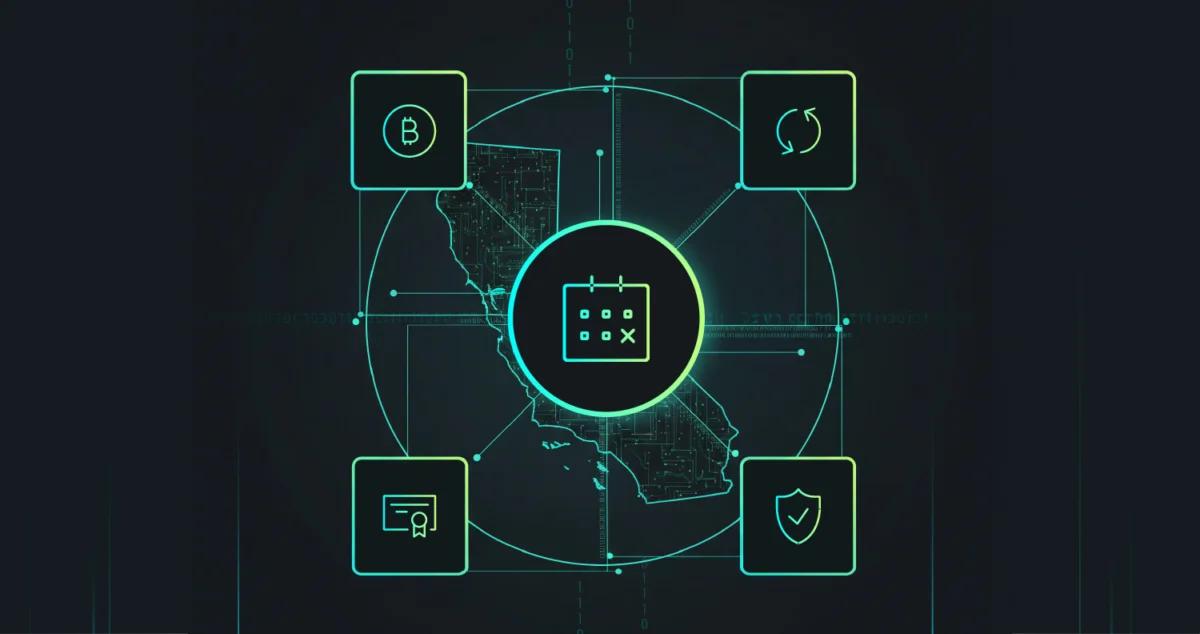
The State of California is preparing to implement one of the most significant regulatory shifts in the digital asset sector with the full enactment of the Digital Financial Assets Law (DFAL). Effective July 1, 2026, any business entity that exchanges, transfers, stores, or administers digital financial assets for California residents must be officially licensed by the Department of Financial Protection and Innovation (DFPI). This mandate represents a "hard deadline" for the industry; companies that fail to secure a license, file a complete application, or qualify for a specific exemption by the summer of 2026 will be legally prohibited from operating within the state. As the fifth-largest economy in the world and a global hub for technological innovation, California’s move to codify crypto oversight is expected to have far-reaching implications for the domestic and international digital asset markets.
Legislative Background and Chronology of the DFAL
The path toward the Digital Financial Assets Law began in earnest following the market volatility and high-profile collapses within the cryptocurrency sector throughout 2022 and early 2023. Seeking to provide a more robust consumer protection framework, California legislators introduced Assembly Bill 39. Governor Gavin Newsom signed the bill into law on October 13, 2023, officially codifying it as California Financial Code § 3101.
The rollout of the DFAL is structured in phases to allow the industry and regulators time to adjust. A key milestone occurred on January 1, 2025, when specific requirements for digital asset kiosks, commonly known as Bitcoin ATMs, went into effect. These rules limited transactions to $1,000 per customer per day and capped service fees. The next major phase begins on March 9, 2026, when the DFPI will officially open the application window through the Nationwide Multistate Licensing System (NMLS). The process culminates on July 1, 2026, when the licensing requirement becomes mandatory for all applicable businesses.
Defining the Scope of Regulatory Oversight
The DFAL is comprehensive in its definition of what constitutes a "digital financial asset." Under the law, these are digital representations of value that are not legal tender but serve as a medium of exchange, unit of account, or store of value. Notably, the law excludes certain assets from its purview, such as digital tokens used solely within gaming platforms that cannot be converted into legal tender, and traditional affinity programs like rewards points or frequent flyer miles.
A critical component of the law is its broad definition of a "California resident." A business falls under the DFAL’s jurisdiction if it interacts with individuals who are domiciled in the state, have a physical presence there for more than 31 days a year, or maintain a principal place of business in California. This means that even firms without a physical office in California must comply if they serve customers located within the state’s borders.
The law targets four primary categories of business activity:
- Exchange: The act of selling, trading, or converting digital assets for legal tender or other cryptoassets.
- Transfer: Moving digital assets on behalf of a customer between accounts or to third parties.
- Storage: Maintaining control or custody of a digital asset on behalf of a resident.
- Administration: Issuing digital assets with the authority to redeem them.
The Centrality of Control in Regulatory Applicability
The linchpin of the DFAL is the concept of "control." The law defines control as the power to unilaterally execute or prevent the execution of a transaction. This definition has sparked significant debate among legal experts regarding its application to decentralized finance (DeFi).
Analysts from firms such as Arnold & Porter suggest that non-custodial decentralized exchanges (DEXs) may fall outside the scope of the law because they do not exercise unilateral control over user assets. Conversely, other legal commentators argue that the proposed regulations could be interpreted to cover any platform that facilitates transactions through smart contracts or digital wallets. Until the DFPI provides explicit clarification, firms operating DEX interfaces or front-end services are being advised to evaluate their specific technical architectures to determine if they meet the threshold of "control."
The Application Process and Financial Prerequisites
Applying for a DFAL license is a rigorous and resource-intensive process. Businesses must submit their applications via the NMLS and pay an initial fee of $7,500, in addition to the costs incurred by the DFPI during the review process.
The DFPI has established clear initial capital expectations to ensure that licensed firms are financially resilient. Applicants are generally expected to demonstrate a tangible net worth of at least $100,000 and furnish a surety bond of $500,000. However, the DFPI maintains the discretion to adjust these amounts based on the specific risk profile, transaction volume, and business model of the applicant.
Furthermore, the application must be "complete" by the July 1, 2026, deadline. The regulator has signaled that placeholder applications or incomplete filings will not suffice to grant a business the right to continue operations past the deadline. This necessitates that firms begin preparing audited financial statements, flow-of-funds diagrams, and detailed business plans well in advance.
AML, CFT, and Cybersecurity Standards
Under the DFAL, digital asset businesses must implement anti-money laundering (AML) and countering the financing of terrorism (CFT) programs that align with the federal Bank Secrecy Act (BSA). This includes the appointment of a dedicated AML officer, ongoing staff training, and independent audits of internal controls. Crucially, the DFAL does not replace federal obligations; businesses must still remain registered with the Financial Crimes Enforcement Network (FinCEN).
In terms of information security, the DFPI expects firms to adhere to the NIST (National Institute of Standards and Technology) framework. This requires a comprehensive strategy to identify, protect, detect, respond to, and recover from cybersecurity threats. Documentation regarding wallet security, key management, and incident response plans is a mandatory component of the licensing package.
Consumer Protection and Record Retention
One of the primary objectives of the DFAL is to enhance transparency for the retail consumer. Licensed entities will be required to provide clear disclosures regarding the risks of digital assets, including the fact that they are not legal tender and are not insured by the FDIC. They must also disclose all fees, the terms of their insurance coverage (if any), and the customer’s right to a receipt.
To facilitate ongoing oversight, the law mandates a five-year record retention policy. Businesses must maintain detailed logs of all transactions, KYC (Know Your Customer) data, and records of customer complaints or disputes. This ensures that the DFPI can conduct thorough examinations and investigations when necessary.
Industry Reactions and Enforcement Trends
The reaction to the DFAL has been a mixture of caution and cautious optimism. While the regulatory burden is high, many industry leaders view the law as a necessary step toward mainstream legitimacy. Governor Newsom emphasized that the law provides "clear rules of the road" that foster innovation while protecting Californians from fraud and insolvency.
However, the DFPI has already demonstrated that it is willing to use its enforcement powers. The regulator has recently brought multiple actions against crypto kiosk operators for violating the fee caps and disclosure requirements that went into effect earlier this year. In one notable case, a kiosk operator faced penalties of up to $1 million for alleged non-compliance. These actions serve as a warning to the broader industry that the state intends to be a vigilant supervisor.
Broader Implications for the Digital Asset Market
The implementation of the DFAL marks a turning point in state-level crypto regulation in the United States. It mirrors the "BitLicense" framework established by New York in 2015 but introduces more modern nuances regarding DeFi and administrative issuance. For businesses, the "dual licensing" requirement is perhaps the most significant operational hurdle; firms handling both fiat currency and cryptoassets will likely need both a Money Transmission Act (MTA) license and a DFAL license, at least until potential regulatory "pipeline" rules address the overlap.
The cost of compliance may lead to a period of consolidation within the California market. Smaller startups may find the $100,000 net worth requirement and the costs of independent audits prohibitive, potentially driving them to relocate or merge with larger entities. Conversely, for established players, obtaining a California license could serve as a "gold standard," signaling to investors and users that the firm meets some of the highest regulatory benchmarks in the country.
As the July 1, 2026, deadline approaches, the global digital asset industry will be watching California closely. The success or failure of the DFAL in balancing consumer safety with technological growth will likely influence how other states—and potentially federal legislators—structure the future of digital finance in America.