


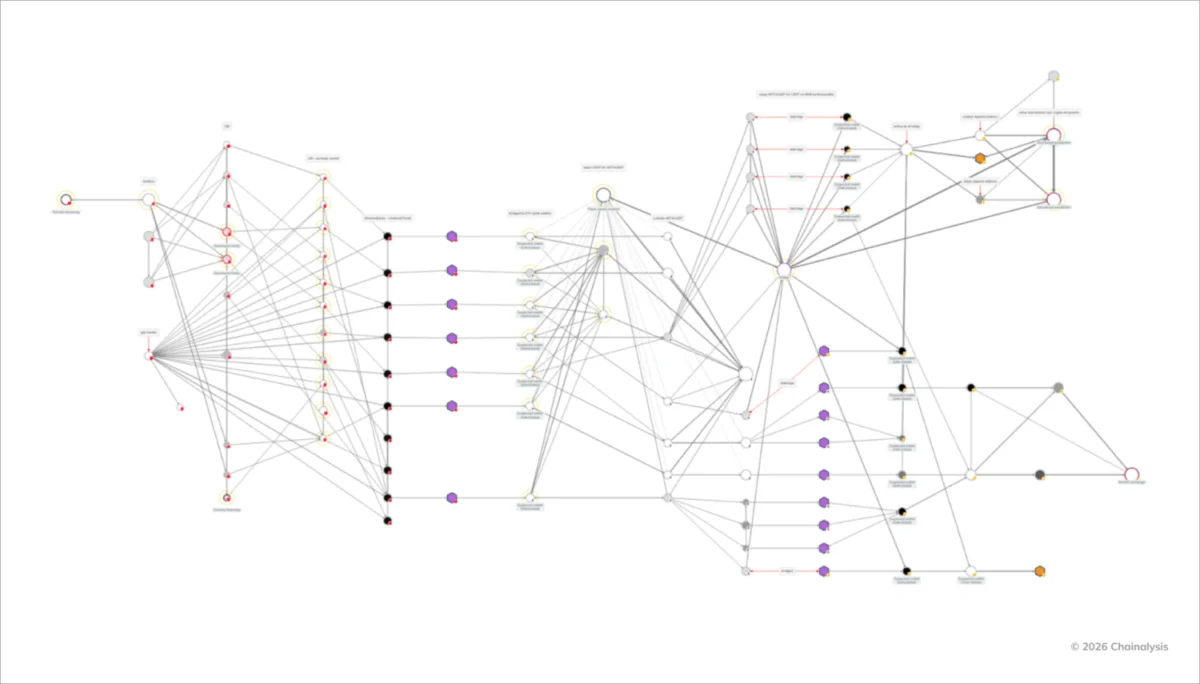
In a coordinated strike against the financial infrastructure of the Iranian regime, the U.S. Department of the Treasury’s Office of Foreign Assets Control (OFAC) and the stablecoin issuer Tether have executed a massive enforcement action, resulting in the freezing of $344 million in digital assets. On April 24, 2026, OFAC officially updated its Specially Designated Nationals (SDN) list to include several new cryptocurrency addresses linked to the Central Bank of Iran (CBI). This move marks a significant escalation in the use of blockchain forensics to dismantle state-sponsored sanctions evasion tactics, particularly those involving the Islamic Revolutionary Guard Corps (IRGC) and its regional proxies.
The enforcement action is the culmination of a week-long intensive effort by U.S. authorities and private sector partners to disrupt a complex laundering network that has increasingly relied on stablecoins to bypass traditional financial systems. The $344 million in frozen USDT (Tether) represents one of the largest seizures of digital currency in the history of U.S. sanctions enforcement against Iran. This action arrives at a moment of extreme geopolitical volatility, as Tehran attempts to impose a "maritime toll" on commercial shipping transiting the Strait of Hormuz, a move that international observers have characterized as state-sponsored extortion.
The Geopolitical Context: Extortion in the Strait of Hormuz
The timing of the OFAC designation and the subsequent asset freeze is inextricably linked to events unfolding in the Strait of Hormuz, one of the world’s most vital maritime chokepoints. On April 23, 2026, the Iranian government announced that the Central Bank of Iran had successfully processed its first "toll revenue" from commercial vessels passing through the strait. This policy, which Iran justifies as a fee for maritime safety and environmental protection, has been widely condemned by the international community as a violation of the United Nations Convention on the Law of the Sea (UNCLOS).
The implementation of these tolls has created a chaotic environment for global shipping lines. According to maritime intelligence reports, the lack of a transparent payment system has allowed opportunistic scammers to thrive. Several international shipping firms, desperate to ensure the safety of their crews and cargo, were deceived into sending payments to offshore accounts and crypto wallets controlled by fraudulent actors posing as Iranian maritime authorities.
The consequences of these scams have been dire. Because the actual Iranian authorities did not receive the funds, vessels that believed they had paid for safe passage were subsequently intercepted and harassed by IRGC naval assets. In several instances, IRGC vessels engaged in aggressive maneuvers and boarding operations, leading to a spike in insurance premiums for any ship transiting the region. Analysts suggest that the CBI’s pivot to cryptocurrency for these toll collections was a direct response to Iran’s continued exclusion from the SWIFT global messaging system and traditional dollar-clearing mechanisms.
Chronology of the Enforcement Action
The path to the April 24 designation involved a multi-year investigation into the CBI’s shadow banking operations. The CBI was originally designated by the U.S. in 2019 for its role in transferring billions of dollars to the IRGC-Quds Force and Hezbollah. However, as traditional banking channels became increasingly restricted, the regime turned to the digital asset ecosystem to maintain its liquidity.
The timeline of the most recent crackdown is as follows:
- Late 2025: Leaked documents from the network of Babak Morteza Zanjani, a notorious sanctions-evasion broker, provided investigators with initial leads regarding the CBI’s use of stablecoins to facilitate large-scale oil transactions.
- January – March 2026: U.S. law enforcement, working with blockchain analytics firms, identified a "shadow banking" network involving Iranian national Alireza Derakhshan. This network was found to have coordinated over $100 million in crypto-related oil sales.
- April 20, 2026: Tether and U.S. authorities began a "massive enforcement week," targeting high-value wallets that showed patterns of interaction with CBI-controlled intermediary addresses.
- April 23, 2026: On-chain data recorded the freezing of two major TRON-based addresses: TTiDLWE6fZK8okMJv6ijg42yrH6W2pjSr9 and TNiq9AXBp9EjUqhDhrwrfvAA8U3GUQZH81. These addresses held balances that matched the $344 million figure later announced by authorities.
- April 24, 2026: OFAC formally added these addresses to the SDN list, providing the legal framework for global compliance officers to block any further interaction with these entities.
Supporting Data and On-Chain Analysis
The precision of this seizure was made possible by the inherent transparency of the blockchain. Analysis of the designated addresses reveals a sophisticated laundering process designed to obscure the origin of Iranian funds. The CBI-linked funds were typically moved through several "hops," utilizing cross-chain bridges and decentralized finance (DeFi) protocols to break the audit trail.
The funds were eventually cycled back into the mainstream Iranian crypto ecosystem, where they could be used to pay for imports or fund IRGC operations. Specifically, the addresses TTiDLWE6fZK8okMJv6ijg42yrH6W2pjSr9 and TNiq9AXBp9EjUqhDhrwrfvAA8U3GUQZH81 were identified as "collection hubs" for stablecoins acquired through the sale of illicit petroleum.

This enforcement action also coincided with the designation of several Chinese "teapot" refineries, such as Hengli Petrochemical. These independent refineries have long been suspected of being the primary destination for Iranian crude oil. By designating these refineries alongside the crypto wallets, the U.S. Treasury is effectively squeezing both ends of the transaction: the physical commodity and the digital payment. The "shadow fleet" of nearly 40 shipping firms involved in transporting this oil has also been sanctioned, further isolating the Iranian energy sector.
Official Responses and Industry Reaction
The scale of the $344 million freeze has sent shockwaves through the digital asset industry. Paolo Ardoino, CEO of Tether, issued a strong statement following the action, emphasizing the company’s commitment to working with global regulators.
"USDT is not a safe haven for illicit activity," Ardoino stated. "When credible links to sanctioned entities or criminal networks are identified, we act immediately and decisively. Our collaboration with U.S. law enforcement demonstrates that blockchain transparency, combined with real-time monitoring, is a powerful tool to stop the flow of illicit funds before they can be utilized for destabilizing activities."
A senior U.S. Treasury official, speaking to reporters on the condition of anonymity, noted that the action highlights the evolving nature of financial warfare. "The Iranian regime has tried to use the anonymity of the crypto world to hide its tracks, but they have learned that the blockchain is a double-edged sword. Every transaction leaves a permanent record that our investigators can follow. We will continue to use every tool at our disposal—sanctions, seizures, and international partnerships—to ensure that the CBI cannot fund terrorism through the back door of the digital economy."
In the shipping industry, the reaction has been one of caution. The International Chamber of Shipping (ICS) issued a warning to its members, advising them to exercise extreme diligence when navigating the "new toll" requirements. The risk of inadvertently interacting with a sanctioned SDN address—or falling victim to a scammer—has created a compliance nightmare for captains and maritime lawyers alike.
Broader Impact and Future Implications
The April 2026 enforcement action carries several long-term implications for the global financial and geopolitical landscape. First, it underscores the diminishing utility of stablecoins as a tool for large-scale state-sponsored sanctions evasion. While small-scale transactions may still slip through the cracks, the ability of companies like Tether to "freeze" assets at the smart-contract level means that central bank-level sums are highly vulnerable to seizure.
Second, the situation in the Strait of Hormuz represents a new frontier in maritime risk. If Iran continues to demand tolls in cryptocurrency, it will force the global shipping industry into a precarious position where compliance with local demands could result in a violation of U.S. federal law. This "compliance trap" may lead to a permanent shift in trade routes, as companies seek to avoid the strait entirely, potentially driving up global shipping costs and inflation.
Third, the coordination between the U.S. government and a private stablecoin issuer sets a significant precedent. It suggests a future where private financial technology companies act as "digital deputies" for state interests, effectively enforcing foreign policy through code. For the broader crypto market, this reinforces the trend toward "regulated decentralization," where the underlying technology is decentralized, but the most liquid and widely used assets are subject to centralized control and regulatory oversight.
As the U.S. Treasury continues to monitor the on-chain activity of the CBI and the IRGC, more designations are expected. The message to the Iranian regime is clear: the digital walls are closing in. For global businesses, the takeaway is equally stark: the intersection of maritime trade and digital finance is now a high-stakes compliance battlefield, and the cost of an oversight can run into the hundreds of millions.














