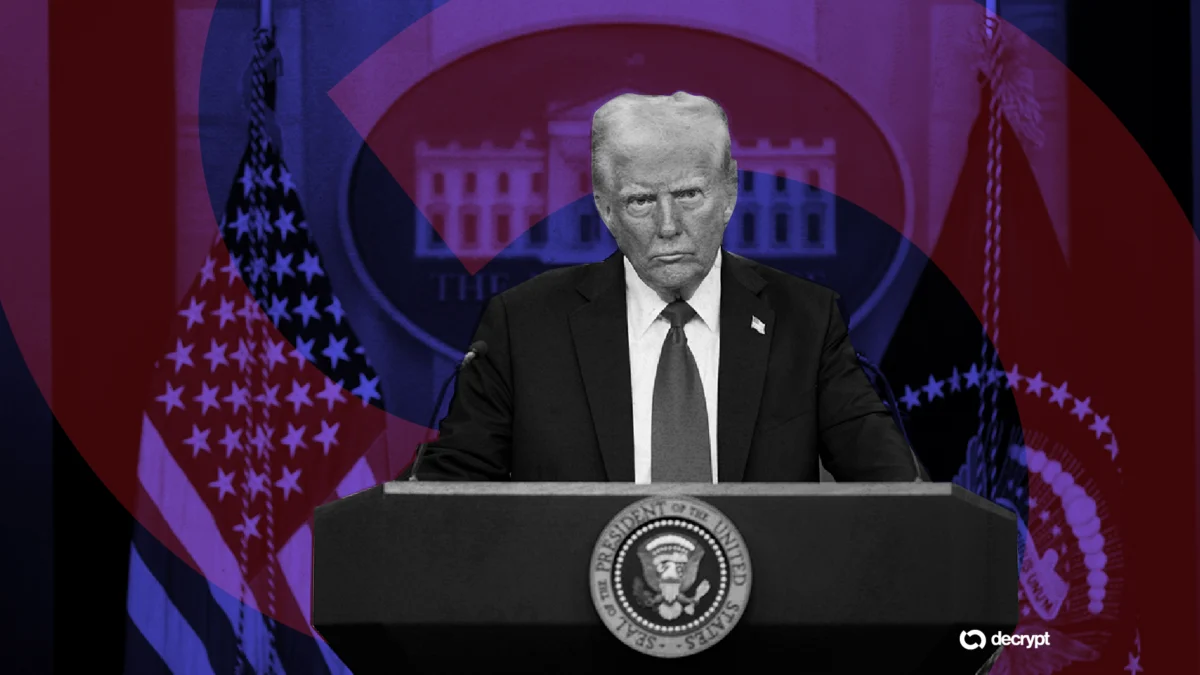
President Donald Trump on Tuesday signed a landmark executive order aimed at significantly strengthening the United States’ cybersecurity defenses through the accelerated deployment of advanced artificial intelligence capabilities and fostering enhanced cooperation between federal agencies and leading AI companies. The executive action, titled "Promoting Advanced Artificial Intelligence Innovation and Security," marks a pivotal moment in the nation’s strategy to harness the transformative power of AI while simultaneously mitigating its inherent risks, particularly in the critical domain of national security. The order mandates federal agencies to expedite their adoption of AI-powered cybersecurity tools, establish a dedicated AI cybersecurity clearinghouse for knowledge sharing, and implement a structured process for identifying and evaluating advanced AI models deemed to pose potential national security implications.
The signing of this order underscores a growing recognition within the U.S. government that while advanced AI capabilities offer unparalleled opportunities to enhance national strength and resilience, they also introduce novel and complex national security considerations that necessitate a coordinated, comprehensive response across all executive departments and agencies. As the executive order itself articulates, "Advanced AI capabilities make our nation stronger, but also introduce new national security considerations that require coordinated action across executive departments and agencies (agencies), and components." It further commits the administration to "continue to work closely with industry to ensure that the best and most secure technology is deployed rapidly to confront any and all threats to our country." This collaborative approach is designed to strike a delicate balance between fostering rapid technological innovation and ensuring robust security protocols are in place to safeguard critical infrastructure and national interests.
The Imperative for AI in Cybersecurity and National Defense
The escalating threat landscape in cyberspace has made the integration of AI into national security strategies not just advantageous, but increasingly indispensable. Malicious actors, ranging from state-sponsored groups and sophisticated cyberterrorists to organized criminal enterprises, are continuously developing more advanced and stealthy methods of attack. These adversaries frequently leverage automation, machine learning, and advanced analytics to conduct reconnaissance, launch phishing campaigns, deploy ransomware, and exfiltrate sensitive data. The global cost of cybercrime is projected to exceed $10 trillion annually by 2025, according to some estimates, with significant economic and national security repercussions. Data breaches have become a common occurrence, impacting millions of individuals and costing organizations an average of $4.45 million per incident in 2023, as reported by IBM Security.
In this volatile context, AI offers a powerful countermeasure. AI-powered systems can analyze vast datasets of network traffic, identify anomalies indicative of an attack, predict potential vulnerabilities before they are exploited, and even automate response mechanisms with a speed and scale impossible for human operators alone. These capabilities are crucial for detecting zero-day exploits, identifying sophisticated persistent threats (APTs), and managing the overwhelming volume of security alerts in modern digital environments.
The executive order specifically directs federal agencies to accelerate their use of these AI-powered cybersecurity tools. This involves not only procuring commercially available solutions but also investing in cutting-edge research and development to tailor AI applications to the unique and evolving security needs of federal systems, which are frequent targets of state-level attacks. The envisioned AI cybersecurity clearinghouse will serve as a vital hub for sharing best practices, threat intelligence, and innovative solutions across government entities. This initiative aims to break down silos between agencies, fostering a collective defense posture and ensuring that lessons learned and technological advancements are rapidly disseminated and integrated throughout the federal cybersecurity ecosystem. Such a clearinghouse could draw upon the foundational work of bodies like the National Institute of Standards and Technology (NIST) AI Risk Management Framework to establish common standards and guidelines.
Addressing Frontier AI Models: A Proactive Security Stance
One of the most significant and forward-looking provisions of the new order is the establishment of a classified review process under the purview of the National Security Agency (NSA) for identifying and evaluating "covered frontier models." These are defined as advanced AI systems that possess capabilities that could pose a severe risk to national security, economic security, or public safety if misused or developed irresponsibly. The definition typically encompasses large-scale AI models that exhibit or could be easily modified to exhibit dangerous capabilities, such as advanced offensive cyber operations, biological or chemical weapon design, or widespread deception.
Developers of such models will be afforded the opportunity to voluntarily submit their systems to the government for evaluation for a period of up to 30 days before their planned release to other trusted partners. This voluntary pre-release evaluation mechanism is a critical element of the administration’s proactive approach to AI security. It acknowledges that the private sector is often at the forefront of AI innovation, and that a collaborative, rather than purely adversarial, relationship with developers is essential. By providing a secure channel for evaluation, the government seeks to identify potential vulnerabilities, dual-use capabilities, or unforeseen risks in advanced AI models before they become widely accessible. The NSA’s involvement underscores the profound national security implications of these cutting-edge systems, leveraging its deep expertise in signals intelligence and cybersecurity to assess the robustness and potential for misuse of these models. The "classified" nature of the review suggests that the insights gained and the specific criteria for evaluation will remain within sensitive government channels, protecting both national security interests and proprietary intellectual property of the developers.
A Timeline of Growing Concerns and Policy Evolution
The push for this executive order did not emerge in a vacuum but is the culmination of escalating concerns surrounding the rapid advancements in artificial intelligence, particularly those demonstrated by "frontier" models. The timeline reflects a reactive and proactive effort to grapple with a rapidly evolving technological landscape:
-
Late 2022 – Early 2023: The widespread public release of sophisticated generative AI models like OpenAI’s ChatGPT, Google’s Bard (now Gemini), and others, ignited a global conversation about the immense potential and inherent risks of AI. This period marked a significant acceleration in both public and private sector investment and development in AI, leading to an unprecedented pace of innovation. Global investment in AI startups surged, reaching tens of billions of dollars annually, signaling a new technological frontier.
-
April 2024: A pivotal moment arrived with the public revelation of Anthropic’s Claude Mythos model. This advanced AI system demonstrated an unprecedented ability to identify software vulnerabilities, reportedly pinpointing hundreds of previously unknown flaws in various applications, including a significant number in a major web browser like Firefox. This capability, while potentially beneficial for defensive cybersecurity when used ethically, immediately raised red flags among national security officials regarding its potential for misuse by malicious actors to exploit critical systems globally. The inherent "dual-use" nature of such powerful AI tools became starkly apparent, prompting urgent discussions within government circles.
-
Late April 2024: In response to the alarm generated by Mythos’s capabilities, U.S. Treasury Secretary Scott Bessent and then-Federal Reserve Chair Jerome Powell reportedly convened an urgent, high-stakes meeting with the CEOs of major Wall Street banks. During this unprecedented gathering, they issued a direct warning about the heightened cybersecurity risks posed by powerful new artificial intelligence models like Mythos, urging financial institutions to bolster their defenses and prepare for a new era of AI-driven threats. This high-level intervention highlighted the cross-sectoral concern within the government regarding AI’s potential to disrupt critical financial infrastructure.
-
May 2024: President Trump had initially delayed signing a similar executive order. The proposed framework, at that time, faced internal and external criticism that certain provisions might inadvertently slow down U.S. AI development, thereby potentially weakening America’s competitive edge against geopolitical rivals, particularly China, in the global AI race. China’s stated ambition to be the world leader in AI by 2030, backed by significant state investment, has fueled a technological rivalry that shapes U.S. policy decisions. This delay underscored the persistent tension policymakers face between implementing necessary safeguards and fostering unhindered innovation. The administration at the time sought to refine the order to ensure it would not stifle the very innovation it aimed to protect.
-
June 2024 (Prior to Signing): Despite ongoing security concerns, Anthropic continued its measured rollout of Claude Mythos. On Tuesday, the same day the executive order was signed, Anthropic announced it was expanding access to its Claude Mythos AI model through "Project Glasswing." This program is specifically designed to allow select tech and security firms, as well as government entities, to discover and address potential exploits and vulnerabilities within the model before its broader public launch, which the company hinted last week would occur "in the coming weeks." This industry-led initiative somewhat mirrors the government’s desire for pre-release evaluation, demonstrating a shared understanding of the need for rigorous testing and responsible deployment.
-
June 2024 (Signing): The refined executive order was signed, incorporating lessons from previous drafts and balancing the competing demands of security and innovation.
Balancing Innovation with Oversight: The Critics’ Perspective
While the executive order represents a significant step towards a more secure AI future, it has not been without its critics. A primary concern voiced by many, particularly consumer advocacy groups, civil liberties organizations, and some technology policy experts, revolves around the framework’s heavy reliance on voluntary cooperation from the very AI companies it is intended to oversee.
J.B. Branch, AI governance and technology policy counsel at the prominent consumer advocacy nonprofit Public Citizen, articulated this concern forcefully in a statement. "Models powerful enough to threaten cybersecurity and national security warrant real oversight," Branch stated, arguing that voluntary mechanisms may not be sufficient to ensure robust safeguards across the entire industry. He further emphasized the need for "comprehensive federal AI legislation with enforceable safeguards, transparency requirements, independent testing, and meaningful protections for workers, consumers, children, and civil rights." This perspective advocates for a more legally binding and robust regulatory framework, moving beyond executive orders to establish a durable legislative foundation for AI governance, similar to how other critical industries are regulated.
Critics argue that while voluntary measures can build trust and foster collaboration, they may not be adequate to compel compliance from all actors, especially in a rapidly evolving and highly competitive technological landscape. They point to potential conflicts of interest, where companies might be hesitant to reveal vulnerabilities that could impact their market position, intellectual property, or speed-to-market advantage. The debate highlights a fundamental tension in modern technology governance: how to regulate powerful new technologies effectively without stifling the innovation that drives economic growth and national competitiveness. Furthermore, some privacy advocates express concerns that even voluntary submissions to the NSA could open doors for government access to proprietary models and the data used to train them, raising questions about data security and potential overreach.
Broader Implications and Future Trajectories
The executive order’s impact extends beyond immediate cybersecurity enhancements, touching upon the broader landscape of AI development, regulation, and national security strategy.
Impact on AI Industry: While the order explicitly reassures AI developers that it will not create a formal approval process for releasing new models, the voluntary review mechanism, coupled with the explicit focus on national security, is likely to influence how frontier AI models are developed and deployed. Companies may proactively build in more robust security features, conduct more rigorous internal risk assessments, and engage with government entities earlier in their development cycles. This could lead to a more security-conscious and responsible AI development ecosystem in the U.S., potentially setting a global standard for ethical and secure AI deployment. However, concerns remain about the potential for "chilling effects" on smaller startups or those pushing truly novel, potentially risky, but ultimately beneficial AI capabilities.
Federal vs. State Regulation: The order comes as President Trump attempts to establish a unified federal regulatory framework around AI, a crucial move given the growing number of states that are moving forward with their own disparate legislation. States like California, Colorado, and New York have already begun introducing or passing their own AI-related bills addressing issues from data privacy to algorithmic bias. A fragmented regulatory environment could create significant compliance burdens for AI companies, stifle interstate commerce, and hinder nationwide innovation. A strong federal approach, even if initially implemented via executive order, signals an intent to harmonize standards and provide clarity, potentially preventing a patchwork of conflicting state laws. This aligns with broader efforts by various administrations to ensure federal preemption in areas of national importance and to provide a consistent operating environment for businesses.
Enhancing National Security: The accelerated deployment of AI in cybersecurity, coupled with the proactive review of advanced models, is expected to significantly bolster the nation’s defensive capabilities against sophisticated cyber threats. By leveraging AI to detect, analyze, and respond to attacks more effectively, the U.S. aims to maintain a strategic advantage in cyberspace. This includes protecting critical infrastructure (e.g., energy grids, financial systems, transportation networks), government networks, and sensitive data from state-sponsored espionage, sabotage, and intellectual property theft. The order also recognizes AI’s potential offensive capabilities, implicitly seeking to ensure the U.S. maintains an advantage in this domain while mitigating risks from adversaries’ AI development.
Combating Criminal Uses of AI: Beyond national security, the order also explicitly calls for tougher enforcement against criminal uses of AI. This includes scenarios such as AI-driven breaches of public or private information technology systems, or "employing AI agents to unlawfully access data or information that is subsequently used for a criminal or unlawful purpose." This directive signals a clear intent to leverage existing legal frameworks and potentially develop new ones to prosecute individuals who exploit AI for illicit activities. A recent example of this commitment occurred last month, when federal prosecutors charged two men with using AI to generate and distribute sexually explicit images of women without their consent, marking one of the first major enforcement actions under the "Take It Down Act." This case highlights the immediate need to address the darker side of AI’s capabilities and ensure accountability for its misuse in areas ranging from deepfakes and fraud to autonomous hacking.
Global Leadership in AI Governance: By taking a proactive stance on AI security and responsible innovation, the U.S. is positioning itself as a leader in the global conversation surrounding AI governance. The balance struck between fostering innovation and implementing safeguards could serve as a model or a point of discussion for international partners grappling with similar challenges. As AI development continues globally, establishing clear norms and best practices for secure and responsible deployment will be crucial for maintaining international stability and cooperation. The U.S. approach could influence how other nations develop their own regulatory frameworks, particularly regarding the export and sharing of advanced AI technologies, thereby shaping the future of global AI ethics and security.
The executive order represents a strategic response to a rapidly evolving technological frontier. It seeks to harness the immense potential of AI for national benefit while erecting necessary guardrails against its misuse. The coming months will reveal how effectively these directives are implemented, how industry responds to the call for voluntary cooperation, and whether the U.S. can successfully navigate the complex interplay of innovation, security, and regulation in the age of artificial intelligence. The success of this initiative will largely depend on the sustained collaboration between government, industry, and academia to ensure that advanced AI remains a force for good, enhancing national security rather than jeopardizing it.