


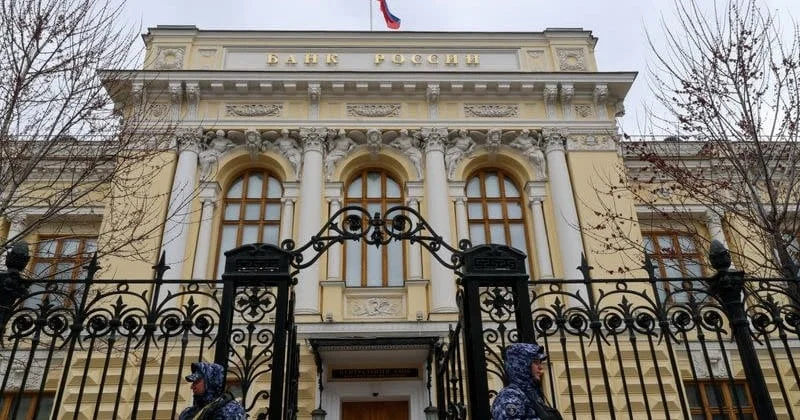
The Central Bank of Russia has formally intensified its legal confrontation with European authorities by filing a second major lawsuit with the General Court of the European Union, specifically contesting the bloc’s decision to utilize generated proceeds from frozen Russian assets to fund a massive €90 billion loan package for Ukraine. This latest legal action, initiated on May 25, marks a significant escalation in the Kremlin’s strategy to protect its offshore reserves and challenge the international legal frameworks being constructed by the G7 and the EU to support Kyiv’s defense and reconstruction efforts. While a previous lawsuit filed by the Central Bank of Russia (CBR) in March 2024 focused on the initial freezing of the assets themselves, this new litigation targets the specific mechanisms of Regulation (EU) 2026/467, which Moscow argues represents an unprecedented and unlawful appropriation of sovereign property under international law.
The Core of the Dispute: Regulation (EU) 2026/467
The legal battle centers on the European Union’s innovative, yet controversial, strategy to bypass the legal hurdles of seizing the principal of sovereign assets. Since the full-scale invasion of Ukraine in February 2022, Western nations have frozen approximately $300 billion in Russian central bank reserves. Of this total, the EU holds roughly €210 billion ($244 billion), with the vast majority—estimated between €185 billion and €193 billion—residing within Euroclear, the Brussels-based central securities depository.
Under Regulation (EU) 2026/467, adopted in early 2026, the European Commission established a framework to isolate the "extraordinary profits" generated by these frozen assets. Because the assets are frozen, they continue to generate interest and coupon payments that Euroclear cannot legally remit to the CBR. The EU’s position is that these "windfall" profits do not belong to the Russian state but are a byproduct of the sanctions regime itself. The regulation mandates that these proceeds be channeled into a specialized fund to back a €90 billion ($105 billion) loan package intended to stabilize the Ukrainian economy and fund its military requirements throughout 2026 and 2027.
The CBR’s legal team contends that this distinction between "principal" and "proceeds" is a legal fiction. In its filing to the General Court, the CBR argues that the right to the fruits of an asset is inseparable from the ownership of the asset itself. By diverting these funds, the CBR claims the EU is violating the principle of sovereign immunity, a cornerstone of international law that generally protects state-owned assets from seizure or attachment by foreign courts and governments.
A Chronology of Financial Warfare
The current legal impasse is the result of a multi-year escalation in financial sanctions and retaliatory measures. Understanding the timeline is essential to grasping the gravity of the CBR’s latest move:
- February 2022: Following the invasion of Ukraine, the EU, US, and G7 partners freeze the assets of the Central Bank of Russia held in Western jurisdictions.
- 2023: EU officials begin exploring legal avenues to use the interest generated by the frozen funds. Euroclear reports record profits due to the accumulation of cash from Russian securities.
- March 2024: The CBR files its first lawsuit at the General Court of the EU, challenging the legality of the asset freeze under the EU’s own Charter of Fundamental Rights.
- May 15, 2026: A Moscow arbitration court issues a landmark ruling against Euroclear, ordering the depository to pay 18.2 trillion rubles (approximately $250 billion) in damages to the CBR.
- May 24, 2026: The EU finalize the operational details of the €90 billion loan package for Ukraine, backed by the future proceeds of Russian assets.
- May 25, 2026: The CBR files the second lawsuit, specifically targeting the diversion of proceeds under Regulation (EU) 2026/467.
The Moscow Court Ruling and Russia’s Parallel Strategy
While the CBR pursues traditional legal channels in Luxembourg, the Russian government is simultaneously building a domestic legal infrastructure to justify the seizure of Western assets located within Russia. The Moscow arbitration court’s May 15 ruling, which awarded the CBR $250 billion in damages, is viewed by international legal experts as largely symbolic in the West but functionally potent within Russia.
The $250 billion figure is calculated to exceed the total value of Russian assets held in Europe, creating a "legal surplus" that Moscow can use to justify the expropriation of private Western investments. Since 2022, Russia has already placed the local operations of several Western companies—including Uniper, Fortum, Carlsberg, and Danone—under "temporary management" by the Federal Agency for State Property Management (Rosimushchestvo). The Moscow court ruling provides a veneer of judicial legitimacy for these actions, framing them as court-ordered compensation for the "theft" of Russian state reserves.
Furthermore, this parallel strategy serves as a deterrent. By maintaining a massive, albeit internationally unenforceable, judgment against Euroclear, Russia signals to European financial institutions that any cooperation with the EU’s asset-diversion plan will result in the permanent loss of their remaining Russian interests.
Sovereign Immunity and the International Legal Precedent
The CBR’s argument rests heavily on the 2004 United Nations Convention on Jurisdictional Immunities of States and Their Property. Although not all nations have ratified the convention, its principles are widely regarded as customary international law. Sovereign immunity dictates that the property of a central bank used for government purposes is immune from enforcement measures in the courts of another state.
The European Union’s legal defense hinges on the "extraordinary" nature of the current geopolitical situation. EU lawyers argue that the proceeds in question are not "state property" in the traditional sense because they are generated solely because the assets are immobilized by sanctions. They contend that the "windfall" profits are an unintended consequence of the depository’s operations under a sanctions regime, rather than a direct return on investment belonging to the CBR.
Critics of the EU’s approach, including some central bankers in the Global South, have expressed concern that this move could undermine the status of the Euro as a reserve currency. If sovereign reserves are seen as subject to political seizure—even if only the interest is taken—nations like China, Saudi Arabia, and Brazil may reconsider the safety of holding their reserves in Western financial systems.
Financial Stability and the Role of Euroclear
Euroclear occupies a unique and vulnerable position in this conflict. As a central securities depository, it is the plumbing of the global financial system, holding trillions of euros in assets for clients worldwide. The accumulation of Russian cash has ballooned Euroclear’s balance sheet, creating significant management risks.
The depository has warned that the legal uncertainty surrounding the frozen assets could lead to a loss of confidence in the European clearing system. If Euroclear were forced to pay out the $250 billion demanded by the Moscow court, it would face immediate insolvency, potentially triggering a systemic crisis in the Eurozone. While the Moscow ruling is unenforceable in Belgium, the risk remains that Russian authorities could seize Euroclear’s assets held in third-party jurisdictions that maintain closer ties with Moscow, or target the assets of Euroclear’s international clients that remain within Russia’s reach.
Implications for Digital Assets and Crypto Regulation
The legal war over sovereign assets has secondary implications for the digital asset sector. As traditional financial channels become increasingly weaponized, regulators in the EU and the US have moved to close potential loopholes in the sanctions regime.
The European Union has recently expanded its sanctions framework to include more stringent requirements for Crypto-Asset Service Providers (CASPs). Under the latest iterations of the Anti-Money Laundering (AML) directives and the Markets in Crypto-Assets (MiCA) regulation, CASPs are required to perform enhanced due diligence to ensure that digital assets are not being used to circumvent the freeze on Russian reserves.
The CBR’s lawsuits may inadvertently accelerate the push for a "digital ruble" or other blockchain-based cross-border payment systems that operate outside the reach of the SWIFT network and Western depositories like Euroclear. As the legal battle intensifies, the intersection of sovereign immunity and decentralized finance (DeFi) is likely to become a new frontier for regulatory scrutiny, as states seek to ensure that "frozen" wealth cannot be liquidated through permissionless protocols.
Future Outlook and Geopolitical Consequences
The General Court of the European Union is expected to take months, if not years, to reach a verdict on the CBR’s latest lawsuit. In the interim, the EU plans to proceed with the Ukraine loan package, banking on the assumption that the legal risk is manageable compared to the geopolitical necessity of supporting Kyiv.
However, the CBR’s persistent litigation serves a broader purpose beyond the immediate recovery of funds. It creates a "cloud of title" over the assets, making it difficult for the EU to ever fully seize the principal without facing decades of legal challenges. It also provides a rallying point for other nations wary of Western financial hegemony.
The outcome of this case will likely define the boundaries of economic warfare for the 21st century. If the EU succeeds in using the proceeds of frozen assets without suffering a systemic financial backlash, it will have created a potent new tool for international diplomacy. If, however, the CBR’s legal challenges gain traction or lead to a significant flight of capital from the Eurozone, the "legal war" may end up being as costly for the victors as it is for the sanctioned.
As the May 25 lawsuit moves through the European judicial system, the international community will be watching closely. The case represents more than a dispute over billions of dollars; it is a fundamental test of whether the rules-based international order can adapt its financial laws to punish aggression without destroying the very principles of property and immunity that underpin global stability.














