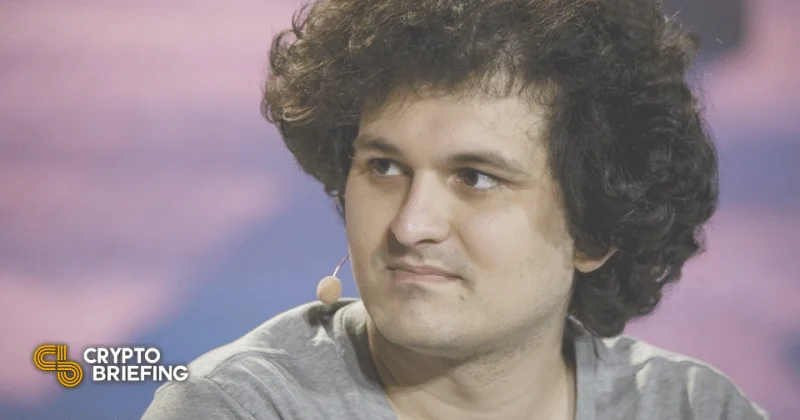
The United States Court of Appeals for the Second Circuit in Manhattan has formally upheld the fraud conviction and 25-year prison sentence of Sam Bankman-Fried, the co-founder and former CEO of the collapsed cryptocurrency exchange FTX. The decision, handed down on Friday, ensures that one of the most significant figures in the history of digital finance will remain incarcerated until approximately 2044. This ruling marks a pivotal conclusion to a legal saga that began with the spectacular multi-billion-dollar implosion of FTX in late 2022, an event that sent shockwaves through global financial markets and triggered a massive regulatory crackdown on the cryptocurrency industry.
Bankman-Fried, who once commanded a net worth exceeding $20 billion and was frequently seen as the "white knight" of the crypto sector, was convicted in November 2023 on seven counts of fraud, conspiracy, and money laundering. The appellate court’s decision effectively rejects the defense’s arguments that the trial was fundamentally unfair or that the presiding judge, U.S. District Judge Lewis Kaplan, had overstepped his authority in restricting the evidence presented to the jury.
The Basis of the Appeal and the Court’s Ruling
The appeal, launched in September 2024, was centered on the assertion that the original trial was marred by judicial bias and procedural errors. Bankman-Fried’s legal team argued that Judge Kaplan had unfairly restricted the defense from presenting evidence suggesting that FTX was solvent at the time of its bankruptcy. They contended that if the jury had been allowed to see that the exchange’s assets—including its significant stake in the AI firm Anthropic—could eventually cover customer losses, the perception of Bankman-Fried’s "intent to defraud" would have been neutralized.
Furthermore, the defense alleged that the court had improperly allowed prosecutors to present a narrative of a "massive hole" in customer funds while preventing the defense from arguing that the funds were merely illiquid rather than missing. Bankman-Fried’s lawyers also took issue with the speed of the trial and the limitations placed on his ability to testify regarding his reliance on legal counsel during the period leading up to the collapse.
However, the Second Circuit panel was unpersuaded. The judges noted that the core of the criminal charges involved the unauthorized use of customer funds at the moment they were diverted to Alameda Research, Bankman-Fried’s private hedge fund. Whether those funds could have been paid back later through speculative investments or market recoveries was deemed irrelevant to the act of the initial theft. The court affirmed that Judge Kaplan’s evidentiary rulings were within his discretion and that the weight of the evidence against Bankman-Fried was overwhelming.
A Chronology of the FTX Collapse and Legal Proceedings
The fall of Sam Bankman-Fried is a narrative of rapid ascension followed by an unprecedented descent. To understand the gravity of the appellate court’s decision, one must look at the timeline of events that led to the 2044 release date.
2019–2021: The Rise of an Empire
Sam Bankman-Fried founded FTX in 2019, positioning it as an exchange "built by traders, for traders." By 2021, the company had moved its headquarters to the Bahamas and achieved a valuation of $32 billion. Bankman-Fried became a ubiquitous figure in Washington D.C., lobbying for crypto regulation and becoming one of the largest donors to political campaigns.
November 2022: The Implosion
The collapse began on November 2, 2022, when a leaked balance sheet from Alameda Research revealed that the hedge fund held a massive, illiquid position in FTT, FTX’s native token. This sparked a "bank run" as customers rushed to withdraw their holdings. On November 11, FTX filed for Chapter 11 bankruptcy protection after it was revealed that the exchange had a $8 billion deficit in customer funds.
December 2022: Arrest and Extradition
Bankman-Fried was arrested by Bahamian authorities at the request of the U.S. government. Shortly thereafter, his top lieutenants, including Alameda CEO Caroline Ellison and FTX co-founders Gary Wang and Nishad Singh, began cooperating with federal prosecutors.
October–November 2023: The Trial
During a month-long trial in Manhattan, prosecutors presented a mountain of evidence, including internal spreadsheets and encrypted messages. The testimony of Ellison, Wang, and Singh was particularly damaging; they testified that Bankman-Fried had personally directed them to create a "backdoor" in FTX’s code that allowed Alameda Research to draw an essentially unlimited line of credit from customer deposits.
March 2024: Sentencing
Judge Kaplan sentenced Bankman-Fried to 25 years in federal prison. During the sentencing hearing, Kaplan criticized the defendant’s "apparent lack of remorse" and noted that Bankman-Fried had committed perjury during his own trial testimony.
Supporting Data: The Scale of the Fraud
The scale of the misconduct at FTX remains one of the largest in the history of financial crime, often compared to the Ponzi scheme orchestrated by Bernie Madoff. According to trial records and bankruptcy filings:
- $8 Billion Missing: At the time of the bankruptcy filing, FTX owed customers approximately $8 billion that it could not produce.
- Alameda’s Debt: Alameda Research had used customer funds to pay off its own lenders, fund venture capital investments, and purchase luxury real estate in the Bahamas valued at over $200 million.
- Political Contributions: Bankman-Fried and his executives used over $100 million in diverted funds for political donations across the spectrum, seeking to influence crypto legislation.
- The Recovery Effort: While the current bankruptcy estate, led by CEO John J. Ray III, has indicated that customers may eventually receive 100% of the dollar value of their claims at the time of the 2022 bankruptcy, this does not account for the massive appreciation of crypto assets (like Bitcoin and Solana) that occurred during the bankruptcy proceedings. Customers argue they are still being deprived of billions in market gains.
Testimony from the Inner Circle
The appellate court’s decision to uphold the conviction relied heavily on the consistency of the testimony provided by Bankman-Fried’s former associates. Caroline Ellison, who had an on-and-off romantic relationship with Bankman-Fried, provided the most detailed account of the fraud. She testified that Bankman-Fried directed her to send "dishonest" balance sheets to lenders to hide the fact that Alameda was borrowing billions from FTX customers.
Gary Wang, the former Chief Technology Officer, explained the technical mechanics of the fraud. He admitted to altering FTX’s codebase to grant Alameda an "allow_negative" feature, which exempted the hedge fund from the exchange’s automated liquidation engine. This allowed Alameda to continue losing money using customer deposits without being forced to close its positions.
The defense’s attempt to paint Bankman-Fried as a "math nerd" who simply made mistakes in risk management was systematically dismantled by these witnesses, who portrayed him as a calculating leader who was fully aware of the illegality of his actions.
Reactions and Official Responses
The decision by the Second Circuit has been met with approval from federal prosecutors and regulatory bodies. Damian Williams, the U.S. Attorney for the Southern District of New York, has consistently framed the case as a warning to other actors in the financial technology space.
"Sam Bankman-Fried orchestrated one of the largest financial frauds in history, a multibillion-dollar scheme designed to make him the King of Crypto," Williams stated following the original conviction. "This case was always about old-fashioned greed dressed up in new-age technology."
On the other side, Bankman-Fried continues to maintain his innocence in the court of public opinion. From his cell at the Metropolitan Detention Center (and later at a federal facility in California), he has continued to communicate through legal intermediaries, expressing his belief that the bankruptcy lawyers "hijacked" his company and that customers would have been made whole if he had been allowed to stay in control.
In a recent move, Bankman-Fried formally requested a presidential pardon or clemency. His supporters argue that the 25-year sentence is "draconian" compared to other white-collar crimes and that the recovery of assets should mitigate his punishment. However, legal experts suggest that a pardon is highly unlikely given the bipartisan nature of the outrage following the FTX collapse.
Broader Impact and Implications for the Industry
The upholding of Bankman-Fried’s conviction has profound implications for the future of the cryptocurrency industry and the legal standards for digital asset management.
1. Regulatory Precedent
The case has emboldened the Securities and Exchange Commission (SEC) and the Commodity Futures Trading Commission (CFTC) to pursue more aggressive enforcement actions against "offshore" and "unregulated" exchanges. The ruling reinforces the principle that "code is not law" and that traditional anti-fraud statutes apply to digital assets regardless of their technological complexity.
2. Custodial Accountability
The FTX scandal has shifted the industry standard toward "Proof of Reserves." Exchanges are now under immense pressure to provide transparent, third-party verified audits of customer holdings to prove they are not commingling funds with their own corporate accounts.
3. The End of "Effective Altruism" in Finance
Bankman-Fried was a prominent proponent of "Effective Altruism," a philosophy centered on earning as much money as possible to give it away to high-impact causes. The conviction has led to a significant backlash against this philosophy within the tech community, as critics argue it was used as a moral shield to justify unethical risk-taking and fraud.
4. Judicial Finality
For the victims of the FTX collapse, the appellate court’s decision provides a sense of finality. While the bankruptcy process continues to grind through the courts to distribute recovered assets, the criminal aspect of the case is now largely settled. Unless the U.S. Supreme Court chooses to take up the case—a rare occurrence for such matters—Bankman-Fried has exhausted his primary legal avenues for a shortened sentence.
Conclusion
The Second Circuit’s ruling solidifies the downfall of Sam Bankman-Fried. From the heights of a $32 billion empire to a 2044 release date from federal prison, his trajectory serves as a cautionary tale for the digital age. The court’s decision to uphold the conviction emphasizes that the diversion of $8 billion in customer funds is a crime that transcends the specific medium of the theft. As the cryptocurrency industry continues to evolve, the ghost of FTX remains a permanent fixture in the regulatory landscape, ensuring that the era of unchecked "crypto-cowboys" has come to a definitive and legally binding end.