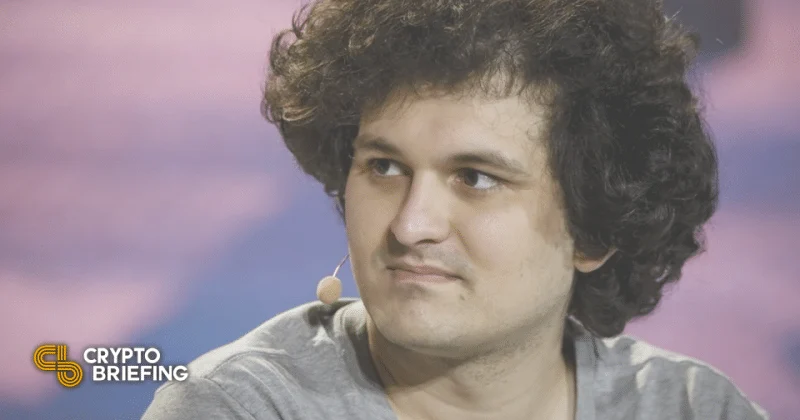
The United States Court of Appeals for the Second Circuit in Manhattan has formally upheld the criminal conviction of Sam Bankman-Fried, the co-founder and former CEO of the collapsed cryptocurrency exchange FTX. This landmark ruling ensures that the individual once hailed as the "King of Crypto" will remain in federal custody until approximately 2044, effectively ending his immediate legal efforts to overturn the results of his 2023 trial. The appellate court’s decision reinforces the original verdict, which found Bankman-Fried guilty on seven counts of fraud, conspiracy, and money laundering related to the historic implosion of his digital asset empire.
The appellate panel’s decision marks a definitive chapter in one of the most significant financial fraud cases in American history. Bankman-Fried, whose net worth once peaked at an estimated $26 billion, was convicted of orchestrating a scheme that resulted in the loss of approximately $8 billion in customer funds. The court’s affirmation of the lower court’s ruling suggests that the legal arguments presented by Bankman-Fried’s defense team—which alleged judicial bias and unfair evidentiary restrictions—failed to demonstrate any procedural errors significant enough to warrant a new trial.
The Foundation of the Appeal and the Court’s Rejection
In September 2024, Bankman-Fried’s legal counsel launched a comprehensive appeal against the conviction and the subsequent 25-year sentence handed down by U.S. District Judge Lewis Kaplan. The appeal centered on the assertion that the trial was fundamentally unfair. The defense argued that Judge Kaplan had improperly restricted Bankman-Fried from presenting evidence that suggested FTX was solvent at the time of its bankruptcy filing in November 2022. They contended that if the jury had been allowed to hear that the exchange’s assets might have eventually covered customer withdrawals, the perception of "intent to defraud" would have been significantly mitigated.
Furthermore, the defense alleged that Judge Kaplan displayed a "combative" attitude toward Bankman-Fried during his testimony, claiming the judge’s interruptions and tone favored the prosecution. However, the Second Circuit Court of Appeals found these arguments unpersuasive. The appellate judges noted that the prosecution’s evidence was "overwhelming" and that the trial judge acted within his discretion to maintain the focus of the proceedings on the specific criminal acts alleged rather than speculative future outcomes of a bankruptcy process.
The appellate court highlighted that the core of the crime was the unauthorized diversion of customer funds to Alameda Research, Bankman-Fried’s private hedge fund, regardless of whether those funds could have eventually been replaced. Under federal law, the act of misappropriation is complete when the funds are taken without consent, making the "potential for repayment" a secondary concern that does not absolve the defendant of the initial fraud.
Chronology of a Collapse: From Industry Titan to Federal Inmate
The downfall of Sam Bankman-Fried and FTX was as rapid as its rise. To understand the gravity of the appellate court’s decision, it is necessary to examine the timeline of events that led to the 2022 collapse and the subsequent legal battles.
2017–2019: The Genesis of an Empire
Bankman-Fried founded Alameda Research in 2017, focusing on arbitrage opportunities in the nascent cryptocurrency market. In 2019, he launched FTX, which quickly grew into one of the world’s largest and most respected cryptocurrency exchanges. By 2021, FTX was a household name, securing stadium naming rights in Miami and featuring celebrity spokespeople such as Tom Brady and Larry David.
Early 2022: Peak Influence
At its height, FTX was valued at $32 billion following a Series C funding round. Bankman-Fried became a major political donor and a frequent presence in Washington D.C., advocating for specific regulatory frameworks for the digital asset industry. Behind the scenes, however, the lines between FTX and Alameda Research were becoming increasingly blurred.
November 2022: The Implosion
A report by CoinDesk revealed that a significant portion of Alameda Research’s balance sheet consisted of FTT, a token created by FTX. This sparked a liquidity crisis as users rushed to withdraw their funds. Within ten days, FTX, Alameda Research, and over 100 affiliated entities filed for Chapter 11 bankruptcy. It was soon discovered that billions of dollars in customer deposits were missing.
December 2022: Arrest and Extradition
Bankman-Fried was arrested in the Bahamas and subsequently extradited to the United States. While initially released on a $250 million bond, his bail was revoked in August 2023 after Judge Kaplan found probable cause that he had attempted to witness-tamper by leaking the private journals of Caroline Ellison to the press.
October–November 2023: The Trial
The trial lasted five weeks and featured testimony from Bankman-Fried’s closest associates, including former Alameda CEO Caroline Ellison and FTX co-founders Gary Wang and Nishad Singh. On November 2, 2023, the jury returned a guilty verdict on all seven counts after less than five hours of deliberation.
March 2024: Sentencing
Judge Kaplan sentenced Bankman-Fried to 300 months (25 years) in prison. During the sentencing, the judge remarked that Bankman-Fried had committed perjury during his testimony and showed a "lack of remorse" for the thousands of victims who lost their life savings.
Supporting Data: The Mechanics of the $8 Billion Fraud
The prosecution’s case was built on a mountain of digital evidence and internal communications. Central to the fraud was a hidden piece of code in the FTX software—referred to as the "allow_negative" flag. This feature allowed Alameda Research to maintain a virtually unlimited line of credit on the FTX platform, funded directly by the deposits of other customers.
Key data points presented during the trial and reinforced during the appeal include:
- The $65 Billion Credit Line: While ordinary users were subject to strict liquidation protocols if their accounts fell into a deficit, Alameda Research was granted a secret $65 billion credit line.
- The Deficit: At the time of the bankruptcy filing, there was an $8 billion gap between what FTX owed its customers and the assets it actually held.
- Venture Capital and Real Estate: Evidence showed that customer funds were used to purchase over $200 million in luxury real estate in the Bahamas and to fund billions of dollars in venture capital investments through Alameda.
- Political Donations: Bankman-Fried was accused of using at least $100 million in stolen funds to make illegal "straw" donations to both Democratic and Republican candidates to influence crypto legislation.
The appellate court noted that the sheer scale of this misappropriation made the defense’s claim of "unintentional mismanagement" highly improbable. The testimony from Ellison and Wang confirmed that Bankman-Fried was not only aware of the deficit but had actively directed them to "cook the books" to hide the truth from lenders and investors.
Official Responses and Judicial Sentiment
The upholding of the conviction has drawn reactions from legal experts and the victims of the FTX collapse. Prosecutors from the Southern District of New York (SDNY) characterized the appellate ruling as a victory for the rule of law and a warning to other executives in the financial technology sector.
"This decision sends a clear message that no one is above the law, regardless of how complex their financial schemes may be," a spokesperson for the Department of Justice suggested in the wake of the ruling. "The court has affirmed that the evidence of fraud was insurmountable."
Judge Lewis Kaplan, who presided over the original trial, was particularly pointed in his assessment of Bankman-Fried’s character. At the sentencing in March 2024, Kaplan stated that Bankman-Fried "knew it was wrong" and "knew it was criminal," but proceeded anyway because he believed he was "smart enough" to navigate the consequences. The appellate court’s refusal to find fault with Kaplan’s conduct effectively validates his handling of the high-profile case.
Meanwhile, Bankman-Fried has not entirely abandoned his efforts for release. In a move that has drawn significant media attention, he has formally petitioned for a presidential pardon or clemency. His supporters argue that the 25-year sentence is excessive compared to other white-collar crimes and that the ongoing bankruptcy proceedings, which aim to repay creditors at 100% of their 2022 value, prove that no permanent harm was done. However, legal analysts note that a pardon is highly unlikely given the bipartisan condemnation of his actions.
Broader Impact and Implications for the Crypto Industry
The finality of Sam Bankman-Fried’s conviction has profound implications for the global cryptocurrency industry. For years, the sector operated in a perceived regulatory "gray area." The FTX case served as a catalyst for a more aggressive stance from the Securities and Exchange Commission (SEC) and the Commodity Futures Trading Commission (CFTC).
1. Increased Regulatory Oversight: Since the collapse, the U.S. government has ramped up enforcement actions against other major exchanges, such as Binance and Coinbase, focusing on anti-money laundering (AML) compliance and the registration of digital assets as securities.
2. The Shift in Public Perception: The FTX saga severely damaged the public’s trust in centralized exchanges. It led to a "flight to self-custody," where users moved their assets into private wallets rather than leaving them on platforms.
3. Judicial Precedent: The appellate court’s ruling sets a strong precedent for future financial fraud cases involving digital assets. It clarifies that traditional fraud and embezzlement laws apply equally to the crypto space, regardless of the technological novelty involved.
4. Creditor Recovery: While the criminal case is largely settled, the FTX bankruptcy estate continues to liquidate assets to repay victims. While the estate has claimed it has enough to pay back most customers, many victims argue that being paid back at 2022 prices (when Bitcoin was around $16,000) is not a full recovery, given the subsequent rise in crypto prices.
Conclusion: The End of the Road for SBF
With the US Court of Appeals for the Second Circuit upholding the conviction, Sam Bankman-Fried’s path to freedom is now almost entirely blocked. Barring a successful petition to the Supreme Court—which legal experts deem improbable—or a rare act of executive clemency, the former billionaire will spend the next two decades in a federal correctional facility.
The case remains a cautionary tale of the dangers of unchecked ambition, lack of corporate governance, and the fragility of trust in the digital age. As the industry moves forward, the shadow of FTX continues to influence how investors, regulators, and technologists approach the future of decentralized finance. Bankman-Fried’s stay in prison until 2044 serves as a permanent marker of the end of the "wild west" era of cryptocurrency.