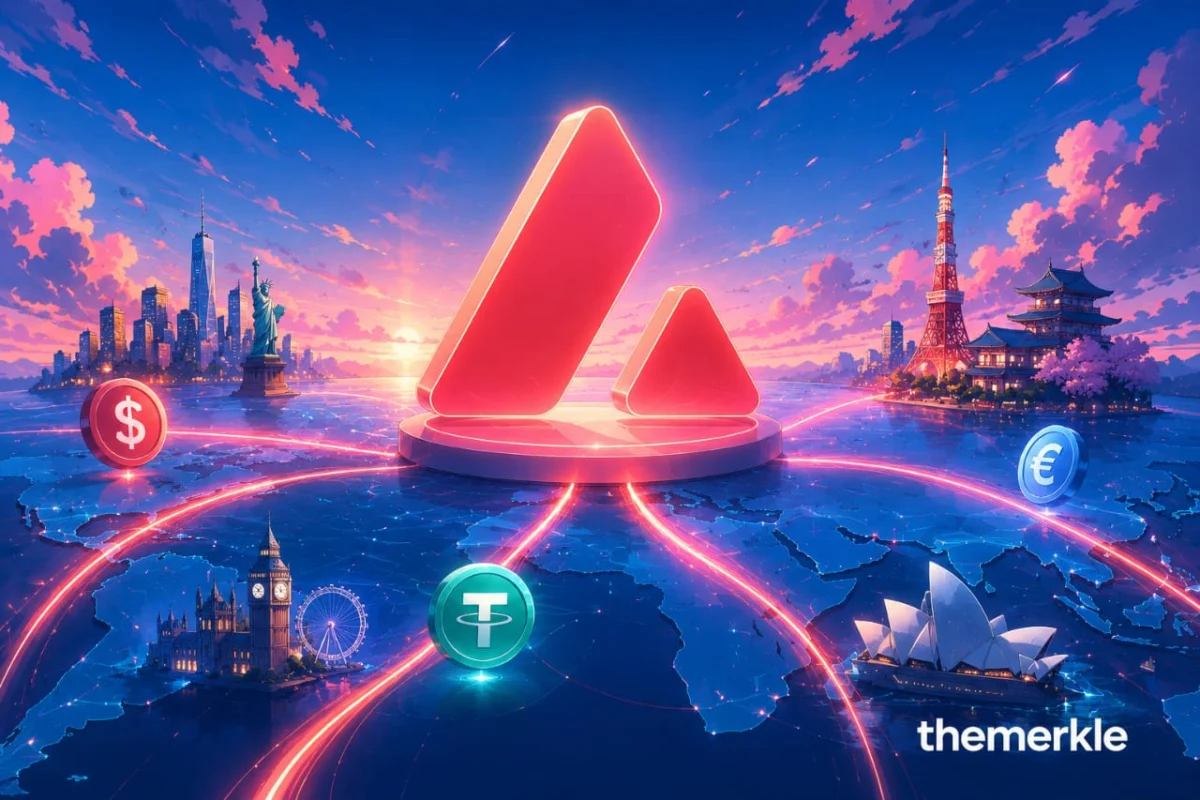
The Avalanche Payments Collective unites a formidable consortium of founding participants, including venerable names from traditional finance alongside leading innovators in the digital asset space. Among the prominent members are Franklin Templeton, a global investment management organization with over $1.5 trillion in assets under management; VanEck, another established asset manager known for its pioneering work in digital asset ETFs; Anchorage Digital, one of the few federally chartered digital asset banks in the United States; and Paxos, a regulated blockchain infrastructure platform and stablecoin issuer. These key players are joined by Agora, Ethena, Rain, Axiym, and Tassat, alongside numerous other companies specializing in stablecoins, settlement, treasury infrastructure, custody, and foreign exchange. This diverse amalgamation of expertise is designed to tackle the multifaceted challenges inherent in global money movement.
This announcement is far from a superficial marketing exercise. The Collective’s reach extends across payment flows in over 150 countries, supports transactions in 96 currencies, and connects to approximately 22 billion payout endpoints. These staggering figures underscore the genuinely global scale of the initiative, positioning it as a foundational infrastructure rather than a regional pilot or niche product offering. For an industry that has extensively debated the potential of blockchain to replace slow, fragmented, and costly legacy payment rails, the Avalanche Payments Collective represents one of the most concrete and institutionally backed attempts to realize that vision. It brings together established financial entities and cutting-edge crypto-native infrastructure providers, all committed to a shared goal of transforming the global payments landscape.
The Genesis of the Collective: Addressing Global Payment Friction
The impetus behind the Avalanche Payments Collective stems from a deep understanding of the systemic problems that have plagued global payments for decades. While blockchain technology offers the promise of instantaneous settlement, speed alone is insufficient to solve the complexities of cross-border money movement. The core issue, as articulated by Avalanche, is that the future of payments demands more than just faster transactions. Moving money across national borders involves navigating a labyrinth of interconnected yet often disparate systems for liquidity management, regulatory compliance, secure settlement, robust treasury management, trusted custody, foreign exchange conversion, and integration with diverse local payment networks. All these components must seamlessly interoperate, a challenge that traditional systems often fail to meet.
The current global payment infrastructure, largely reliant on correspondent banking networks and legacy SWIFT messaging, is characterized by high costs, slow settlement times, limited transparency, and significant manual intervention. A payment journey can involve multiple intermediaries, each adding fees and delays, increasing the risk of errors, and complicating reconciliation. Even with the advent of faster payment systems in various regions, the fragmented nature of the global financial ecosystem means that these benefits rarely extend across borders without considerable friction.
A stablecoin, for instance, can theoretically settle in mere seconds on a blockchain. However, if the compliance layer on the sending end of a transaction cannot communicate effectively with the custody layer on the receiving end, the inherent speed advantage of the blockchain is effectively nullified. Money can still get stuck, requiring extensive manual processing, and encountering the very same friction points that have made cross-border payments expensive and cumbersome for decades. The Avalanche Payments Collective seeks to resolve this by creating a unified, on-chain environment where these critical functions are natively integrated and interoperable.
A Convergence of Giants: Who’s Involved and Why it Matters
The diverse composition of the founding participants is a critical differentiator for the Collective. It represents a deliberate strategy to merge the established trust and regulatory acumen of traditional finance with the technological innovation and efficiency of crypto-native infrastructure.
-
Traditional Asset Managers: Firms like Franklin Templeton and VanEck are pivotal. They manage enormous pools of institutional capital and have spent the last several years actively exploring and developing tokenized fund products. Their involvement signifies a strong institutional endorsement of blockchain as a viable infrastructure for core financial operations. These firms bring not only capital but also deep experience in risk management, regulatory navigation, and serving sophisticated institutional clients. Their participation suggests a clear pathway for significant institutional capital to flow through the Avalanche network for various payment and settlement needs.
-
Regulated Custodians and Stablecoin Issuers: Anchorage Digital and Paxos are foundational to establishing trust and regulatory adherence. Anchorage, as a federally chartered digital asset bank, provides the regulated custody infrastructure that large financial institutions demand before committing meaningful transaction volumes on-chain. This addresses one of the most significant hurdles for enterprise blockchain adoption: ensuring asset security and compliance within a recognized legal framework. Paxos, a regulated blockchain infrastructure platform and issuer of the Pax Dollar (USDP) and Paxos Gold (PAXG), brings expertise in stablecoin issuance and enterprise-grade settlement solutions, crucial for facilitating efficient, low-cost value transfer.
-
Specialized Infrastructure Providers: Agora and Ethena contribute further stablecoin and settlement capabilities, enhancing the network’s capacity for instant and reliable value transfer. Rain, Axiym, and Tassat round out the group with diverse capabilities spanning card issuance, business payments, and additional settlement infrastructure. Rain, for example, could facilitate the last-mile delivery of funds to end-users via traditional card networks, bridging the on-chain and off-chain worlds. Axiym’s focus on business payments and Tassat’s experience in institutional blockchain solutions further strengthen the Collective’s ability to cater to a broad spectrum of enterprise payment needs.
Each of these companies, operating independently, occupies a specific niche within the financial ecosystem. The brilliance of the Collective lies in its ability to stitch these disparate lanes together into a cohesive whole. Custody systems can seamlessly interact with settlement layers, which in turn connect with treasury infrastructure, and that infrastructure integrates with foreign exchange mechanisms. All these critical functions run through a shared on-chain layer provided by Avalanche, eliminating the need for each member to build and maintain complex, point-to-point integrations with every other participant. This unified approach dramatically reduces operational overhead, enhances efficiency, and minimizes friction across the entire payment lifecycle.
Unprecedented Scale: The Numbers Behind the Vision
The figures associated with the Avalanche Payments Collective are genuinely staggering and warrant careful consideration. The claim of facilitating payment flows across 150+ countries and 96 currencies is not merely a projection of future potential but a reflection of the existing infrastructure that the founding members already operate. These institutions collectively possess a global footprint that is now being interconnected and optimized through Avalanche, rather than requiring the painstaking construction of new infrastructure from scratch. This represents a strategic aggregation of pre-existing global reach.
Perhaps the most striking number in the announcement is the 22 billion payout endpoints. This figure offers a profound sense of the expansive reach of this infrastructure, encompassing everything from individual bank accounts and mobile wallets to diverse card networks across nearly a hundred currencies. It signifies the vast network of final destinations where funds can be delivered. Crucially, this is not a number tied to speculative crypto adoption curves or aggressive growth projections. Instead, it is firmly rooted in the existing global payment infrastructure that the founding members already engage with through their regular business operations.
What fundamentally changes with the advent of the Collective is not the mere existence of this vast infrastructure, but rather the strategic attempt to route an increasingly significant share of its operations through a shared, on-chain layer. This unified layer on Avalanche allows settlement, compliance, and liquidity to move in concert, overcoming the historical challenge of these functions residing in separate, disconnected systems that lack native interoperability. This integration promises to unlock efficiencies, reduce costs, and enhance transparency on a scale previously unattainable.
Avalanche’s Strategic Foundation: A Platform for Institutional Adoption
Avalanche’s underlying architecture makes it particularly well-suited for an initiative of this magnitude. Its subnet architecture allows for the creation of application-specific blockchains that can be tailored to meet specific regulatory, performance, and privacy requirements of institutional participants. This means that members of the Payments Collective can operate within environments that offer predictable gas fees, high transaction throughput, and customizable security features, all while maintaining connectivity to the broader Avalanche ecosystem.
Avalanche has also cultivated a reputation for being an enterprise-friendly blockchain. Its C-chain provides compatibility with the Ethereum Virtual Machine (EVM), making it accessible for developers. More importantly for institutional use cases, its architecture allows for permissioned subnets, which can enforce KYC/AML requirements, specific validator sets, and other regulatory controls essential for financial institutions. This strategic focus on institutional-grade solutions has been a consistent theme in Avalanche’s development, attracting projects like the Deloitte-powered Close Loop, which uses Avalanche for disaster recovery funding.
Over the past several years, Avalanche has been quietly building an ecosystem conducive to exactly this kind of institutional collaboration. Companies across stablecoins, settlement, and treasury infrastructure have been developing on the network individually. The Payments Collective now formalizes this scattered activity, giving it a shared identity, a unified vision, and, presumably, a coordinated roadmap for future development. This consolidation of efforts under a common banner creates powerful network effects and accelerates the development of a truly integrated global payment solution.
Beyond Speed: A Holistic Approach to Global Money Movement
The Avalanche Payments Collective’s approach transcends the simplistic narrative of "faster payments." It recognizes that global money movement is a complex ecosystem where speed is just one variable. The critical challenge lies in the orchestration of diverse financial functions that are currently siloed:
- Liquidity Management: Ensuring sufficient funds are available at each stage of a cross-border transaction is crucial. The Collective aims to optimize liquidity through on-chain mechanisms, potentially leveraging stablecoins and tokenized assets to reduce the need for pre-funding in multiple jurisdictions.
- Compliance & KYC/AML: Regulatory adherence is paramount. By integrating compliance layers directly into the on-chain infrastructure, the Collective can facilitate automated checks and ensure transactions meet global anti-money laundering (AML) and know-your-customer (KYC) standards, reducing manual burdens and improving auditability.
- Settlement: Achieving finality of payment across borders often involves multiple settlement cycles. The Collective aims for atomic, near-instant settlement on-chain, significantly reducing counterparty risk and freeing up capital.
- Treasury Management: Corporations and financial institutions managing global operations require sophisticated tools for treasury management. The Collective’s integrated approach can offer real-time visibility and control over global cash positions, optimizing working capital.
- Foreign Exchange (FX): Managing currency conversions is a major cost and complexity factor. By connecting stablecoin issuers and FX providers, the Collective can streamline FX processes, potentially offering more competitive rates and greater transparency.
This holistic integration on a single, shared blockchain layer is designed to dismantle the fragmented nature of traditional cross-border payments, making the entire process more efficient, transparent, and cost-effective.
Distinguishing the Collective: A New Paradigm for Blockchain Payments
Numerous blockchain projects have historically claimed to be building the "future of payments," with many of these claims failing to materialize beyond marketing rhetoric. What unequivocally distinguishes the Avalanche Payments Collective is the seniority, regulatory standing, and established trust of the names attached to it.
Franklin Templeton and VanEck are not nascent crypto startups seeking a narrative; they are venerable firms with decades of institutional credibility, rigorous regulatory scrutiny, and a proven track record in traditional finance. Their willingness to directly integrate into Avalanche’s ecosystem carries immense weight, signaling a robust confidence in the underlying technology and its operational viability that a list of less established participants simply could not convey. This participation validates the technical maturity and strategic direction of Avalanche as a platform for enterprise-grade financial solutions.
Similarly, Anchorage Digital’s involvement is a critical trust signal. As one of the few federally chartered digital asset banks in the U.S., its presence assures that the custody component for this complex payments infrastructure is handled by a regulated institution that already meets the stringent regulatory bars expected by traditional finance. This detail alone sets the Collective apart from many earlier attempts at blockchain-based payment rails, which often struggled to overcome the critical hurdles of trust, compliance, and regulatory acceptance. The presence of such institutions effectively de-risks the initiative from a regulatory and operational perspective, paving the way for broader institutional adoption.
Broader Implications: Reshaping the Global Financial Landscape
The launch of the Avalanche Payments Collective carries profound implications for the future of global finance:
- Accelerated Institutional Adoption: The Collective serves as a powerful proof point for the enterprise readiness of blockchain technology, potentially inspiring other traditional financial institutions to explore and adopt similar solutions. It demonstrates that regulated, large-scale financial operations can effectively leverage public blockchain infrastructure.
- Reduced Costs and Increased Efficiency: By streamlining complex payment flows, automating compliance, and enabling near-instant settlement, the Collective promises to significantly reduce the costs and operational overhead associated with cross-border payments, benefiting businesses and potentially consumers.
- Enhanced Transparency and Auditability: Blockchain’s inherent transparency and immutability can provide a clearer, more auditable trail for financial transactions, which can aid in regulatory reporting and dispute resolution.
- Competition and Innovation: The success of the Collective could spur greater competition and innovation among existing payment providers and other blockchain networks, ultimately leading to a more efficient and interconnected global financial system.
- Impact on CBDCs and Tokenized Assets: While distinct from Central Bank Digital Currencies (CBDCs), the Collective’s focus on stablecoins and tokenized assets for settlement could complement future CBDC initiatives or provide a private sector alternative for wholesale payments. It also highlights the growing importance of tokenized real-world assets (RWAs) for liquidity and collateral within a blockchain-based financial system.
Challenges and Outlook
Despite its strong foundations, the Avalanche Payments Collective will undoubtedly face challenges. Achieving true global interoperability across diverse regulatory regimes remains complex. Sustaining network effects and onboarding a critical mass of users beyond the founding members will be crucial for long-term success. Furthermore, navigating the evolving landscape of digital asset regulation will require continuous adaptation and collaboration with policymakers.
Nevertheless, the launch of the Avalanche Payments Collective represents a monumental leap forward in the journey to integrate blockchain technology into the core fabric of global finance. By bringing together a robust consortium of traditional financial powerhouses and innovative crypto-native entities, Avalanche has positioned itself at the forefront of building a more efficient, transparent, and accessible global payment system. This initiative is not merely about faster transactions; it is about fundamentally rethinking the architecture of global money movement, promising a future where financial services are more seamlessly integrated and universally available.