The decision, confirmed to media publication Puck late Thursday, was spearheaded by Mike Hopkins, the influential figure overseeing Prime Video and Amazon MGM Studios. Hopkins communicated Amazon’s definitive stance to director Luca Guadagnino, known for acclaimed works like "Challengers" and "Call Me By Your Name," and his producing team, stating unequivocally that Amazon would not proceed with the film’s planned release. This abrupt reversal sends ripples through both Hollywood and the tech industry, highlighting the delicate balance studios must strike when producing content about powerful, contemporary figures intertwined with their own strategic business interests.
"We have the utmost respect and admiration for Luca Guadagnino as an award-winning filmmaker—not to mention a longstanding relationship that we hope to continue," an Amazon spokesperson conveyed to Puck, attempting to soften the blow of the unexpected cancellation. The spokesperson added, "We believe that ‘Artificial’ will be better served if it were released by a different studio and are working closely with the filmmaking team to find the film a new home." This statement, while diplomatic, signals a clear corporate discomfort with the film’s trajectory, prompting an unusual move for a project reportedly nearing completion and featuring significant talent.
The Genesis and Sudden Halt of ‘Artificial’
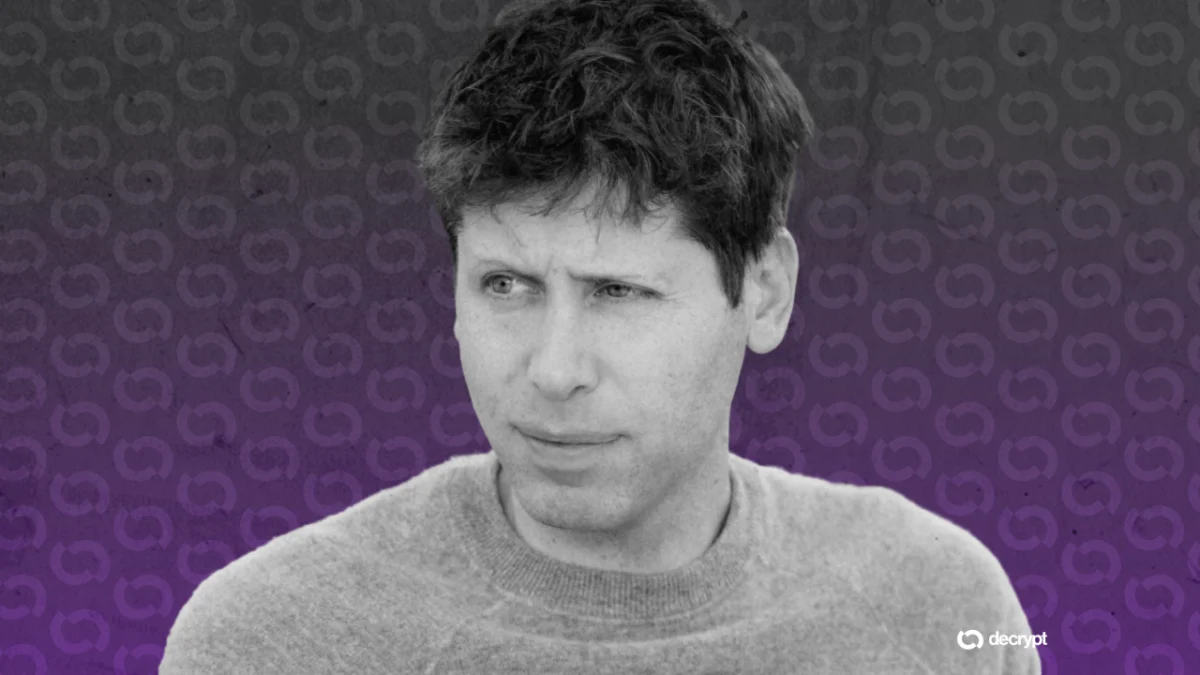
"Artificial" was conceived as a high-profile dramatization of one of the most tumultuous events in recent tech history: Sam Altman’s dramatic ouster and subsequent reinstatement as CEO of OpenAI in November 2023. Written by Simon Rich, a celebrated author and screenwriter known for his comedic and often satirical works, the film had garnered considerable buzz, drawing immediate comparisons to "The Social Network," David Fincher’s critically acclaimed and commercially successful 2010 film about the founding of Facebook. That comparison alone elevated expectations, suggesting a sharp, perhaps unflattering, portrayal of a tech titan and the power struggles within a groundbreaking company.
The cast assembled for "Artificial" further amplified its prestige. Andrew Garfield, an Academy Award-nominated actor lauded for his roles in films like "The Social Social Network" (ironically, where he played Eduardo Saverin) and "Hacksaw Ridge," was cast as Sam Altman. His involvement promised a nuanced, intense portrayal of the OpenAI chief. Alongside him, Yura Borisov, a rising Russian actor recognized for his work in "Compartment No. 6" and "Petrov’s Flu," was slated to play OpenAI co-founder Ilya Sutskever, a central figure in the dramatic boardroom coup. Luca Guadagnino’s direction, characterized by its emotional depth and stylistic flair, was expected to bring a compelling narrative to the screen, exploring the complex human drama behind the headlines.
However, despite the strong creative pedigree, the film’s journey took an unforeseen turn. According to Puck, an early script for "Artificial" depicted Altman in a decidedly unflattering light, portraying him as "power-hungry and manipulative." One particularly pointed scene reportedly featured renowned computer scientist Geoffrey Hinton, often hailed as the "Godfather of AI," referring to Altman as "one of the most manipulative people on the planet." This depiction, if accurate, suggests a critical and potentially controversial narrative that challenged the carefully cultivated public image of one of the tech world’s most prominent figures.
A source familiar with Amazon’s internal discussions indicated that the finished film’s tone evolved to be "considerably darker" than the initial pitch. This tonal shift, particularly after Hopkins viewed a cut of the film, appears to have been the catalyst for the studio’s drastic decision to halt its release. The implication is that the final product deviated too far from what Amazon was comfortable endorsing, especially given its multifaceted relationship with OpenAI and the broader tech ecosystem.
Amazon’s Strategic AI Investments and OpenAI’s Tumultuous History
The decision to shelve "Artificial" cannot be viewed in isolation; it is deeply intertwined with Amazon’s significant strategic investments in the artificial intelligence sector, particularly its burgeoning relationship with OpenAI. Months before the film’s cancellation, Amazon made headlines by announcing a substantial investment in OpenAI, committing a staggering $50 billion to the company. While the specifics of this investment and its structure are complex, it underscores Amazon’s profound commitment to the future of AI and its strategic partnership with the company at the forefront of generative AI innovation. This financial commitment signals a shared future, where the success and public perception of OpenAI directly impact Amazon’s own technological trajectory and market standing.
OpenAI itself has had a tumultuous and widely publicized history, particularly in the lead-up to and aftermath of the November 2023 leadership crisis that "Artificial" sought to dramatize. Founded in 2015 as a non-profit research company with a mission to ensure that artificial general intelligence (AGI) benefits all of humanity, OpenAI later transitioned to a "capped-profit" model, with a non-profit board overseeing a for-profit subsidiary. This unique governance structure, designed to balance rapid development with ethical oversight, became the crucible for the crisis.
The November 2023 OpenAI Leadership Crisis: A Detailed Recap
The events of November 17, 2023, sent shockwaves through the global tech industry. OpenAI’s board of directors, which at the time included Ilya Sutskever, Adam D’Angelo, Helen Toner, and Tasha McCauley, announced that they had fired Sam Altman as CEO. Their statement cited that Altman "was not consistently candid in his communications with the board, hindering its ability to exercise its responsibilities." The news, delivered abruptly and without prior public warning, plunged the highly valued company into immediate chaos.
The initial days were marked by confusion and escalating drama. Greg Brockman, OpenAI’s president and co-founder, resigned in protest shortly after Altman’s dismissal. Several senior researchers also departed, expressing solidarity with Altman. The board appointed Mira Murati, OpenAI’s CTO, as interim CEO, but her tenure was short-lived. Over the ensuing weekend, intense negotiations unfolded, with investors, including Microsoft, pushing for Altman’s return. Microsoft, a major investor with a reported $13 billion stake in OpenAI, saw its investment and strategic AI ambitions jeopardized by the instability.
On November 20, the board announced a new interim CEO, Emmett Shear, co-founder of Twitch, after negotiations for Altman’s return faltered. This decision further inflamed the situation. Within hours, nearly all of OpenAI’s 770 employees signed a letter threatening to resign and join Altman at Microsoft if the original board did not step down and reinstate him. The letter explicitly stated, "We cannot work for or with people that lack competence, judgement, and care for our mission and employees." This unprecedented mass revolt by employees underscored their unwavering loyalty to Altman and their belief in his leadership to guide OpenAI’s mission.
Faced with an existential threat, the board capitulated. By November 21, a new agreement was reached. Altman was reinstated as CEO, and a new initial board was formed, comprising Bret Taylor (former co-CEO of Salesforce) as chair, Larry Summers (former U.S. Treasury Secretary), and Adam D’Angelo (the only remaining member from the original board). Ilya Sutskever, who had initially supported Altman’s ouster, expressed regret for his actions, stating, "I deeply regret my participation in the board’s actions. I never intended to harm OpenAI. I love everything we’ve built together and I will do everything I can to reunite the company." This dramatic turnaround, orchestrated in less than a week, cemented Altman’s position and demonstrated the immense power wielded by a unified employee base and key investors.
The Interplay of Tech, Media, and Politics
Against this backdrop, Amazon’s decision to sideline "Artificial" appears to be a calculated move driven by a complex interplay of corporate strategy, media relations, and political considerations. Amazon’s substantial financial commitment to OpenAI means it has a vested interest in the stability and positive public perception of the AI powerhouse. A film that portrays OpenAI’s CEO as "manipulative" could complicate this relationship, potentially creating friction or undermining the public trust essential for widespread AI adoption.
Furthermore, the article notes that Sam Altman has cultivated close ties to the Trump administration—relationships that Amazon and its founder, Jeff Bezos, have also diligently sought to maintain. In the highly polarized political climate of the United States, major corporations often walk a tightrope, endeavoring to maintain cordial relations across the political spectrum. A film that casts a key tech figure, with whom Amazon is strategically allied, in a negative light could inadvertently jeopardize these delicate political relationships, which are crucial for navigating regulatory landscapes and securing future business opportunities. Jeff Bezos, in particular, has a history of navigating complex political waters, especially given his ownership of The Washington Post. The potential for a critically sharp film to disrupt carefully built bridges is a risk many corporations would prefer to avoid.
Creative Freedom vs. Corporate Interests in Hollywood
The shelving of "Artificial" reignites a perennial debate within the entertainment industry: the tension between creative freedom and corporate interests. Studios, particularly those owned by vast conglomerates like Amazon (which spans e-commerce, cloud computing, and entertainment), often face pressure to align their content production with broader corporate objectives. While Amazon Prime Video aims to produce compelling and award-winning content, it also operates within the strategic framework of a trillion-dollar company.
This incident is not isolated. Historically, studios have made decisions based on financial implications, potential controversies, or alignment with their brand image. However, the explicit reason cited—a "darker tone" depicting a key figure in a major corporate partner—is particularly illuminating. It suggests a direct link between the portrayal of a subject and the strategic business relationships of the parent company. This can create a chilling effect on filmmakers, particularly those tackling sensitive contemporary subjects involving powerful corporations or individuals with whom the studio’s parent company might have direct or indirect ties. The unspoken message is that certain narratives, no matter how artistically compelling, may be deemed too risky if they threaten corporate alliances or public image.
The Challenge of Contemporary Biopics
Producing biopics about contemporary figures, especially those still actively shaping the world, presents unique challenges. Unlike historical figures whose narratives are largely settled, the story of someone like Sam Altman is still unfolding. Reputations can shift, new information can emerge, and the subjects themselves (or their powerful allies) can react strongly to their portrayals. "The Social Network," while successful, also faced criticism from some of its subjects, including Mark Zuckerberg. However, the landscape has evolved; in the age of rapid information dissemination and heightened corporate scrutiny, the stakes for such portrayals are even higher.
The rapid pace of tech developments also complicates storytelling. A film about an event that occurred just months prior risks becoming outdated or being perceived as incomplete as new chapters unfold. Furthermore, the sensitivity surrounding the AI industry—its immense potential, ethical dilemmas, and regulatory uncertainties—adds another layer of complexity. A film that is perceived as overly critical or biased could be seen as adding fuel to an already volatile public discourse.
What’s Next for ‘Artificial’?
With Amazon stepping aside, Creative Artists Agency (CAA) is now tasked with screening "Artificial" for potential new distributors. This process will undoubtedly be challenging. While the film boasts a strong director, cast, and a compelling, real-life story, any new studio will have to weigh the creative merits against the very corporate sensitivities that led Amazon to drop the project.
Potential buyers might include independent distributors, streaming services without direct ties to OpenAI, or even international distributors. However, the controversy surrounding its initial shelving might make some studios wary, fearing similar pressures or public relations issues. The film’s critical depiction of Altman, which was reportedly the primary sticking point for Amazon, could be a draw for studios looking for provocative and unflinching storytelling, or a deterrent for those concerned about potential backlash from the tech industry or even from Altman himself and his powerful network.
The market for such a film will likely be niche, targeting audiences interested in the intersection of tech, power, and human drama. If "Artificial" finds a new home and is eventually released, its journey will become a meta-narrative in itself: a film about corporate drama that experienced its own corporate drama, offering a fascinating glimpse into the power dynamics that shape both Silicon Valley and Hollywood.
Ultimately, the shelving of "Artificial" by Amazon is more than just a footnote in the entertainment news cycle. It serves as a potent reminder of the complex web of relationships that bind major corporations, the delicate balance between artistic expression and commercial interests, and the profound influence that strategic business partnerships and political considerations can exert over creative output in the modern era. The narrative of Sam Altman’s ouster was dramatic enough for a major motion picture, but the story behind that motion picture’s sudden halt may prove to be just as telling.