


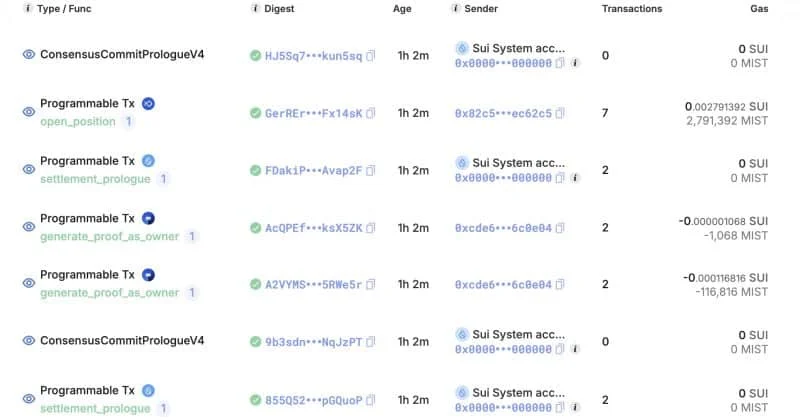
The Sui mainnet has successfully been brought back online following a significant disruption that rendered the network inoperable for nearly six hours. The outage, which commenced on May 28th and concluded on May 29th, was attributed to a critical bug identified within the gas charging logic of the blockchain’s latest software release, version 1.72. This flaw effectively halted the network’s ability to process new blocks and finalize transactions, impacting all decentralized applications (dApps) and services operating on the Sui ecosystem. Validators, the decentralized network of computers responsible for verifying and processing transactions, collaborated swiftly to implement a fix, upgrading to a patched version of the software and restoring normal checkpoint production.
The Genesis of the Outage: A Flaw in Gas Logic
The root cause of the nearly six-hour network standstill was a fundamental issue within the gas fee calculation mechanism introduced in Sui’s 1.72 software update. In essence, the code responsible for determining the cost users incur for executing transactions malfunctioned. This critical failure led to a complete cessation of new block production across the entire network. When the gas fee calculation breaks down, the network’s consensus mechanism is unable to proceed, as it relies on accurate fee attribution to validate and append new blocks to the blockchain.
The incident began on May 28th when validators operating the newly released 1.72 update encountered this critical bug. Consequently, they ceased generating new checkpoints, which are essential milestones in the blockchain’s operation, marking the completion of a set of transactions and blocks. Without the ability to finalize new transactions, the Sui network was effectively frozen in time. This meant that any pending transactions, DeFi operations, or other on-chain activities could not be processed or confirmed, creating a significant operational paralysis for users and developers alike.
The Path to Recovery: A Coordinated Validator Effort
Restoring the Sui network was not a trivial undertaking that could be resolved with a simple reboot. The blockchain’s robust consensus mechanism necessitates a significant majority of network validators to adopt the patched software before operations can resume. Specifically, more than two-thirds of all staked tokens – a measure of the economic stake validators hold in the network – needed to upgrade to the corrected version. This requirement ensures the integrity and security of the network, preventing malicious actors from easily manipulating the chain.
The process involved rapid communication and coordination among the distributed validator set. Once the bug was identified, the Sui Foundation and its development team worked diligently to develop and test a patch. This patched version was then disseminated to the validators, who were tasked with deploying it across their infrastructure. The time it took for the majority of validators to update and synchronize their systems contributed directly to the extended duration of the outage. This reliance on distributed consensus, while a cornerstone of blockchain security, can also introduce complexities and delays during critical recovery scenarios.
Safety Guarantees: No User Funds Compromised
Despite the prolonged network disruption, a crucial positive outcome was the preservation of user funds. Sui’s underlying architecture and its immutability guarantees ensured that no user assets were lost or compromised during the outage. Furthermore, the network’s design features prevented any data inconsistencies from accumulating while the chain was stalled. This means that once operations resumed, the blockchain’s state was consistent with its pre-outage condition, avoiding the potential for complex reconciliation issues. This resilience in safeguarding user assets underscores the fundamental security principles upon which the Sui blockchain is built.
Impact on the DeFi Ecosystem
The halt in network activity had a cascading effect on the decentralized finance (DeFi) protocols built upon the Sui blockchain. During the outage, DeFi applications were effectively frozen. This meant that users were unable to adjust their existing positions, execute new trades, or interact with lending and borrowing protocols. Crucially, automated liquidation mechanisms, which are designed to protect lenders by selling collateral when a borrower’s position becomes undercollateralized, were also unable to function. While the lack of liquidations prevented potential cascading failures during the outage, it also meant that outstanding risks within DeFi protocols remained unaddressed until normal network operations were restored. The total value locked (TVL) across Sui’s DeFi ecosystem, which had grown to hundreds of millions of dollars since the network’s launch, was effectively inaccessible during this period.
A Recurring Pattern of Downtime
This recent incident marks not the first time the Sui network has experienced significant downtime in 2024. On January 14th of the same year, the network suffered a similar multi-hour stall, lasting approximately six hours, due to a different issue: a consensus commit bug. This prior event, coupled with the most recent gas fee logic flaw, paints a concerning picture of recurring stability challenges for the burgeoning blockchain.
The pattern is becoming increasingly apparent: a bug introduced in a software update is followed by an extended period of network unavailability, requiring a complex and time-consuming coordination effort among validators to implement a fix. Two such substantial outages within a roughly five-month span are difficult to dismiss as isolated incidents. They raise questions about the robustness of the software development and testing processes within the Sui ecosystem, particularly as it aims to attract significant user and capital inflows.
Market Reaction and Investor Sentiment
The cryptocurrency market reacted swiftly to the news of the Sui network outage. The native SUI token experienced a noticeable price decline during the disruption. Reports indicate that the price dropped to approximately $0.89, representing a decline in the range of 6-8%. This price movement served as a real-time indicator of investor sentiment and the market’s perception of the network’s stability. Following the restoration of normal operations, the SUI token saw a partial recovery, suggesting that while the outage caused immediate concern, the market retained some confidence in the network’s long-term prospects once stability was re-established.
For traders and investors, this price action offers a potential playbook for future events. The market’s tendency to react negatively to network outages and then partially recover once stability is restored suggests that this pattern could repeat if further significant disruptions occur. This highlights the importance of network uptime and reliability for maintaining investor confidence and supporting the token’s valuation.
Broader Implications for Sui’s Ambitions
Sui has positioned itself as a high-throughput Layer 1 blockchain, designed to be a robust and scalable infrastructure capable of supporting demanding decentralized finance applications and, eventually, attracting substantial institutional capital. The growth of its ecosystem, evidenced by the hundreds of millions of dollars in total value locked, reflects the ambition and potential of the platform.
However, recurring network outages, especially those stemming from critical software bugs, pose a significant threat to these aspirations. The narrative of a high-performance blockchain is undermined when the network itself becomes unavailable for extended periods. For DeFi protocols, which rely on consistent and predictable operations, such disruptions can erode trust and lead to users seeking more stable alternatives. For institutional investors, who often prioritize security and reliability above all else, repeated stability issues can be a major deterrent.
The Sui Foundation and its development team face the critical task of demonstrating that these outages are anomalies rather than systemic weaknesses. Strengthening their quality assurance processes, enhancing their testing protocols, and potentially diversifying their validator outreach for bug bounty programs could be crucial steps. The ability of Sui to overcome these challenges and establish a track record of consistent uptime will be a key determinant of its success in achieving its ambitious goals within the competitive blockchain landscape. The recent incident serves as a stark reminder that even the most technologically advanced blockchains are susceptible to human error and the complexities of distributed systems, underscoring the perpetual need for vigilance and continuous improvement in the blockchain space.














