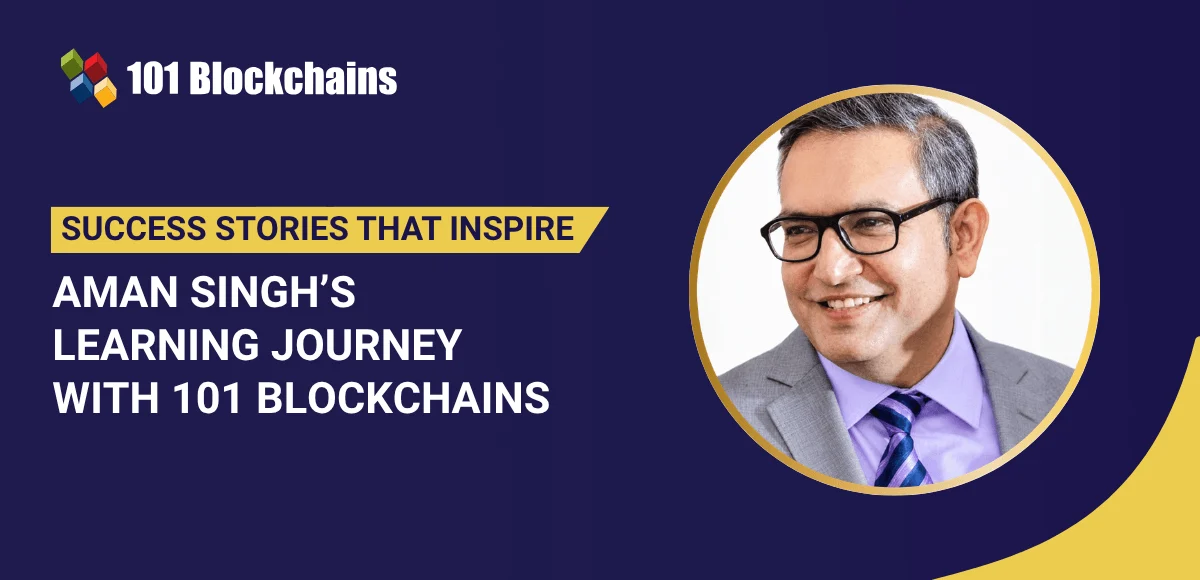
In a significant stride reflecting the accelerating demand for specialized expertise in distributed ledger technology (DLT) and blockchain, Aman Singh, a distinguished Senior Product Owner and Program Delivery Manager at Oliver Wyman and DTCC in the United States, has achieved a remarkable feat by completing four advanced certifications through 101 Blockchains. His comprehensive educational journey, encompassing the Certified Enterprise Blockchain Professional (CEBP)™, Certified Fintech Expert (CFTE)™, Certified Blockchain Product Manager (CBPM)™, and Certified RWA Tokenization Professional (CRWATP)™ programs, underscores a strategic commitment to mastering the intricacies of the evolving digital asset landscape, particularly in the burgeoning field of Real-World Asset (RWA) tokenization. This achievement positions Singh as a pivotal subject matter expert, poised to drive innovation and strategic implementation within the financial services sector.
A Professional Profile Aligned with Digital Transformation
Aman Singh’s professional background as a Senior Product Owner and Program Delivery Manager at Oliver Wyman and DTCC places him at the nexus of strategic consulting and critical financial market infrastructure. Oliver Wyman, a global leader in management consulting, advises top-tier institutions on strategy, operations, risk management, and organizational transformation. Their clients often include major financial services firms navigating complex technological shifts. The Depository Trust & Clearing Corporation (DTCC), on the other hand, plays a crucial role in the global financial system, providing post-trade market infrastructure services, including clearing, settlement, and information services for equities, corporate and municipal bonds, unit investment trusts, government and mortgage-backed securities, money market instruments, and over-the-counter derivatives. Both organizations are deeply invested in understanding and potentially integrating emerging technologies like blockchain to enhance efficiency, security, and transparency across financial markets. In such roles, a deep understanding of DLT and its applications is not merely an advantage but a necessity for leading product development and successful program execution. Singh’s pursuit of these certifications reflects a proactive approach to equipping himself with the foresight and practical knowledge required to navigate and shape the future of finance in an increasingly digitized world.
A Structured Path to Comprehensive Blockchain Mastery
Singh’s learning journey with 101 Blockchains spanned over a year, demonstrating a methodical approach to building a robust foundation before specializing. His initial foray into the certification programs included the Certified Fintech Expert (CFTE)™ and the Certified Blockchain Product Manager (CBPM)™. The CFTE™ program provides a deep dive into the intersection of finance and technology, covering areas such as digital payments, challenger banks, artificial intelligence in finance, and the foundational role of blockchain. This certification would have equipped Singh with a broad understanding of the technological shifts disrupting traditional financial services. Following this, the CBPM™ program offered insights into the lifecycle of blockchain products, from ideation and strategy to development, launch, and scaling, providing essential skills for managing complex projects in the blockchain space.
Building upon these foundational competencies, Singh then pursued the highly specialized Certified RWA Tokenization Professional (CRWATP)™. This program focuses on one of the most transformative applications of blockchain: the representation of tangible and intangible assets on a blockchain ledger. This includes everything from real estate and commodities to intellectual property and art. Finally, Singh completed the Certified Enterprise Blockchain Professional (CEBP)™, a comprehensive certification designed to validate expertise across various enterprise blockchain platforms, use cases, and strategic considerations. This capstone certification integrates knowledge from the previous programs, offering a holistic perspective on implementing and managing blockchain solutions within large organizations. This chronological progression underscores a deliberate strategy to acquire both breadth and depth in a rapidly evolving technological domain.
The Strategic Imperative of RWA Tokenization

Singh’s decision to pursue the CRWATP™ was explicitly driven by the observation that "RWA tokenization is the next big thing for this industry." This statement resonates with a growing consensus among financial experts and institutions worldwide. Real-World Asset (RWA) tokenization refers to the process of converting the value of physical or intangible assets into digital tokens on a blockchain. This innovation promises to unlock trillions of dollars in illiquid assets, offering enhanced liquidity, fractional ownership, transparency, and accessibility.
Supporting data highlights the immense potential of this sector. A report by Boston Consulting Group (BCG) and ADDX projected that the market for tokenized illiquid assets could reach $16 trillion by 2030. Similarly, Deloitte’s "Global Blockchain Survey" consistently points to the increasing interest of enterprises in leveraging blockchain for asset tokenization, citing benefits such as reduced operational costs, faster settlement times, and improved capital efficiency. Financial giants like BlackRock, JPMorgan, and Fidelity have openly explored or launched initiatives in the RWA tokenization space, indicating a significant shift in traditional finance towards digital asset strategies. The tokenization of real estate, fine art, commodities, and even private equity funds is no longer a theoretical concept but a burgeoning reality. For a professional like Aman Singh, operating at the intersection of product strategy and program delivery within global financial institutions, understanding the nuances of RWA tokenization—including its legal, regulatory, and technical complexities—is paramount to staying at the forefront of financial innovation.
101 Blockchains: A Hub for Practical, In-Depth Learning
Singh’s positive experience with 101 Blockchains underscores the platform’s reputation as a leading provider of professional blockchain education. He remarked, "My experience with 101 Blockchains has been incredible. The courses’ depth and simplicity are what make 101 Blockchains different from other organizations in the learning space." This sentiment is a testament to the platform’s instructional design philosophy, which aims to demystify complex blockchain concepts and present them in an accessible yet comprehensive manner.
101 Blockchains positions itself as an independent research-based network for Blockchain and Web3 practitioners, offering accredited certifications and online training. Their curriculum is meticulously developed to bridge the significant skill gap observed in the rapidly expanding blockchain industry. According to a report by LinkedIn Learning, blockchain is consistently listed among the most in-demand hard skills globally, yet the supply of qualified professionals often lags behind. Educational providers like 101 Blockchains play a crucial role in addressing this disparity by offering structured learning paths that align with industry needs. Their programs cover a spectrum from foundational DLT concepts to advanced topics like decentralized finance (DeFi), non-fungible tokens (NFTs), and enterprise blockchain solutions, catering to a diverse audience ranging from technical developers to business strategists and product managers. The platform’s commitment to delivering "real-world skills that shape you into a confident blockchain professional" resonates with professionals seeking practical, applicable knowledge rather than mere theoretical understanding.
Elevating Professional Growth and Strategic Influence
The cumulative effect of these certifications is profound for Singh’s professional trajectory. He explicitly stated, "This program will help me to become the SME in the DLT blockchain space. Over the last one year, I completed multiple certifications with 101 blockchains, and this will help me to build up my knowledge, skills, and experience." Becoming a Subject Matter Expert (SME) in DLT and blockchain is a significant career differentiator, particularly within organizations like Oliver Wyman and DTCC, which require deep technical and strategic insights to advise clients and develop infrastructure solutions.
As an SME, Singh will be uniquely positioned to:

- Lead Innovation: Drive the development and implementation of new blockchain-based products and services, especially those involving RWA tokenization.
- Strategic Consulting: Provide authoritative guidance to clients and internal stakeholders on blockchain strategy, risk assessment, and regulatory compliance.
- Product Vision: Shape the product roadmap for digital assets, ensuring that solutions are robust, scalable, and aligned with market demands and technological advancements.
- Program Execution: Oversee complex blockchain projects, mitigating technical and operational challenges, and ensuring successful delivery.
The skills gained—DLT, Blockchain, DLT networks, Fintech, and Blockchain Product Management—are foundational pillars for any professional aiming to lead in the digital finance revolution. These capabilities are critical for understanding the underlying technology, assessing its business value, managing its lifecycle, and integrating it effectively within existing financial ecosystems. The ability to articulate complex technical concepts in a business context, a skill honed through product management training, is particularly valuable in translating blockchain’s potential into tangible, value-generating solutions.
Actionable Advice for Aspiring Blockchain Professionals
Aman Singh’s advice to those considering a career in blockchain is pragmatic and forward-looking: "I would recommend everyone take the full annual membership, which will provide access to all the skill paths and career paths programs, traversing from technical development to overall product management." This recommendation highlights the dynamic nature of the blockchain industry, where continuous learning is not just beneficial but essential. An annual membership provides unparalleled access to an evolving curriculum, ensuring professionals can stay abreast of new technologies, regulatory changes, and emerging use cases.
The comprehensive nature of an all-access membership allows individuals to explore various facets of blockchain, from the highly technical aspects of smart contract development and cryptography to the strategic business considerations of product management, legal frameworks, and compliance. This broad exposure is invaluable for career flexibility and for identifying niche areas of interest that may emerge as the industry matures. For instance, a professional might start with an interest in technical development but discover a passion for the regulatory implications of digital assets, or vice versa. The ability to seamlessly transition between learning paths within the same platform offers a distinct advantage in building a well-rounded and adaptable skill set. Moreover, the emphasis on both technical and product management skills underscores the interdisciplinary nature of blockchain careers, where understanding the technology is as crucial as understanding how to apply it to solve real-world problems and create market value.
Broader Impact and the Future of Upskilling in a Digital Economy
Aman Singh’s journey exemplifies a broader trend in the global workforce: the imperative for continuous upskilling and reskilling in the face of rapid technological advancements. The World Economic Forum’s "Future of Jobs Report" consistently emphasizes the growing demand for digital literacy and specialized skills in areas like AI, big data, and blockchain. As traditional industries undergo digital transformation, the gap between existing workforce capabilities and required skills widens, posing a significant challenge for businesses and individuals alike.
Educational platforms like 101 Blockchains are at the forefront of addressing this challenge, providing accessible and high-quality training that bridges the skill divide. By enabling professionals like Aman Singh to acquire cutting-edge knowledge, these platforms contribute directly to the development of a highly skilled workforce capable of driving innovation in the digital economy. The implications extend beyond individual career growth; they impact organizational competitiveness, national economic growth, and the ability to leverage new technologies for societal benefit. As blockchain and Web3 technologies continue their inexorable march towards mainstream adoption, the demand for certified, experienced professionals will only intensify, making strategic investments in specialized education, as demonstrated by Aman Singh, not just an advantage but a fundamental necessity for future success.