



Bitcoin (BTC) is currently navigating a period of consolidation, trading largely sideways on Friday amidst significant market liquidity. This cautious trading environment comes as the world’s largest cryptocurrency has experienced a modest decline of approximately 2% over the past week. While this dip might appear insignificant, it reflects a steady, persistent selling pressure rather than a broad market downturn, indicating a potential shift in investor sentiment or strategy.
The influx of traditional investors into the cryptocurrency space, particularly Bitcoin, has been a notable trend in recent months. This has been driven by a variety of factors, including the search for higher yields in a low-interest-rate environment, a growing acceptance of digital assets as a legitimate investment class, and the potential for Bitcoin to act as a hedge against inflation and geopolitical uncertainty. However, this increased participation from mainstream finance has also introduced new dynamics to the market, including a greater sensitivity to traditional risk-on/risk-off sentiment.

Exchange Inflows Signal Potential Selling Pressure
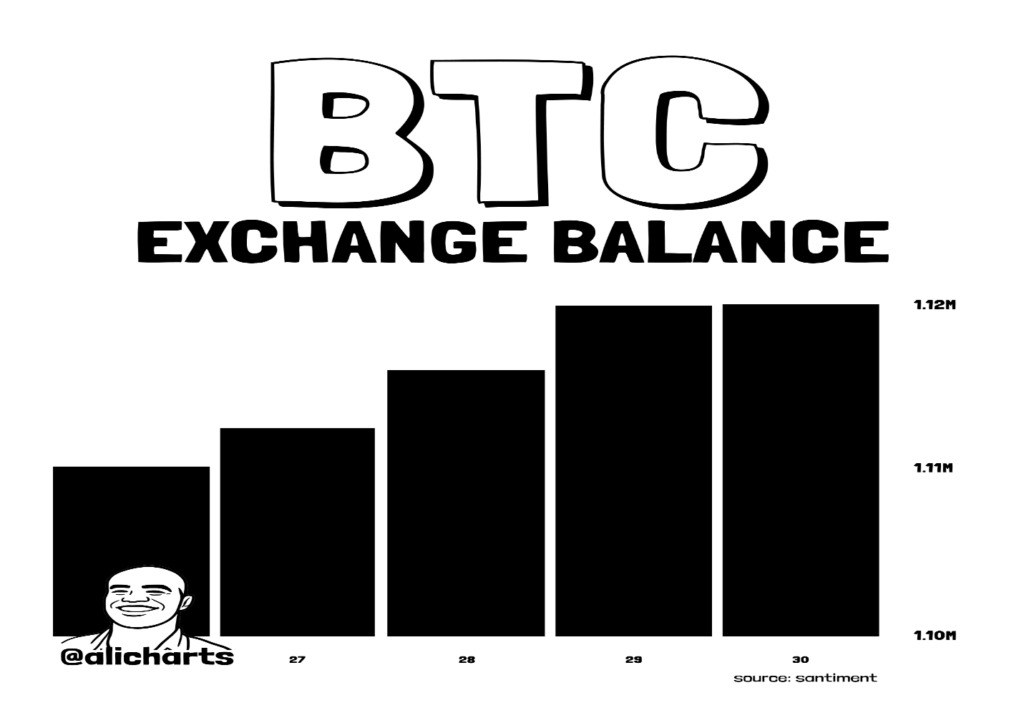
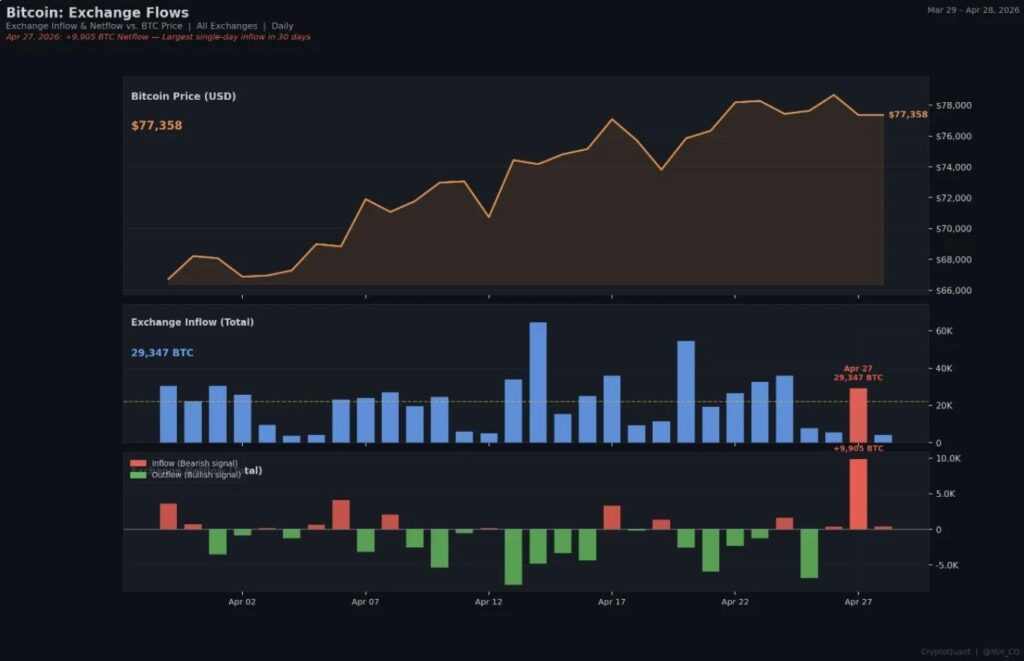
A key indicator being closely watched by market analysts is the recent surge in Bitcoin deposits onto cryptocurrency exchanges. Data analytics platform CryptoQuant, as highlighted by analyst Ali Martinez, reported that over 10,000 BTC, valued at roughly $760 million, were deposited onto exchanges in the past week. Historically, such substantial inflows have often been interpreted as a precursor to potential selling activity. Large holders, often referred to as "whales," may move their assets to exchanges to liquidate positions, take profits, or rebalance their portfolios.
The immediate implication of these exchange inflows is a heightened sense of caution among traders and investors. Increased supply on exchanges can translate to greater volatility, as a larger pool of assets becomes available for trading. This can lead to sharper price swings in the short term, making it a challenging environment for those seeking stable returns.
However, it is crucial to note that not all exchange inflows necessarily signal an impending sell-off. Coins transferred to exchanges can also be intended for various other purposes, including:
- Derivative Trading: Investors might deposit Bitcoin to engage in futures or options trading, hedging their existing spot positions or speculating on future price movements.
- Hedging Strategies: In a volatile market, some holders may move assets to exchanges to quickly execute trades that hedge against potential downturns in their broader investment portfolios.
- Internal Custody Reassignment: Exchanges themselves may move assets between different wallets for operational or security purposes, which can sometimes be reflected in inflow data.
- New Entrants and Rebalancing: Traditional investors, newly entering the crypto market, might deposit funds to purchase Bitcoin or rebalance their crypto holdings.
Therefore, while the surge in exchange deposits warrants attention, it does not automatically translate into immediate bearish price action. The broader market context and sustained demand play a critical role in determining the ultimate impact of these inflows.
Support Levels and Investor Cost Basis Under Scrutiny
The current price action of Bitcoin is being closely monitored against key support levels. Analysts suggest that if the increased exchange inflows are not met with robust buying demand, Bitcoin could potentially test the $74,000 to $75,000 support zone. This range is considered a critical liquidity area, where a significant number of buyers are expected to step in to defend the price structure and prevent further declines.
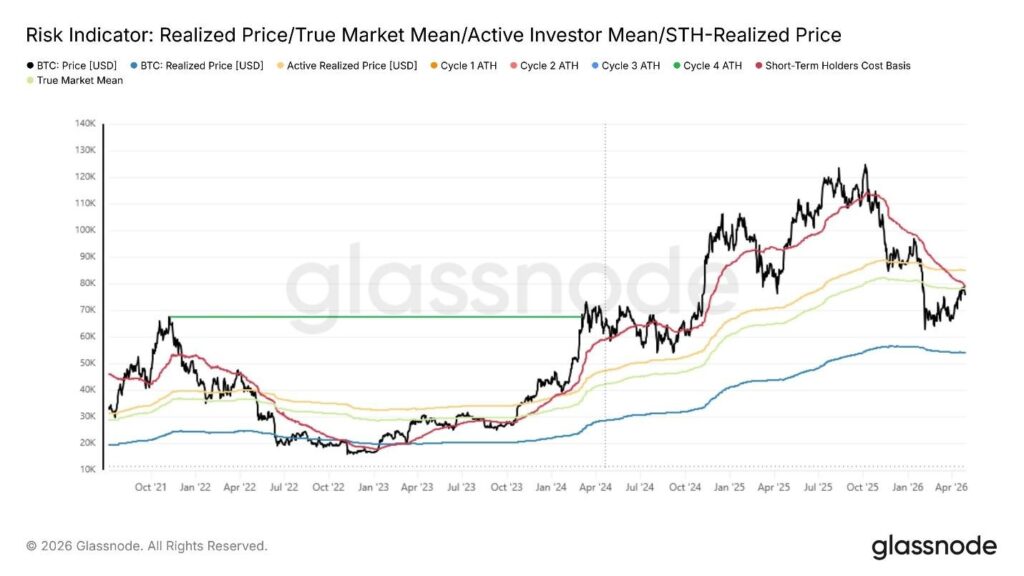
Further insights into the market’s health are provided by on-chain data from Glassnode. At the current spot price of $75,700, Bitcoin falls short of several important investor cost-basis points, indicating a potentially precarious situation for more recent market participants.

- Short-Term Holders: The average cost basis for short-term holders (those who have held BTC for less than 155 days) is around $78,900. This means a significant portion of these recent buyers are currently underwater, facing unrealized losses.
- Active Investors: The cost basis for active investors, generally considered a broader category of engaged participants, is approximately $85,000. This indicates that even these investors are not yet in a position of significant profit at current prices.
The fact that the broader market is currently valued around $78,000, a level above the cost basis of many short-term holders, suggests a degree of vulnerability. A sustained drop below this mark could trigger further selling pressure as these investors seek to cut their losses.
However, a more optimistic perspective emerges when examining the Realized Price. This metric, which represents the average price at which all Bitcoin coins were last moved on the blockchain, stands at approximately $54,100. The substantial difference between the current spot price and the Realized Price indicates that long-term holders, who have held their assets for extended periods, remain comfortably in profit. This strong foundation of profitable long-term holders can act as a significant support factor for the market, absorbing some of the selling pressure from short-term holders.
Consolidation and Defined Trading Ranges
The market sentiment is further characterized by an emerging consolidation pattern. Analyst Ted, observing the market’s order book dynamics, has identified strong buy-side interest emerging between $73,000 and $74,000. Conversely, significant sell orders are concentrated in the $79,000 to $80,000 range.
This creates a defined trading band within which Bitcoin is likely to continue consolidating. Such range-bound conditions are typical in periods of market uncertainty. Liquidity tends to build up on both the buy and sell sides as traders await a decisive catalyst to break the stalemate. This consolidation phase can be seen as a period of accumulation or distribution, where market participants are strategically positioning themselves before a significant price movement.
The implications of this consolidation are twofold:
- Reduced Volatility (in the short term): While large inflows can be volatile, the defined trading range suggests that immediate sharp price swings might be contained within these boundaries.
- Potential for a Breakout: The accumulation of buy and sell orders at these specific levels indicates that a breakout in either direction is likely to be significant. A strong upward move would require overcoming the substantial sell wall above $79,000, while a downward move would need to breach the buy support around $73,000.
Broader Market Context and Investor Sentiment
The current market dynamics are occurring against a backdrop of broader economic conditions. Inflationary pressures, geopolitical tensions, and the monetary policies of major central banks continue to influence investor appetite for risk assets. Bitcoin, initially heralded as a purely uncorrelated asset, has shown an increasing correlation with traditional risk assets like technology stocks in recent times. This means that global economic sentiment and shifts in risk-on/risk-off appetite can directly impact Bitcoin’s price.
The flood of traditional investors into Bitcoin has brought with it a more sophisticated understanding of risk management. While this can lead to increased volatility, it also suggests a maturing market. Institutional investors are often more strategic in their entry and exit points, contributing to the formation of these defined support and resistance levels.
The ability of Bitcoin to maintain its value and eventually break out of its current consolidation range will depend on several factors:
- Sustained Demand: A consistent inflow of new capital, both from retail and institutional investors, is crucial to absorb the selling pressure and drive prices higher.
- Macroeconomic Stability: A more stable global economic environment, with clearer signals from central banks, could boost investor confidence and encourage risk-taking.
- Positive Regulatory Developments: Progress on regulatory clarity for cryptocurrencies in major jurisdictions could further legitimize the asset class and attract more institutional capital.
- Technological Advancements and Adoption: Continued development within the Bitcoin ecosystem, such as improvements in scalability and the adoption of Bitcoin for payments or as a store of value, can provide fundamental support for its price.
A Look Ahead
At the time of reporting, BTC was trading at $77,324, reflecting a modest 1.66% gain in the past 24 hours. This price action indicates that the market is still in a delicate balance, with buyers and sellers vying for control. The coming days will be critical in determining whether Bitcoin can break through its immediate resistance levels or if it will test the crucial support zones. Investors and analysts will be closely watching exchange flows, on-chain metrics, and broader market sentiment for further clues on the direction of this pivotal digital asset. The narrative of traditional investors entering the market continues to shape Bitcoin’s price discovery, making it a dynamic and closely watched financial instrument. The interplay between established financial players and the nascent cryptocurrency ecosystem will undoubtedly continue to define its trajectory in the foreseeable future.














