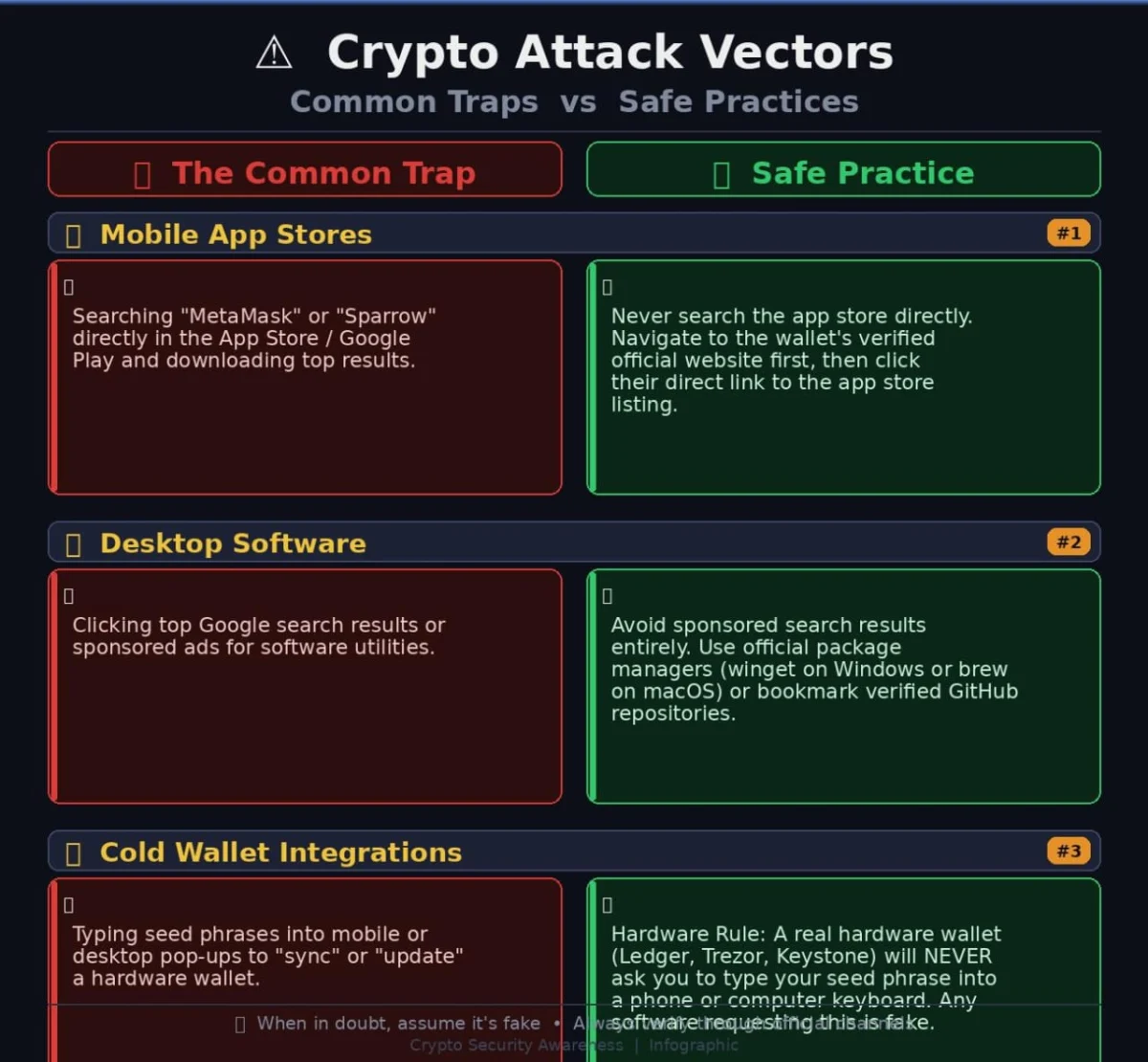
Recent incidents have brought into sharp focus a concerning trend in cryptocurrency security: the primary vulnerabilities are increasingly found not within the blockchain technology itself, but in the seemingly trusted digital platforms and services that act as gateways to users’ crypto assets. A confluence of events, including a significant lawsuit against Apple, the emergence of sophisticated malware, and widespread search engine manipulation, collectively underscore a critical paradigm shift in cybercrime. These vectors surfaced within days of each other, revealing a pervasive and avoidable security blind spot across major digital ecosystems: Apple’s App Store, Google Play, and Google Search. The collective losses, running into millions of dollars, highlight an urgent need for enhanced vigilance from users and more robust vetting from platform providers.
The Apple Lawsuit: A Decade-Old Blind Spot Exposed
On July 24, three plaintiffs—James Ramirez, Christopher Ellis, and Jalen Delgado—filed a lawsuit against Apple in California, alleging substantial losses totaling approximately $1.8 million in Bitcoin. The core of their complaint revolves around a fraudulent application impersonating Sparrow Wallet, which they downloaded from the Apple App Store. The lawsuit claims that this fake app successfully deceived them into divulging their seed phrases, which were subsequently used to drain their cryptocurrency holdings. Ramirez reportedly lost $875,000, Ellis $840,000, and Delgado $120,000, with these thefts occurring between May and August of 2025.
The most damning detail cited in the complaint is the fundamental impossibility of a legitimate Sparrow Wallet app existing on iOS. Sparrow Wallet, a well-known Bitcoin wallet, is exclusively available for desktop operating systems: Windows, macOS, and Linux. Its official developer, Craig Raw, has never released an iOS version. This fact alone should have rendered any Sparrow app on the App Store inherently fraudulent, yet the lawsuit alleges that Apple not only approved the fake application but also promoted it within its own curated cryptocurrency collections, effectively lending it an unwarranted seal of authenticity.
Adding to the gravity of the situation, the complaint further states that Craig Raw had previously reported an identical impersonator app in prior years. Instead of taking decisive action against the fraudulent app, Apple’s response reportedly included flagging Raw’s own legitimate developer account. While Apple has since issued statements to reporters indicating that it acted quickly to remove the impersonating apps and terminate the associated developer accounts, the lawsuit contends that other fake Sparrow apps have remained active even after being reported.
This incident is not an isolated anomaly but rather a documented, repeating pattern of failure. Earlier this year, a similar Ledger Live impersonator app on the App Store was responsible for draining $9.5 million from victims. These repeated occurrences suggest a systemic weakness in Apple’s app review and curation processes, despite the company’s reputation for stringent security standards. The implication for users is clear: the perceived "walled garden" security of the App Store may offer a false sense of security when it comes to sophisticated impersonation schemes targeting high-value assets like cryptocurrency.
SparkKitty Malware: Turning Camera Rolls into Crime Scenes
Concurrent with the unfolding Apple lawsuit, cybersecurity firm Check Point published a separate, equally concerning report on a new malware family dubbed SparkKitty. This cross-platform threat, impacting both Android and iOS devices, introduces an insidious method of credential theft that bypasses traditional attack vectors like keystroke logging or clipboard monitoring.
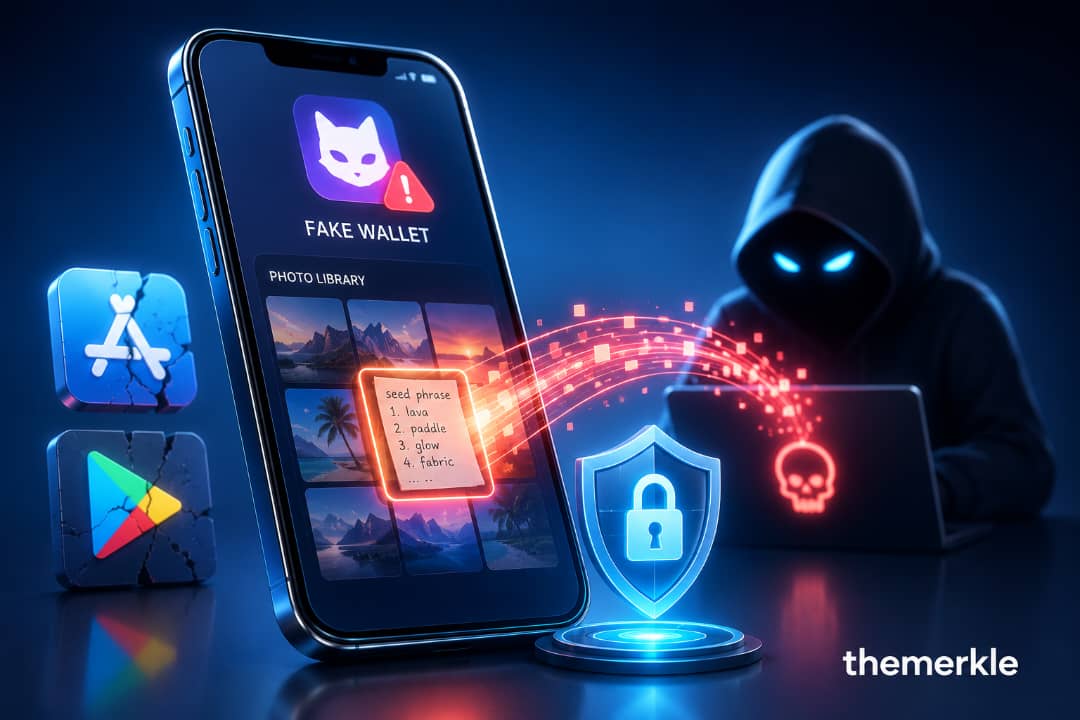
SparkKitty operates by exploiting granted photo library access. Once installed, it scans images stored on infected devices using optical character recognition (OCR) technology, specifically hunting for cryptocurrency wallet seed phrases. The malware is described as an evolved version of SparkCat, an OCR-based stealer first documented by Kaspersky in 2025, which also extracted data from screenshots.
On iOS, SparkKitty cleverly concealed its malicious code within a crypto application named "å¸coin," successfully navigating Apple’s review process before requesting photo library access from unsuspecting users. On the Android platform, the malware appeared within an application called SOEX, which was marketed as a messaging and crypto exchange platform. SOEX garnered over 10,000 downloads on Google Play before its eventual removal. Beyond official app stores, SparkKitty also propagated through less regulated channels, including pirated APKs, modified TikTok applications, and online betting apps, illustrating its diverse distribution strategy.
The effectiveness of SparkKitty lies in its deceptively simple mechanism. Users, accustomed to granting photo access for legitimate functionalities like uploading profile pictures or scanning documents, inadvertently provide the malware with carte blanche access to their entire photo gallery. The app then silently uploads and scans this gallery for any sequence of 12 or 24 words resembling a seed phrase. Upon detection, the associated cryptocurrency wallet can be compromised within minutes, leaving victims with no recourse for reversal or chargeback, a stark reality of the decentralized nature of cryptocurrency transactions.
The Proliferation of Fake Wallets Hiding in Plain Sight
Beyond the specific threat posed by SparkKitty, researchers have independently identified a broader phenomenon: 26 fake wallet applications discovered on the App Store. These apps cunningly mimicked popular legitimate wallets such as MetaMask, Trust Wallet, and Coinbase. They employed near-identical logos and branding, with only minute spelling variations or subtle design differences designed to evade casual scrutiny.
This particular vector represents a direct social engineering attack, arguably even more straightforward than malware deployment. Unlike SparkKitty, these fake apps do not require complex exploits or hidden code. Users are simply tricked into believing they are interacting with a genuine wallet interface. They then voluntarily input their seed phrases directly into the fraudulent application, effectively handing over control of their funds. The success of these schemes relies entirely on convincing branding and the user’s lack of meticulous verification, highlighting the critical role of user education in combating such threats.
Desktop Vulnerabilities: Search Engine Poisoning and Trojanized Software
The security landscape for cryptocurrency management on desktop platforms is equally fraught with peril. A recent report revealed that over 70 fake websites are actively impersonating popular Windows applications, including widely used tools like PowerToys, CrystalDiskMark, EasyBCD, Lively Wallpaper, Wintoys, SignalRGB, and MKVToolNix. Disturbingly, many of these lookalike domains have achieved higher rankings than the genuine project pages in Google search results, making them appear more authoritative and trustworthy to an average user.
The playbook employed by these campaigns is patient and deliberately deceptive. Initially, these malicious sites build search engine rankings for a popular application’s name. They often appear harmless, initially linking to the genuine download source. However, once the site has accumulated sufficient traffic and established a veneer of trust, the legitimate download link is surreptitiously swapped for a malicious installer, often containing trojanized software. Check Point has already traced malware families, such as RemusStealer, to these campaigns. Developers behind legitimate applications like Lively Wallpaper and SignalRGB have also independently confirmed active impersonation attempts targeting their projects.
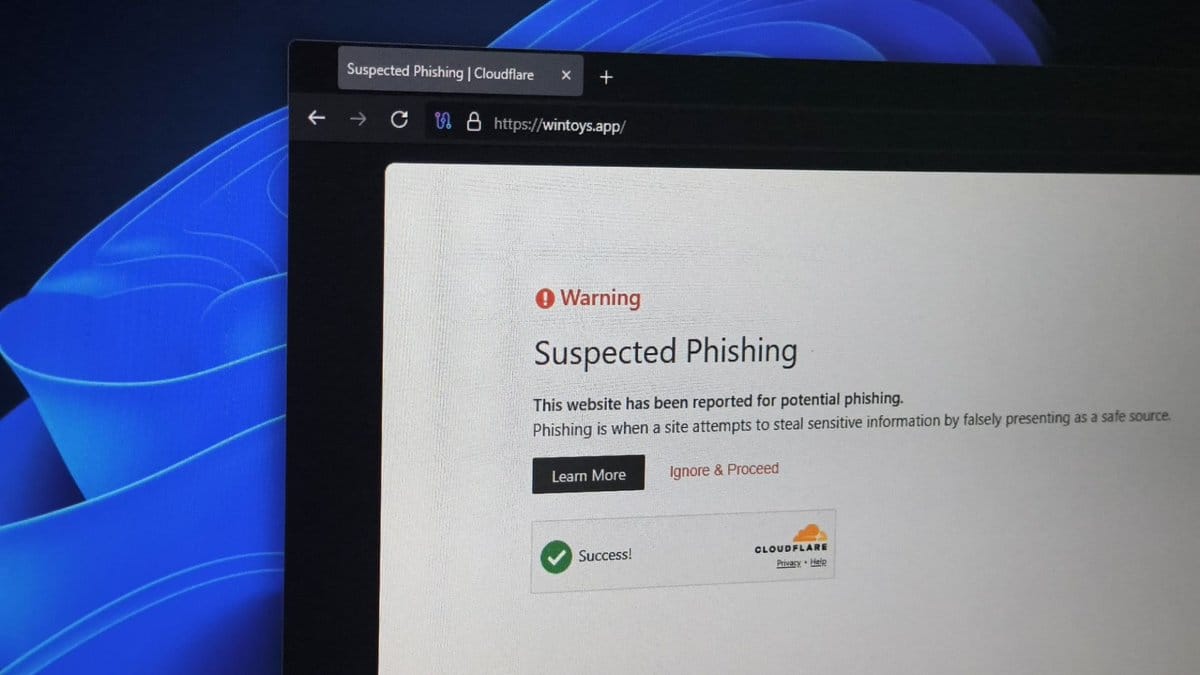
Perhaps the most unsettling aspect of this campaign is its broad applicability. It is not exclusively crypto-specific infrastructure; rather, it is designed to compromise anyone downloading common software. For an infected machine, cryptocurrency wallets or exchange credentials stored on it simply represent one of the most valuable potential payoffs once the trojanized installer gains a foothold. This highlights a universal vulnerability in how users discover and acquire software, moving beyond the confines of app stores to the fundamental act of searching the web. The once-reliable advice to "just Google the app name and download it" is now demonstrably dangerous and needs to be retired entirely.
Broader Context and Implications: A Crisis of Trust in Digital Gatekeepers
These three distinct but interconnected incidents are not isolated occurrences; they represent a singular, underlying failure manifesting across different digital platforms. App stores and search engines have built their formidable reputations on the pillars of curation and trust. However, attackers have astutely recognized that exploiting this established trust—by impersonating reputable brands and manipulating platform algorithms—is often significantly easier and more effective than attempting to crack the robust cryptographic foundations of blockchain technology.
Apple’s stringent app review process, often touted as a gold standard, demonstrably failed to detect an app that had no legitimate reason to exist on iOS, even after prior warnings. Google Play hosted an application that covertly uploaded entire user photo libraries without triggering sufficient scrutiny for rapid removal. And Google Search, the ubiquitous tool relied upon by billions for information retrieval, is actively surfacing malicious sites above genuine ones, directly facilitating software supply chain attacks.
The implications are profound. This shift in attack vectors fundamentally challenges the long-held assumption that official app stores and leading search engines are inherently safe environments for software discovery and download. The "weakest link" has moved from the cryptographic integrity of distributed ledgers to the centralized human and algorithmic gatekeepers of our digital world. This erosion of trust necessitates a recalibration of user behavior and a demand for greater accountability from these platform giants.
Cybersecurity experts consistently report a rising tide of social engineering and phishing attacks targeting cryptocurrency holders. Data from various security firms indicates that losses from such scams now account for a significant portion of overall crypto theft, often overshadowing direct protocol exploits. These recent events provide concrete examples of how these social engineering tactics are being weaponized through mainstream platforms.
Recommendations for Enhanced Digital Security: A Modern Crypto Hygiene Playbook
Understanding the mechanisms of these emerging attack vectors is only valuable if it translates into actionable changes in user habits. A proactive and disciplined approach to digital security is now paramount for anyone interacting with cryptocur cryptocurrencies.
1. Safeguarding Digital Credentials: Neutralizing SparkKitty and Similar Threats
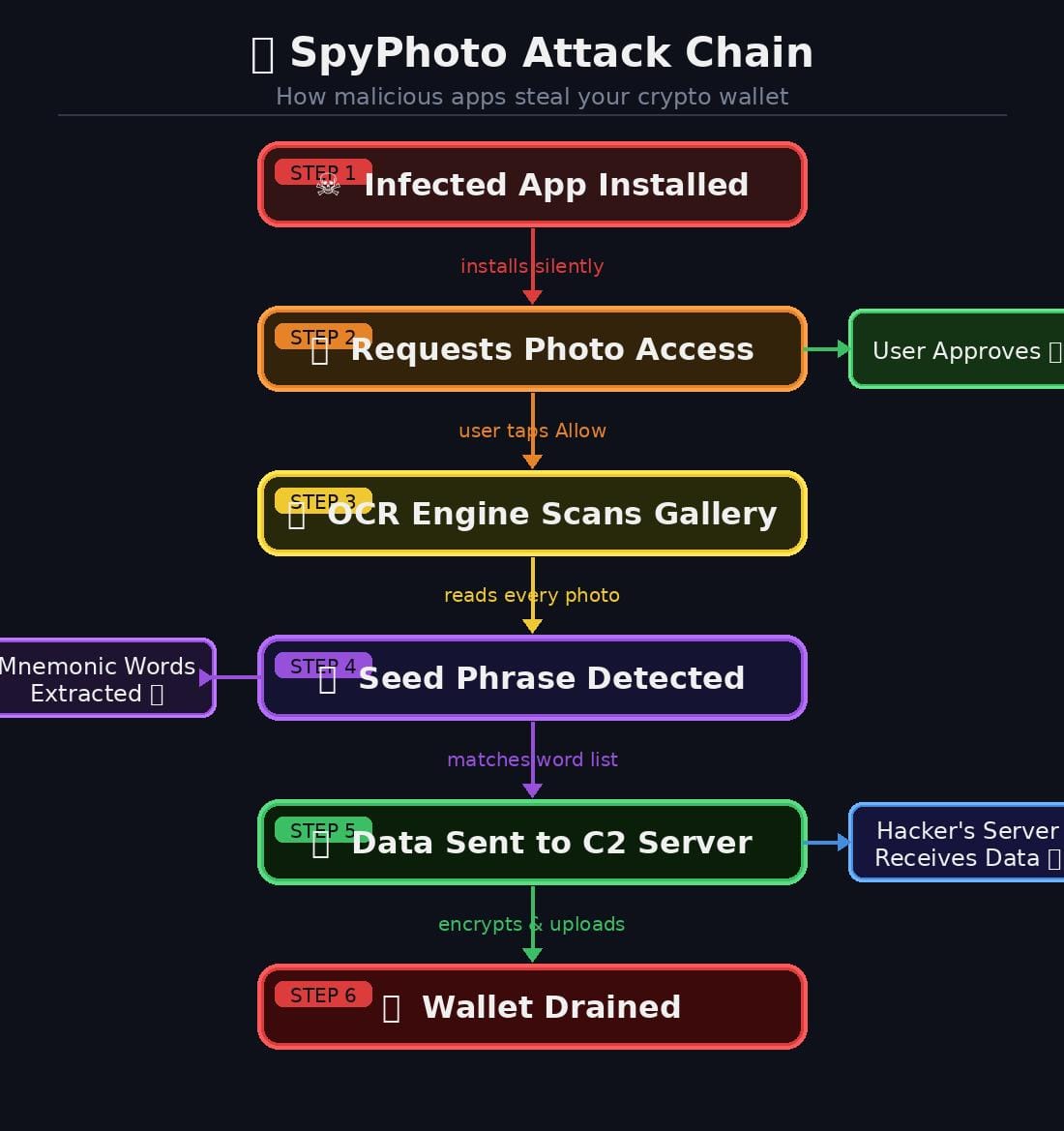
The SparkKitty malware underscores the extreme danger of storing sensitive information, particularly cryptocurrency seed phrases, in easily accessible digital formats.
- Never Store Seed Phrases Digitally: Under no circumstances should seed phrases (12- or 24-word recovery phrases) be stored as plain text files, screenshots, photographs, or in cloud storage services (e.g., Google Photos, iCloud, Dropbox, notes apps). This is the single most critical rule for protecting against OCR-based malware and accidental exposure.
- Physical, Offline Storage: The only secure method for storing seed phrases is physically, on paper or metal, in a secure, fireproof, and waterproof location, completely disconnected from the internet. Consider splitting the phrase and storing parts in separate secure locations for added redundancy.
- Critical Review of App Permissions: Be extremely judicious when granting applications access to your photo library, camera, or file system. Question why a cryptocurrency wallet, messaging app, or game would require such broad access if its core functionality doesn’t directly involve image processing or sharing. Regularly review and revoke unnecessary permissions in your device settings.
- Regular Device Audits: Periodically review the contents of your camera roll and device storage for any accidental captures of sensitive information. Clear your "recently deleted" albums as well.
- Principle of Least Privilege: Only grant applications the absolute minimum permissions necessary for their stated function.
2. Verifying Software Authenticity: Bypassing Fake Apps and Search Poisoning
The proliferation of impersonator apps and poisoned search results demands a rigorous verification protocol before downloading any software or entering sensitive credentials.
- Bookmark Official Sources: For any cryptocurrency wallet, exchange, or essential software, always navigate to its official website directly by typing the URL or using a trusted, pre-saved bookmark. Never rely on search engine results, especially for high-value applications.
- Cross-Reference Developer Information: When downloading from app stores, meticulously check the developer’s name, publisher, and app ID against the information provided on the official project website. Be wary of subtle misspellings, additional words, or generic-sounding developer names.
- Scrutinize App Store Listings: Look for inconsistencies in branding, poor grammar in descriptions, suspicious reviews (e.g., many five-star reviews within a short period, or reviews that sound AI-generated), and the number of downloads. Legitimate apps usually have a long history and a large, consistent user base.
- Verify Download Hashes (for Desktop Software): For desktop applications, if the official website provides cryptographic hashes (MD5, SHA-256) for downloads, verify the hash of your downloaded file against the published hash. This confirms the file has not been tampered with.
- Hardware Wallets for Cold Storage: For significant cryptocurrency holdings, invest in a hardware wallet (e.g., Ledger, Trezor). These devices store private keys offline, making them immune to software-based attacks from fake apps or malware on your computer or phone. They require physical confirmation for transactions, adding a crucial layer of security.
- Beware of Malvertising: Be extra cautious with sponsored results or advertisements that appear at the top of search engine results, as these are frequently exploited by attackers to promote malicious sites.
3. The Modern Crypto Hygiene Playbook: Key Rules for Daily Protection
Beyond specific attack vectors, adopting a holistic approach to digital security is essential.
- Enable Two-Factor Authentication (2FA) Everywhere: Implement 2FA using authenticator apps (e.g., Authy, Google Authenticator) or hardware keys (e.g., YubiKey) for all cryptocurrency exchanges, wallets, email accounts, and other critical services. Avoid SMS-based 2FA where possible, as it is vulnerable to SIM-swapping attacks.
- Strong, Unique Passwords: Use long, complex, and unique passwords for every online account. Employ a reputable password manager to generate and store these passwords securely.
- Keep Software Updated: Regularly update your operating systems (iOS, Android, Windows, macOS, Linux) and all applications. Updates often include critical security patches that protect against newly discovered vulnerabilities.
- Exercise Extreme Caution with Links and Downloads: Be suspicious of unsolicited emails, messages, or social media posts containing links or attachments, even if they appear to come from trusted sources. Phishing attempts are a constant threat.
- Dedicated Devices for Crypto Management: For individuals with substantial crypto assets, consider using a dedicated, air-gapped (offline) computer or a clean, minimal-use mobile device solely for managing cryptocurrency transactions. This significantly reduces the attack surface.
- Educate Yourself Continuously: The threat landscape evolves rapidly. Stay informed about the latest scams, malware, and security best practices from reputable cybersecurity news sources.
The underlying technology securing public blockchains remains remarkably robust and fundamentally secure when implemented correctly. However, the incidents detailed above underscore a critical vulnerability in the human and platform layers surrounding this technology. By shifting trust away from third-party app store curation and search engine results, and instead implementing strict, verifiable habits, users can significantly enhance their security posture. This ensures that the digital platforms meant to facilitate access to cryptocurrency do not inadvertently become the single point of failure that leads to irreversible financial loss.
Disclosure: This is not trading or investment advice. Always do your research before buying any cryptocurrency or investing in any services.
Follow us on Twitter @themerklehash to stay updated with the latest Crypto, NFT, AI, Cybersecurity, and Metaverse news!