Michael Saylor, the often-controversial founder of MicroStrategy, has sent ripples across the financial world with an extraordinary claim: he credits an artificial intelligence chatbot, specifically OpenAI’s ChatGPT, for designing a novel financing structure that reportedly generated approximately $15 billion for his Bitcoin-holding enterprise. This assertion stands in stark contrast to conventional wisdom, where executives typically attribute such monumental capital raises to traditional financial instruments, astute bankers, or propitious market conditions. Saylor’s revelation, made during a high-profile interview, posits a future for corporate finance where AI plays a direct, instrumental role in crafting complex financial solutions, challenging the long-held dominance of human expertise in investment banking and legal counsel.
The Unprecedented Claim: AI as Architect
The audacious claim first emerged during Saylor’s August 6, 2024, appearance on Steven Bartlett’s popular podcast, "The Diary Of A CEO." In a moment that visibly halted the conversation, Saylor stated unequivocally, "I used an AI to make $15 billion in a way that no one would ever conceive that you could make $15 billion." Bartlett, expressing palpable surprise, pressed for confirmation, to which Saylor affirmed the veracity of his statement. What further amplified the impact of this declaration was Saylor’s direct and unambiguous identification of the AI tool: ChatGPT, developed by OpenAI. This concrete attribution, rather than a vague reference to "AI," lent significant weight to a story that quickly went viral across finance, technology, and cryptocurrency communities. It forced a re-evaluation of AI’s potential beyond mere task automation, hinting at its capacity for strategic ideation in the most complex and high-stakes financial arenas.
MicroStrategy’s Bitcoin Quest: A Financial Tightrope
To fully grasp the significance of Saylor’s claim, one must understand MicroStrategy’s unique and aggressive corporate strategy. Beginning in August 2020, under Saylor’s leadership, the business intelligence firm embarked on an unprecedented pivot, adopting Bitcoin as its primary treasury reserve asset. This strategy, initially met with skepticism, saw MicroStrategy accumulate vast quantities of Bitcoin, transforming its balance sheet and market identity. By early 2025, the company’s Bitcoin holdings had swelled to an estimated $30 billion, primarily financed through a series of convertible bond offerings. These instruments allowed MicroStrategy to raise capital at relatively low interest rates, with the option for bondholders to convert their debt into company stock, theoretically tying their returns to the upside potential of Bitcoin’s price appreciation.
However, by the first quarter of 2025, this highly successful, yet unconventional, approach began to reach its practical limits. Traditional financial advisors, including seasoned bankers and corporate lawyers, expressed growing concerns. The continuous issuance of convertible debt risked excessive dilution for existing shareholders, placed increasing pressure on the company’s debt-to-equity ratios, and presented challenges within existing securities frameworks designed for more conventional corporate structures. Saylor reported that his team faced a wall of skepticism and a lack of creative solutions from conventional financial institutions, who deemed further aggressive capital raises through existing mechanisms either impossible or fraught with unacceptable risk. The company found itself in a paradoxical situation: a clear strategic objective (accumulating more Bitcoin) but a perceived ceiling on the traditional financing methods available to achieve it.
ChatGPT’s Alleged Role: From Concept to Capital
Faced with this impasse, Saylor recounted that his team turned to artificial intelligence. Instead of scaling back its ambitions, MicroStrategy leveraged AI to explore novel financing structures that human advisors had not considered or had dismissed. The process, as described by Saylor, involved presenting the core problem to ChatGPT: how to design a capital instrument that could continually raise significant funds for Bitcoin acquisition, offer attractive returns to investors, and circumvent the limitations of traditional debt and equity, all while adhering to regulatory frameworks.

While Saylor’s narrative suggests a near-autonomous design process by AI, financial experts generally infer a more collaborative model. It is more probable that ChatGPT functioned as a sophisticated ideation engine and a powerful sounding board. The AI could have rapidly generated and stress-tested permutations of existing financial instruments, identified unconventional combinations of features, and perhaps even highlighted overlooked precedents or regulatory grey areas that human experts, constrained by conventional thinking or pre-existing biases, might have missed. The power of large language models lies in their ability to process vast amounts of data—including legal texts, financial regulations, and historical market data—and synthesize new ideas from them. This capacity could have allowed ChatGPT to propose a framework that integrated elements of various securities in a way that appeared novel to human financiers operating within established playbooks. The "no one would ever conceive" assertion likely speaks to the AI’s ability to explore a broader solution space than human teams, unburdened by mental models or institutional inertia.
Decoding STRK: A Novel Financial Instrument
The culmination of this AI-assisted ideation process was the development of STRK, formally known as MicroStrategy’s 8.00% Series A Perpetual Strike Preferred Stock. This instrument represents a sophisticated hybrid security, strategically positioned between traditional corporate debt and common equity. Launched in early January 2025, STRK was designed to offer investors a unique blend of stability and growth potential, while providing MicroStrategy with a perpetual funding mechanism for its Bitcoin strategy.
Key features of STRK include:
- 8% Cumulative Dividend: Investors receive a fixed dividend payment of 8% annually. The "cumulative" aspect means that if MicroStrategy is unable to pay the dividend in any period, the obligation accrues and must be paid in full before any dividends can be distributed to common stockholders. This provides a strong income stream for investors, making it attractive in a yield-hungry market.
- Perpetual Nature: Unlike traditional bonds that have a maturity date, STRK is a "perpetual" security, meaning it has no fixed redemption date. This eliminates the refinancing pressure associated with maturing debt, allowing MicroStrategy to maintain a stable capital base without periodic lump-sum repayments.
- Convertible into Class A Common Stock: A crucial feature is its convertibility. Each STRK share can be converted into MicroStrategy’s Class A common stock at a fixed ratio. This gives investors optionality, allowing them to participate in the potential upside of MicroStrategy’s stock performance, which is intrinsically linked to the value of its Bitcoin holdings.
- Strategic Placement: By sitting between debt (with its fixed payments and senior claims) and common equity (with its higher risk and unlimited upside), STRK appeals to a specific investor appetite. It offers more security than common stock due to the fixed dividend, but more upside potential than traditional debt through its convertibility.
According to Saylor, the genuine innovation of STRK was not any single feature in isolation, but rather the AI-driven synthesis of these disparate elements into a cohesive, perpetual, and convertible structure with a cumulative dividend, specifically engineered to continuously funnel capital towards Bitcoin purchases without the recurring burden of debt refinancing.
The Chronology of Capital: $15 Billion and Beyond
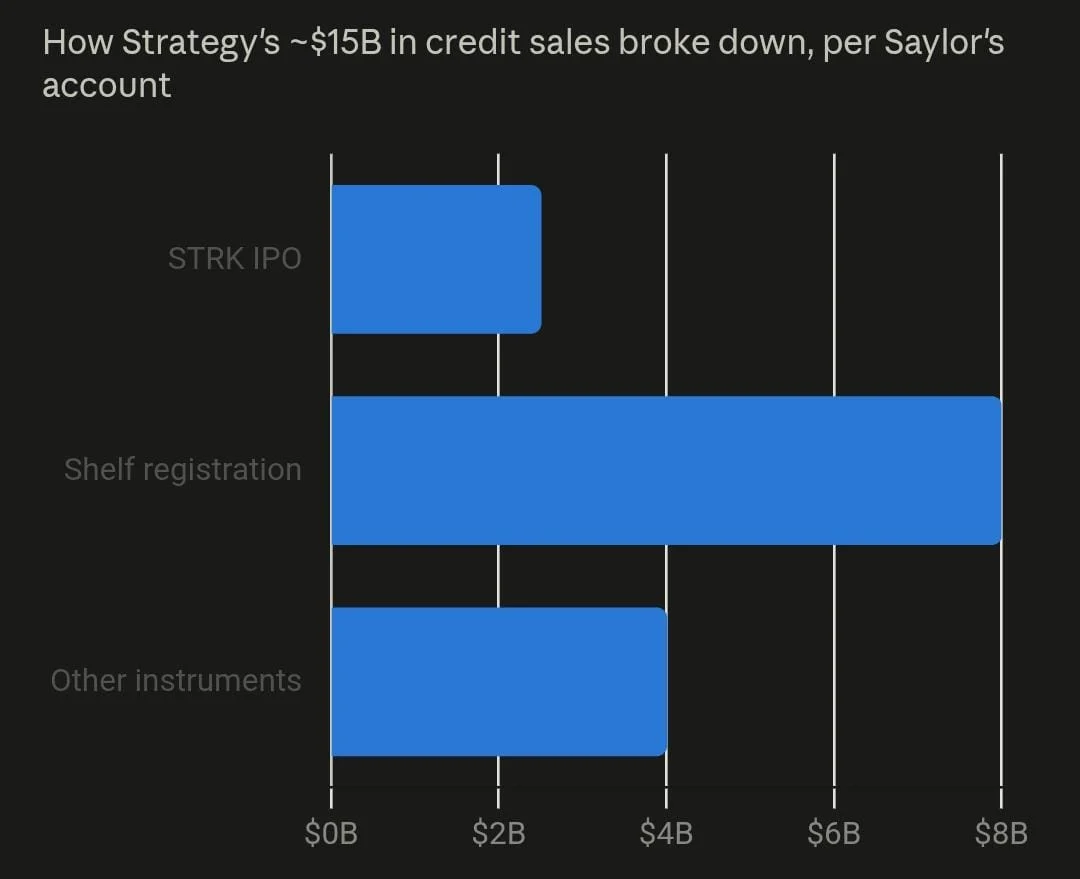
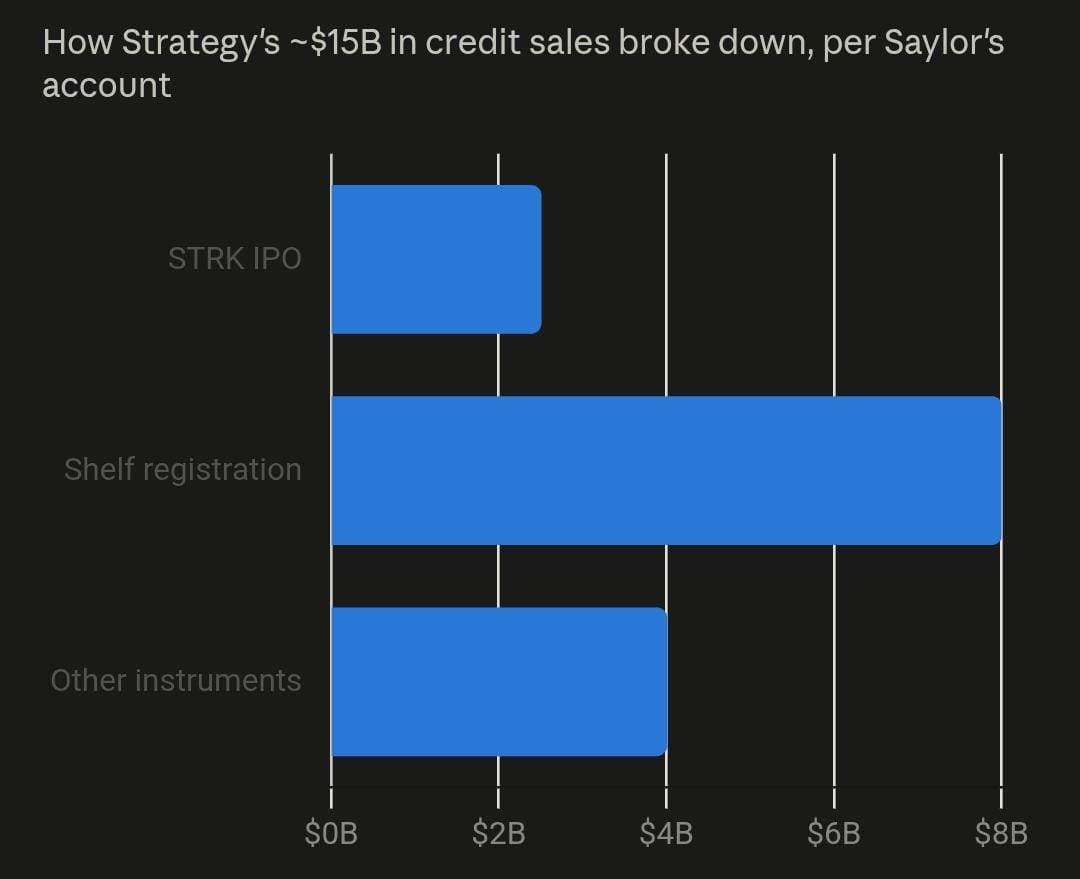
Saylor provided specific figures regarding the capital raised through these AI-assisted mechanisms. The initial public offering (IPO) of STRK reportedly became the largest offering of its kind to date, generating approximately $2.5 billion. Building on this success, MicroStrategy then layered on a shelf registration, which facilitated an additional $8 billion in capital. Furthermore, around $4 billion was raised through other related instruments, bringing the total sum to an impressive $15 billion in credit sold – a figure Saylor equates to the company effectively "making" $15 billion.
MicroStrategy’s public filings with the U.S. Securities and Exchange Commission (SEC) largely corroborate the broader pattern of aggressive and sequential capital raising throughout 2025 and into 2026. While Saylor’s cited figures may blend several distinct offerings, the company’s disclosures confirm the scale and ambition of its financing strategy:
- STRC Offering: In July 2025, MicroStrategy successfully closed its STRC offering, generating $2.521 billion in gross proceeds. This was officially recognized as the largest U.S. IPO of 2025 up to that point, a testament to market appetite for these novel instruments.
- STRD At-The-Market Program: Around the same period, MicroStrategy launched a separate $4.2 billion STRD at-the-market program, further confirming its strategy of continuous capital accumulation. An at-the-market (ATM) offering allows a company to sell new shares directly into the secondary market at prevailing market prices over a period, providing flexibility and efficient capital access.
- Expanding the Stack: Beyond STRK, MicroStrategy continued to introduce and manage a suite of preferred instruments, including STRF, STRC, STRD, and a proposed STRE offering, which carried an even higher 10% dividend rate. Each of these instruments was tailored to attract slightly different investor profiles, balancing appetite for yield, seniority in the capital structure, and conversion upside. As of August 2026, MicroStrategy’s SEC filings confirmed the company was still actively managing dividend rates and repurchase programs across this diverse stack of preferred securities, demonstrating that this was not a one-off maneuver but an integral part of an evolving financing philosophy.
This sequence of verifiable capital raises strongly suggests that the underlying financial structures, whether directly designed by AI or significantly influenced by its output, proved effective in attracting substantial investment.
Reactions and Expert Perspectives: Wall Street’s Verdict
Saylor’s claim has naturally elicited a range of reactions from the financial establishment. While MicroStrategy’s public filings confirm the successful execution of these multi-billion-dollar offerings, the direct attribution to ChatGPT has sparked debate. Traditional investment bankers, often priding themselves on their bespoke financial engineering capabilities and deep market relationships, are likely to view Saylor’s statement with a mixture of skepticism and concern. Some may dismiss it as a clever marketing ploy, downplaying AI’s role to that of a mere computational aid, while others might privately acknowledge the disruptive potential.
Financial analysts, while impressed by MicroStrategy’s ability to consistently raise capital for its Bitcoin strategy, have generally focused on the structural merits and risks of the preferred stock offerings themselves, rather than the alleged AI origin. Questions around dilution, the sustainability of high dividend rates, and the company’s overall leverage remain pertinent. However, the sheer scale of the capital raised, and the apparent market acceptance of these novel instruments, suggests that MicroStrategy successfully navigated regulatory complexities and investor demands, irrespective of the tool used for their conceptualization.
The broader implication for Wall Street is a challenging one: if an AI can assist in designing multi-billion-dollar financing structures that human experts struggled with, what does that mean for the future of highly compensated financial advisory roles? The immediate consensus is that AI won’t entirely replace human ingenuity, but it will undoubtedly augment it, forcing financial professionals to adapt to new paradigms of collaboration with intelligent systems.
Implications for Corporate Finance
Saylor’s anecdote, even if partially exaggerated for rhetorical effect, spotlights profound implications for corporate finance:
- Disruption of Traditional Advisory Models: If AI can rapidly generate viable and complex financial structures, it could reduce reliance on traditional investment banking services for ideation, shifting the value proposition towards execution, market access, and relationship management.
- Enhanced Innovation and Speed: AI’s ability to process vast datasets and explore countless permutations could significantly accelerate the development of new financial products, allowing companies to respond more dynamically to market conditions and strategic needs.
- Democratization of Financial Engineering: Sophisticated financial structuring, once the exclusive domain of highly specialized and expensive human experts, could become more accessible to a broader range of companies through AI tools.
- Risk Management and Compliance: AI can potentially identify regulatory risks or compliance pitfalls in novel structures more quickly, though the ultimate legal responsibility and interpretation will always rest with human experts. Conversely, new risks associated with AI-generated structures (e.g., unforeseen systemic impacts, opaque design processes) would need careful consideration.
- The Human-AI Synergy: The most likely outcome is a synergistic relationship, where AI handles data analysis, pattern recognition, and idea generation, freeing human experts to focus on strategic judgment, ethical considerations, negotiation, and relationship-building.
The Broader AI Revolution in Business
Beyond the confines of corporate finance, Saylor’s claim serves as a potent case study for the broader AI revolution in business. It underscores AI’s potential to move beyond operational efficiencies into strategic decision-making and innovation. This development raises critical questions for businesses across all sectors:
- Strategic Problem Solving: Are companies fully exploring how AI can tackle their most intractable strategic challenges, not just their routine tasks?
- Competitive Advantage: Early adopters who effectively integrate AI into their core strategy development could gain significant competitive advantages.
- Ethical and Governance Considerations: The use of AI in high-stakes decisions necessitates robust governance frameworks, ensuring transparency, accountability, and ethical safeguards. Who is ultimately responsible when an AI-assisted strategy goes awry?
- Talent Adaptation: The evolving landscape demands a workforce capable of effectively collaborating with AI, understanding its capabilities, and critically evaluating its outputs.
In conclusion, Michael Saylor’s assertion that ChatGPT helped design a $15 billion financing structure for MicroStrategy is more than just a captivating headline; it is a verifiable financial outcome accompanied by a controversial origin story. While the precise degree of AI’s autonomous design remains a subject of debate, the success of MicroStrategy’s novel preferred stock offerings, backed by robust SEC filings, confirms the company’s remarkable ability to raise substantial capital outside conventional methods. This narrative forces a serious re-evaluation of AI’s role in the highest echelons of corporate finance, positioning it not merely as an efficiency tool, but as a potential catalyst for unprecedented innovation and a formidable challenger to established advisory paradigms in a rapidly evolving global economy.