



Bhutan has formally denied reports suggesting a significant sale of its Bitcoin holdings, a development that has drawn considerable attention due to apparent large-scale wallet transfers linked to the Himalayan nation. The controversy comes as the country, known for its quiet accumulation of a substantial Bitcoin treasury through hydroelectric-powered mining, faces renewed scrutiny following on-chain data indicating a sharp decrease in its digital asset reserves.
On-Chain Data Sparks Sale Speculation
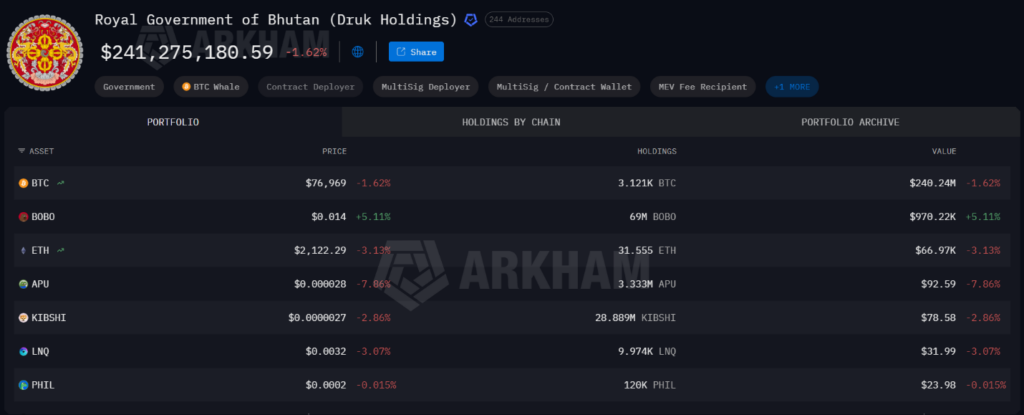
Blockchain analytics firm Arkham Intelligence initially flagged the transactions, reporting that wallets attributed to Bhutan’s sovereign wealth fund, Druk Holding and Investments (DHI), once held a peak of nearly 13,000 Bitcoin (BTC) as of October 2024. However, the same cluster of wallets now reportedly holds just over 3,100 BTC. This dramatic reduction has fueled widespread speculation that the kingdom may have liquidated a substantial portion of its reserves over the preceding year, coinciding with Bitcoin’s record highs.
The on-chain data, meticulously tracked by analysts, revealed a series of outgoing transactions from these wallets. A significant portion of these transfers were directed towards wallets associated with prominent centralized exchanges and institutional trading platforms, including OKX and Galaxy Digital. Such movements are frequently interpreted within the cryptocurrency community as preparatory steps for selling activities, given that these platforms are primary conduits for converting digital assets into fiat currency or for trading purposes.
Official Rebuttal and Lingering Questions
Despite the compelling on-chain evidence, Bhutanese officials have maintained that no recent Bitcoin sales have occurred. In a statement to CoinDesk last week, Ujjwal Deep Dahal, the CEO of DHI, stated, "I don’t recall the last time we sold any BTC." This assertion, while direct, has not fully dispelled the concerns raised by the observed wallet activity.

Crucially, DHI did not dispute the attribution of the wallets identified by Arkham Intelligence to Bhutan, nor did it provide updated figures regarding the country’s current Bitcoin holdings. This lack of specific clarification has left room for interpretation, prompting ongoing debate within the crypto community. The observed transfers could represent outright sales, a strategic reshuffling of custody, the use of Bitcoin as collateral for financial arrangements, or other sophisticated financial strategies not immediately apparent from the on-chain data alone.
Bhutan’s Bitcoin Genesis: Sustainable Mining
Bhutan’s journey into the Bitcoin landscape has been unique. Unlike many governments that have acquired Bitcoin through direct purchases, Bhutan’s strategy has centered on leveraging its abundant hydroelectric resources for mining operations. The nation has consistently promoted its Bitcoin mining initiative as a sustainable and environmentally friendly endeavor, powered by surplus clean energy.
The country is reported to operate multiple state-backed mining facilities. Officials have emphasized the continuity of these operations, even amidst broader challenges within the global cryptocurrency mining industry. Favorable weather conditions this year have reportedly bolstered hydroelectric output, ensuring uninterrupted mining activities across the kingdom’s infrastructure. Furthermore, Bhutan has been investing in upgrading to newer-generation mining equipment to maintain its competitiveness in an increasingly demanding sector.
Industry Headwinds and Profitability Concerns
The timing of these transactions and the ensuing speculation is significant, given the current global landscape of Bitcoin mining. A recent report by digital asset investment firm CoinShares highlighted a challenging financial period for many Bitcoin mining companies following the latest halving cycle. The report indicated a substantial surge in average mining costs for public companies in late 2025, coupled with weakened mining revenues due to lower hash price metrics. This environment has been described by analysts as one of the most difficult for miners in recent years, with several firms reportedly operating at or below their profitability thresholds.
Against this backdrop, some observers have speculated that Bhutan might be experiencing similar pressures, potentially leading to a slowdown in mining activity or the liquidation of reserves to offset operational costs. These concerns were amplified by a noted lack of fresh inflows into wallets linked to Bhutan’s mining operations over recent months, further fueling the narrative of potential divestment.
Gelephu Mindfulness City: A Grand Ambition at Risk?
The controversy surrounding Bhutan’s Bitcoin reserves has also cast a shadow over the nation’s ambitious long-term crypto plans. Late last year, Bhutan announced a groundbreaking initiative to allocate up to 10,000 BTC towards the development of Gelephu Mindfulness City. This project envisions a major economic and innovation zone designed to attract significant international investment and foster a unique blend of cultural heritage and technological advancement.
At the time of the announcement, this pledge represented one of the largest state-backed Bitcoin commitments globally, signaling Bhutan’s commitment to integrating digital assets into its national development strategy. However, if Arkham Intelligence’s estimates regarding Bhutan’s current remaining reserves are accurate, the kingdom may now possess insufficient Bitcoin to fulfill this ambitious commitment outright. This potential shortfall raises questions about how Bhutan plans to finance such a large-scale development project if a significant portion of its digital asset reserves has indeed been divested.
Chronology of Events
- Prior to October 2024: Bhutan, through Druk Holding and Investments (DHI), accumulates a significant Bitcoin treasury, reaching a peak of approximately 13,000 BTC, primarily through state-backed hydroelectric mining operations.
- Late 2025: Bhutan announces plans to allocate up to 10,000 BTC towards the development of Gelephu Mindfulness City, signaling a strong commitment to integrating Bitcoin into its national economic strategy.
- October 2024 onwards: On-chain data analytics platforms, including Arkham Intelligence, begin to detect significant outgoing transactions from wallets attributed to DHI.
- Recent Months: On-chain data indicates a substantial reduction in the Bitcoin holdings within these wallets, decreasing from a peak of nearly 13,000 BTC to just over 3,100 BTC. Concurrently, a lack of fresh inflows into Bhutan’s mining-related wallets is observed.
- Last Week: Reports emerge suggesting Bhutan may have sold a major portion of its Bitcoin holdings, prompting speculation and media attention. DHI CEO Ujjwal Deep Dahal publicly denies any recent sales, stating, "I don’t recall the last time we sold any BTC." DHI does not dispute the attribution of the wallets but also does not provide updated figures on holdings.
- Present: The cryptocurrency community and analysts continue to monitor wallet activity and await further clarification from Bhutanese officials regarding the nature and extent of their Bitcoin holdings and any potential divestments.
Broader Implications for Sovereign Digital Asset Holdings
The situation in Bhutan highlights the complexities and evolving strategies surrounding sovereign nations’ engagement with digital assets. While many countries are exploring cryptocurrencies for various purposes, including reserve diversification and technological advancement, the volatile nature of these assets and the opacity of on-chain data can lead to significant speculation and scrutiny.
Bhutan’s approach, rooted in sustainable mining and national development, presented a unique model. The current ambiguity surrounding its Bitcoin holdings underscores the challenges in balancing transparency with strategic financial management. As the global adoption of cryptocurrencies by institutions and governments continues to grow, the case of Bhutan serves as a pertinent reminder of the need for clear communication and robust financial frameworks to navigate the nascent digital asset landscape. The implications extend beyond Bhutan, influencing broader discussions on how nations can responsibly manage and leverage digital currencies while maintaining economic stability and trust. The ongoing monitoring of Bhutan’s digital asset activities will be crucial for understanding the long-term trajectory of sovereign engagement with cryptocurrencies.














