Bitcoin (BTC) is currently navigating a complex phase, with analysts scrutinizing historical data and on-chain metrics to forecast its trajectory in the lead-up to significant market events, including the upcoming halving and U.S. midterm elections. While some indicators suggest a potential for deeper corrections in the short term, others point towards a foundation for future recovery, with some projections extending to early 2027. The cryptocurrency market, inherently volatile, is being influenced by a confluence of factors, including macroeconomic conditions, investor sentiment, and the unique cyclical patterns observed in Bitcoin’s price history.
Historical Echoes: The Midterm Election Cycle and Bitcoin
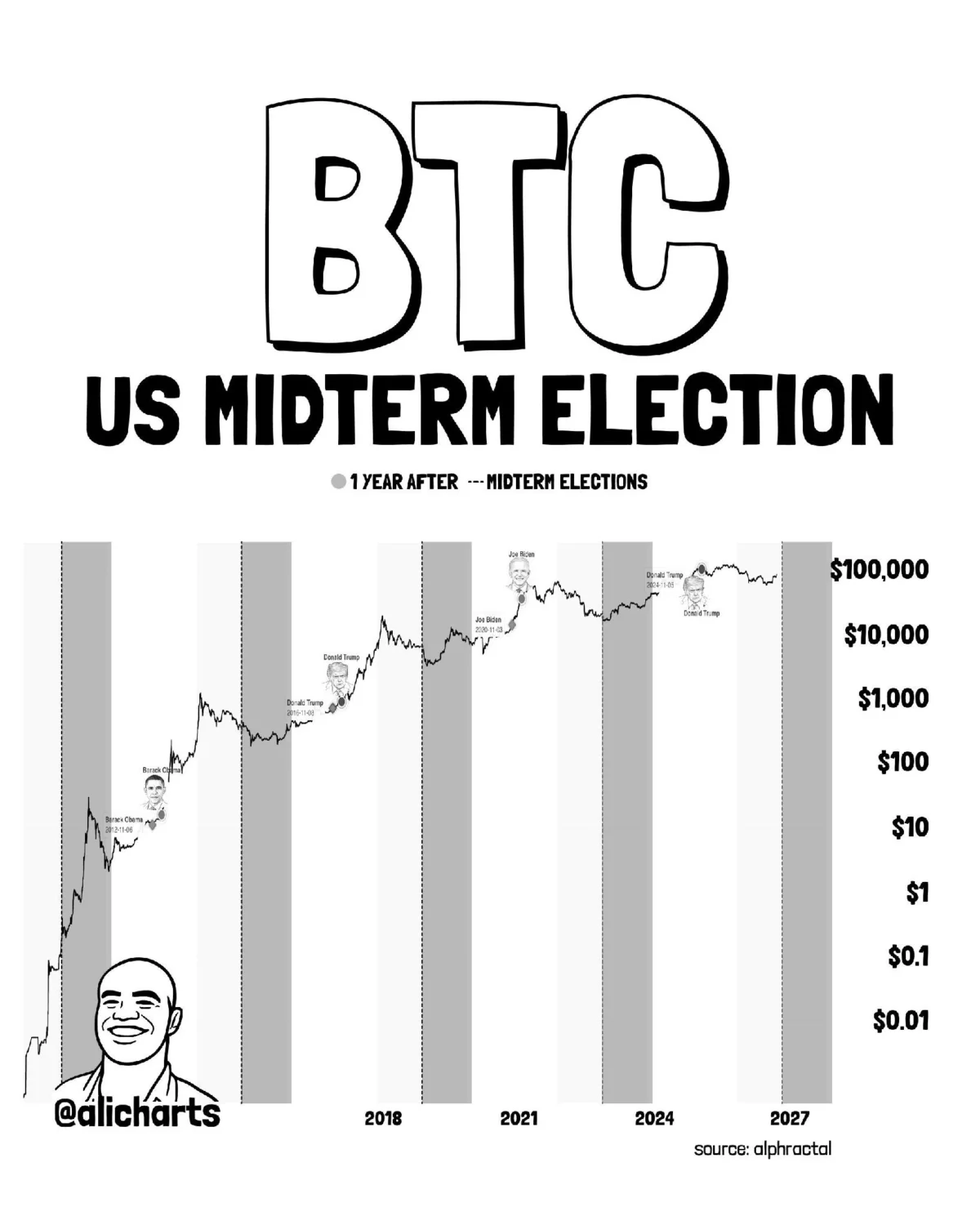
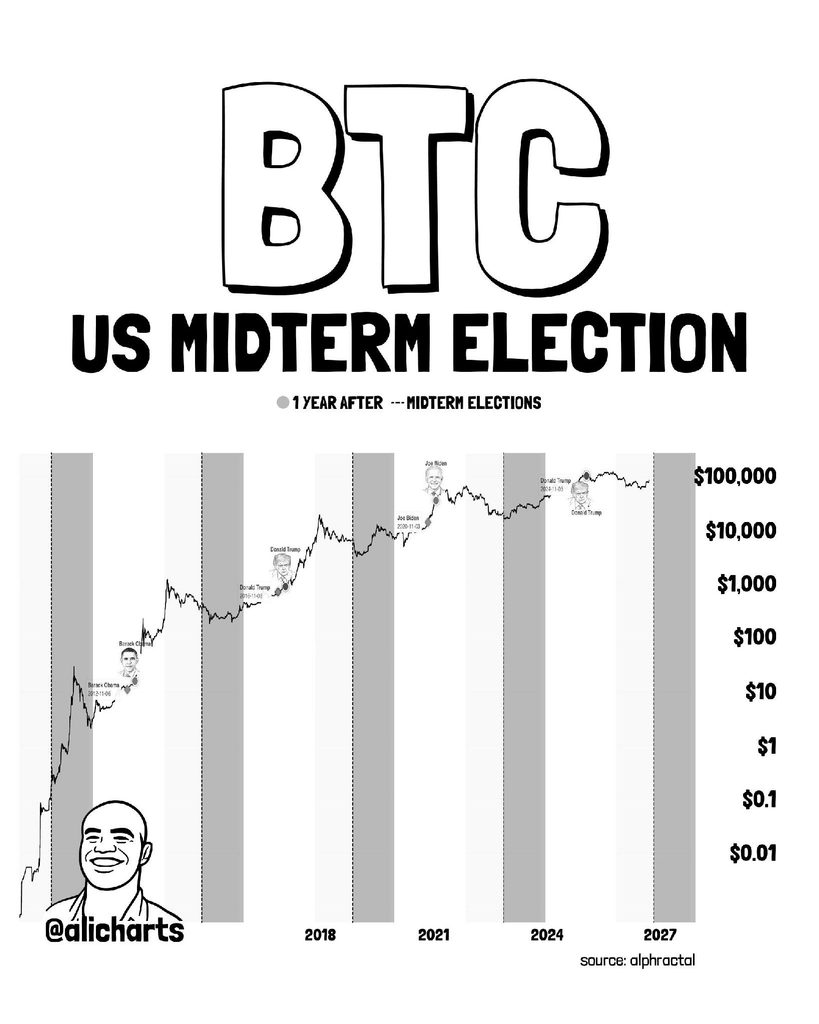
Analysts are drawing parallels between Bitcoin’s current market behavior and its performance during previous U.S. midterm election cycles, particularly 2018 and 2022. Satoureireal, an analyst at CryptoQuant, highlighted data from blockchain analytics firm Alphractal, which indicates that Bitcoin experienced substantial price corrections around these midterm periods. In late 2018, the cryptocurrency bottomed out before embarking on a recovery in 2019. Similarly, the bear market of 2022 paved the way for a rebound in 2023. This historical pattern has led to speculation about whether a similar cycle could unfold in 2026, potentially setting the stage for a recovery in 2027.
Satoureireal’s analysis, shared on X (formerly Twitter), further emphasized the recurring volatility associated with U.S. midterms. Bitcoin has, at times, rallied in anticipation of these elections, only to experience sell-offs afterward. In other cycles, declines have emerged later, underscoring the unpredictable nature of these correlations. "During the previous two midterm election cycles in 2018 and 2022, Bitcoin experienced significant corrections before forming a bottom and entering a recovery phase in the following year," Satoureireal stated, pointing to the nuanced relationship between political events and cryptocurrency markets.

It is crucial to acknowledge that these historical correlations do not definitively establish a causal link between elections and Bitcoin sell-offs. Market liquidity, monetary policy decisions by central banks, the positioning of investors, and broader economic conditions all play significant roles in shaping price movements. The midterms may act as a catalyst or a coincidental marker within a larger economic narrative.
Technical Indicators and Bullish Undercurrents
Beyond election cycle comparisons, technical analysts are identifying other patterns that could suggest underlying strength in Bitcoin’s price structure. Frank Cappelleri, founder of CappThesis, recently shared his observations with CNBC, drawing attention to similarities between Bitcoin’s current chart and the patterns that preceded its previous major recovery. Cappelleri noted that Bitcoin’s recent drawdown of approximately 54% bears resemblance to the nearly 70% drawdown observed between 2022 and 2023.
"This also looks like a bullish pattern to me," Cappelleri remarked, suggesting that the earlier decline ultimately laid the groundwork for a strong recovery as market momentum returned. While he stopped short of predicting a repeat of Bitcoin’s previous meteoric rise, which approached 400%, he expressed optimism about its potential to establish a new base for future advances. "I’m not calling for that, but I am calling for a very similar foundation to be leveraged and potentially get back to new highs again," he stated. His analysis implies that Bitcoin could be consolidating, building the necessary support for another upward trend, with a potential push towards new all-time highs by early 2027.
However, not all historical analyses paint an exclusively optimistic picture. Popular analyst Ali Charts has meticulously tracked Bitcoin’s performance in the aftermath of the last four U.S. midterm elections. His data reveals a consistent pattern of declines: 72% after the 2010 midterms, 65% after the 2014 elections, 52% after the 2018 vote, and a more modest 27% following the 2022 midterms. This trend suggests that periods leading up to and immediately following midterms have historically been challenging for Bitcoin, with significant price retracements. Ali Charts has identified the $73,000 level as a critical point to monitor if this historical pattern of decline reasserts itself.

On-Chain Data: Shifting Investor Behavior
Amidst the price speculation and historical analysis, on-chain data provides crucial insights into the behavior of Bitcoin holders, offering a glimpse into the underlying sentiment and potential market direction. Recent reports from analytics firms like Glassnode and Santiment indicate a subtle but significant shift in investor activity.
Glassnode reported that the profit-taking by short-term Bitcoin holders has eased. These holders, often more reactive to market fluctuations, had contributed to selling pressure in recent weeks. The firm noted that the proportion of exchange inflows from short-term holders who were in profit reached a one-year high before normalizing to its average level over the past year. This cooling of short-term profit-taking could alleviate some immediate selling pressure.
Concurrently, Santiment observed a notable accumulation trend among "new whales"—wallets holding between 10 and 10,000 BTC. Over a one-month period from September 19th, these influential wallets acquired approximately 88,987 BTC. Their combined holdings have now surpassed 13.69 million BTC, marking the highest level seen since April. This sustained accumulation by a significant segment of large-scale investors suggests a growing conviction in Bitcoin’s long-term value proposition, even amidst current market uncertainties.
Santiment further elaborated on the implications of this accumulation: "Bitcoin still drives much of crypto’s direction, so persistent accumulation from its largest influential holders can support not only BTC, but confidence across the market." This sentiment among larger holders can serve as a stabilizing force, potentially bolstering market confidence and acting as a counterweight to short-term volatility.

The Bitcoin Halving: A Looming Catalyst
While the midterm elections and broader economic factors are influencing current price action, the upcoming Bitcoin halving remains a pivotal event on the horizon. Scheduled for approximately April 2024, the halving is a pre-programmed event that will reduce the reward for mining new Bitcoin blocks by 50%. Historically, halvings have been associated with significant price increases in the months and years following the event, primarily due to the reduction in the new supply entering the market.
The preceding halving in May 2020, for instance, was followed by a strong bull run that saw Bitcoin reach new all-time highs in late 2021. The halving in July 2016 also preceded a substantial market appreciation. Analysts are closely watching how the current market dynamics will interact with the supply shock introduced by the next halving. The anticipation of reduced supply, coupled with potentially increasing demand fueled by institutional adoption and a more favorable macroeconomic environment, could create a potent upward force.
However, the pre-halving period itself can be characterized by heightened volatility and consolidation. Investors often adopt a cautious stance, waiting for clarity on the post-halving impact. Some may engage in strategic selling to de-risk or reposition their portfolios, while others may accumulate in anticipation of future gains. The current analysis, suggesting potential near-term corrections, could be interpreted as a typical pre-halving consolidation phase, where the market digests recent gains and prepares for the upcoming supply adjustment.
Broader Market Implications and Future Outlook
The interplay of these factors—historical election cycle patterns, technical analysis, on-chain data, and the impending halving—creates a complex landscape for Bitcoin and the broader cryptocurrency market. While short-term price fluctuations are to be expected, the underlying accumulation by significant holders and the long-term bullish implications of the halving event suggest a potential for recovery and new highs in the coming years.
The current trading price of Bitcoin, hovering around $80,341 with a modest daily increase of 1.02% at press time, reflects this ongoing equilibrium. The market appears to be digesting mixed signals, with immediate concerns about potential pullbacks tempered by optimism for the long-term growth trajectory. The next few months will be crucial in determining whether Bitcoin succumbs to historical pre-election cycle pressures or if the robust accumulation by whales and the anticipation of the halving will provide sufficient support to navigate these challenges. Investors and analysts will be closely monitoring key price levels, on-chain metrics, and macroeconomic developments for further directional clues. The potential for a recovery in 2027, as suggested by some analysts, hinges on the successful navigation of these near-term headwinds and the sustained growth of the underlying fundamentals supporting Bitcoin’s adoption and utility.