Bitwise Asset Management, a prominent name in the digital asset investment space, has officially marked its entry into the nascent but rapidly expanding tokenized funds market by assuming investment management responsibilities for the Bitwise Crypto Carry Fund (USCC). This strategic move immediately places Bitwise at the helm of a fund with $259 million in assets under management (AUM), signaling a significant step in the convergence of traditional finance (TradFi) and decentralized finance (DeFi). The announcement, detailed via Bitwise’s official channels, confirms the availability of the product to qualified purchasers, effective immediately.
A Strategic Handover: Bitwise and Superstate’s Collaborative Vision
The USCC fund, originally conceived and launched by Superstate in 2024, represents an innovative approach to generating yield within the cryptocurrency ecosystem. Superstate, a company founded by Compound Labs founder Robert Leshner, built the fund’s sophisticated on-chain infrastructure using its proprietary FundOS platform. This division of labor sees Superstate continuing to manage the technical backbone and on-chain operations, while Bitwise takes over the critical role of investment management, leveraging its extensive experience and credibility in the digital asset sector. This partnership model is designed to maximize efficiency and leverage the specialized expertise of both entities: Superstate as a pioneer in on-chain fund technology and Bitwise as an established leader in asset management and distribution.
The collaboration underscores a broader industry trend where specialized firms are combining their strengths to create hybrid financial products that marry the robustness of traditional asset management with the transparency and programmability of blockchain technology. For Bitwise, this isn’t merely an incremental product launch; it signifies a strategic expansion into a format the firm clearly anticipates will become a permanent fixture in how institutional investors interact with and gain exposure to crypto assets.
Understanding the USCC Fund’s Core Strategy: The Crypto Basis Trade
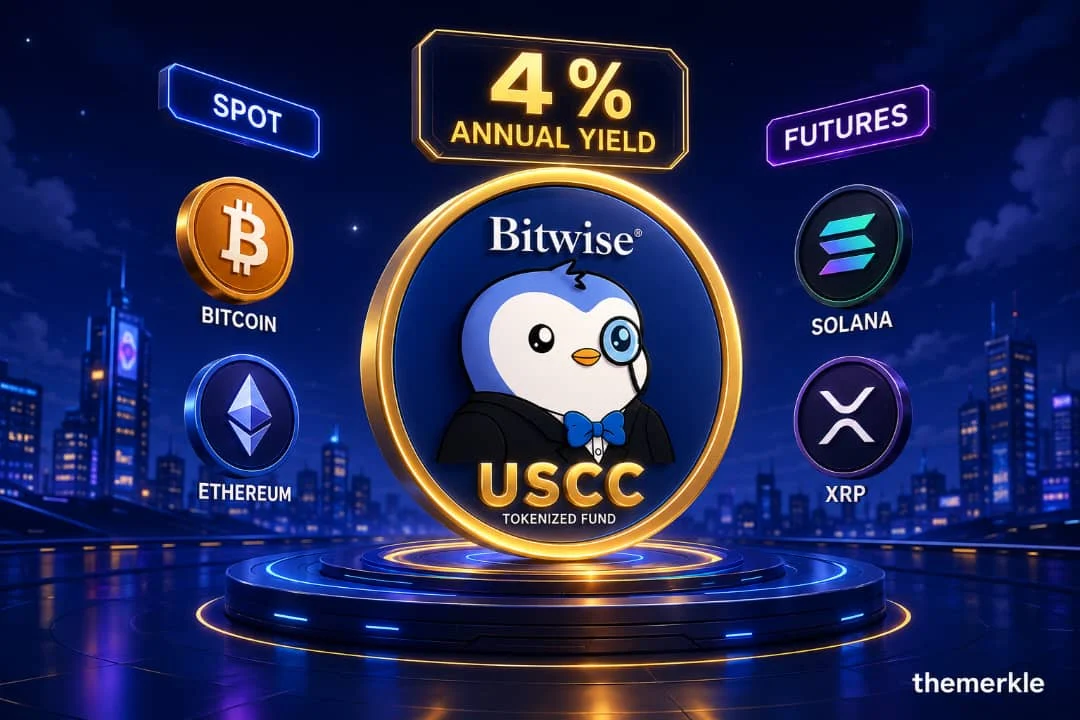
At the heart of the USCC fund’s appeal is its meticulously crafted investment strategy: the crypto basis trade. This market-neutral approach is designed to deliver a consistent annual yield, currently positioned at 4%, largely detached from the inherent directional volatility that characterizes most direct cryptocurrency investments. The mechanism is straightforward yet powerful: the fund simultaneously holds spot positions in major crypto assets—specifically Bitcoin (BTC), Ethereum (ETH), Solana (SOL), and XRP—and sells futures contracts tied to those very same assets.
The yield generated by the USCC fund originates from the "basis," or the spread, between the spot price of an asset and its corresponding futures price. In cryptocurrency markets, this spread often persists due to a structural demand for leveraged long exposure among traders. Futures contracts for cryptocurrencies typically trade at a premium to their spot prices, reflecting the cost of carrying a leveraged position over time. By simultaneously buying spot and selling futures, the fund effectively locks in this premium, converting the differential into yield for its investors.
This strategy results in a market-neutral position. Unlike traditional crypto investments that make a directional bet on price movements, the USCC fund is insulated from whether BTC or ETH prices rise or fall. Its profitability hinges on the maintenance of the spot-futures premium, offering a hedge against market downturns while still participating in the yield opportunities presented by the crypto derivatives market. While a 4% annual yield might not appear "explosive" compared to the dramatic price swings often seen in crypto, its consistency and detachment from directional volatility offer a compelling value proposition for institutional investors and qualified purchasers seeking more stable returns within the digital asset landscape. The basis trade, though common in traditional finance for commodities and equities, is still relatively novel in its systematic application across multiple crypto assets within a tokenized fund structure, providing a professionally managed avenue for sophisticated investors to access this strategy.
The Evolution of Tokenized Funds and Institutional Adoption
The move by Bitwise into tokenized funds comes amidst a rapidly accelerating trend of asset tokenization globally. According to reports from institutions like Boston Consulting Group (BCG) and Standard Chartered, the market for tokenized assets, including real-world assets (RWAs), is projected to reach trillions of dollars by the end of the decade. BCG estimated the market could hit $16 trillion by 2030, driven by the inherent advantages of blockchain technology: increased liquidity, fractional ownership, enhanced transparency, reduced settlement times, and lower administrative costs.
Bitwise’s entry validates the growing belief that tokenized funds represent the next evolutionary step for asset management, bridging the gap between traditional investment vehicles and the efficiencies of blockchain. For years, institutions have grappled with the operational complexities, custody challenges, and regulatory uncertainties associated with direct crypto investments. Tokenized funds, especially those with established managers and robust infrastructure like USCC, offer a regulated and more familiar pathway for these entities to gain exposure.
Bitwise itself has been a frontrunner in bringing crypto to traditional investors. The firm was among the first to launch a spot Bitcoin ETF in the U.S. (BITB) and has a long history of providing index funds and research into the digital asset space. Its strategic alignment with tokenization is a natural progression, reflecting a deep understanding of market demand and technological innovation. Matt Hougan, Chief Investment Officer at Bitwise, has often articulated the firm’s vision for a future where all assets are tokenized, emphasizing the efficiency and accessibility benefits. While direct statements on USCC are pending, it can be inferred that Bitwise sees this as a foundational step in building out a comprehensive suite of tokenized products that cater to the evolving needs of institutional clients seeking regulated and innovative exposure to the digital economy.
Unlocking Capital Efficiency: DeFi Integration as a Game Changer
What truly sets the USCC fund apart from many other tokenized products is its deep integration with the decentralized finance (DeFi) ecosystem. While many tokenized funds stop at merely digitizing fund ownership, USCC goes further by enabling its tokens to be used as collateral across major DeFi lending markets, including Aave, Kamino, and Morpho. This feature is not a mere technicality; it fundamentally alters the capital efficiency paradigm for investors.
In traditional finance, an investor holding a position in a fund typically has two main options to access liquidity: sell the position, thereby incurring capital gains/losses and losing future yield, or seek a highly specialized and often illiquid collateralized loan, which is rarely straightforward for fund units. With USCC tokens, investors can hold their yield-generating position, continue to earn the 4% basis yield, and simultaneously use those tokens as collateral to borrow stablecoins or other assets from a DeFi lending protocol. This "capital composability" allows the same capital to perform multiple functions concurrently, a feat that is virtually impossible within the confines of traditional financial systems.
The immediate acceptance of USCC tokens as collateral by three of DeFi’s most significant lending protocols – Aave, a cornerstone of DeFi lending with billions in Total Value Locked (TVL); Kamino, a robust liquidity protocol; and Morpho, an innovative lending optimizer – is a powerful validation of the fund’s design and underlying assets. This level of integration at launch signals a high degree of trust from the on-chain finance community, reflecting both the quality and security of Superstate’s FundOS infrastructure and the institutional credibility that Bitwise brings to the table. For investors, it means enhanced flexibility, liquidity, and potentially even higher effective returns through strategic leveraging, all within a transparent and programmable environment.
Robert Leshner, CEO of Superstate, would likely emphasize the groundbreaking nature of FundOS in enabling such deep DeFi integration for traditional fund structures. "Our vision with FundOS has always been to build the rails for a new era of finance, where assets are not just tokenized, but are truly composable and liquid within the global digital economy," Leshner might state. "The seamless integration of USCC tokens with leading DeFi protocols like Aave, Kamino, and Morpho demonstrates the power of this infrastructure and the potential for a more capital-efficient future."
Timeline and Genesis of the USCC Fund
The journey of the USCC fund began in 2024 with Superstate, a venture-backed company focused on building on-chain infrastructure for regulated financial products. Superstate’s founding by Robert Leshner, renowned for his work with Compound Finance, immediately lent credibility to its mission. Recognizing the growing demand for yield-generating products in crypto that mitigated directional risk, Superstate developed the concept of a market-neutral basis trade fund. Utilizing its FundOS platform, Superstate was able to engineer an on-chain fund that not only managed the complex basis trade strategy but also ensured the tokenized representation of fund units could interact seamlessly with the broader DeFi ecosystem.
Bitwise, with its long-standing commitment to bringing institutional-grade crypto products to market, likely recognized the innovative potential and market fit of the USCC fund. Having spent years conducting extensive research into asset tokenization and observing the maturation of the DeFi landscape, the firm was well-positioned to identify a product that aligned with its strategic expansion into on-chain rails. The transition of investment management responsibilities from Superstate to Bitwise represents a natural evolution, with Bitwise providing the scale, compliance expertise, and distribution network necessary for the fund’s continued growth and institutional adoption. This handoff underscores a collaborative spirit prevalent in the digital asset space, where technological innovators and established financial managers are increasingly partnering to accelerate market development.
Broader Impact and Implications for the Digital Asset Ecosystem
The launch and subsequent management of the USCC fund by Bitwise carries significant implications for several facets of the digital asset ecosystem:
-
Institutional Adoption: It marks a crucial inflection point for institutional investors. The combination of a respected asset manager like Bitwise, a proven on-chain infrastructure provider like Superstate, a market-neutral yield strategy, and deep DeFi composability provides a compelling package that addresses many of the historical barriers to institutional crypto participation. It offers a more familiar, regulated, and less volatile entry point.
-
Tokenization’s Maturation: USCC serves as a powerful case study for the potential of asset tokenization beyond mere speculation. It demonstrates how tokenized fund units can offer enhanced utility and capital efficiency, moving beyond simply representing ownership to actively participating in dynamic financial markets. This sets a precedent for how other traditional assets might be tokenized and integrated into blockchain-based finance.
-
DeFi’s Evolution: The integration with Aave, Kamino, and Morpho validates DeFi’s growing maturity and its capacity to serve as a robust platform for institutional-grade assets. It suggests a future where institutional capital, once exclusively confined to TradFi, can flow more freely and efficiently into permissioned DeFi protocols, further blurring the lines between the two financial worlds. This cross-pollination could significantly increase DeFi’s Total Value Locked and overall utility.
-
Demand for Market-Neutral Products: The continued volatility of crypto markets in 2025 and 2026 has reinforced the need for diversified investment strategies. Products like USCC, which offer a consistent yield decoupled from directional price swings, fill a critical gap for investors seeking exposure to the crypto ecosystem without enduring its characteristic "rollercoaster" nature. This demand is likely to spur further innovation in structured products and alternative strategies within digital assets.
-
Strategic Partnerships as a Blueprint: The Bitwise-Superstate partnership model—where one entity provides technological infrastructure and the other handles investment management and distribution—could become a blueprint for future collaborations in the tokenized asset space. It allows firms to specialize and excel in their core competencies, leading to more robust and innovative products.
For qualified purchasers interested in accessing the fund, Bitwise directs inquiries to its official website, bitwiseinvestments.com/crypto-funds/uscc, or through their established client service channels.
In conclusion, the Bitwise Crypto Carry Fund, with its $259 million AUM, market-neutral strategy, and groundbreaking DeFi integration, is more than just a new investment product. It is a tangible manifestation of the ongoing convergence between traditional finance and blockchain technology, a clear data point indicating the direction in which tokenized finance is heading, and a testament to the increasing sophistication and institutionalization of the digital asset landscape. Its success could pave the way for a new generation of financial products that harness the best of both worlds, offering unparalleled efficiency, transparency, and capital utility.
Disclosure: This article is for informational purposes only and does not constitute trading or investment advice. Always conduct thorough research and consult with a qualified financial professional before making any investment decisions.