


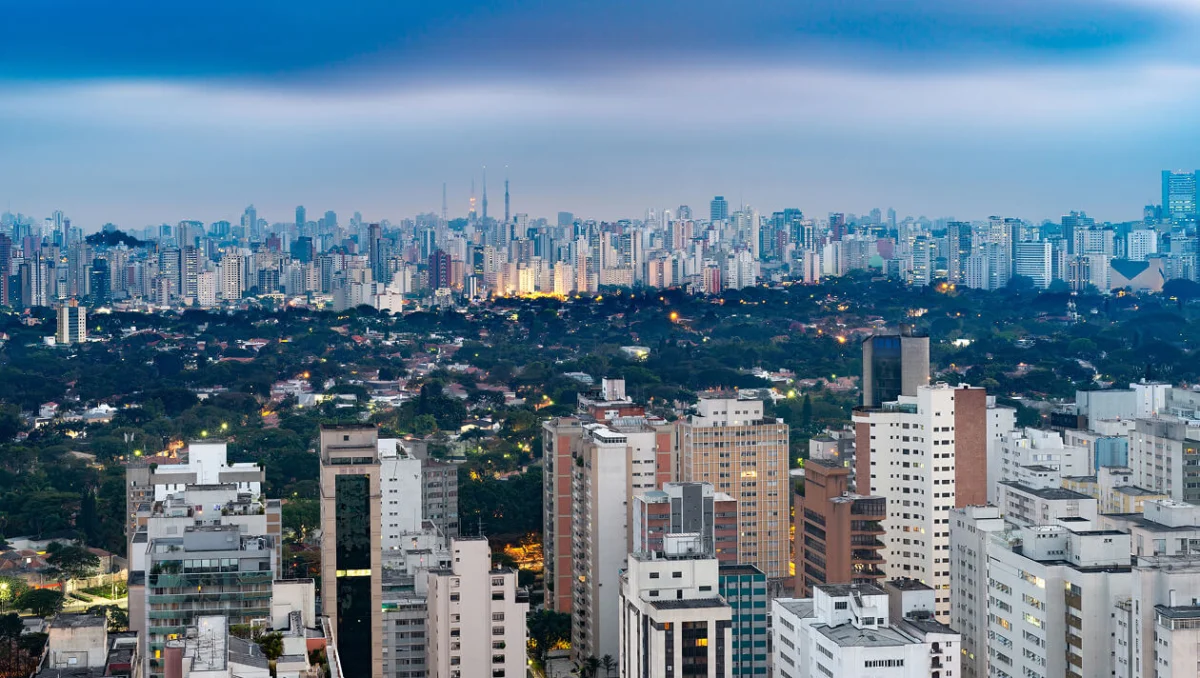
Brazil has solidified its position as the preeminent cryptocurrency market in Latin America and one of the most dynamic digital asset corridors globally. Between July 2024 and June 2025, the country received an estimated $318 billion in on-chain value, representing approximately one-third of all cryptocurrency transactions recorded across the Latin American region. This explosive growth is the result of a unique confluence of factors: a large, tech-savvy youth population, a sophisticated fintech ecosystem that has democratized digital financial services, and a persistent demand for dollar-pegged stablecoins as a hedge against domestic inflationary pressures. However, the rapid expansion of Brazil’s legitimate crypto economy has concurrently attracted a shadow industry of illicit actors. New data reveals that the same criminal syndicates dominating global money laundering—including Chinese-language money laundering networks (CMLNs), Russian sanction evaders, and international drug trafficking organizations—have established a deep-seated presence within Brazilian digital asset exchanges.
The nature of cryptocurrency crime is inherently borderless, yet Brazil has become a critical focal point where global threat actors converge. According to recent market analysis, three specific categories of illicit actors—CMLNs, sanctioned entities, and drug cartels—account for more than 50% of the identified illicit flows into selected Brazilian exchanges as of 2025. This influx of criminal capital arrives at a pivotal moment for the nation’s financial oversight. On February 2, 2026, a comprehensive new authorization regime for cryptocurrency companies went into effect, marking the beginning of a rigorous regulatory era overseen by the Banco Central do Brasil (BCB). With reporting obligations active since May 4, 2026, and a final licensing deadline set for October 29, 2026, the ability of exchanges to detect and disrupt these sophisticated criminal flows serves as the first major trial for Brazil’s new supervisory framework.
The Global Context: A $154 Billion Criminal Ecosystem
The challenges facing Brazil are a microcosm of a broader, more alarming global trend. The total value received by illicit cryptocurrency addresses reached a staggering $154 billion in 2025, a massive escalation from $59 billion in 2024 and a mere $11 billion in 2020. This surge is not merely a byproduct of increased crypto adoption; it represents a fundamental shift in the professionalization of digital crime. Since 2020, on-chain criminal activity has evolved from fragmented, opportunistic thefts into highly structured operations. Modern illicit organizations now utilize shared dedicated infrastructure, and for the first time, state-sponsored actors are participating in the ecosystem at an unprecedented scale.
The composition of these illicit flows has also undergone a dramatic transformation. While Bitcoin was once the primary vehicle for cybercrime, stablecoins now dominate the landscape. Preferred for their price stability and ease of settlement, stablecoins allow criminal networks to move vast sums of value without the volatility risks associated with traditional cryptocurrencies. This preference mirrors the broader market trend where stablecoins have become the primary liquidity source for both legitimate and illegitimate users. In Brazil, the intersection of high stablecoin demand and a massive exchange infrastructure has provided the perfect environment for these global networks to mask their activities within high-volume legitimate trading.

The Triad of Threats: CMLNs, Sanctions, and Cartels
The illicit landscape in Brazil is currently defined by three primary forces that have migrated from the global stage to the local market.
First, Chinese-language money laundering networks (CMLNs) have become a dominant fixture. These networks operate as highly efficient "money-laundering-as-a-service" providers, often facilitating the movement of funds for a variety of disparate criminal groups. Data indicates that approximately 20% of known illicit funds globally are now routed through CMLNs. In Brazil, these networks leverage the country’s high liquidity to off-ramp digital assets into fiat currency or transfer them across international borders, often disguising the origin of the funds through complex layers of transactions.
Second, the involvement of Russian-linked entities and sanction evaders has risen sharply. Following international geopolitical shifts, Russian services such as the A7A5 swap service and other sanctioned platforms have sought out alternative jurisdictions with high crypto penetration. Brazil’s open and growing market has inadvertently provided a gateway for these entities. The exposure to Russian-related services in Brazilian exchanges has become a significant concern for regulators, as it risks entangling the domestic financial system in global sanction violations.
Third, the influence of drug trafficking organizations and cartels remains a persistent threat. Given Brazil’s geographical position as a key transit point for international narcotics, cartels have increasingly turned to cryptocurrency to launder the proceeds of their operations. The intensity of this problem is consistent with trends across the Western Hemisphere, where cartels utilize the speed and perceived anonymity of crypto to move wealth across borders more efficiently than traditional banking systems allow.
A Chronology of Brazil’s Regulatory Response
To combat these rising threats, the Brazilian government has accelerated its legislative and regulatory agenda. The timeline of this transformation reflects a proactive attempt to secure the market without stifling innovation:

- December 2022: The Brazilian government passes the "Virtual Assets Act," providing a legal definition for digital assets and establishing the groundwork for federal oversight.
- November 2025: The Banco Central do Brasil (BCB) publishes Resolutions 519, 520, and 521. These resolutions operationalize the 2022 law, detailing the requirements for licensing, anti-money laundering (AML), and the "Travel Rule" as recommended by the Financial Action Task Force (FATF).
- February 2, 2026: The new authorization regime officially enters into force. All Virtual Asset Service Providers (VASPs), known locally as SPSAVs, must begin the process of seeking formal authorization to operate.
- March 2026: Law No. 15.358 is enacted, significantly expanding the powers of law enforcement to block, seize, and repurpose digital assets linked to organized crime.
- May 4, 2026: Mandatory regulatory reporting obligations begin. Exchanges are required to provide detailed transaction data to the BCB to ensure compliance with AML and Counter-Terrorist Financing (CTF) protocols.
- June 2026: The Securities and Exchange Commission of Brazil (CVM) concludes its public consultation on which crypto-assets qualify as securities, providing further clarity for institutional investors.
- October 29, 2026: The final deadline for existing companies to obtain their SPSAV licenses. Firms failing to meet this deadline face immediate cessation of operations within the country.
Data-Driven Intervention: The Power of Concentration
Despite the daunting scale of illicit activity, data analysis provides a glimmer of hope for enforcement. One of the most significant findings in recent studies of Brazilian exchanges is the high level of concentration in illicit flows. While the number of distinct deposit addresses exposed to illicit funds ranged between 550 and 950 per quarter from 2023 to early 2026—suggesting that criminals are spreading their activity to avoid detection—the actual volume is heavily concentrated.
Consistently, the top five most exposed deposit addresses per quarter accounted for between 75% and 90% of the total illicit volume received by Brazilian exchanges. As of March 2026, approximately 80% of all illicit volume was directed toward just five distinct addresses. This "Pareto Principle" of crypto crime offers a massive operational advantage to regulators and exchange compliance teams. By prioritizing the monitoring and freezing of a very small number of high-risk addresses, authorities can disrupt a disproportionately large percentage of criminal activity.
This concentration suggests that while the criminal networks are vast, their infrastructure relies on a few critical "bottlenecks." If Brazilian authorities and exchanges can effectively target these high-volume nodes, they can make the country a significantly less hospitable environment for global money launderers.
Regional Leadership and Broader Implications
Brazil’s approach to cryptocurrency regulation is increasingly viewed as a blueprint for the rest of Latin America. As other nations like Argentina, Mexico, and Colombia grapple with their own crypto adoption surges, they are looking toward the BCB’s framework as a model for balancing financial stability with technological growth. Brazil’s decision to treat stablecoin transfers as foreign exchange activities under Resolution 521 is a particularly innovative move that addresses the unique role stablecoins play in emerging markets.
The implications of Brazil’s success or failure in this endeavor are profound. If the new regulatory regime successfully flushes out illicit actors, it will likely lead to an influx of institutional capital and further solidify Brazil’s status as a global fintech leader. Conversely, if the 50% illicit flow rate persists, the country risks being gray-listed by international bodies, which could hamper its broader economic integration.

Conclusion: The Path Forward
The intersection of a booming legitimate market and a sophisticated criminal underbelly has placed Brazil at a crossroads. The data is clear: global threat actors are already active within the Brazilian ecosystem. However, the transparency of the blockchain provides a unique opportunity for intervention that traditional finance cannot match.
The upcoming October 2026 licensing deadline is more than just a bureaucratic milestone; it is a defensive perimeter. For Brazilian exchanges, regulators, and law enforcement, the challenge is to move faster than the criminals. By leveraging advanced transaction monitoring tools and focusing on the highly concentrated nodes of illicit activity, Brazil has the potential to transform from a target of global crime into a global leader in digital asset security and compliance. The next few months will determine whether Brazil’s crypto market remains a "vibrant frontier" or becomes a "fortress" against the world’s most sophisticated financial criminals.














