Cake Wallet stands out in the increasingly crowded landscape of multi-currency cryptocurrency wallets, not merely for its broad asset support, but for a particular feature often overlooked by casual users: the ability to send crypto to multiple addresses in a single, consolidated transaction. This functionality, while seemingly minor, represents a significant leap in efficiency and cost-effectiveness, addressing common pain points associated with individual cryptocurrency transfers. Once the profound implications of this batch sending capability—in terms of saved fees, reduced time, and enhanced reliability—are understood, it becomes clear how much friction many other wallets continue to impose on their users.
The Unsung Efficiency of Batch Sending: A Deep Dive
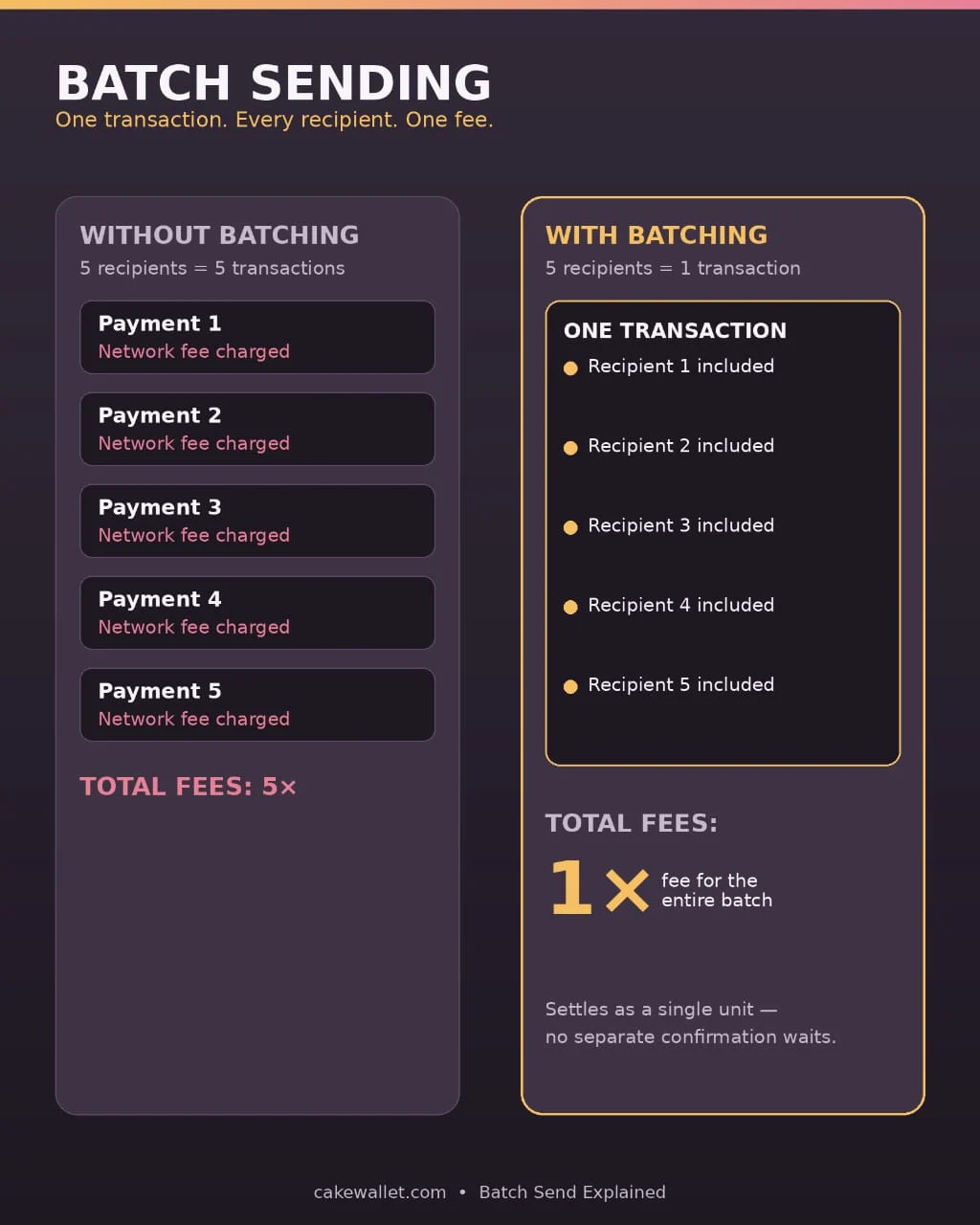
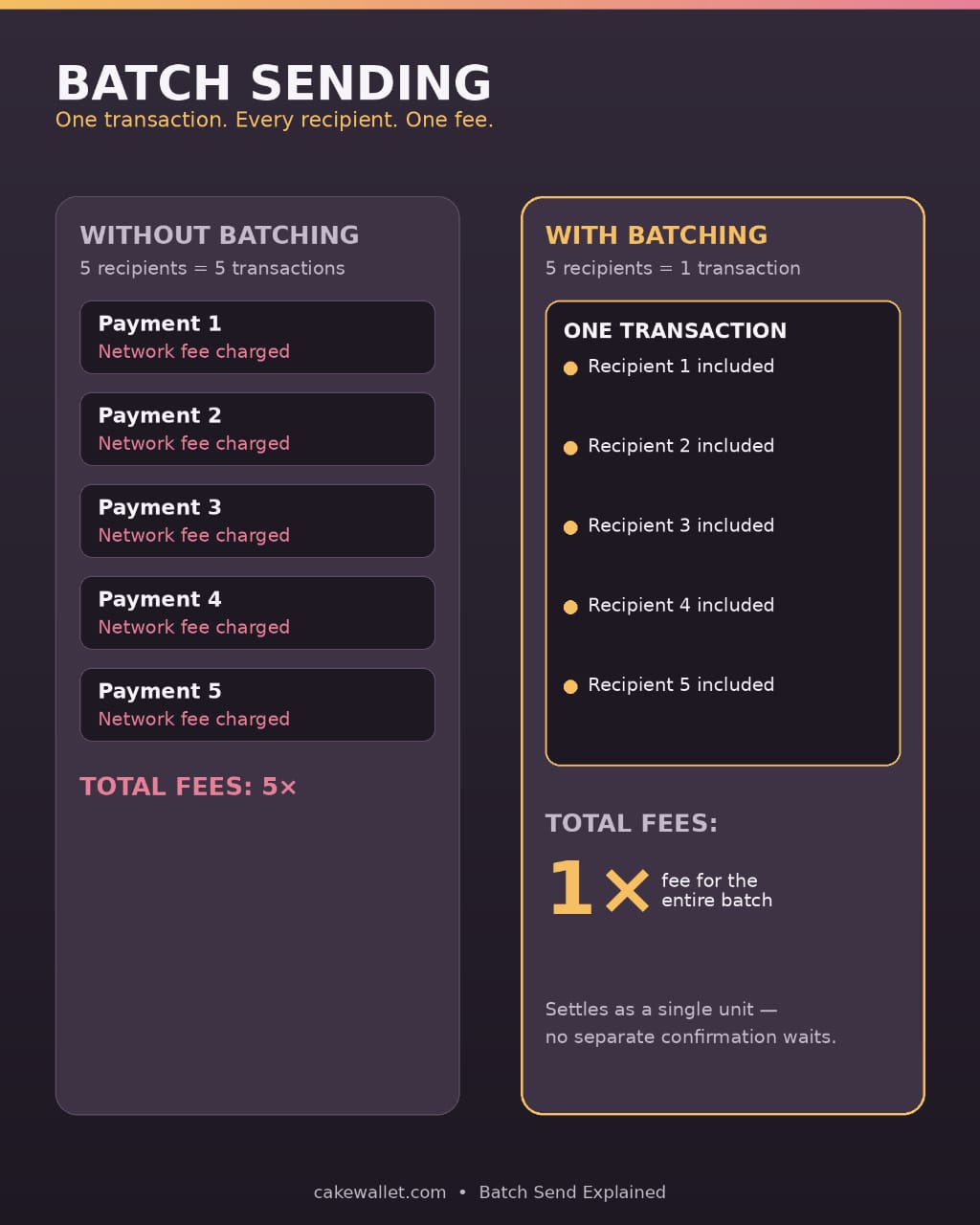
The core of Cake Wallet’s innovation in this area lies in its batch sending mechanism. Instead of initiating five separate transactions to disburse funds to five different recipients, each incurring its own network fee, requiring its own confirmation wait, and facing individual susceptibility to network congestion, users can bundle all these transfers into one atomic transaction. This single transaction then settles as a unified unit on the blockchain.

The practical value of this feature becomes immediately apparent to anyone who frequently manages cryptocurrency distributions, whether for payroll, splitting expenses among a group, settling payments with multiple contractors, or simply consolidating funds across various personal wallets. On blockchain networks, particularly those like Bitcoin and Ethereum where transaction fees can fluctuate wildly based on network congestion, batching is not merely a convenience; it is a critical cost-saving strategy. Network fees are typically calculated based on the transaction’s data size and complexity, rather than a flat rate per recipient. By consolidating multiple outputs into a single transaction input, the overall data footprint can be significantly smaller than the sum of multiple individual transactions, leading to substantial fee reductions. For instance, during peak network activity, an individual Ethereum transaction might cost upwards of $10-$50 in gas fees. Sending funds to five separate addresses could accumulate costs ranging from $50-$250. With batch sending, the user pays a single, albeit slightly larger, fee for the bundled transaction, which is almost always a fraction of the cumulative cost of individual sends. This quiet efficiency translates into tangible financial savings over time, particularly for high-volume users or small businesses operating on blockchain rails.
Addressing the Friction in Cryptocurrency Transactions
The cryptocurrency ecosystem, despite its rapid advancements, has historically presented users with significant operational hurdles. Early wallets often supported only a single currency, leading to a fragmented user experience where managing diverse digital assets required juggling multiple applications. Beyond this, the inherent design of many blockchain networks meant that every transfer, regardless of size, was a distinct event, consuming network resources and incurring fees. This model, while fundamental to decentralization, introduced inefficiencies for users needing to make multiple payments. High network fees, particularly during periods of increased demand or "gas spikes" on networks like Ethereum, exacerbated these issues, making small, frequent payments economically unfeasible for many. The time taken for individual transactions to confirm, often ranging from minutes to hours depending on network load and chosen fee priority, further added to user frustration. Cake Wallet’s batch sending directly confronts these challenges, streamlining the process and reducing both the financial and temporal overhead traditionally associated with multi-recipient crypto transactions.
Cake Wallet: A Deep Dive into its Core Identity
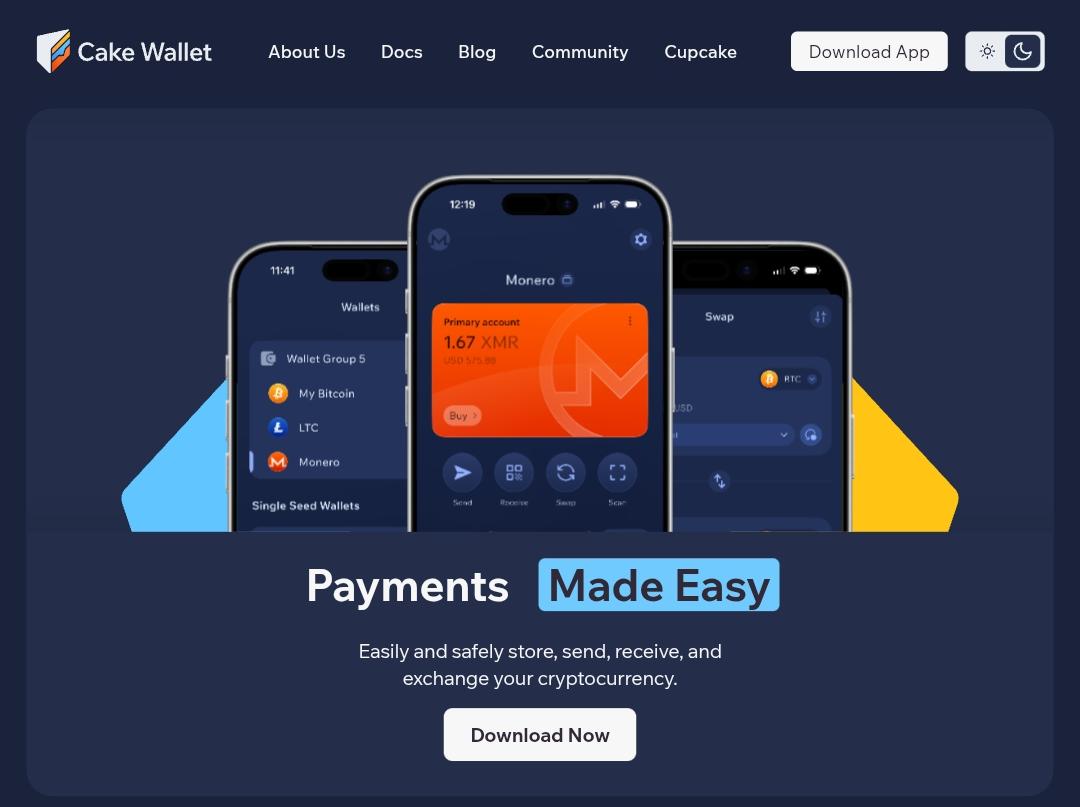
At its foundation, Cake Wallet is a non-custodial, open-source cryptocurrency wallet, distinguishing itself by giving users full control over their private keys and digital assets. This non-custodial nature is a cornerstone of the decentralized ethos, ensuring that no third party holds or can freeze user funds. Developed by Cake Labs, the wallet operates under the permissive MIT license, making its entire codebase publicly auditable. This commitment to open-source transparency is not merely a technical detail; it is a fundamental security assurance. In an industry frequently plagued by scams and opaque practices, the ability for anyone to inspect the underlying code means that claims of privacy and security can be independently verified, fostering a higher degree of trust than marketing assertions alone.
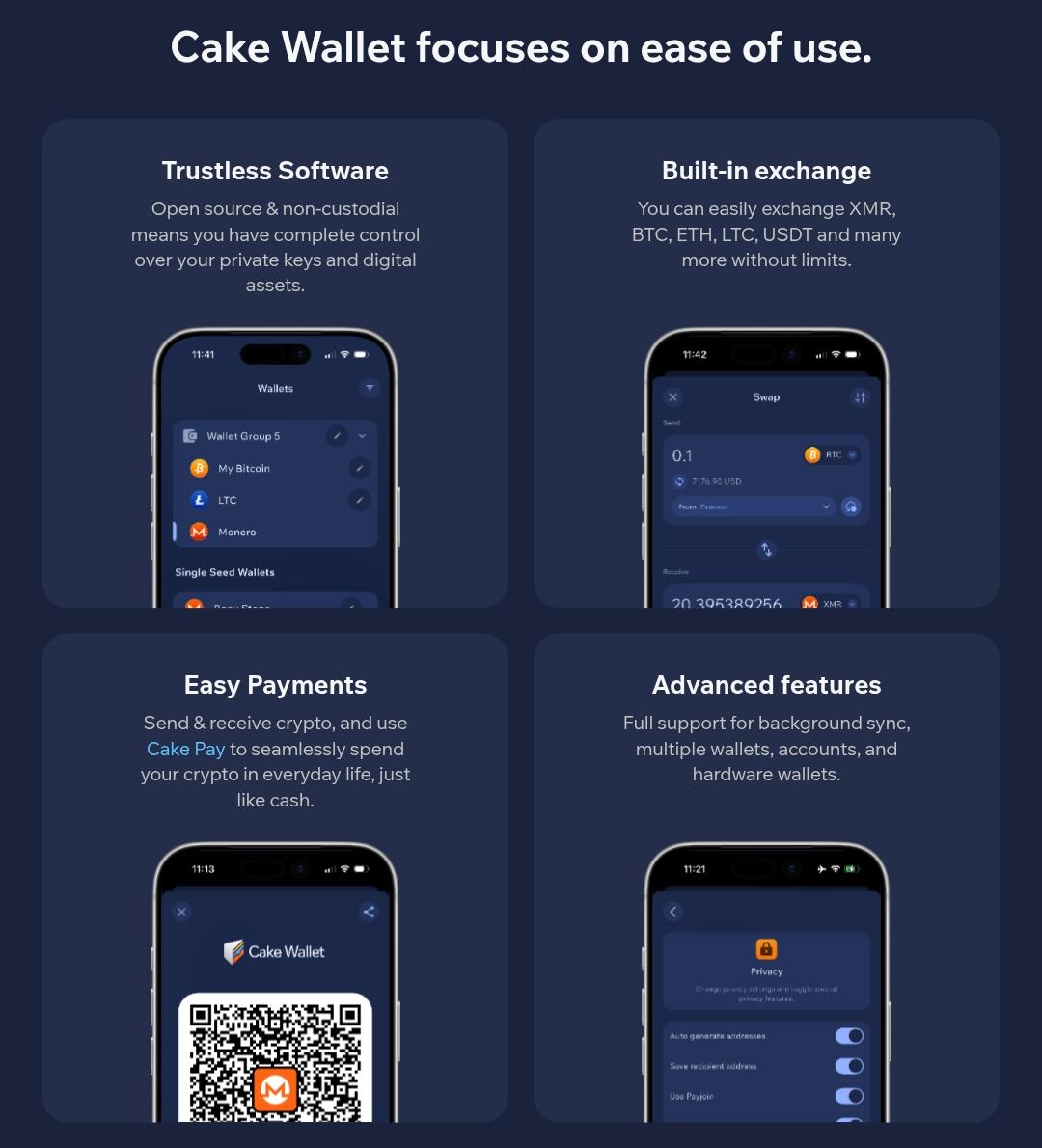
Monero support has been a defining characteristic of Cake Wallet since its early days. Monero (XMR) is renowned for its robust privacy features, utilizing ring signatures, stealth addresses, and confidential transactions to obscure sender, recipient, and transaction amounts. Cake Wallet’s deep integration with Monero reflects a commitment to privacy that permeates its overall design philosophy. Beyond basic send and receive functionalities, Cake Wallet incorporates features like Cake Pay, enabling users to spend cryptocurrencies directly for everyday purchases, and offers full background synchronization, ensuring up-to-date transaction histories and balances. The wallet also supports the management of multiple distinct wallets and accounts within a single application interface and provides compatibility with hardware wallets, offering cold storage security combined with a user-friendly software interface.
Navigating the Send Flow: Precision and Control
The process of initiating a transaction within Cake Wallet is designed for clarity and control. From the balance screen, users simply tap "Send." They can then input the destination address through various convenient methods: pasting a standard alphanumeric address, scanning a QR code, or selecting from a saved address book. The amount to be sent can be specified either in the active cryptocurrency’s denomination or its fiat equivalent, with an "ALL" button available for transferring the entire wallet balance. Critically, for individual and batch transactions alike, users have the flexibility to adjust the network fee priority, influencing how quickly the transaction is processed on the blockchain. An optional private internal note, visible only within the app, allows for better personal record-keeping. Before broadcasting, a confirmation screen provides a comprehensive overview, ensuring accuracy.
A crucial distinction for new users is the separation of the network fee from the send amount. For instance, if a user has 1 XMR, intends to send 0.5 XMR, and the network fee is 0.01 XMR, the total expenditure for that transaction will be 0.51 XMR. This distinction is particularly pertinent when utilizing the batch sending feature. In a batch transaction, a single combined fee covers all recipients within that bundle, contrasting sharply with the accumulation of individual fees that would occur if each payment were sent separately. This consolidation of fees underscores the economic advantage of batch sending, particularly on networks where transaction costs are significant.
Redefining Address Flexibility: Beyond the Alphanumeric
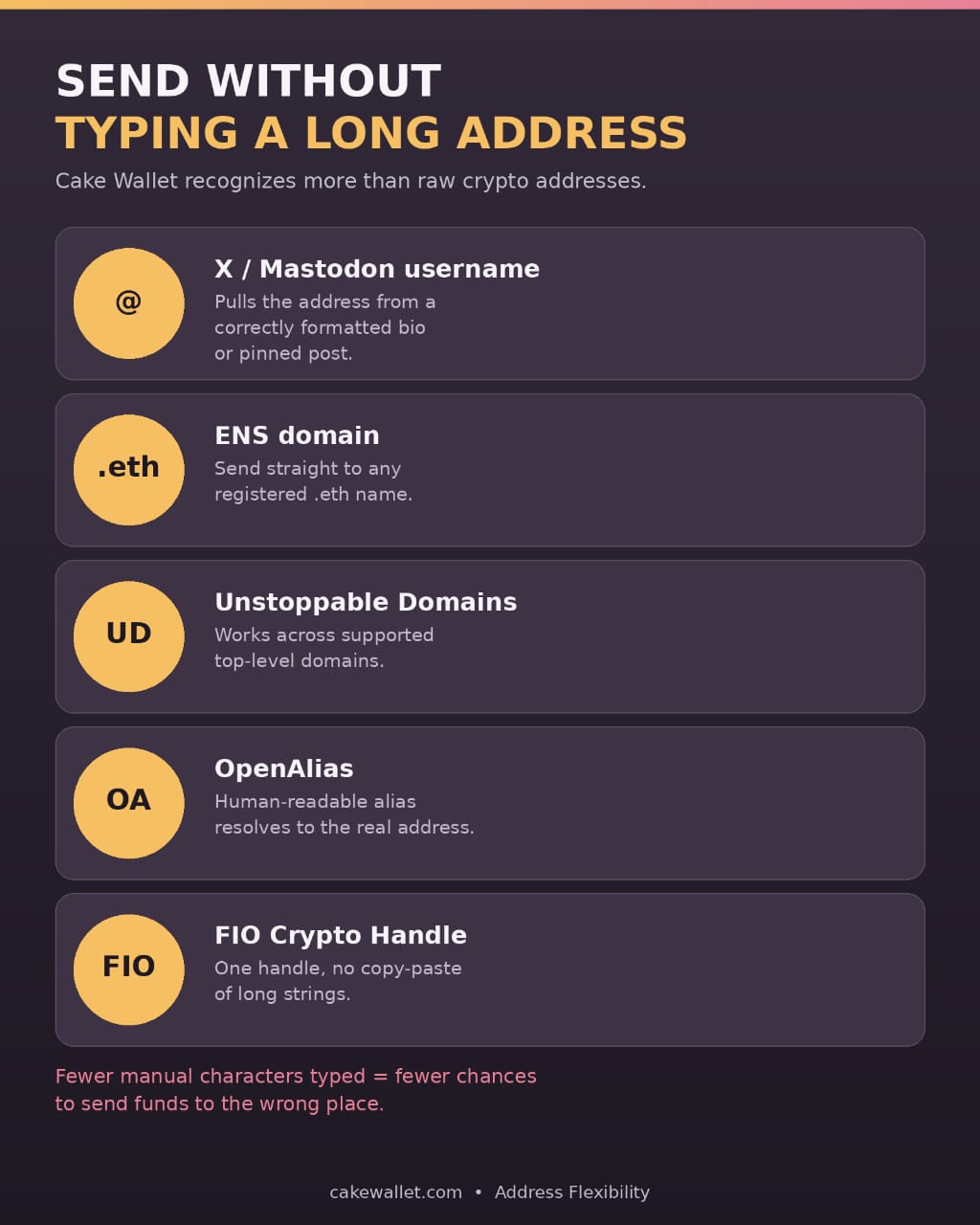
Cake Wallet further elevates the user experience by moving beyond the traditional, cumbersome alphanumeric wallet addresses. Recognizing that long, complex strings of characters are a frequent source of error in cryptocurrency transactions, Cake Wallet has implemented robust support for human-readable addressing systems. This includes sending directly to OpenAlias addresses, Ethereum Name Service (ENS) domains ending in .eth, and Unstoppable Domains addresses across various supported top-level domains. Additionally, it integrates with FIO Crypto Handles, another initiative aimed at simplifying crypto transactions with human-readable identifiers.
Perhaps one of the most innovative aspects of its address recognition is the ability to type a Mastodon or X (formerly Twitter) username directly into the send screen. If the specified social media account has a correctly formatted cryptocurrency address publicly posted in its bio or a pinned post for the relevant cryptocurrency, Cake Wallet will automatically detect and surface that address. This feature significantly reduces the cognitive load and potential for error, transforming the process of sending crypto from a tedious copy-paste operation to something as intuitive as sending an email or direct message. This comprehensive suite of address flexibility, combined with batch sending, reflects a consistent design philosophy: minimizing the number of steps and potential points of failure in a transaction, thereby enhancing both convenience and security for the end-user. The elimination of long, easily mistyped wallet addresses directly mitigates one of the most common causes of irretrievable fund loss in the crypto space.
Privacy-Centric Architecture: The Monero Legacy
Given Monero’s central role in Cake Wallet’s identity, its privacy-specific tools are meticulously integrated and deserve particular emphasis. The wallet automatically generates new subaddresses after each use by default. This is a crucial privacy practice, as it prevents multiple transactions from being easily linked to the same identity on the blockchain, thereby enhancing pseudonymity. For advanced users requiring more granular control, the automatic generation can be disabled, allowing for manual management of subaddresses. Cake Wallet also offers an extreme privacy option: configuring the wallet to discard the recipient address entirely after sending Monero. While this ensures no record of the recipient remains within the wallet, Cake Wallet explicitly recommends this setting only for advanced users who fully comprehend the irreversible trade-off of losing transaction recipient history.
Wallet creation and restoration within Cake Wallet default to a 16-word Polyseed, a modern and robust mnemonic standard, though it also supports the older 25-word legacy seed format for compatibility. A fundamental operational requirement for Cake Wallet is full synchronization with the blockchain, indicated by a green dot on the home screen, before most functionalities become fully operational. This synchronization process, while a minor initial friction point for newly restored wallets, is essential for ensuring accurate balance reporting and secure transaction execution, particularly for a privacy-focused coin like Monero which relies on scanning the entire chain for user-specific transactions.
The Synergy of Features: A Holistic Approach to Crypto Management
While batch sending, in isolation, exists within other Bitcoin-focused tools, Cake Wallet’s distinctive value proposition emerges from the synergistic combination of this fee-saving capability with genuinely broad multi-currency support, deep Monero-specific privacy tooling, flexible address recognition across various human-readable formats and social media usernames, and a fully open-source codebase. All these features are unified within a single, non-custodial application, eliminating the need for users to juggle disparate tools to achieve a comprehensive crypto management experience.
For individuals and entities who regularly disburse cryptocurrency to multiple recipients—be it for payroll, recurring group payments, or simply consolidating personal funds across various self-managed wallets—batch sending offers quiet, yet significant, financial savings through avoided fees over time. While often overshadowed by more prominently marketed features, its utility becomes paramount precisely when such multi-recipient transactions are needed. The integration of this efficiency-driven feature with robust privacy controls, an open-source security model, and an intuitive, error-reducing address system positions Cake Wallet not just as another crypto wallet, but as a thoughtfully engineered solution addressing the practical demands of modern cryptocurrency users. It represents a forward-thinking approach to wallet design, setting a benchmark for convenience, security, and cost-efficiency that many other platforms have yet to fully embrace.
Some visuals in this article are AI-generated illustrations created to demonstrate Cake Wallet’s features and are not actual screenshots of the app. For accurate, up-to-date information or to interact directly with the wallet, please visit https://cakewallet.com/.
Disclosure: This is not trading or investment advice. Always do your research before buying any cryptocurrency or investing in any services.