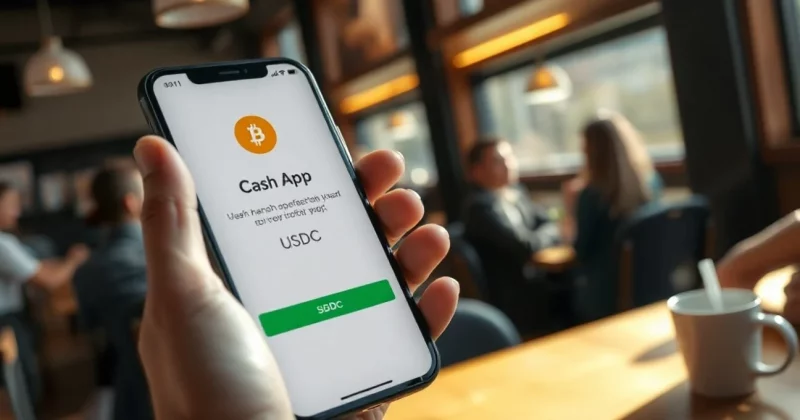
Cash App, the immensely popular mobile payment platform operated by Jack Dorsey’s fintech giant Block, has taken a significant leap into the world of digital assets by commencing the rollout of its USD Coin (USDC) send-and-receive functionality. This integration, which began on May 27th, makes Cash App one of the largest consumer-facing platforms to offer stablecoin payments, initially reaching approximately 15 million users, representing roughly 25% of its nearly 60 million monthly active users. The move signifies a strategic expansion beyond its established Bitcoin offerings and positions the company to capitalize on the growing utility of stablecoins in everyday transactions.
The newly implemented feature leverages the Solana blockchain for transaction settlement. Users will experience a seamless process, allowing them to instantly convert USDC into their existing USD Cash balance within the app. This integration aims to simplify the user experience by abstracting away the complexities often associated with cryptocurrency transactions, such as managing separate wallets or worrying about fluctuating gas fees.
Seamless Integration: Bridging Traditional Finance and Decentralized Technology
The technical architecture behind Cash App’s USDC integration is designed for user-friendliness and efficiency. Each Cash App user is assigned a unique blockchain deposit address specifically for USDC transactions. This innovation is crucial as it enables anyone, not exclusively other Cash App users, to send USDC directly to a Cash App account. The process utilizes a standard Solana wallet address, making it accessible to a broad range of digital asset holders.
A core tenet of this feature is its inherent simplicity. The conversion between USDC and USD is executed automatically within the Cash App interface. Users are not required to manage separate cryptocurrency wallets, engage in complex cross-chain bridging, or contend with the often unpredictable and potentially prohibitive gas fees that can plague networks like Ethereum, especially during periods of high congestion. This focus on an abstracted user experience is a key differentiator, aiming to lower the barrier to entry for mainstream adoption of stablecoin payments.
The choice of Solana as the settlement layer for these transactions was a deliberate one, driven by the blockchain’s renowned speed and exceptionally low transaction costs. In contrast to the Ethereum mainnet, where transaction fees can surge to economically unviable levels for small payments during peak demand, Solana’s transaction costs, often measured in fractions of a cent, make micropayments a practical reality. This cost-effectiveness is paramount for a platform like Cash App, where users frequently engage in smaller, everyday transactions.
The initial rollout, which commenced this week, is progressing rapidly. Block anticipates that the USDC send-and-receive functionality will be fully available to its entire user base by the end of the current week. This swift expansion from the initial 25% cohort to the broader user base underscores the company’s commitment to quickly integrating and scaling new features.
From Bitcoin Pioneer to Digital Asset Ecosystem
Cash App’s journey with digital assets began years ago with its robust support for Bitcoin. Users have long been able to buy, sell, and transact using Bitcoin, including leveraging the Lightning Network for faster and cheaper payments. The addition of USDC marks a significant strategic evolution, moving beyond the volatility inherent in Bitcoin to embrace the stability of a pegged asset.
While Bitcoin excels as a store of value and a speculative investment, its price volatility can present challenges for everyday transactional use. The risk of price fluctuations between the moment a payment is initiated and when it is received can lead to discrepancies, making it less ideal for scenarios where exact dollar amounts are critical.
USDC, on the other hand, is designed to maintain a 1:1 peg with the U.S. dollar. Its stability is underpinned by reserves comprising cash and short-dated U.S. Treasury securities, providing a degree of confidence in its value proposition for transactional purposes.
Block first signaled its intentions to integrate stablecoin support back in November 2025. At that time, the company outlined plans to introduce USDC functionality on the Solana blockchain, alongside enhancements to its existing Bitcoin payment features. The current rollout effectively delivers on that roadmap, arriving in early 2026, aligning with the timeline that Block had initially projected for the feature’s launch.
Implications for Investors and the Broader Digital Asset Landscape
The integration of USDC payments by a platform with a user base approaching 60 million monthly active users is poised to have far-reaching consequences across the digital asset ecosystem.
For the Solana blockchain, this partnership represents a potentially transformative catalyst. As Cash App scales its USDC payment capabilities to its entire user base, the network could experience a substantial surge in transaction volume. This increased activity could solidify Solana’s position as a leading blockchain for high-throughput, low-cost transactions, attracting further development and adoption.
The implications for Circle, the issuer of USDC, are equally significant. Cash App’s adoption is a major endorsement for the stablecoin and could lead to a meaningful increase in USDC’s circulation and daily transaction volume. This growth would further strengthen USDC’s competitive standing against its primary rival, Tether’s USDT, in the highly contested stablecoin market. A larger user base and increased transactional utility are key metrics for stablecoin dominance.
From Block’s perspective, the introduction of stablecoin payments unlocks new avenues for revenue generation. The company could potentially earn revenue through conversion spreads when users move between USDC and USD balances, through transaction fees, or by generating yield on the USDC reserves held on behalf of its users. This diversification of revenue streams is a strategic move, complementing the already significant income generated by Cash App’s Bitcoin trading services.
This development places Cash App in esteemed company. PayPal, another major financial technology player, has launched its own stablecoin, demonstrating a broader industry trend towards embracing stablecoin technology. Similarly, Stripe, a leading payment processor, acquired Bridge, a company specializing in stablecoin payments, further signaling the growing importance of this asset class. Now, Cash App’s routing of consumer transactions through Solana highlights the increasing adoption of decentralized infrastructure for mainstream financial services.
Navigating Regulatory Headwinds
Despite the technological advancements and market potential, the regulatory landscape for stablecoins in the United States remains a significant consideration. Legislation governing stablecoins is still in flux, and any future regulatory framework could impose new requirements that alter the economic calculus of offering these services.
The potential for stablecoins to disrupt traditional remittance services is considerable. Legacy remittance providers typically charge fees ranging from 5% to 10% for international money transfers. Stablecoins, with their significantly lower transaction costs and enhanced speed, present a compelling competitive threat to these established incumbents, potentially offering consumers a more efficient and cost-effective alternative. The ability to send value across borders almost instantly and at a fraction of the cost of traditional methods could fundamentally reshape the global remittance market.
This move by Cash App is not merely a technological upgrade; it represents a strategic pivot that could redefine how millions of people interact with digital finance. By abstracting away complexity and focusing on user experience, Block is positioning itself at the forefront of mainstream stablecoin adoption, potentially paving the way for a new era of accessible and efficient digital payments. The success of this integration will likely be closely watched by competitors and regulators alike, as it could serve as a blueprint for other platforms seeking to leverage the benefits of stablecoins.