


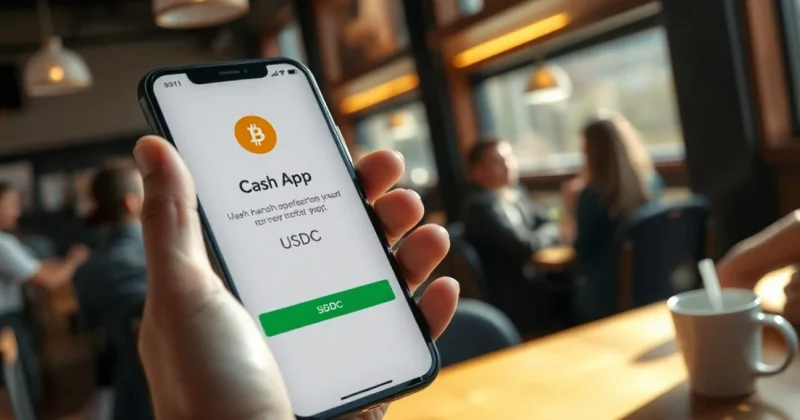
Cash App, a dominant force in peer-to-peer payments and a subsidiary of Jack Dorsey’s fintech giant Block, has officially begun integrating USD Coin (USDC) stablecoin payment functionality, marking a significant expansion beyond its long-standing Bitcoin offerings. This strategic move, which commenced on May 27th, will initially impact approximately 15 million users, representing a substantial quarter of Cash App’s nearly 60 million monthly active users. The integration leverages the Solana blockchain for transaction settlement, enabling users to instantly convert USDC into their existing U.S. dollar Cash balance within the app, effectively bridging the gap between traditional fiat currency and the burgeoning digital asset ecosystem.
The rollout signifies a pivotal moment for consumer-facing fintech platforms, positioning Cash App as one of the largest to embrace stablecoin payments. This development moves Cash App beyond its established Bitcoin capabilities, which have allowed users to buy, sell, and transact using the cryptocurrency, including via the Lightning Network. While Bitcoin remains a popular store of value and speculative asset, its inherent price volatility presents challenges for everyday transactional use, particularly for precise dollar-denominated payments. USDC, on the other hand, is designed to maintain a stable 1:1 peg with the U.S. dollar, backed by reserves of cash and short-dated U.S. Treasuries, making it a more predictable and practical option for transactional purposes.
Seamless Integration: How Cash App’s Stablecoin Payments Work
At the core of Cash App’s stablecoin integration is a user-friendly approach that abstracts away much of the complexity typically associated with cryptocurrency transactions. Each Cash App user is assigned a unique blockchain deposit address for USDC. This design ensures that not only other Cash App users but also individuals utilizing standard Solana-compatible wallets can send USDC directly to a Cash App account.
The magic of the integration lies in its seamless in-app conversion. Once USDC arrives in a user’s Cash App account, it is automatically converted to their existing U.S. dollar Cash balance. This eliminates the need for users to manage separate cryptocurrency wallets, navigate complex bridging protocols between different blockchains, or worry about unpredictable gas fees, a common concern in the cryptocurrency space.
The decision to utilize the Solana blockchain as the settlement layer underscores the network’s inherent strengths: speed and cost-efficiency. In contrast to the Ethereum mainnet, where transaction fees can escalate dramatically during periods of high network congestion, making small payments economically unviable, Solana’s transaction costs remain consistently low, often well below one cent. This characteristic is crucial for enabling micropayments and facilitating widespread adoption of stablecoin transactions for everyday purchases and remittances.
Block initially announced its intentions to integrate USDC support on Solana in November 2025, alongside plans to enhance its existing Bitcoin payment features. The current rollout, which began this week, is expected to be fully accessible to all users by the end of this week, demonstrating Block’s commitment to its projected timeline for delivering this feature, originally slated for early 2026.
Evolution from Bitcoin to a Comprehensive Digital Asset Suite
Cash App’s journey into the digital asset space began with Bitcoin, a pioneering cryptocurrency that has captivated investors and users alike. For years, Cash App has provided robust functionality for Bitcoin trading and payments, including leveraging the Lightning Network for faster and cheaper transactions. However, the introduction of USDC represents a significant strategic evolution, broadening Cash App’s digital asset portfolio to cater to a wider range of use cases.
While Bitcoin’s appeal as a store of value and a speculative investment remains strong, its fluctuating price can introduce uncertainty into transactional scenarios. For instance, sending a precise amount, say $50, to a friend could result in a different final value for the recipient due to market volatility between the time the transaction is initiated and when it is received and potentially converted.
USDC, by design, mitigates this risk. Its peg to the U.S. dollar, maintained through robust reserves, ensures that $1 of USDC is always worth approximately $1 of U.S. dollars. This stability is paramount for a consumer payment platform aiming for broad adoption and ease of use. The backing of USDC by cash and short-dated Treasuries provides a layer of security and transparency, further enhancing its credibility as a digital dollar alternative.
The roadmap for this integration was first articulated by Block in late 2025, detailing a vision that included not only USDC support on Solana but also ongoing improvements to its Bitcoin payment infrastructure. The current May rollout fulfills this vision, adhering to the originally projected launch window. This methodical approach to product development suggests a deliberate strategy to build a comprehensive digital asset suite that caters to diverse user needs, from long-term value storage to everyday transactions.
Implications for Investors and the Broader Financial Landscape
The integration of stablecoin payments by a platform with nearly 60 million monthly active users has profound implications for various stakeholders within the cryptocurrency and traditional finance ecosystems.
For the Solana Blockchain: The potential increase in transaction volume on Solana is immense. As Cash App scales its USDC payment functionality to its entire user base, Solana could witness a surge in daily transactions, solidifying its position as a leading blockchain for high-throughput, low-cost applications. This increased activity could lead to greater network adoption, developer interest, and potentially a rise in the value of its native token, SOL, though such speculation should be approached with caution.
For USDC Issuer Circle: For Circle, the company behind USDC, this partnership represents a significant victory. Cash App’s integration is poised to substantially boost USDC’s circulation and daily transaction volume, directly challenging the dominance of Tether’s USDT, the largest stablecoin by market capitalization. A broader user base for USDC could lead to greater liquidity, enhanced network effects, and a stronger competitive edge in the rapidly evolving stablecoin market. Circle has consistently emphasized regulatory compliance and transparency, which may appeal to a mainstream platform like Cash App and its users.
For Block (Cash App): The introduction of stablecoin payments opens up new avenues for revenue generation for Block. The company stands to profit from conversion spreads on USDC to USD transactions, potential transaction fees, and even yield generated from the USDC reserves it may hold on behalf of users. This diversifies Block’s revenue streams, complementing the significant income already derived from Cash App’s Bitcoin trading services. This move aligns with Block’s broader strategy of building a robust financial ecosystem that supports a range of digital assets and services.
The competitive landscape in digital payments is intensifying, with established players making significant inroads into the crypto space. PayPal has launched its own stablecoin, and Stripe, a major payment processor, acquired Bridge to facilitate stablecoin payments. Cash App’s adoption of Solana for routing consumer transactions places it firmly in this competitive arena, signaling a broader industry trend towards integrating digital assets into mainstream financial services.
Regulatory Landscape and Future Outlook
Despite the promising developments, the regulatory environment surrounding stablecoins remains a significant consideration. In the United States, stablecoin legislation is still in flux, and any future regulatory framework could introduce new requirements that alter the economic viability of offering these services. Clarity and certainty in regulation are crucial for the long-term sustainability and widespread adoption of stablecoin payments.
The potential for stablecoins to disrupt traditional remittance services is substantial. Legacy remittance providers often charge fees in the range of 5-10%, a cost that stablecoins, with their significantly lower transaction fees, could undercut. This could lead to a major shift in the global remittance market, offering more affordable and efficient cross-border money transfer solutions for individuals and families worldwide.
The success of Cash App’s USDC integration will likely hinge on its ability to maintain user trust, ensure seamless operation, and navigate the evolving regulatory landscape. If successful, this move could serve as a blueprint for other large consumer platforms looking to incorporate digital assets, further accelerating the mainstream adoption of cryptocurrencies and stablecoins as integral components of the global financial system. The move from a Bitcoin-centric approach to a more comprehensive digital asset suite signifies a mature understanding of the diverse roles cryptocurrencies can play in modern finance.














