


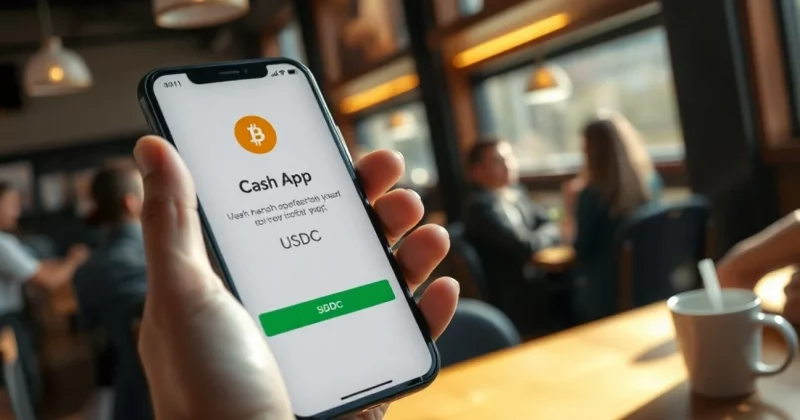
Cash App, a leading consumer finance platform operated by Jack Dorsey’s fintech giant Block, has officially entered the stablecoin arena, marking a significant milestone in the mainstream adoption of digital currencies. As of May 27th, the company began rolling out the functionality to send and receive USD Coin (USDC), a stablecoin pegged 1:1 to the U.S. dollar, to approximately 15 million of its nearly 60 million monthly active users. This initial rollout represents about a quarter of its user base, with full availability anticipated by the end of the current week, signaling a rapid expansion of this transformative feature.
The integration leverages the high-speed, low-cost infrastructure of the Solana blockchain for transaction settlement. A key innovation of Cash App’s implementation is its seamless user experience, eliminating the need for users to manage separate cryptocurrency wallets or navigate complex bridging mechanisms. Transactions are settled on the Solana network, and users can instantly convert their USDC holdings directly into their existing U.S. dollar Cash balance within the app. This move positions Cash App as one of the largest consumer platforms globally to offer direct stablecoin payment capabilities, a development that could profoundly impact the digital payments landscape.
The Mechanics of Seamless Stablecoin Integration
The technical backbone of Cash App’s stablecoin feature is designed for simplicity and accessibility. Each Cash App user is assigned a unique blockchain deposit address for USDC transactions. This crucial feature means that not only can other Cash App users send USDC to an account, but individuals utilizing standard Solana wallets outside of the Cash App ecosystem can also directly deposit USDC into a Cash App account. This open interoperability broadens the utility and reach of the stablecoin functionality.
A core element of the user-friendly design is the automatic conversion process. Upon receiving USDC, users have the option to instantly convert it to their USD Cash balance. This automated conversion happens directly within the app, abstracting away the complexities often associated with cryptocurrency transactions. There is no requirement for users to manage separate crypto wallets, engage in cross-chain bridging, or worry about the unpredictable and often high “gas fees” typically associated with Ethereum transactions during peak network congestion.
Block’s strategic decision to utilize the Solana blockchain as the settlement layer is rooted in the network’s inherent advantages. Solana is renowned for its exceptionally fast transaction speeds and remarkably low transaction costs, often measuring in fractions of a cent. This makes it an ideal candidate for handling a high volume of consumer-level micropayments, where even nominal fees on other blockchains would render transactions economically unviable. For instance, during periods of congestion on the Ethereum mainnet, transaction fees can surge, making the act of sending a small amount, such as $20 to a friend, prohibitively expensive. Solana’s sub-cent transaction costs effectively democratize these small-value transfers, making them practical and cost-effective.
Evolution from Bitcoin to a Comprehensive Digital Asset Suite
Cash App’s journey into digital assets began years ago with the integration of Bitcoin. Users have long been able to buy, sell, and make payments using Bitcoin, notably through the Lightning Network, which offers faster and cheaper Bitcoin transactions. The addition of USDC represents a significant strategic evolution for the platform. While Bitcoin serves as an excellent store of value and a speculative investment, its inherent price volatility makes it less suitable for everyday transactions where precise value transfer is crucial. The gap between the moment a payment is initiated and when it is received and recognized can lead to unintended value fluctuations, especially for amounts like $50.
USDC, on the other hand, is designed to maintain a stable value, pegged at a 1:1 ratio with the U.S. dollar. Its stability is underpinned by reserves of U.S. dollars and short-dated U.S. Treasury securities, held by regulated financial institutions. This stability makes it an attractive medium for payments, remittances, and other transactional use cases where predictable value is paramount.
The initial announcement of Cash App’s stablecoin integration dates back to November 2025, when Block outlined its vision to incorporate USDC support on Solana, alongside enhancements to its existing Bitcoin payment features. The current rollout in May 2026 fulfills this roadmap, aligning with the projected timeline Block had previously indicated for an early 2026 launch. This consistent delivery on announced features underscores Block’s commitment to expanding its digital asset offerings.
Implications for Investors and the Broader Ecosystem
The integration of stablecoin payments by a platform with nearly 60 million monthly active users carries substantial downstream implications for the digital asset ecosystem.
For the Solana Blockchain: The influx of Cash App users performing USDC transactions could lead to a dramatic increase in transaction volume on the Solana network. As Cash App scales this feature across its entire user base, Solana stands to benefit significantly from the heightened network activity, potentially solidifying its position as a leading blockchain for high-throughput applications. Data from blockchain analytics firms, which track on-chain activity, will be crucial in quantifying this impact. For example, a sustained increase in daily active addresses and transaction counts on Solana would be a direct indicator of Cash App’s influence.
For USDC Issuer Circle: This partnership represents a major victory for Circle, the issuer of USDC. Cash App’s integration has the potential to significantly boost USDC’s circulation and daily transaction volume, thereby strengthening its competitive standing against Tether’s USDT, the current market leader in stablecoins. A deeper penetration into a popular consumer payment app like Cash App could attract new users and developers to the USDC ecosystem, fostering further growth and utility.
For Block and Cash App: For Block itself, the introduction of stablecoin payments opens up new avenues for revenue generation. Potential revenue streams could include earning from conversion spreads on USDC to USD transactions, nominal transaction fees, or even yield generated from holding USDC reserves on behalf of users, subject to regulatory frameworks. This diversification complements the existing revenue generated from Cash App’s Bitcoin trading services, which has already proven to be a significant contributor to Block’s financial performance. This strategic move mirrors trends seen across the fintech industry, with competitors also embracing stablecoin technology. PayPal launched its own stablecoin, and Stripe acquired Bridge for stablecoin payment solutions, highlighting a broader industry shift towards integrating digital currencies into mainstream financial services.
Regulatory Landscape and Competitive Dynamics
The regulatory environment surrounding stablecoins in the United States remains a critical factor influencing the future of these digital assets. Legislation governing stablecoins is still in flux, and any future regulatory framework could introduce new requirements or alter the economic feasibility of offering these services. The U.S. Treasury and Congress have been actively discussing potential regulations, with a focus on consumer protection, financial stability, and anti-money laundering measures.
The potential for stablecoins to disrupt traditional remittance services is also significant. Legacy remittance providers, such as Western Union, typically charge fees ranging from 5% to 10% for international money transfers. Stablecoins, with their significantly lower transaction costs and faster settlement times, present a formidable competitive threat to these established players, offering a more efficient and cost-effective alternative for cross-border payments. The ability for Cash App users to send stablecoins internationally, leveraging the low fees of Solana, could directly challenge the market share of traditional remittance services.
The success of Cash App’s stablecoin integration will likely depend on its ability to navigate these evolving regulatory waters while continuing to offer a compelling user experience. The company’s proactive approach, coupled with its substantial user base, positions it to be a key player in shaping the future of digital currency adoption for everyday consumers. The convergence of major fintech platforms with blockchain technology, particularly stablecoins, signals a maturation of the digital asset space and its increasing integration into the global financial infrastructure.
This development is not merely an incremental feature update; it represents a strategic pivot for a major financial technology company, signaling a broader embrace of blockchain technology beyond its initial foray into Bitcoin. By simplifying the process of interacting with stablecoins and leveraging the efficiency of the Solana blockchain, Cash App is making a bold statement about the future of payments and digital asset utility for millions of everyday users. The coming months will be crucial in observing the uptake of this feature and its impact on transaction volumes across the Solana network and the broader stablecoin market.














