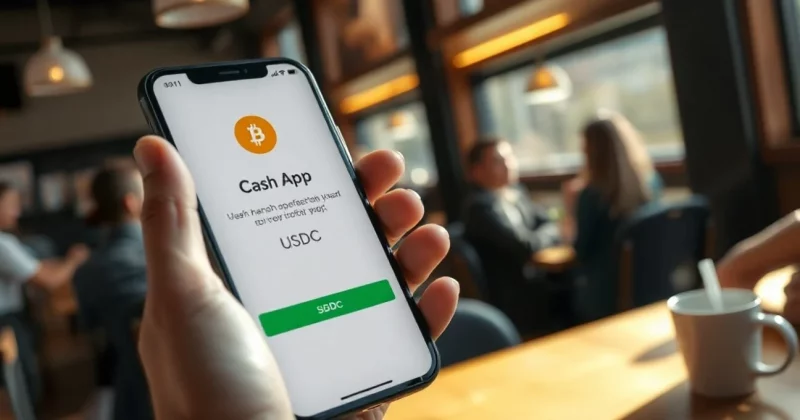
Cash App, the wildly popular peer-to-peer payment application operated by Jack Dorsey’s fintech giant Block, has officially begun integrating USD Coin (USDC) stablecoin payment functionality, marking a significant evolution for one of the largest consumer platforms in the digital finance space. This strategic move, which commenced rolling out on May 27th, initially grants approximately 15 million users access to send and receive USDC, representing about 25% of Cash App’s nearly 60 million monthly active users. The integration leverages the Solana blockchain for transaction settlement, offering users the ability to instantly convert USDC into their existing U.S. Dollar Cash balance, thereby streamlining digital asset transactions for a broad consumer base.
This expansion beyond its established Bitcoin services signifies a deliberate effort by Block to broaden its digital asset offerings and cater to a wider spectrum of user needs. While Bitcoin has long been a cornerstone of Cash App’s crypto offerings, enabling users to buy, sell, and transact via the Lightning Network, USDC introduces a stable and predictable asset for everyday payments. Unlike Bitcoin, which can experience significant price volatility, USDC is pegged at a 1:1 ratio to the U.S. dollar, backed by reserves of cash and short-dated U.S. Treasuries. This stability makes it a more suitable option for transactions where precise value preservation is crucial, eliminating concerns about price fluctuations between the time a payment is initiated and received.
The integration’s technical architecture is designed for user simplicity and efficiency. Each Cash App user is assigned a unique blockchain deposit address for USDC transactions. This feature is particularly noteworthy as it allows individuals outside of the Cash App ecosystem to send USDC directly to a Cash App account using a standard Solana wallet address. Crucially, the app handles the conversion between USDC and U.S. Dollars automatically within the user interface. This means users do not need to manage separate cryptocurrency wallets, engage in complex bridging between different blockchain networks, or worry about the unpredictable and often prohibitive gas fees associated with some blockchains, especially during periods of high network congestion.
Block’s choice of Solana as the settlement layer is a testament to the blockchain’s inherent strengths: speed and low transaction costs. In contrast, the Ethereum mainnet, while a dominant force in the blockchain space, can experience transaction fees that escalate dramatically during peak usage, rendering small-value payments economically impractical. Solana, with its consistently sub-cent transaction costs, provides a viable infrastructure for micropayments, making the seamless transfer of small amounts of digital currency feasible and cost-effective for Cash App users. This decision underscores a pragmatic approach to user experience, prioritizing affordability and accessibility for a mass-market financial application.
The phased rollout commenced this week, with Block aiming for full availability to its entire user base by the end of the current week. This rapid expansion from an initial 25% cohort to the broader user base indicates a confident deployment strategy and a commitment to bringing this new functionality to as many users as possible in a short timeframe.
From Bitcoin to a Full Digital Asset Suite: A Strategic Evolution
Cash App’s journey into the digital asset landscape began with Bitcoin, a move that positioned it as a pioneer in bringing cryptocurrency to mainstream consumers. For years, users have been able to buy, sell, and pay with Bitcoin, often utilizing the Lightning Network for faster and cheaper transactions. However, the addition of USDC represents a significant strategic pivot. Bitcoin, while lauded as a robust store of value and a speculative asset, presents inherent challenges for everyday transactions. The unpredictability of its price movements can be a deterrent for users who need to send exact dollar amounts without the risk of value erosion or appreciation by the time the transaction is completed.
USDC, on the other hand, offers a compelling alternative. Its design as a stablecoin, pegged 1:1 to the U.S. dollar and backed by tangible assets, provides the predictability that is essential for consumer-facing payment applications. This stability is underpinned by reserves managed by regulated financial institutions, which include cash and short-term U.S. Treasury securities. This robust backing aims to ensure the stability and reliability of the token.
Block first unveiled its intentions to integrate USDC stablecoin support on Solana in November 2025. At the time, the company outlined plans not only to introduce USDC but also to enhance its existing Bitcoin payment features. The current rollout in May delivers on that roadmap, aligning closely with the initial projected launch timeline of early 2026. This demonstrates a consistent and deliberate product development strategy from Block.
Implications for Investors and the Broader Ecosystem
The integration of USDC payments by a platform with nearly 60 million monthly active users has far-reaching implications across the digital asset ecosystem. For Solana, the impact could be transformative. As Cash App scales its USDC payment capabilities to its entire user base, the Solana blockchain could experience a substantial surge in transaction volume. This influx of activity could bolster Solana’s position as a leading blockchain for consumer applications and decentralized finance (DeFi), potentially attracting further developer interest and investment.
The consequences for Circle, the issuer of USDC, are equally significant. Cash App’s adoption represents a major endorsement for the stablecoin and could lead to a considerable increase in USDC’s overall circulation and daily transaction volume. This would further solidify USDC’s competitive standing against its primary rival, Tether’s USDT, in the rapidly growing stablecoin market. A larger user base and increased transaction activity for USDC could translate into greater network effects and broader acceptance across various financial services.
For Block itself, the introduction of stablecoin payments unlocks new avenues for revenue generation. The company could potentially profit from conversion spreads when users exchange fiat for USDC or vice versa, implement modest transaction fees, or generate yield on USDC reserves held on behalf of users. This diversification of revenue streams, building upon the existing success of its Bitcoin trading services, could enhance Block’s overall financial performance and market valuation.
This move by Cash App places it in esteemed company. PayPal, another payments giant, has launched its own stablecoin, demonstrating a similar strategic direction. Stripe, a dominant player in online payment processing, also made a significant move into the stablecoin space by acquiring Bridge, a platform specializing in stablecoin payments. Cash App’s routing of consumer transactions through Solana is another strong indicator of the growing mainstream adoption and integration of stablecoins into the global financial infrastructure.
Navigating the Regulatory Landscape
Despite the technological advancements and market opportunities, the stablecoin landscape remains subject to regulatory scrutiny. The regulatory framework for stablecoins in the United States is still evolving, and any future legislation could introduce new requirements that significantly alter the economic calculus of offering these services. Potential regulations could impact reserve requirements, issuer oversight, and consumer protection measures, all of which could influence the cost and complexity of operating stablecoin payment systems.
However, the potential for stablecoins to disrupt traditional financial services is immense. Legacy remittance services, for instance, often charge fees ranging from 5% to 10% for international money transfers. In this context, stablecoins, with their significantly lower transaction costs and faster settlement times, present a formidable competitive threat to established players like Western Union. As platforms like Cash App integrate these capabilities, they are poised to offer more affordable and efficient alternatives, potentially reshaping the remittance market and other cross-border payment corridors.
The strategic integration of USDC by Cash App is more than just a feature update; it’s a harbinger of a more integrated and accessible digital finance future. By bridging the gap between traditional fiat currency and the burgeoning world of digital assets, Block, through Cash App, is paving the way for millions of users to engage with stablecoins in a familiar and user-friendly environment. This move is likely to accelerate innovation in consumer-facing blockchain applications and further solidify the role of stablecoins as a critical component of the modern financial ecosystem.