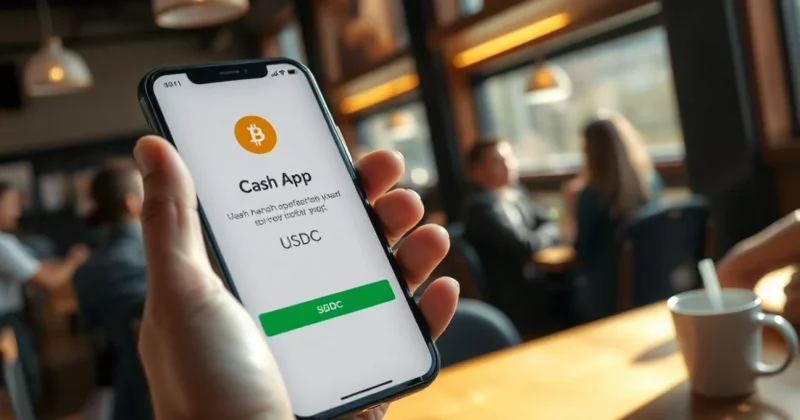
Cash App, a leading consumer finance platform, has officially entered the stablecoin arena, marking a significant milestone in the mainstream adoption of digital assets for everyday transactions. Block, the fintech giant spearheaded by Jack Dorsey, commenced a phased rollout on May 27th, enabling approximately 15 million of its nearly 60 million monthly active users to send and receive USD Coin (USDC). This strategic move positions Cash App as one of the largest consumer platforms to directly integrate stablecoin payments, a development that carries substantial implications for the cryptocurrency ecosystem and the broader financial landscape.
The newly introduced functionality leverages the Solana blockchain for transaction settlement, renowned for its high throughput and low transaction fees. Crucially, the integration offers users an immediate conversion pathway, allowing them to instantly transform incoming USDC into their existing USD Cash balance within the app. This seamless process aims to eliminate the complexities often associated with cryptocurrency transactions, such as managing separate wallets or navigating fluctuating network fees.
The Mechanics of Seamless Stablecoin Transactions
At the core of Cash App’s USDC integration is a user-friendly architecture designed for accessibility. Each Cash App user is assigned a unique blockchain deposit address for USDC transactions. This feature is particularly noteworthy as it extends the utility beyond the Cash App user base; individuals not utilizing Cash App can directly send USDC to a Cash App account by simply employing a standard Solana wallet address.
The operational magic of the system lies in its automated conversion process. Once USDC arrives in a user’s Cash App account, it is instantly and seamlessly converted into their available USD balance. This eliminates the need for users to manage separate cryptocurrency wallets, engage in complex cross-chain bridging, or contend with the unpredictable and often prohibitive gas fees associated with networks like Ethereum during periods of high congestion. The implicit promise is an experience akin to traditional digital payments, but powered by blockchain technology.
Block’s deliberate choice of Solana as the settlement layer is a testament to the network’s capabilities. Solana’s architecture is engineered for speed and cost-efficiency, making it an attractive option for micropayments and high-volume transaction environments. In contrast, the fluctuating and often substantial transaction fees on Ethereum’s mainnet, particularly during peak demand, would render sending small amounts, such as $20 to a friend, economically unviable. Solana’s sub-cent transaction costs, however, open the door for such low-value, high-frequency transactions to become practical and cost-effective.
The current rollout, which began this week, is anticipated to achieve full availability for all Cash App users by the end of the current week. This rapid expansion from an initial 25% cohort to the entire user base underscores the company’s commitment to a swift and comprehensive deployment of this new feature.
Evolution from Bitcoin to a Comprehensive Digital Asset Ecosystem
Cash App’s journey with digital assets is not entirely new; the platform has supported Bitcoin (BTC) for several years, allowing users to buy, sell, and facilitate payments via the Lightning Network. However, the introduction of USDC represents a significant strategic pivot and an expansion of its digital asset strategy. While Bitcoin serves as a robust store of value and a speculative asset, its inherent price volatility can present challenges for everyday payment scenarios. Sending a precise $50 to someone, for instance, carries the risk of its value fluctuating between the moment of sending and the recipient’s access, potentially leading to discrepancies.
USDC, on the other hand, is designed to maintain a stable value, pegged 1:1 to the U.S. dollar. Its stability is underpinned by reserves comprising cash and short-dated U.S. Treasury bonds, managed by regulated financial institutions. This inherent stability makes USDC an ideal candidate for transactional use cases where preserving value is paramount, such as remittances, everyday purchases, and peer-to-peer transfers.
Block first signaled its intentions to integrate stablecoin capabilities back in November 2025, outlining plans to introduce USDC support on the Solana blockchain. At that time, the company also indicated enhancements to its existing Bitcoin payment features. The current May rollout successfully delivers on that roadmap, aligning with Block’s initial projected timeline for a launch in early 2026, demonstrating effective execution of its strategic initiatives.
Implications for Investors and the Wider Market
The integration of stablecoin payments by a platform with a user base approaching 60 million monthly active users is poised to have a profound ripple effect across the cryptocurrency landscape. For Solana, the immediate and most significant implication is the potential for a substantial surge in transaction volume. As Cash App scales its USDC payment functionality across its entire user base, the network could experience a dramatic increase in daily active users and transaction throughput, solidifying its position as a leading blockchain for consumer-facing applications.
For Circle, the issuer of USDC, this partnership represents a monumental leap in market penetration and legitimacy. Cash App’s adoption of USDC could significantly boost the stablecoin’s overall circulation and daily transaction volume, thereby strengthening its competitive standing against rivals like Tether (USDT) in the fiercely contested stablecoin market. This move positions USDC as a more accessible and integrated option for mainstream consumers.
Block itself stands to unlock new revenue streams through this stablecoin integration. Potential avenues include earning revenue from currency conversion spreads when users exchange fiat for USDC and vice versa, transaction fees, or by generating yield on the USDC reserves held on behalf of its users. This diversification of revenue sources is particularly noteworthy, given that Cash App’s Bitcoin trading services already contribute meaningfully to Block’s overall financial performance.
This development also places Cash App in esteemed company. PayPal has launched its own stablecoin, and Stripe has made strategic acquisitions, such as Bridge, to facilitate stablecoin payments. Now, with Cash App routing consumer transactions through Solana, it signals a broader trend of established financial technology companies embracing and integrating blockchain-based payment solutions.
Navigating the Regulatory Landscape and Competitive Threats
The broader implications of Cash App’s stablecoin integration are also intertwined with the evolving regulatory environment in the United States. The legal framework governing stablecoins remains in a state of flux, and any future legislation could introduce new requirements that alter the economic viability of offering such services. This regulatory uncertainty is a persistent factor for all entities operating in the stablecoin space.
However, the potential for stablecoins to disrupt traditional financial services is immense. Legacy remittance services, such as Western Union, typically charge fees ranging from 5% to 10% for cross-border money transfers. Stablecoins, with their significantly lower transaction costs and faster settlement times, present a compelling competitive threat to these established incumbents, offering consumers a more efficient and cost-effective alternative for remittances and international payments. Cash App’s entry into this space could accelerate this disruption by bringing stablecoin utility to a massive consumer base.
The successful integration of USDC by Cash App signifies a pivotal moment for the cryptocurrency industry. It demonstrates the growing maturity of stablecoins as a viable medium of exchange for everyday transactions and highlights the increasing willingness of major financial platforms to leverage blockchain technology. As the rollout progresses and user adoption expands, the long-term impact on Solana, Circle, and the broader digital asset market will undoubtedly be closely watched. The ability of these innovations to navigate regulatory hurdles while offering tangible benefits to consumers will ultimately determine the pace and scale of this ongoing financial revolution.