The United States Court of Appeals for the District of Columbia Circuit has issued a landmark ruling affirming the reliability of Chainalysis Reactor, the industry-leading blockchain analytics software, marking a definitive victory for digital forensics in the federal judicial system. By upholding a lower court’s decision to admit evidence derived from the platform, the appellate court has signaled that the methodologies used to deanonymize cryptocurrency transactions meet the rigorous Daubert standard for expert testimony. This decision, arising from the high-profile criminal case of United States v. Sterlingov, provides a robust legal foundation for the continued use of blockchain tracing tools in complex financial investigations, regulatory compliance, and international law enforcement actions.
The core of the legal dispute centered on Roman Sterlingov, a dual Swedish-Russian national who was convicted in early 2024 for his role in operating "Bitcoin Fog," one of the internet’s longest-running and most prolific cryptocurrency money laundering services. Between 2011 and 2021, Bitcoin Fog moved over 1.2 million Bitcoin—valued at approximately $335 million at the time of the transactions—primarily serving as a conduit for illicit proceeds from darknet marketplaces such as Silk Road, Agora, and AlphaBay. Following his conviction and subsequent sentence of more than 12 years in prison, Sterlingov appealed the verdict, specifically targeting the admissibility of the Chainalysis Reactor software that was instrumental in tracing his activities.
The appellate court’s rejection of Sterlingov’s challenge represents more than just the conclusion of a single criminal case; it serves as a formal judicial endorsement of the scientific and technical rigor underpinning modern blockchain analytics. As the first and only blockchain analytics platform to be successfully tested against the Daubert standard at both the district and appellate levels, Chainalysis Reactor has set a legal precedent that will likely influence digital asset litigation for years to come.
The Evolution of the Sterlingov Case and Bitcoin Fog
To understand the significance of the appellate ruling, one must examine the decade-long operation of Bitcoin Fog and the investigative hurdles law enforcement faced. Launched in 2011, Bitcoin Fog was designed to obscure the link between a sender and a receiver by "mixing" or "tumbling" coins. For a fee, users could deposit cryptocurrency into the service, which would then shuffle the funds with those of other users before withdrawing them to a new address. This process was intended to break the "on-chain" trail, making it nearly impossible for traditional investigators to follow the flow of illicit wealth.
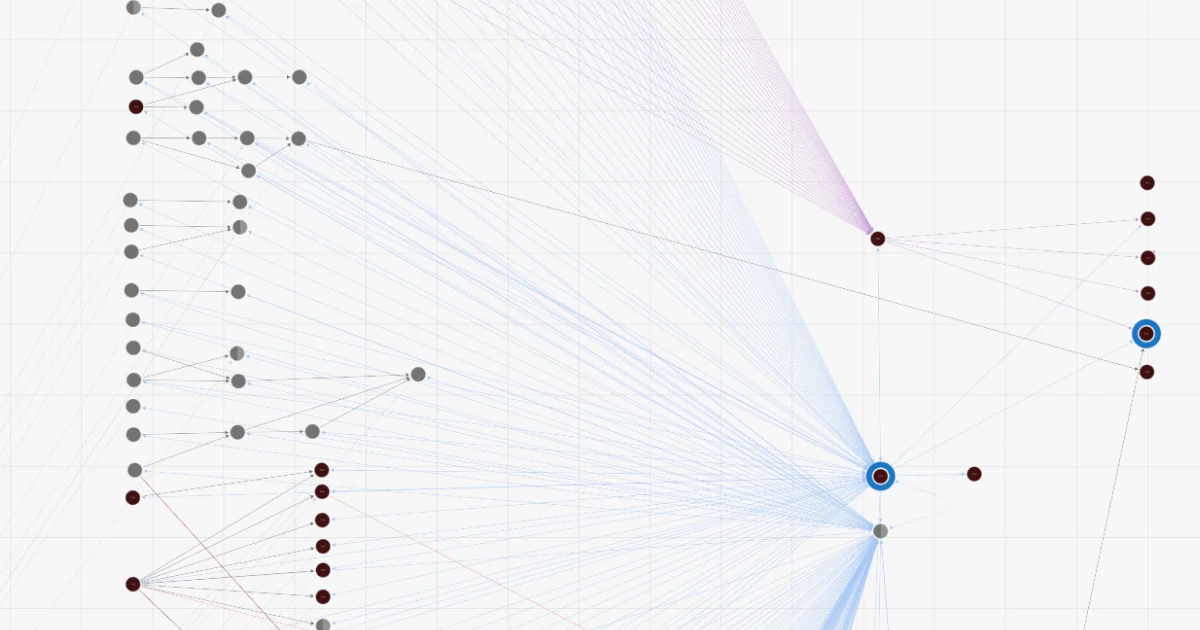
The investigation into Sterlingov utilized Chainalysis Reactor to pierce this veil of anonymity. By examining transaction patterns and utilizing sophisticated clustering algorithms, investigators were able to attribute over 900,000 individual Bitcoin addresses to the Bitcoin Fog service. The software allowed the FBI and other agencies to visualize the connections between the mixer and various darknet entities, ultimately linking Sterlingov to the administrative backend of the service.
During the initial trial in the U.S. District Court for the District of Columbia, the defense argued that Reactor’s methodology was proprietary and "black box" in nature, suggesting it lacked the transparency required for scientific evidence. However, the court admitted the evidence, supported by the testimony of FBI Specialist Luke Scholl and Chainalysis expert Elizabeth Bisbee. Both witnesses provided detailed accounts of how Reactor validates its data through a combination of change address analysis and digital fingerprinting. The jury ultimately found Sterlingov guilty of money laundering conspiracy, sting money laundering, and operating an unlicensed money transmitting business.
Understanding the Daubert Standard in Blockchain Forensics
The Daubert standard is the benchmark used by U.S. federal courts to determine whether an expert witness’s testimony is based on reasoning or methodology that is scientifically valid and can be properly applied to the facts at issue. Under this framework, judges evaluate several factors: whether the theory or technique can be (and has been) tested; whether it has been subjected to peer review and publication; the known or potential error rate; the existence and maintenance of standards controlling the technique’s operation; and whether the technique has attained general acceptance within the relevant scientific community.
In the Sterlingov appeal, the D.C. Circuit scrutinized these factors in the context of blockchain analytics. The defense argued that because Chainalysis Reactor’s source code is proprietary, it had not undergone traditional peer review and lacked a quantifiable error rate. The appellate court, however, remained unpersuaded by these arguments. It noted that in rapidly evolving fields like cryptocurrency forensics, traditional academic peer review is not the sole metric of reliability. Instead, the court pointed to the "general acceptance" of the tool among law enforcement agencies worldwide and its consistent performance in real-world applications.
Crucially, the court highlighted Reactor’s "conservative" approach to attribution. Unlike tools that might attempt to make speculative links to increase coverage, Reactor prioritizes defensible, high-confidence connections. The court recognized that an "underinclusive" methodology—one that chooses to omit a connection rather than risk a false positive—is a hallmark of reliability in a legal context. This conservative philosophy ensures that when a link is made between a suspect and a criminal entity, it is backed by verifiable on-chain behavior.
Technical Foundations: Clustering and Digital Fingerprinting
The appellate decision provides a deep dive into the technical methodologies that have now been legally validated. At the heart of Chainalysis Reactor is the concept of "clustering." Since a single user or entity can control thousands of different cryptocurrency addresses, investigators must group these addresses together to see the full picture of an entity’s activity.
Reactor achieves this through two primary methods:
- Change Address Analysis: When a user sends a portion of their balance, the remaining funds are often sent to a "change address" controlled by the same wallet. By identifying these patterns, Reactor can link multiple addresses to a single user.
- Digital Fingerprinting: Different wallet hardwares, software services, and mixing protocols leave unique "fingerprints" on the blockchain. These might include specific transaction versions, lock times, or script types. By matching these characteristics, Reactor can identify addresses belonging to the same service provider, such as Bitcoin Fog.
The court noted that during the trial, experts Scholl and Bisbee testified that they could not recall a single instance where a Reactor attribution had been proven incorrect upon further investigation. This track record of accuracy, combined with the widespread adoption of the tool by the IRS, FBI, and private financial institutions, outweighed the defense’s concerns regarding the lack of a formal error rate.
Chronology of Legal and Investigative Milestones
The path to this appellate victory spans over fifteen years of technological and legal development:
- 2011: Bitcoin Fog begins operations, quickly becoming the preferred mixer for early darknet market users.
- 2014-2017: The rise of major darknet markets like AlphaBay increases the volume of illicit funds flowing through Bitcoin Fog.
- 2021: Roman Sterlingov is arrested at Los Angeles International Airport. Federal authorities seize the Bitcoin Fog domain and begin a deep dive into his financial records.
- Early 2024: The U.S. District Court for the District of Columbia holds a Daubert hearing. The court rules that Chainalysis Reactor meets the threshold for admissibility, allowing expert testimony to be presented to the jury.
- March 2024: A jury finds Sterlingov guilty on all counts.
- 2025: Independent academic researchers publish a granular evaluation of various blockchain analysis tools. The study confirms that Chainalysis data possesses the highest accuracy and the lowest false-positive rate in the industry, providing retroactive support for the court’s earlier findings.
- September 2026: The U.S. Court of Appeals for the D.C. Circuit officially upholds the District Court’s decision, cementing the legal status of Reactor-derived evidence.
Broader Implications for the Crypto Industry and AI
The validation of Reactor’s methodology comes at a critical juncture for the digital asset industry. As decentralized finance (DeFi) and privacy-enhancing technologies continue to evolve, the pressure on law enforcement to maintain "eyes on the ground" has never been greater. This ruling provides a "green light" for agencies to continue investing in and relying on sophisticated analytical software.
Furthermore, the decision has significant implications for the integration of Artificial Intelligence (AI) in forensics. As Chainalysis and other firms begin to incorporate AI to handle the massive scale of modern blockchains, the legal focus will remain on the underlying data. As noted in recent reports regarding the $387 million Bitget hack in 2026, AI can accelerate the speed of an investigation, but it cannot fix a flawed foundation. By establishing that the foundational methodology of Reactor is legally sound, the court has cleared a path for AI-enhanced tools to be used in future high-stakes litigation, provided they build upon these validated principles.
For the private sector, particularly exchanges and financial institutions, this ruling reinforces the necessity of using "court-tested" tools for Anti-Money Laundering (AML) and Know Your Customer (KYC) compliance. If a financial institution’s compliance software is based on the same methodologies now upheld by the D.C. Circuit, they are in a much stronger position to defend their risk-management decisions before regulators.
Conclusion: A New Era of Accountability
The appellate court’s decision in United States v. Sterlingov marks the end of the "wild west" era where criminals believed the complexity of the blockchain offered a permanent shield from justice. The ruling confirms that the transparency of the blockchain, when viewed through a scientifically validated lens like Chainalysis Reactor, is a powerful tool for accountability.
By meeting and surpassing the Daubert standard, Chainalysis has moved blockchain analytics from the realm of "novel technology" into the category of "established forensic science," alongside DNA testing and fingerprint analysis. This transition provides the legal certainty required for the next generation of investigations, ensuring that as the digital economy grows, the tools to protect it remain sharp, reliable, and—most importantly—admissible in a court of law. The precedent set here ensures that the methodology behind an attribution is as defensible as the evidence it uncovers, providing a clear roadmap for the future of digital justice.