


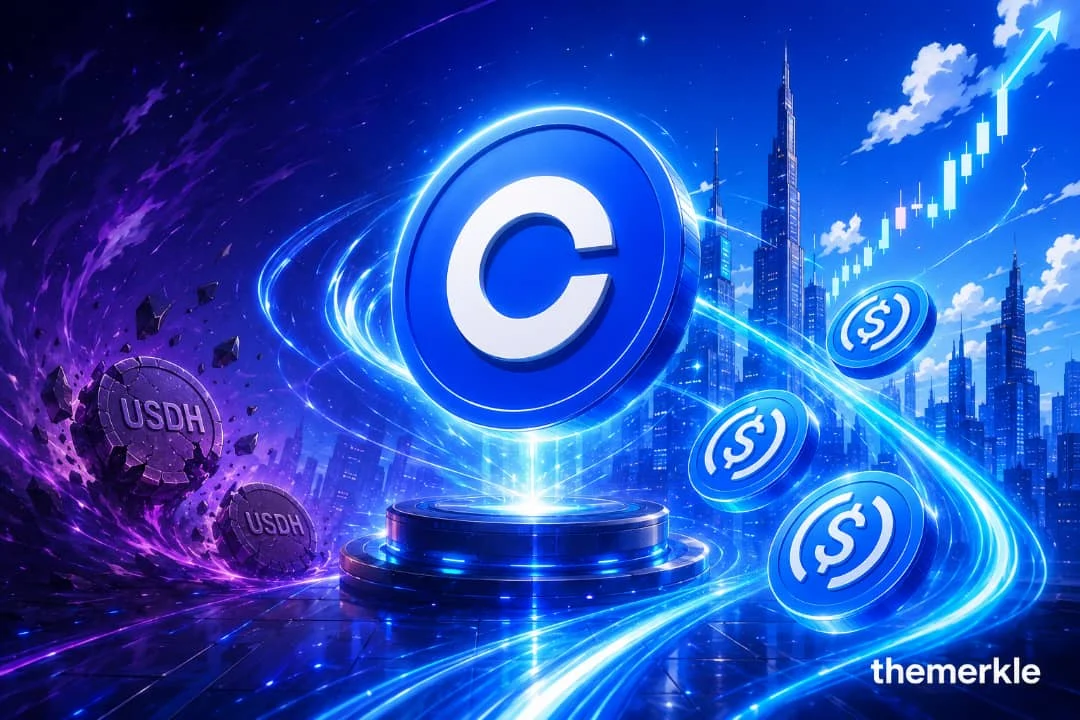
In a landmark development for decentralized finance (DeFi) liquidity and stablecoin strategy, Coinbase, a leading cryptocurrency exchange, has been officially appointed as the treasury deployer for USDC on Hyperliquid, a prominent decentralized derivatives exchange. This strategic alliance marks a pivotal shift towards the widespread adoption of USDC as the primary quote asset (AQA) within the Hyperliquid ecosystem, moving away from its native stablecoin, USDH. The transition is set to reshape liquidity dynamics, enhance user experience, and attract a broader spectrum of traders to the platform.
The confirmation of this significant change came through a joint announcement, with Coinbase’s official statement and a subsequent update from Hyperliquid. Coinbase highlighted the critical need for "collateral that is always available, instantly transferable, and deeply liquid" in 24/7 on-chain markets, asserting that USDC "delivers exactly that." This move is a direct response to the escalating demand for integrated liquidity and a more streamlined user experience across DeFi markets, which have historically grappled with fragmentation issues stemming from a multitude of stablecoin options.
A New Era of Collaboration: Coinbase, Circle, and Native Markets
At the core of this ambitious initiative is a meticulously coordinated integration involving Coinbase, Circle (the issuer of USDC), and Native Markets (the original operator of USDH). These entities are collectively laying the groundwork for a new technical framework dubbed AQAv2. This enhanced architecture is designed to significantly reduce market fragmentation by consolidating liquidity around a single, robust quote asset, while simultaneously building upon the foundational innovations pioneered by USDH.
The collaboration underscores a growing trend in DeFi where major centralized entities like Coinbase and Circle are actively engaging with decentralized protocols to bolster infrastructure and foster broader adoption. This symbiotic relationship aims to leverage the strengths of each participant: Coinbase’s vast market reach and operational expertise, Circle’s stablecoin issuance and technical prowess, and Hyperliquid’s innovative decentralized trading platform.
Coinbase’s Expanded Role as Treasury Deployer for USDC
Coinbase’s new designation as the treasury deployer for USDC on Hyperliquid substantially elevates its involvement within the protocol’s infrastructure. In this capacity, Coinbase will assume responsibility for managing the issuance and operational aspects of USDC as the main quote asset across the Hyperliquid network. This includes ensuring the availability, stability, and efficient deployment of USDC to facilitate trading activities.
Complementing Coinbase’s role, Circle will serve as the technical deployer, providing critical support for features such as the Cross-Chain Transfer Protocol (CCTP) and native bridging systems. CCTP, in particular, is vital for seamless and secure transfer of USDC across different blockchain networks, enabling greater capital efficiency and liquidity flow. This integrated structure ensures that liquidity oversight and complex technical execution remain in the hands of experienced firms with deep domain knowledge in stablecoin operations and blockchain interoperability.
To further align incentives and demonstrate commitment, both Coinbase and Circle have committed to staking HYPE tokens, Hyperliquid’s native governance token. This move is indicative of a broader phenomenon in DeFi, where established players are directly participating in on-chain governance and infrastructure development, thereby tying their success to the protocol’s long-term prosperity. By taking on this multifaceted role, Coinbase is not merely facilitating a stablecoin migration but is actively shaping the next generation of liquidity infrastructure within the Hyperliquid ecosystem. The establishment of USDC as the designated quote asset is expected to standardize trading pairs, thereby significantly improving market efficiency and reducing complexities for traders.
The Transition from USDH: Brand Acquisition and User-Centric Migration
A crucial aspect of this transition involves the phased deprecation of USDH, Hyperliquid’s previous native stablecoin. As part of this process, Native Markets, the original operator of USDH, has granted Coinbase the rights to its brand assets associated with USDH. This effectively transfers control of the stablecoin’s long-term identity and strategic direction to Coinbase, although the immediate focus is on a smooth transition to USDC.
Importantly, the deprecation of USDH will not be abrupt. The transition plan prioritizes a seamless and user-friendly experience for all participants. Users will have the ability to easily transfer their existing USDH positions without incurring any replacement fees. This is facilitated through a designated dashboard provided by Native Markets, allowing for direct redemption of USDH for USDC or fiat currency. This mechanism ensures that users are not penalized for the shift and can move their assets efficiently.
Native Markets has affirmed its commitment to maintaining full backing and functionality for USDH throughout the transition period. They are working in close collaboration with HIP-3 and HIP-1 deployers (Hyperliquid Improvement Proposal deployers) to ensure that all existing integrations are updated well in advance of USDH’s eventual deprecation. This measured and transparent approach to migration is a welcome step towards stability in the DeFi space. Instead of forcing an instantaneous change, the ecosystem is providing users, developers, and liquidity providers ample time to adapt to the new USDC-centric structure at a gradual and manageable pace. This demonstrates a commitment to community welfare and ecosystem resilience, fostering trust during significant protocol upgrades.
Linking Liquidity to the AQAv2 Framework: Aggregation and Efficiency
The AQAv2 framework represents Hyperliquid’s inaugural major integration focused on structuring liquidity. At its fundamental level, the framework directly addresses the pervasive issue of fragmentation in DeFi liquidity, a long-standing challenge that has compelled users to navigate between disparate assets and numerous liquidity pools. Such fragmentation often leads to inefficient capital utilization, higher slippage, and a more complex trading environment.
The strategic rationale behind positioning USDC as the primary US dollar-aligned stablecoin is to aggregate all liquidity into a single, unified quote asset. This consolidation is anticipated to simplify trading significantly, enhance the process of price discovery, and mitigate inefficiencies across the entire trading spectrum. By centralizing liquidity, Hyperliquid aims to create deeper markets, allowing for larger trades with less price impact, a critical factor for institutional participants.
A quintessential element of this alignment is the implementation of a robust revenue-sharing model. As the treasury deployer, Coinbase will allocate 90% of the reserve yield generated from the deployed USDC back into the Hyperliquid protocol. This mechanism establishes a strong incentive alignment, ensuring that both the deployers and the broader ecosystem mutually benefit as adoption and usage of the protocol scale. This reinvestment not only bolsters the protocol’s treasury but also incentivizes continued development and growth, creating a positive feedback loop for all stakeholders.
This transition also foreshadows future strategic developments. Under HIP-4 (Hyperliquid Improvement Proposal 4), USDC is slated to become the default quote asset in canonical outcome markets, firmly establishing it as the network’s primary asset. This level of standardization is widely anticipated to attract more sophisticated traders and institutional players who prioritize stability, predictability, and deep liquidity in their trading environments. The shift signals Hyperliquid’s ambition to move beyond niche DeFi offerings towards a more institutional-grade trading experience.
The Enduring Legacy of USDH Innovation
While USDH is being gradually phased out, its profound impact on the Hyperliquid ecosystem remains highly relevant. Native Markets successfully built one of the first production-scale stablecoin models with a fully on-chain implementation that directly shared yield with the protocol. This innovative design demonstrated a novel approach to stablecoin utility, moving beyond mere price stability to actively contribute to the protocol’s economic health.
This pioneering innovation underpins the very foundation of AQAv2. The new framework will integrate key mechanisms and insights derived from USDH, ensuring that its legacy is not lost but rather evolved and accounted for in the ongoing development of the ecosystem. USDH proved that stablecoins could offer more than just a stable peg; they could actively generate and distribute value within a decentralized protocol. AQAv2 has taken this concept further, refining and improving it to provide a more scalable and comprehensively aligned solution.
Understanding USDH’s role in the ecosystem highlights an important principle in DeFi development: progress often builds upon prior experiments and innovations. Some crucial ideas transcend individual assets, evolving and becoming integrated into more complex and resilient systems even as their original manifestations are retired. This iterative process of innovation and refinement is a hallmark of the rapidly evolving blockchain space.
Grants and Migration Support for Practitioners
To facilitate a smooth and equitable transition, the Hyper Foundation has initiated a series of grants specifically aimed at developers and teams that had previously integrated USDH. These grants are designed to support the establishment of additional liquidity pools and will be made available to qualifying HIP-3 deployers, HIP-1 deployers, and other essential ecosystem contributors.
The overarching goal of this grant program is to ensure that no legitimate player is penalized during the migration process. By providing financial and technical support, the foundation incentivizes teams to re-architect their applications and integrations around the new USDC-centric framework. This proactive approach underscores a wider commitment to ecosystem-wide sustainability and developer welfare.
Hyperliquid is demonstrating a strategic investment in the long-term health of its developer community, rather than merely replacing one asset with another. By supporting its builders, the protocol aims to foster continued innovation and ensure a vibrant ecosystem. Increased adoption of the new framework is expected to generate deeper liquidity, significantly improve the overall user experience, and bolster protocol incentives for builders who successfully implement the changes. This creates a positive feedback loop, where seamless adoption drives further innovation and strengthens the protocol’s position in the competitive DeFi landscape.
What This Means for Hyperliquid Going Forward
The transition from USDH to USDC represents an inflection point for Hyperliquid, positioning the protocol for significant scaling and enhanced operational efficiency. By concentrating liquidity around a single, highly aligned asset, Hyperliquid is set to achieve deeper markets and greater capital efficiency, which are crucial for attracting institutional liquidity and sophisticated trading strategies.
Ultimately, this process will translate into a smoother and more robust trading experience for users. Reduced fragmentation means less complexity in navigating the market and executing strategies, leading to a more intuitive and efficient platform. Simultaneously, the provision of feeless conversions ensures that users can transition their assets without incurring additional financial burdens, fostering trust and encouraging adoption.
In the broader context of DeFi, this step underscores the critical need for incentive alignment across all key stakeholders: infrastructure providers, stablecoin issuers, and protocol operators. As DeFi ecosystems grow increasingly complex and interconnected, collaborative programs like AQAv2 may well become the standard for effective liquidity management and sustainable growth. This model of shared responsibility and aligned incentives could serve as a blueprint for future cross-protocol collaborations.
While the migration progresses, USDH markets will remain operational for a short period, slowly phasing out as users and integrators complete their transition. During this time, users can expect full support and easy redemption options, reassuring them of their asset rights and ensuring a secure process throughout the changeover.
In conclusion, the strategic coalition between Coinbase, Circle, and Hyperliquid signifies a new era of maturity for DeFi. It is built upon the foundational principles of cooperation, standardization, and a shared vision for a more efficient and user-friendly decentralized financial system. This collaborative effort is poised to shape the fundamental elements of the industry’s next stage, potentially setting new benchmarks for liquidity management and stablecoin integration in the evolving world of decentralized finance.
Disclosure: This is not trading or investment advice. Always do your research before buying any cryptocurrency or investing in any services.














