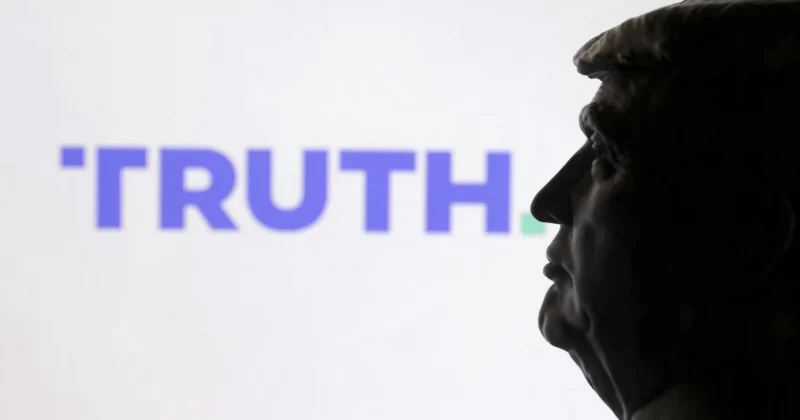
The Intercept and the Freedom of the Press Foundation filed a federal lawsuit against President Donald Trump on Wednesday, alleging that a premium subscription service offered by Truth Social—which provides accelerated access to the president’s official public statements—constitutes a violation of the First and Fifth Amendments of the U.S. Constitution. The legal action, supported by Citizens for Responsibility and Ethics in Washington (CREW) and Yale Law School’s Media Freedom and Information Access Clinic, seeks to halt the practice of charging for preferential access to government-related announcements. The lawsuit argues that by allowing a select group of wealthy subscribers to receive presidential communications seconds or minutes before the general public, the administration is effectively selling government transparency to the highest bidder.
The Mechanics of the Truth API Service
At the center of the controversy is the "Truth API," a specialized data feed launched by Trump Media & Technology Group (TMTG) on August 1. The service was designed specifically to cater to high-frequency trading firms, hedge funds, and major financial institutions. According to TMTG interim CEO Kevin McGurn, the API provides a direct, high-speed pipeline to posts made by Donald Trump and other high-profile accounts on the platform. While the general public can access Truth Social for free via its website or mobile application, the API allows automated systems to "scrape" or ingest data at speeds significantly faster than a human user or a standard web browser can refresh.
The financial barriers to entry for this service are substantial. Contracts for the Truth API reportedly range from $60,000 to $100,000 per month, a price point that restricts the service to elite financial entities. Internal data suggests that more than ten major customers, primarily high-frequency trading (HFT) firms, have already subscribed to the feed. For these firms, the value of the service lies in the "latency advantage"—the ability to act on market-moving news milliseconds before the rest of the market can react.
Constitutional Challenges: First and Fifth Amendment Claims
The plaintiffs’ legal argument rests on two primary constitutional pillars. First, they contend that the arrangement violates the First Amendment, which protects the public’s right to receive information about government activities on an equal basis. The lawsuit asserts that when the President of the United States uses a private platform to announce official policy, that platform becomes a "public forum" or a critical conduit for government speech. By providing a "fast lane" for those who pay six-figure sums, the lawsuit argues the government is creating a discriminatory system of access to public information.
Second, the complaint alleges a violation of the Fifth Amendment’s Due Process Clause. The plaintiffs argue that the Truth API imposes an "unreasonable financial condition" on the access to government information. Under established legal principles, the government generally cannot charge exorbitant fees that prevent ordinary citizens from accessing information necessary to understand or participate in the democratic process. The lawsuit suggests that because President Trump has increasingly used Truth Social as the primary medium for announcing significant trade decisions, foreign policy shifts, and personnel changes, the "timing" of this information is as critical as the information itself.
The Economic Impact of "Market-Moving" Posts
The significance of the timing of presidential communications cannot be overstated in the context of modern global markets. Throughout his tenure, Donald Trump has utilized social media to announce tariffs, comment on Federal Reserve policy, and weigh in on the stock performance of specific corporations. These posts frequently trigger immediate volatility in equity, currency, and commodity markets.
By selling a high-speed feed of these announcements to trading firms, TMTG is essentially monetizing the volatility generated by the president’s official duties. High-frequency trading algorithms are programmed to detect keywords in presidential posts and execute trades in a fraction of a second. If a specific firm receives a post regarding a new trade tariff 30 seconds before it appears on a standard news ticker or a public web browser, that firm can profit immensely at the expense of retail investors and other market participants who are operating on "stale" information.
The plaintiffs argue that this creates a "pay-to-play" environment for government transparency, where the President’s personal company profits directly from his role as a public servant. Trump maintains a significant financial stake in TMTG, the parent company of Truth Social, which the lawsuit highlights as a clear conflict of interest.
Chronology of the Truth API Rollout
The development of the Truth API followed a rapid timeline that coincided with increased market interest in the president’s digital communications:
- July: Trump Media & Technology Group announces the upcoming launch of a professional-grade API service targeted at the financial sector. The announcement highlights the "unparalleled insight" the feed would provide into influential accounts.
- August 1: The Truth API officially goes live. Marketing materials emphasize the speed and reliability of the data delivery, specifically targeting firms interested in "market-moving events."
- Mid-August: Reports surface via Reuters and other financial news outlets detailing the pricing structure of the service, revealing monthly costs of up to $100,000.
- Late August: Legal advocacy groups and media organizations begin drafting the complaint, citing concerns over the intersection of private profit and public office.
- Wednesday: The Intercept and the Freedom of the Press Foundation officially file the lawsuit in federal court, naming Donald Trump and several White House employees as defendants.
Background: Precedents in Social Media Law
This is not the first time Donald Trump’s social media usage has faced constitutional scrutiny. In the landmark case Knight First Amendment Institute v. Trump, the Second Circuit Court of Appeals previously ruled that the president could not block users from his Twitter (now X) account based on their political views. The court found that because the account was used for official government business, it constituted a "public forum."
The current lawsuit seeks to extend this logic. If a social media account is a public forum, the plaintiffs argue, then the access to that forum must be equitable. While the Knight case focused on the exclusion of individuals, the current case focuses on the tiering of access based on wealth. Legal experts suggest this case could set a significant precedent regarding how the "Public Forum Doctrine" applies to modern data delivery technologies and the monetization of government speech.
Responses and Ethical Implications
While the White House and TMTG have yet to issue a formal legal response to the filing, proponents of the API service have previously argued that TMTG is a private corporation with the right to monetize its technology. They contend that the API is a technical service—a piece of infrastructure—rather than a restriction on the information itself, as the posts eventually become available to everyone.
However, the plaintiffs counter that in the digital age, a delay in information is equivalent to a denial of information. "The president is using his official powers to create a revenue stream for his private business," said a representative from the Freedom of the Press Foundation in a statement following the filing. "This isn’t just about social media; it’s about the fundamental principle that the government cannot charge the public for the privilege of hearing what the president has to say."
The involvement of the Yale Law School Media Freedom and Information Access Clinic adds significant academic and legal weight to the challenge. The clinic specializes in defending the public’s right to know and has a history of litigating complex transparency issues. Their participation suggests that the legal strategy will focus heavily on the "Right to Receive" doctrine, a component of First Amendment law that ensures the public can receive information without government-imposed hurdles.
Broader Implications for Government Communication
The outcome of this lawsuit could have far-reaching consequences for how future administrations interact with private technology platforms. If the court rules in favor of the plaintiffs, it could establish a "non-preferential access" rule for all presidential communications, effectively banning the sale of high-speed data feeds for official announcements.
Furthermore, the case highlights the ongoing tension between the private ownership of communication platforms and the public nature of the offices held by those who use them. As more government officials move away from traditional press briefings and toward direct-to-consumer social media, the legal definitions of "public records" and "public forums" continue to evolve.
The lawsuit asks the court for a permanent injunction to prevent the president and White House staff from providing any preferential access to official announcements. It also seeks a declaratory judgment that the current Truth API arrangement is unconstitutional. As the case moves through the federal court system, it will likely prompt a wider debate on the ethics of the "attention economy" when applied to the highest levels of the executive branch. For now, the Truth API remains operational, and the high-frequency trading firms continue to pay for the seconds-long head start that could be worth millions in the volatile world of global finance.