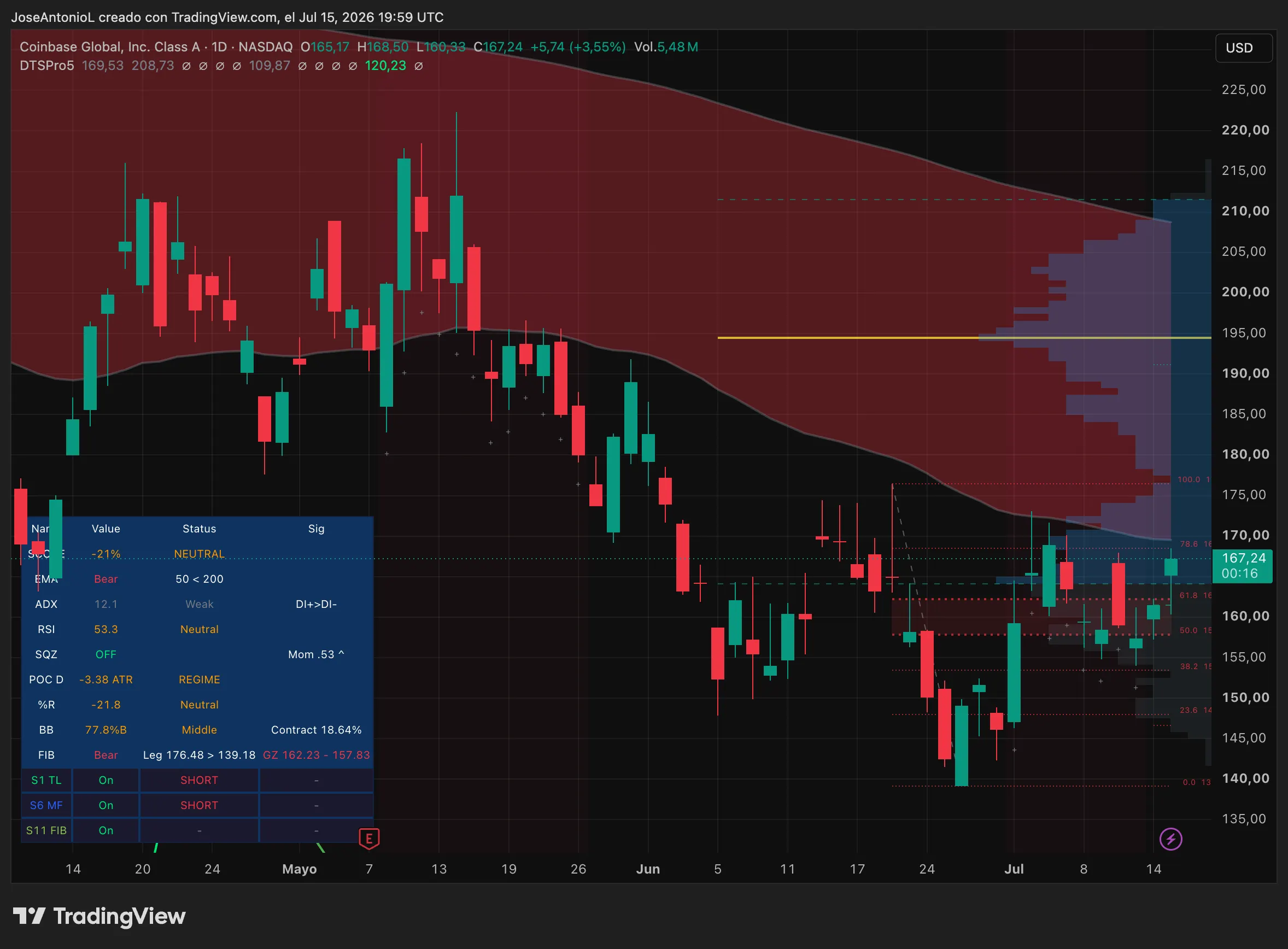
In a paradox reflecting the complex and often counterintuitive nature of cryptocurrency markets, shares of leading crypto exchange Coinbase (COIN) and stablecoin issuer Circle (CRCL) defied grim financial projections this week, each posting gains of approximately 3-4% on Wednesday. This unexpected upward movement followed a research note from William Blair, a venerable Chicago-based investment bank renowned for its tech and growth sector coverage since its founding in 1935, which significantly cut its revenue and earnings forecasts for Coinbase while remarkably reiterating an "outperform" rating. The core message from the investment firm was clear: the market has already factored in the anticipated difficulties, suggesting that the "pain is already in the price." William Blair advised investors to "stay involved in Coinbase," signaling a long-term conviction despite near-term headwinds.
William Blair’s Revised Outlook and Strategic Rationale
The detailed analysis released by William Blair painted a challenging picture for Coinbase’s immediate financial performance. Analysts Andrew Jeffrey and Adib Choudhury revised down their 2026 revenue estimates for Coinbase by a substantial 12%, and their 2027 estimates by 13%. More drastically, adjusted EBITDA (Earnings Before Interest, Taxes, Depreciation, and Amortization) projections were slashed by a significant 34% for both 2026 and 2027. This drastic revision underscores a period of anticipated financial contraction for the crypto giant.
Despite these conservative financial adjustments, the "outperform" rating suggests a strategic bullish stance. The analysts anticipate that Coinbase’s earnings will likely "trough in the second half of 2026" before embarking on a recovery trajectory in 2027. This perspective hinges on the belief that investors should maintain their positions, as spot crypto volume is expected to bottom out in conjunction with Bitcoin’s price movements. Specifically, William Blair projects Coinbase’s total trading volume to experience a considerable decline of approximately 44% this year, falling to $669 billion. However, this projected downturn is expected to be followed by a robust rebound of over 32% in 2027, indicating a belief in the cyclical nature of the crypto market and Coinbase’s eventual resurgence.
A Structurally Different Market Cycle
A crucial element of William Blair’s optimistic long-term view is their assessment that the current market cycle differs fundamentally from the challenging landscape of 2022. Several key structural changes are highlighted:
- Spot Bitcoin ETFs: The introduction and increasing adoption of spot Bitcoin Exchange-Traded Funds (ETFs) represent a watershed moment for the cryptocurrency market. These regulated investment vehicles provide traditional investors with direct, yet indirect, exposure to Bitcoin without the complexities of direct ownership, custody, or navigating crypto exchanges. Their emergence has significantly broadened the potential investor base, drawing in institutional capital that previously remained on the sidelines due to regulatory uncertainties or operational hurdles. This institutional embrace is seen as a stabilizing and legitimizing force for the entire ecosystem.
- Growth in Institutional Flows: Beyond ETFs, there has been a discernible increase in direct institutional participation in the crypto space. Large asset managers, corporations, and even sovereign wealth funds are exploring or actively engaging with digital assets. This growing institutional interest provides a more robust and resilient demand side for cryptocurrencies, potentially mitigating the extreme volatility historically associated with retail-dominated markets.
- Maturing Regulatory Environment: The regulatory landscape, while still evolving, has made strides towards greater clarity and definition compared to four years prior. Governments and financial bodies worldwide are developing frameworks for digital assets, stablecoins, and exchanges. This maturation, though sometimes restrictive, ultimately fosters greater investor confidence and reduces systemic risks by providing clearer operational guidelines for market participants. The anticipation is that a more predictable regulatory environment will pave the way for sustained growth and innovation.
Coinbase’s Diversified Revenue Streams Beyond Spot Trading

The William Blair report also underscored Coinbase’s strategic pivot towards diversifying its revenue base beyond its traditional reliance on spot trading fees, a move critical for long-term stability and growth. Key areas highlighted include:
- Base Layer-2 Network: Coinbase’s Base network, a Layer-2 blockchain built on Ethereum, is identified as a potentially major earnings driver. Layer-2 solutions aim to enhance the scalability and reduce the transaction costs of foundational blockchains like Ethereum, making decentralized applications (dApps) more accessible and efficient. Base’s integration within the Coinbase ecosystem provides a powerful platform for developers and users, potentially generating significant fees from network activity, dApp deployments, and increased user engagement.
- Retail Derivatives: The growth of retail derivatives trading on Coinbase’s platform is another crucial element. These financial instruments, such as futures and options, allow traders to speculate on the future price movements of cryptocurrencies without owning the underlying asset. This segment has shown remarkable growth, with retail derivatives alone crossing an annualized rate of $200 million in the first quarter, indicating strong demand for more sophisticated trading products among its user base.
- Prediction Markets: Prediction markets, where participants bet on the outcome of future events using crypto tokens, represent an emerging and potentially lucrative revenue stream. These markets leverage collective intelligence to forecast events, and as they gain traction, they can drive significant transaction volumes and fee generation for platforms facilitating them.
These diversified offerings collectively position Coinbase to weather fluctuations in spot trading volumes more effectively and capitalize on the broader evolution of the decentralized finance (DeFi) and Web3 ecosystems.
A Contrasting Near-Term View: Piper Sandler’s Caution
While William Blair expressed long-term optimism, not all analysts shared such a constructive near-term outlook. Patrick Moley, an analyst at Piper Sandler, adopted a more cautious stance, cutting his price target for Coinbase shares to $155 from $170 while maintaining a "neutral" rating. Moley’s analysis highlighted the prominence of "prediction markets and perpetual futures" as defining narratives for the second quarter. He specifically noted that the recent World Cup event drove a massive surge in prediction market activity, demonstrating their potential. However, Moley issued a warning regarding "significant investor attention on the perpetual future threat" heading into the third quarter. Perpetual futures, a type of derivative without an expiry date, are highly popular in crypto trading but can also introduce heightened volatility and regulatory scrutiny, posing a potential risk that investors are closely monitoring.
Market Performance Context: A Challenging Year So Far
The broader market context underscores the challenging environment in which these analyses are being conducted. Coinbase has experienced a significant decline of nearly 30% in its stock value year-to-date. This performance mirrors the broader cryptocurrency market, with Bitcoin itself falling approximately 26% over the same period. Stablecoin giant Circle, which made a highly anticipated debut on the NYSE in June 2025 at $31 per share following a splashy IPO, has also seen its value drop by about 20% since January. These figures illustrate the ongoing bearish sentiment that has characterized much of the crypto market throughout the current year, making the recent stock rallies for Coinbase and Circle, despite negative forecasts, all the more noteworthy.
The "W" Pattern: John Bollinger’s Bitcoin Breakout Signal
Beyond fundamental analysis, technical analysts are also observing intriguing patterns that could signal a significant shift in Bitcoin’s trajectory. John Bollinger, the veteran technical analyst globally recognized for creating Bollinger Bands—volatility envelopes plotted above and below a moving average that traders use to identify periods of compression and potential breakouts—has been actively flagging a developing pattern on Bitcoin’s daily chart since early July.
On July 2, Bollinger took to X (formerly Twitter) to share his analysis, pinpointing a nascent "W" double-bottom formation taking shape in Bitcoin’s price action. A double-bottom is a classic bullish reversal pattern in technical analysis, characterized by two distinct swing lows separated by an intervening rebound. This pattern signals a potential shift from a downtrend to an uptrend once the price successfully breaks above the resistance level established at the apex, or peak, between the two troughs. Bollinger described this particular setup as "perfectly fractal," meaning that smaller versions of the same "W" shape are discernible within the larger structure, and the pattern is also evident on the weekly chart, suggesting its significance across different timeframes. While acknowledging the inherent uncertainties of market analysis, he candidly noted that previous bullish setups had been invalidated by persistent selling pressure throughout the current cycle, injecting a note of caution into his otherwise optimistic observation.
In a subsequent post on July 6, Bollinger provided an even clearer indication of his outlook. He stated that if this "W" pattern successfully completes, he would interpret it as "a confirmation of a change in trend." This is his most explicit public statement to date suggesting that the prevailing bearish trend for Bitcoin might be on the verge of reversing rather than merely pausing. It is worth noting that Bollinger had previously disclosed a long Bitcoin position through his investment vehicle earlier this year, aligning his personal market exposure with his analytical pronouncements. From a purely technical standpoint, while the price of Bitcoin remains officially bearish, the strength of this downtrend appears to be weakening, lending further credence to the potential for a reversal.
On-Chain Data: Signs of a Bitcoin Bottom
Adding another layer to the emerging narrative of a potential market shift, on-chain analytics firm Glassnode’s latest weekly analysis offers compelling data suggesting that the Bitcoin bottom might indeed be in. According to their Week 28, 2026 report, "long-term holder capitulation"—a key metric representing the main source of selling pressure observed throughout the year—reached its cycle peak approximately two weeks prior and has since begun to decline. This metric, which precisely measures the amount of Bitcoin long-term holders surrender each day (adjusted to exclude internal transfers to avoid misrepresentation), is now falling for the first time in the current cycle. This development is often interpreted as a sign that the most determined sellers, those holding Bitcoin for extended periods and now selling at a loss, have largely exited the market, reducing potential future selling pressure.
Glassnode’s analysis also documented a broad wave of accumulation across wallets of all sizes during the June lows, indicating that buyers stepped in aggressively when prices dipped. This widespread accumulation suggests renewed confidence among a diverse group of investors, from small retail participants to larger whales. Furthermore, the report highlighted several other positive macroeconomic and market correlations:
- Inverse Relationship with the Dollar: Bitcoin’s inverse relationship with the U.S. dollar has deepened, meaning that as the dollar weakens, Bitcoin tends to strengthen, and vice versa. This indicates Bitcoin’s growing role as a potential hedge against traditional currency fluctuations.
- Loosened Correlation with U.S. Equities: Bitcoin’s correlation with major U.S. equity indices has loosened, suggesting that its price movements are becoming less directly tied to the performance of traditional stock markets. This decoupling could enhance Bitcoin’s appeal as an alternative asset class.
- Sensitivity to Macro News: Critically, Bitcoin’s sensitivity to positive macroeconomic news has returned. For instance, Tuesday’s soft inflation print in the U.S. spurred a more pronounced upward movement in Bitcoin’s price than in any major equity index, demonstrating its responsiveness to favorable economic indicators.
The Lingering Question: Sustained Spot-Driven Buying
Despite these converging signals from fundamental, technical, and on-chain analyses, a critical piece of the puzzle remains outstanding: the absence of sustained, spot-driven buying to unequivocally confirm the recovery. While derivative positions are unwinding, long-term sellers are thinning out, and the "fear premium" in the options market (which reflects the cost of insuring against price drops) is easing, the substantial influx of fresh capital required to propel a definitive uptrend has not yet fully materialized.
Both Wall Street analysts and on-chain researchers acknowledge this crucial missing element. William Blair’s projection of a significant 32% rebound in Coinbase’s trading volume in 2027, following an expected 44% decline this year, implicitly relies on this eventual surge in spot market activity. The market is at an inflection point, with numerous indicators suggesting a bottom is forming and a trend reversal is imminent. However, the ultimate confirmation awaits a sustained and robust return of buying pressure in the spot markets, signaling a renewed appetite for direct cryptocurrency ownership and investment. The confluence of these diverse analytical perspectives suggests that while the path forward may still present volatility, the foundational shifts required for a potential recovery are increasingly falling into place.