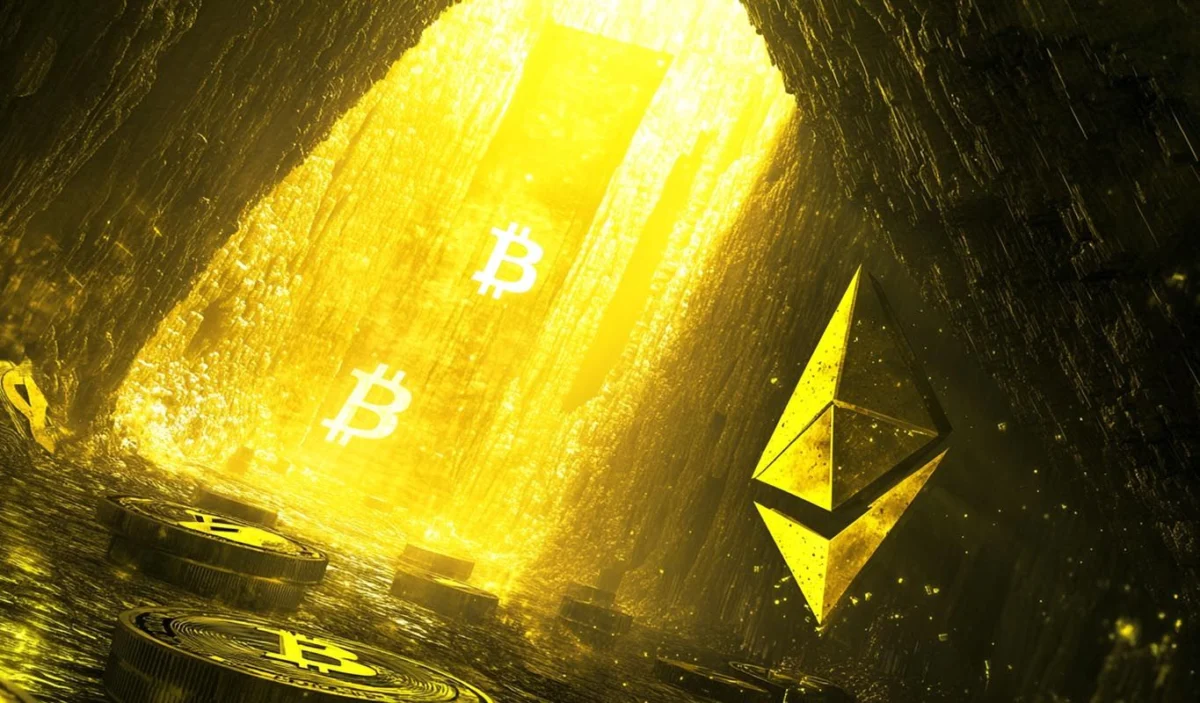
The cryptocurrency market experienced a notable bout of volatility at the commencement of the week, with price movements closely mirroring geopolitical developments. Specifically, statements made by former US President Donald Trump regarding potential peace talks with Iran, coupled with stark threats, appear to have influenced trading patterns for major digital assets like Bitcoin (BTC) and Ethereum (ETH). Initial positive reactions in crypto prices were later tempered as the situation evolved, highlighting the market’s sensitivity to international relations and potential conflicts.
Trump’s Provocative Declaration and its Initial Market Impact
The catalyst for the market’s movement was a series of declarations made by Donald Trump via his social media platform, Truth Social. In a post that garnered significant attention, Trump asserted that the United States was engaged in "serious discussions with A NEW, AND MORE REASONABLE, REGIME to end our Military Operations in Iran." He further suggested that "Great progress has been made."
However, this optimistic framing was juxtaposed with a severe ultimatum. Trump stated, "if for any reason a deal is not shortly reached, which it probably will be, and if the Hormuz Strait is not immediately ‘Open for Business,’ we will conclude our lovely ‘stay’ in Iran by blowing up and completely obliterating all of their Electric Generating Plants, Oil Wells and Kharg Island (and possibly all desalinization plants!), which we have purposefully not yet ‘touched.’" This aggressive rhetoric, a hallmark of Trump’s past foreign policy pronouncements, immediately injected an element of uncertainty into global markets, including the digital asset space.
In the immediate aftermath of these statements, Bitcoin (BTC) saw an initial uptick of approximately 0.8%, while Ethereum (ETH) demonstrated a more pronounced gain of 2.5%. This initial positive correlation suggests that traders may have interpreted the prospect of de-escalation in a volatile region as a potential boost to risk-on assets. However, this trend proved short-lived. As the day progressed, both leading cryptocurrencies reversed their gains. At the time of this report, Bitcoin was trading at approximately $67,749, and Ethereum was priced at $2,073, indicating a bearish turn following the initial optimism.
A Pattern of Geopolitical Influence on Crypto Markets
This is not the first instance where pronouncements concerning Iran have affected cryptocurrency valuations. Last week, Trump had also alluded to potential progress in peace talks, a development that saw the broader crypto market, including Bitcoin and Ethereum, rebound. This historical pattern underscores a recurring theme: the intersection of geopolitical tensions and the digital asset market. Investors and traders often look to cryptocurrencies as a hedge against traditional market instability, but they also appear to be susceptible to the immediate emotional and speculative responses triggered by major international news.
The volatility observed in the crypto market in response to Trump’s statements can be attributed to several factors. Firstly, the prospect of reduced geopolitical risk in a strategically vital region like the Middle East could be interpreted as a positive signal for global economic stability, thereby encouraging investment in riskier assets like cryptocurrencies. Conversely, the threat of escalation and significant military action introduces a heightened level of global uncertainty, which can lead investors to move towards safer havens, often causing a sell-off in speculative assets.
Iranian Counter-Narrative and Market Manipulation Concerns
Adding a layer of complexity to the situation, certain Iranian officials have publicly challenged the narrative of impending peace and have raised concerns about market manipulation. Following Trump’s earlier hints at progress, some Iranian figures pushed back against his claims, suggesting that the information being disseminated was not reflective of the reality on the ground.
More recently, on Sunday, Mohammad Bagher Ghalibaf, the speaker of the Iranian Parliament, issued a pointed warning via his social media channel, X (formerly Twitter). He cautioned the public about the nature of "pre-market so-called ‘news’ or ‘Truth’," characterizing it as often being a "setup for profit-taking" and essentially a "reverse indicator." Ghalibaf advised market participants to "do the opposite: If they pump it, short it. If they dump it, go long." This statement implies a suspicion that certain announcements are strategically timed to influence market sentiment for the benefit of specific actors, rather than reflecting genuine diplomatic breakthroughs. His suggestion that one should "See something tomorrow? You know the drill" further emphasizes a belief in predictable patterns of market manipulation tied to geopolitical pronouncements.
This perspective from an Iranian parliamentary leader introduces a crucial counterpoint to the initial market reaction. It suggests that the optimistic interpretation of Trump’s statements might be misguided, and that the market could be reacting to a carefully crafted narrative rather than an imminent resolution. If Ghalibaf’s assessment is accurate, then the subsequent downturn in crypto prices could be seen as a correction as traders begin to discount the speculative "pump" and anticipate the inevitable "dump" or consolidation.
Understanding the Geopolitical Context: US-Iran Relations and the Strait of Hormuz
To fully appreciate the implications of Trump’s statements, it is essential to understand the long-standing and often fraught relationship between the United States and Iran. Tensions have been particularly high in recent years, fueled by issues such as Iran’s nuclear program, its regional influence, and its support for various militant groups. The Strait of Hormuz, a narrow waterway connecting the Persian Gulf to the open ocean, is a critical chokepoint for global oil supply. Any disruption to shipping traffic in this strait, whether through conflict or blockade, can have immediate and severe repercussions on global energy markets and, by extension, the broader economy.
Trump’s explicit mention of the Strait of Hormuz and his threat to target critical Iranian infrastructure, including oil facilities and power plants, directly highlights the high stakes involved. The potential for military action in such a strategically vital area would undoubtedly lead to significant economic disruption, increased energy prices, and a general flight to safety among investors worldwide. This context explains why any hint of de-escalation, however tenuous, could initially spark a positive reaction in risk assets.
Data and Analysis: Market Performance and Historical Precedents
The cryptocurrency market has a demonstrated sensitivity to macroeconomic and geopolitical events. While often portrayed as an uncorrelated asset class, empirical data suggests otherwise. Major geopolitical crises have frequently coincided with significant price movements in Bitcoin and other cryptocurrencies. For instance, during periods of heightened global uncertainty, Bitcoin has sometimes acted as a digital "safe haven," attracting capital as investors seek alternatives to traditional financial instruments. However, its speculative nature also means it can be among the first assets to be sold off during broad market downturns driven by fear.
The initial uptick in BTC and ETH following Trump’s statements can be analyzed through the lens of market sentiment. Traders, particularly those with a shorter-term horizon, may have reacted impulsively to the perceived possibility of reduced conflict. This is a common phenomenon in highly liquid and sentiment-driven markets. The subsequent decline, however, suggests a more nuanced assessment, potentially influenced by skepticism regarding the sincerity of the peace talks or the realization of the severe threat embedded in Trump’s message.
Expert and Analyst Reactions (Inferred)
While specific named analysts were not quoted in the original content, the scenario invites consideration of typical market analyst perspectives. Following such events, analysts would likely be dissecting the probability of a genuine diplomatic breakthrough versus a rhetorical maneuver. Questions would arise about the "new, and more reasonable, regime" Trump referenced, and whether such a regime is indeed in a position to negotiate or is even receptive to such overtures.
Many analysts would likely echo Ghalibaf’s concerns about market manipulation, pointing to the historical tendency for significant pronouncements to precede periods of price volatility that benefit certain market participants. They would also emphasize the inherent unpredictability of geopolitical situations, advising caution and thorough due diligence before making investment decisions based on such news. The reliance on a single individual’s pronouncements, especially one with a history of controversial statements, would be viewed as a significant risk factor.
Broader Implications for the Crypto Market and Global Finance
The interplay between geopolitical events and cryptocurrency prices has significant implications. It demonstrates that digital assets are not entirely insulated from the complexities of global affairs. Instead, they are increasingly integrated into the global financial ecosystem, subject to the same macro-economic and political forces that influence traditional markets.
The events of the past week highlight several key takeaways for investors:
- Geopolitical Risk as a Market Driver: Geopolitical tensions and potential conflicts are potent drivers of market sentiment, impacting all asset classes, including cryptocurrencies.
- Information Asymmetry and Manipulation: The speed at which information is disseminated in the digital age, coupled with the potential for strategic messaging, raises concerns about market manipulation. It is crucial for investors to critically evaluate news and be aware of potential biases.
- Volatility as the Norm: The cryptocurrency market is inherently volatile. Events like these underscore the need for robust risk management strategies and a long-term investment perspective.
- Interconnectedness of Global Markets: The reactions observed in the crypto market demonstrate the interconnectedness of global finance. Developments in one region or sector can have ripple effects across the world.
Looking Ahead: The Path Forward
The situation between the US and Iran remains fluid and subject to rapid change. The true intentions behind Trump’s statements and the actual state of diplomatic relations will only become clear over time. In the interim, the cryptocurrency market will likely continue to monitor these developments closely. Any concrete steps towards de-escalation or, conversely, any signs of increased tension, will undoubtedly be reflected in asset prices.
Investors are advised to approach the market with caution, conduct their own thorough research, and avoid making impulsive decisions based on headline-grabbing pronouncements. The warnings from Iranian officials regarding potential market manipulation serve as a timely reminder that not all news is created equal, and discerning truth from rhetoric is paramount in navigating the complexities of today’s global financial landscape. The events of this week serve as a potent case study in how international relations continue to cast a long shadow over even the most nascent and seemingly independent financial markets.