


An experienced cryptocurrency trader, identified on social media as @ika_xbt, has reportedly lost their entire digital asset portfolio, valued at over $400,000, after falling victim to a meticulously crafted phishing campaign. The attack, which surfaced on May 26, leveraged seemingly legitimate Google Search advertisements to direct unsuspecting users to a fraudulent replica of the popular decentralized exchange, Uniswap. This incident highlights a persistent and increasingly sophisticated threat vector within the crypto ecosystem, exploiting user trust in major search engines and the inherent irreversibility of blockchain transactions.
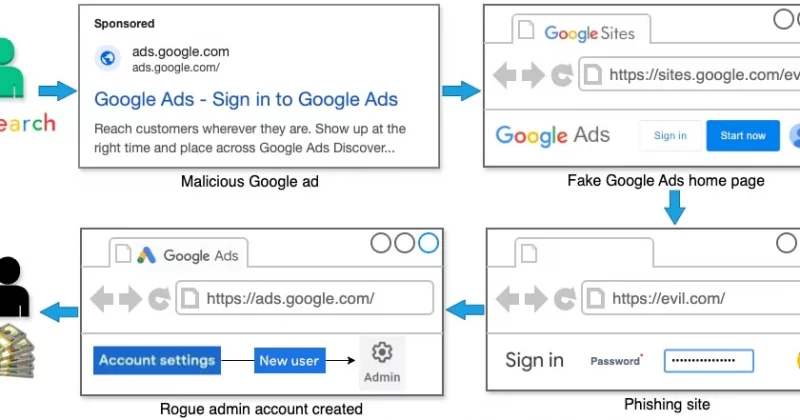
The scam’s modus operandi is disturbingly simple yet highly effective. Attackers strategically purchase sponsored ad placements on Google, specifically targeting the highly sought-after keyword "Uniswap." When users, eager to access the decentralized exchange for trading or liquidity provision, conduct a search for Uniswap, the malicious advertisement appears prominently, often positioned directly above the genuine organic search result. The fraudulent website is designed to be an exact visual replica of the official Uniswap interface, making it virtually indistinguishable from the legitimate platform. The psychological impact of seeing a familiar and trusted interface, coupled with its placement as a sponsored result, creates a potent lure for users who may be operating under time pressure or with a lapse in vigilance.
Once a user navigates to the fake Uniswap site and proceeds to connect their cryptocurrency wallet, the critical juncture of the attack is reached. This connection typically involves granting the platform permission to interact with the user’s assets. In many phishing scenarios, the user is then prompted to approve a transaction, which appears innocuous or is disguised as a necessary step for platform functionality. However, this "approval" is, in reality, a malicious smart contract designed to drain the connected wallet of all accessible funds. Unlike traditional financial systems, the blockchain offers no recourse. There is no customer service department to contact, no chargeback mechanism to initiate, and critically, no undo button for irreversible transactions. For @ika_xbt, a single, seemingly minor approval was sufficient to liquidate their entire substantial portfolio.
It is crucial to understand that this attack did not exploit any vulnerabilities within Uniswap’s underlying smart contracts or its core infrastructure. The Uniswap protocol itself remained secure and uncompromised. Instead, the exploit targeted human psychology and trust in established online platforms, specifically Google’s search results. This distinction is vital, as it underscores the challenge of securing digital assets when the primary point of failure lies in user interaction and the integrity of information presented through third-party services.
A Recurring and Escalating Threat Landscape
The incident involving @ika_xbt is not an isolated event but rather a chilling example of a pattern that has been escalating within the cryptocurrency space. The Security Alliance, commonly known as SEAL, an organization dedicated to monitoring and combating threats in the crypto industry, has observed a significant surge in Google Search-based phishing campaigns targeting various decentralized finance (DeFi) protocols since March 2026. The methodology remains remarkably consistent: attackers secure ad placements, meticulously clone the interface of a trusted DeFi platform, and patiently await unsuspecting users to connect their wallets.
This strategy has proven alarmingly successful, leading to substantial financial losses for investors. As recently as February 2026, similar Google sponsored ad phishing attacks resulted in six-figure losses for victims. Even more striking was a phishing scheme that occurred in July 2025, which successfully siphoned an estimated $1.2 million from users. These figures paint a grim picture of the financial damage inflicted by these persistent campaigns.
Hayden Adams, the founder of Uniswap, has been an outspoken critic of search engine platforms, including Google, for their perceived lack of decisive action against fraudulent advertising. His frustration, frequently voiced across social media and industry forums, echoes widespread concerns among crypto enthusiasts and professionals who feel that these platforms are not doing enough to protect their users from malicious actors operating within their advertising ecosystems. The delay or perceived inaction from these tech giants exacerbates the problem, allowing scammers to continue their operations with relative impunity.
The Anatomy of the Scam: Exploiting Trust and Urgency
The success of this phishing campaign hinges on a multi-pronged approach that exploits psychological vulnerabilities and the inherent characteristics of the blockchain.
- Mimicking Legitimacy: The attackers invest significant effort into creating a visually perfect replica of the target website. This includes replicating logos, color schemes, navigation menus, and even the overall layout. This meticulous attention to detail is designed to bypass the initial visual scrutiny of users who are familiar with the legitimate platform.
- Leveraging Search Engine Authority: Google holds a near-monopoly on internet search. Its sponsored ad system is widely trusted by users, who often perceive the top results as vetted or endorsed. By appearing at the top of search results for a high-intent keyword like "Uniswap," the scam ad gains an immediate veneer of credibility.
- The Wallet Connection Trap: The core of the scam lies in the wallet connection process. Most DeFi interactions require users to connect their cryptocurrency wallets (e.g., MetaMask, Trust Wallet). This connection grants the platform a level of access to the user’s funds. The phishing site exploits this by presenting a seemingly standard connection prompt.
- The Irreversible Transaction: Once a wallet is connected, the attacker can initiate a transaction request through the malicious smart contract. This transaction is typically designed to transfer all available tokens from the user’s wallet to the attacker’s wallet. The critical element here is the blockchain’s immutability. Once confirmed on the network, the transaction cannot be reversed, leaving the victim with no recourse.
- Exploiting User Inattention: Many crypto users, especially those involved in active trading or liquidity provision, may perform numerous transactions daily. This can lead to a degree of complacency or a tendency to approve transactions quickly without thoroughly reviewing the details. The phishing scam relies on this human element, betting that users will not scrutinize the contract details or the permissions they are granting.
A Chronology of Vulnerability
While the recent @ika_xbt incident serves as a stark reminder, the threat of Google Ads phishing has been a persistent issue.
- Early 2025: Reports begin to emerge of increased phishing activity targeting crypto users via search engine ads.
- July 2025: A significant phishing campaign, employing similar tactics, results in the theft of approximately $1.2 million.
- February 2026: Another wave of Google Ads phishing attacks leads to six-figure losses for multiple investors.
- March 2026: The Security Alliance (SEAL) officially notes a substantial increase in these types of campaigns.
- May 26, 2026: The incident involving @ika_xbt and their loss of over $400,000 highlights the continued efficacy and financial impact of these attacks.
This timeline illustrates a consistent and evolving threat, suggesting that attackers are refining their methods and achieving greater success over time.
Supporting Data and Attacker Wallets
Following the discovery of the @ika_xbt incident, blockchain analytics firms and security researchers have been actively tracing the stolen funds. Two wallets have been identified as directly linked to the attackers in this specific phishing campaign. As of the time of their identification, these wallets collectively held approximately 146 Ether (ETH), which, at the prevailing market rate, was valued at roughly $306,000. However, it is important to note that the total stolen funds, including other cryptocurrencies and tokens, are estimated to exceed $400,000, indicating that the attackers likely moved funds through multiple wallets or converted them to other assets. The precise total amount stolen is often difficult to ascertain definitively due to the pseudonymous nature of blockchain transactions and the ability of attackers to quickly obfuscate their holdings.
Implications for Investors: Fortifying Defenses
The persistent threat posed by these phishing campaigns necessitates a proactive and multi-layered approach to security for all cryptocurrency investors.
- Bookmark Critical URLs: The most straightforward and effective defense against this specific attack vector is to bookmark the official URLs of all frequently used DeFi protocols. Instead of relying on search engine results, users should navigate directly to their bookmarked sites. This simple action bypasses the risk of encountering a fraudulent ad entirely. It takes mere seconds to bookmark a site and can prevent catastrophic losses.
- Hardware Wallet Safeguards: Users employing hardware wallets, such as Ledger or Trezor, possess a significant advantage. These devices typically require explicit, on-device confirmation of transaction details before execution. This acts as a crucial final checkpoint, forcing the user to verify the legitimacy of the transaction and the permissions being granted. However, this is not an infallible solution. If a user approves a malicious transaction without carefully reviewing the details displayed on the hardware wallet’s screen, they can still fall victim. The information presented on the hardware wallet must be meticulously cross-referenced with the expected action.
- The Double-Edged Sword of Blockchain Immutability: The decentralized and immutable nature of blockchain technology, which offers transparency and security, also presents its greatest vulnerability in cases of user error or malicious attacks. In traditional finance, mechanisms like fraud protection, chargebacks, and insurance are in place precisely to mitigate losses arising from mistakes or illicit activities. DeFi, by its very design, operates without these intermediaries. Once a transaction is confirmed on the blockchain, it is permanent. This lack of a "safety net" amplifies the consequences of security lapses.
- Vigilance and Due Diligence: Beyond technical safeguards, a heightened sense of vigilance and a commitment to due diligence are paramount. This includes:
- Scrutinizing URLs: Always double-check the URL in your browser’s address bar before connecting your wallet or entering any sensitive information. Look for subtle differences, such as misspellings or unusual domain extensions.
- Reviewing Transaction Details: Before approving any transaction, carefully examine the details presented by your wallet. Understand what permissions you are granting and what assets are being transferred.
- Staying Informed: Keep abreast of the latest phishing scams and security threats within the crypto community. Knowledge is a powerful defense.
- Limiting Permissions: Only grant the minimum necessary permissions to any DeFi protocol. Avoid granting unlimited approval unless absolutely essential and understood.
The incident involving @ika_xbt is a stark reminder that even experienced traders are not immune to sophisticated phishing tactics. As the crypto space continues to evolve, so too will the methods employed by malicious actors. By understanding the attack vectors, implementing robust security practices, and maintaining a constant state of vigilance, investors can significantly reduce their risk of falling victim to these increasingly prevalent scams. The onus of security ultimately rests on the individual user, underscoring the critical need for education and robust personal security protocols in the decentralized finance ecosystem.














