


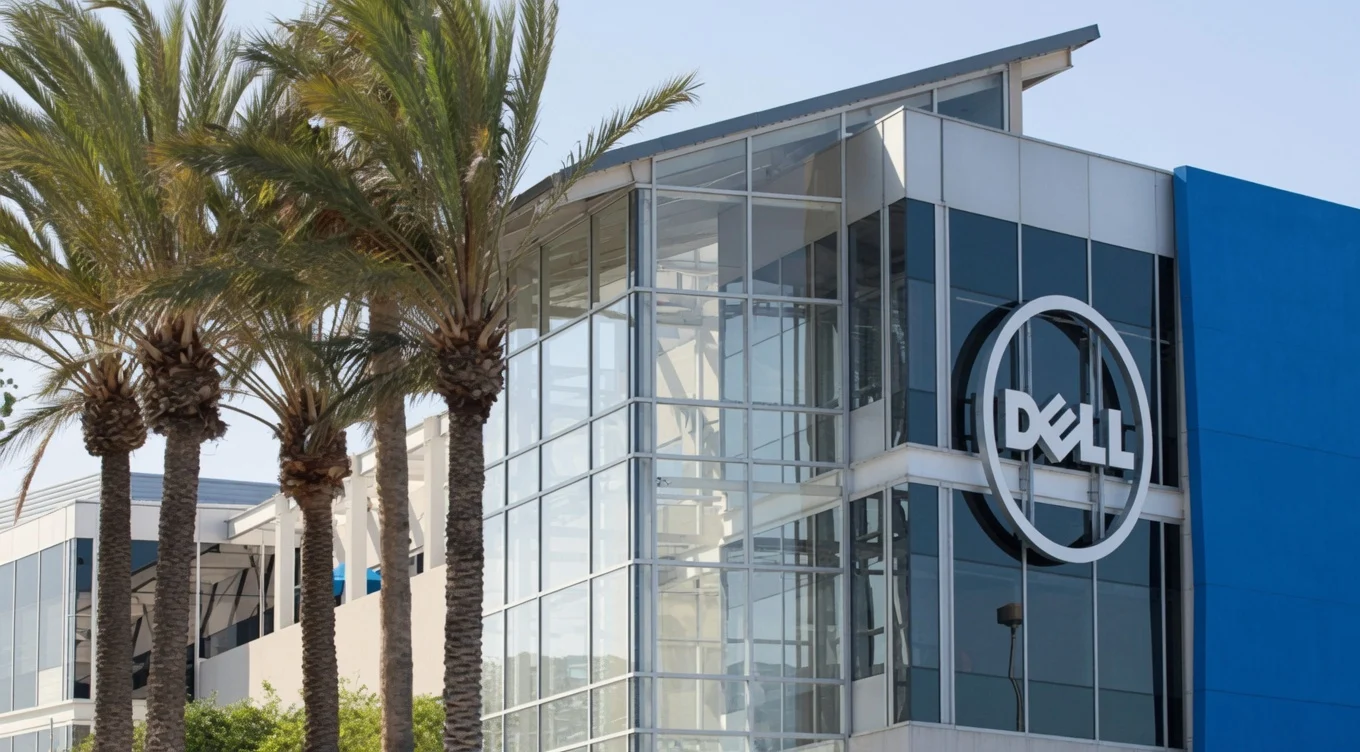
Dell Technologies (DELL) experienced a brutal trading session on Wednesday, July 17, 2024, plummeting more than 13% and touching an intraday floor of $397.69. This sharp decline, one of the most severe single-session drops for the technology hardware manufacturer in recent months, was triggered by a confluence of factors: growing concerns about the sustainability of artificial intelligence (AI) demand, a new analyst downgrade, and substantial insider stock sales that have aggregated to over a billion dollars in recent months. The sell-off in Dell’s shares stood in stark contrast to the broader market, which saw the S&P 500, Dow Jones Industrial Average, and Nasdaq Composite all posting modest gains during the same trading day, underscoring the company-specific nature of the pressure.
A Deep Dive into Market Performance and Context
The 13.22% drop, with shares closing at $397.06, marked a significant reversal in fortune for a stock that had been a darling of the AI boom. Prior to Wednesday’s downturn, Dell’s shares had soared approximately 200% from their 52-week trough of $110.22, largely fueled by investor enthusiasm for its position in the burgeoning AI server market. This dramatic appreciation had driven the company’s forward price-to-earnings (P/E) multiple to roughly 34x, a valuation level that some analysts began to view as stretched, particularly for a hardware manufacturer. The P/E ratio, a common metric for valuing companies, compares a company’s current share price to its per-share earnings. A higher P/E often indicates that investors expect higher future growth, but can also signal overvaluation if growth prospects are not sustained.
The ripple effects of Dell’s sell-off were also felt across the sector. Competitor stocks suffered collateral damage, with Hewlett Packard Enterprise (HPE) declining approximately 7% and Super Micro Computer (SMCI) falling roughly 4%. This synchronized downturn suggests that the concerns affecting Dell may not be isolated but could reflect broader anxieties about the future trajectory of the AI infrastructure market and the intense competition within it.
The AI Demand Dilemma: Meta’s Strategic Shift and Market Saturation Fears
At the heart of Wednesday’s market alarm were reports indicating that Meta Platforms (META), one of the world’s largest hyperscale cloud infrastructure providers, is formulating plans to lease its unused AI training and inference computing power to corporate clients. This revelation sent shockwaves through the market, prompting investors to consider its profound implications for the demand for AI-focused servers. The prevailing concern is that if major cloud infrastructure providers, like Meta, have expanded their computing capacity too aggressively, they might possess a surplus of AI hardware. A move to lease this excess capacity could signal a potential deceleration in the demand for new AI servers from enterprise clients, directly impacting manufacturers like Dell.
Dell Technologies has strategically positioned itself as a critical player in the AI hardware ecosystem, particularly through its manufacturing of high-performance, Nvidia-powered artificial intelligence server systems. These servers are essential for handling the immense computational demands of AI workloads, from large language models to complex data analytics. The prospect of softening demand for these specialized servers is problematic for Dell, as its future growth narrative is heavily tied to this segment. The company has made significant investments in optimizing its supply chain and product lines to capitalize on the AI boom, making any perceived slowdown a material threat to its revenue projections and profitability.
Adding to the demand concerns is the escalating cost of memory components, which are crucial inputs for high-performance servers. Servers optimized for AI workloads, while commanding higher prices, already generate thinner gross profit margins compared to Dell’s conventional hardware products. This means that any weakening in demand, coupled with rising input costs, creates amplified pressure on profitability. The delicate balance between volume, pricing, and component costs is particularly challenging in a rapidly evolving market like AI infrastructure, where technological advancements and supply chain dynamics can shift quickly.
Analyst Sentiment Shifts: Downgrades and Conflicting Outlooks
The market’s growing unease was further compounded by an analyst downgrade. GF Securities, a prominent financial services firm, slashed its rating on DELL to "Hold" on Wednesday. This downgrade was explicitly linked to concerns about valuation levels, following the stock’s meteoric rise. GF Securities noted that after the approximate 200% surge from its 52-week low, the forward price-to-earnings multiple of roughly 34x appeared unsustainable, suggesting that the stock might have outpaced its underlying fundamentals or near-term growth prospects. An analyst downgrade from "Buy" or "Outperform" to "Hold" typically signals that while the firm does not expect the stock to decline significantly, it also does not anticipate substantial upside in the near future, advising investors to maintain their current positions rather than initiating new ones.
Despite this cautionary stance, Wall Street remains divided on Dell’s prospects. Not all analysts are abandoning ship. Evercore ISI, another influential investment bank, reaffirmed its "Outperform" stance on Dell and, notably, boosted its price objective for DELL to $500. This continued optimism from Evercore ISI indicates that some market analysts still view the long-term AI infrastructure narrative favorably, believing that Dell’s strategic positioning and product offerings will allow it to capture significant value in the coming years, regardless of short-term demand fluctuations. Such conflicting analyst opinions highlight the inherent uncertainty and differing interpretations of market signals in a dynamic sector.
Adding to the nuanced sentiment, renowned CNBC personality Jim Cramer, during his "Mad Money Lightning Round," indicated that he would favor Dell or HPE over Super Micro Computer (SMCI) when comparing the competitive landscape of AI server providers. Cramer’s preference, often influential among retail investors, suggests that despite the immediate concerns, Dell’s established market presence, diversified product portfolio, and brand strength may still offer a more compelling long-term investment case compared to more niche players like SMCI.
Heavy Insider Liquidation Compounds Selling Pressure
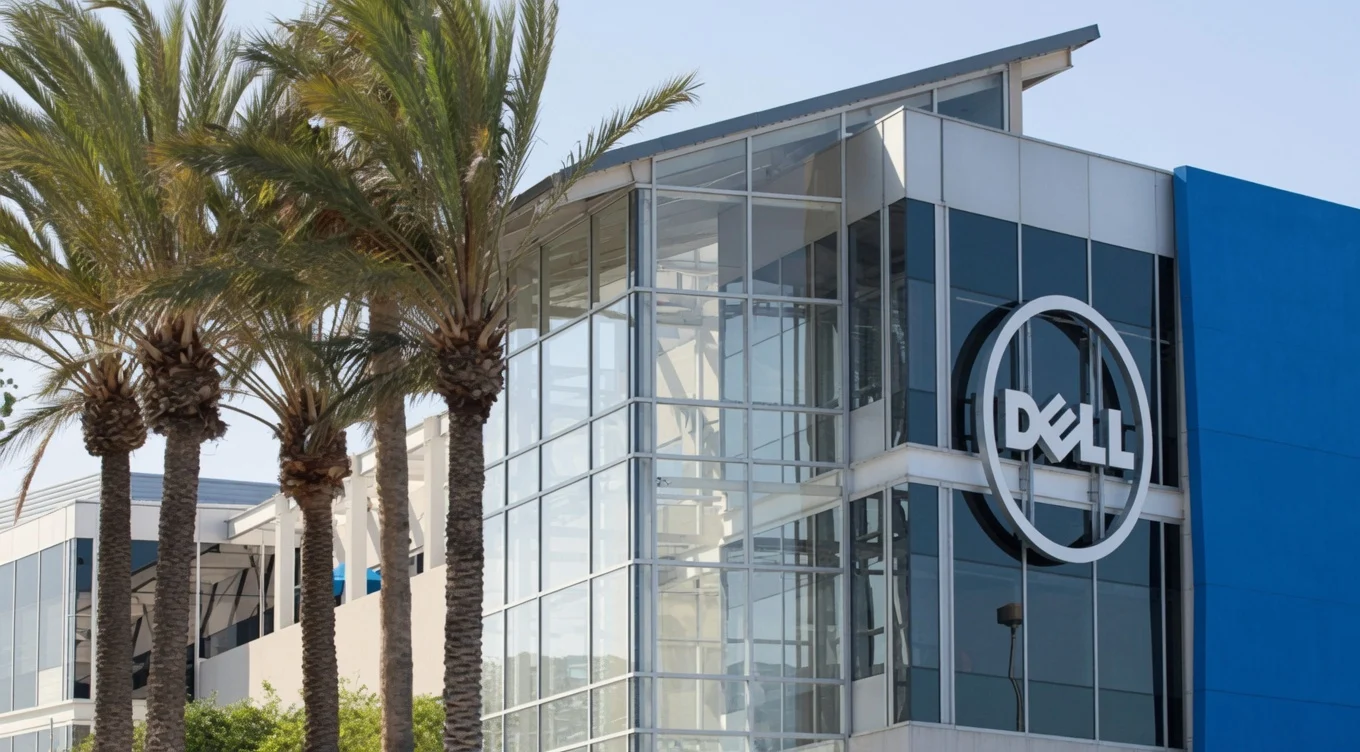
The aggressive insider selling observed over the past few months has significantly intensified the negative sentiment surrounding Dell. Throughout the past three months leading up to the recent drop, company executives and directors liquidated approximately $1.56 billion in Dell stock. Crucially, during this period, no offsetting insider purchases were recorded, signaling a one-sided trend of divestment by those closest to the company’s operations and strategic direction. The sheer magnitude of these sales is substantial and often interpreted by investors as a potential red flag, suggesting that insiders may perceive the stock’s valuation as elevated or foresee challenges ahead.
The transparency requirements of the U.S. Securities and Exchange Commission (SEC) mandate that corporate insiders disclose their transactions through Form 4 filings. In a move that further fueled investor anxiety, two additional Form 4 disclosures were published on July 14, just days before Wednesday’s plunge, revealing further stock transactions by corporate insiders. While insider selling can occur for various legitimate personal financial planning reasons, such as diversification, estate planning, or liquidity needs, a concentrated period of high-volume selling without corresponding buying activity tends to raise questions about management’s confidence in the company’s immediate future prospects.
Beyond insider activity, institutional options activity also turned decidedly negative. Trading analytics platform CapitalFlow observed that major market participants sold over $18 million in bearish call premium following the stock’s initial 8%+ decline from its opening price on Wednesday. This tactical "sell the rally" positioning indicates that large institutional investors were actively betting against a rebound, choosing to profit from the expected continued downside or lack of upward momentum by selling options that would gain value if the stock price fell. This type of options activity often reflects sophisticated market sentiment and can amplify selling pressure.
Technical Analysis Perspective: Navigating Support and Resistance
From a technical chart analysis perspective, Dell’s stock had, until recently, demonstrated robust strength. Despite the recent downturn, DELL continues to trade significantly above its 200-day moving average (DMA) – approximately 99.6% higher. The 200-DMA is a key long-term trend indicator, and trading well above it typically signifies a strong bullish trend. Furthermore, the "golden cross" pattern, which occurred in March when the shorter-term 50-day moving average crossed above the longer-term 200-day moving average, remains technically valid, often interpreted as a strong long-term buy signal. These long-term indicators suggest that while the immediate price action is negative, the underlying long-term trend might still be considered positive by some technical analysts.
However, near-term price action has clearly deteriorated. Shares now trade roughly 5.7% beneath the 20-day moving average (DMA) of $420.74. The 20-DMA is a shorter-term indicator, and falling below it typically signals a weakening in immediate momentum. The relative strength index (RSI), a momentum oscillator that measures the speed and change of price movements, registered 48.48. An RSI reading between 30 and 70 indicates neutral momentum, but a reading below 50 suggests softening momentum and increasing bearish pressure, moving away from overbought conditions that might have existed previously.
Market technicians are now closely monitoring key support levels around $378.50, which could act as a floor for potential further declines, and resistance zones near $444, which would need to be overcome for the stock to signal a recovery. Breaking below the $378.50 support could open the door for further downside, potentially challenging the 50-day moving average, while reclaiming $444 would indicate a potential reversal of the current bearish sentiment.
Broader Industry Implications and Future Outlook
Dell Technologies’ recent stock plunge underscores the inherent volatility and rapid shifts in market sentiment within the technology sector, particularly concerning the highly dynamic artificial intelligence market. The concerns about AI demand, triggered by Meta’s potential strategy, highlight a crucial question for the entire industry: Is the current pace of AI infrastructure build-out sustainable, or are we approaching a period of temporary oversupply? For Dell, whose strategy is heavily invested in being a leading provider of AI servers, this question is existential.
The implications extend beyond Dell to the broader AI infrastructure market. If hyperscalers indeed have excess capacity, it could lead to a slowdown in capital expenditures on new server hardware, impacting not just Dell but also its competitors and upstream component suppliers like Nvidia. Furthermore, the pressure on profit margins from rising memory costs could become a more pervasive issue across the industry, forcing companies to find efficiencies or risk eroding their profitability.
Dell’s management will likely face intense scrutiny in upcoming earnings calls and investor presentations regarding its outlook on AI server demand, its strategies for managing input costs, and its long-term growth projections. The company’s ability to diversify its AI offerings, perhaps into software and services related to AI deployment, or to strengthen its position in other high-growth areas, could be crucial in mitigating risks associated with hardware demand fluctuations.
The conflicting signals from analysts and the contrasting long-term technical indicators versus immediate price action paint a complex picture for Dell Technologies. While the company’s long-term strategic positioning in AI remains a compelling narrative for some, the recent trading session serves as a stark reminder of the challenges and uncertainties that can quickly emerge in a sector characterized by rapid innovation, intense competition, and high investor expectations. Dell’s path forward will depend heavily on how effectively it navigates these converging pressures and communicates its strategy to a discerning market.














