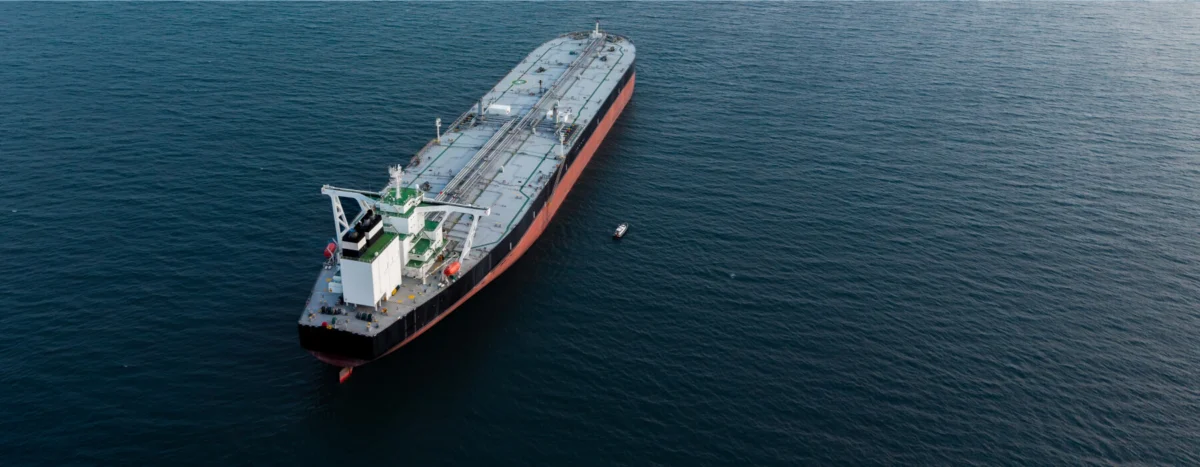
The global maritime industry is facing an unprecedented shift in geopolitical risk following reports that the Islamic Republic of Iran has begun enforcing a cryptocurrency-based toll system for vessels navigating the Strait of Hormuz. In what analysts are describing as the "Iranian Tollbooth," the Islamic Revolutionary Guard Corps (IRGC) has reportedly institutionalized a mechanism that requires ship operators to pay transit fees in digital assets or Chinese yuan to ensure safe passage through one of the world’s most critical maritime chokepoints. This development, first brought to light in April 2026, represents the first documented instance of a nation-state leveraging decentralized finance to monetize control over international waterways, potentially bypassing decades of traditional economic sanctions.
The Emergence of the Iranian Tollbooth
The first indications of this systematic shift emerged on April 1, 2026, when Bloomberg reported that the IRGC had begun intercepting commercial vessels and demanding "transit insurance" fees. According to industry insiders and intelligence reports, the process is highly coordinated. Ship operators are directed to communicate with IRGC-linked intermediaries who demand comprehensive dossiers on the vessel’s ownership, flag of convenience, cargo manifests, destination, and crew nationality. Once this information is vetted, a fee is negotiated—typically starting at a baseline of $1 per barrel of oil or an equivalent value for liquefied natural gas (LNG) and containerized cargo.
By April 8, 2026, the Financial Times corroborated these reports, quoting Hamid Hosseini, a prominent spokesperson for Iran’s Oil, Gas and Petrochemical Products Exporters’ Union. Hosseini clarified that the regime’s expectations were for payments to be settled in "digital currencies," specifically referencing Bitcoin as a means to ensure transactions remain "untraceable and unseizable" by Western financial regulators. This move is seen as a direct response to the tightening of U.S. and EU sanctions, which have historically targeted Iran’s access to the SWIFT banking system and the U.S. dollar.
Chronology of Maritime Financial Escalation
To understand the gravity of the current situation, it is necessary to trace the timeline of Iran’s integration of blockchain technology into its state apparatus.
- September 2022: The U.S. Office of Foreign Assets Control (OFAC) identifies and sanctions a network of Iranian cyber actors using Bitcoin for ransomware operations, marking the early stages of state-adjacent crypto use.
- Early 2025: Reports surface regarding an "Iranian shadow crypto-banking network" capable of moving billions of dollars to facilitate oil sales to East Asian markets.
- Q4 2025: Chainalysis data indicates that the IRGC’s on-chain activity has reached approximately 50% of Iran’s total $7.8 billion cryptocurrency ecosystem.
- April 1, 2026: Bloomberg exposes the "tollbooth" system in the Strait of Hormuz, identifying the requirement for stablecoins and yuan.
- April 8, 2026: Iranian officials publicly acknowledge the use of Bitcoin for transit fees, citing the need to circumvent "illegal sanctions."
- Late April 2026: Global shipping insurance premiums for the Persian Gulf region spike by 400% as the legality of paying these tolls remains in a state of flux.
Supporting Data: The Scale of the IRGC’s Digital Empire
The IRGC’s pivot to digital assets is not an overnight phenomenon but the result of a multi-year strategy to build a parallel financial infrastructure. Data from blockchain analytics firms suggests that the volume of funds received by IRGC-associated wallets has seen an exponential trajectory. In 2024, identified addresses linked to the IRGC received over $2 billion. By 2025, that figure climbed to more than $3 billion.
These numbers are considered conservative "lower-bound" estimates. They primarily track wallets directly named in OFAC designations or seized by the National Bureau for Counter Terror Financing (NBCTF). They do not account for the vast network of front companies in the UAE, Turkey, and Southeast Asia that act as liquidity providers for the regime.
The economic incentive for the Hormuz toll is staggering. Approximately 20% of the world’s daily oil and LNG supply—roughly 21 million barrels of oil equivalent—passes through the Strait of Hormuz. If the IRGC successfully levies a $1 per barrel toll on even 10% of this traffic, it could generate upwards of $700 million in annual revenue, nearly all of which would exist outside the oversight of the global banking system.
Stablecoins vs. Bitcoin: The Regime’s Strategic Choice
While Iranian officials have publicly touted Bitcoin for its decentralization, technical analysis of the regime’s actual on-chain behavior suggests a preference for stablecoins, particularly those pegged to the U.S. dollar like USDT (Tether).
The rationale is twofold:
- Price Stability: Bitcoin’s inherent volatility makes it an unreliable medium for high-volume commercial contracts. A ship operator paying a toll in Bitcoin might find the value of their payment has fluctuated by 5% between the time of the invoice and the time of the escrow release.
- Liquidity and Pegging: Stablecoins allow the IRGC to maintain the purchasing power of their revenue in a currency that is globally recognized and easily convertible into the yuan or other fiat currencies used for military procurement and state imports.
However, the use of stablecoins presents a vulnerability. Unlike Bitcoin, most major stablecoins have centralized issuers who possess the technical capability to "freeze" assets at the request of law enforcement or in compliance with sanctions. This has led to a cat-and-mouse game where the IRGC frequently cycles through new "clean" wallets and uses decentralized mixers to obfuscate the origin and destination of their funds.
Official Responses and Global Compliance Risks
The international community has reacted with a mixture of alarm and legal caution. The U.S. Treasury Department issued a memorandum in mid-April 2026, reminding all maritime entities that "the denomination of a transaction in cryptocurrency does not alter its status under U.S. sanctions law." Any payment made to the IRGC—whether in BTC, USDT, or yuan—is a violation of Executive Order 13224, which targets entities supporting international terrorism.
For shipping giants like Maersk, MSC, and Hapag-Lloyd, the "Iranian tollbooth" creates a legal quagmire. If they pay the toll, they risk massive fines and the loss of access to the U.S. financial system. If they refuse to pay, their vessels, cargo, and crew face the physical threat of seizure by IRGC fast-attack craft.
Legal experts in maritime law suggest that this situation may force a re-evaluation of "force majeure" clauses in shipping contracts. Insurance P&I (Protection and Indemnity) clubs have also warned that they may not be able to provide coverage for vessels that willingly engage in sanctioned financial transactions, even under duress.
Geopolitical Implications and the Precedent for Global Trade
The success of Iran’s crypto-toll strategy could provide a blueprint for other sanctioned or non-state actors. If the IRGC demonstrates that a strategic chokepoint can be monetized via blockchain, similar models could be adopted in other regions:
- The Bab-el-Mandeb: Houthi rebels in Yemen could implement similar digital levies on Red Sea traffic.
- The Malacca Strait: Piracy syndicates or regional militias could use decentralized finance to facilitate "protection" payments that are difficult for international task forces to track.
- The Northern Sea Route: As Arctic ice melts, Russia could potentially explore crypto-denominated transit fees to bypass sanctions related to its energy sector.
Furthermore, this situation accelerates the "bifurcation" of global trade. The use of the yuan alongside cryptocurrency signals a shift toward a multi-polar financial world where the U.S. dollar is no longer the sole arbiter of international commerce.
Future Outlook: Opportunities for Disruption
Despite the challenges, the inherent transparency of the blockchain offers a unique tool for Western authorities. Unlike "dark" ship-to-ship transfers of oil that are difficult to monitor, every cryptocurrency transaction is recorded on a public ledger.
Future efforts to disrupt the Iranian tollbooth will likely focus on:
- Real-Time Chain Analysis: Using AI-driven tools to identify IRGC wallets the moment they are funded by shipping companies.
- Exchange Blacklisting: Working with global cryptocurrency exchanges to ensure that any funds originating from "toll" wallets cannot be off-ramped into fiat currency.
- Diplomatic Pressure on Issuers: Ensuring that stablecoin issuers proactively freeze addresses associated with maritime extortion.
As the situation in the Strait of Hormuz continues to evolve, the intersection of maritime security and decentralized finance will remain a primary concern for global policy makers. The "Iranian Tollbooth" is no longer just a theoretical risk; it is a functioning component of the Islamic Republic’s state-level financial operations, demanding a sophisticated, data-driven response from the international community.