


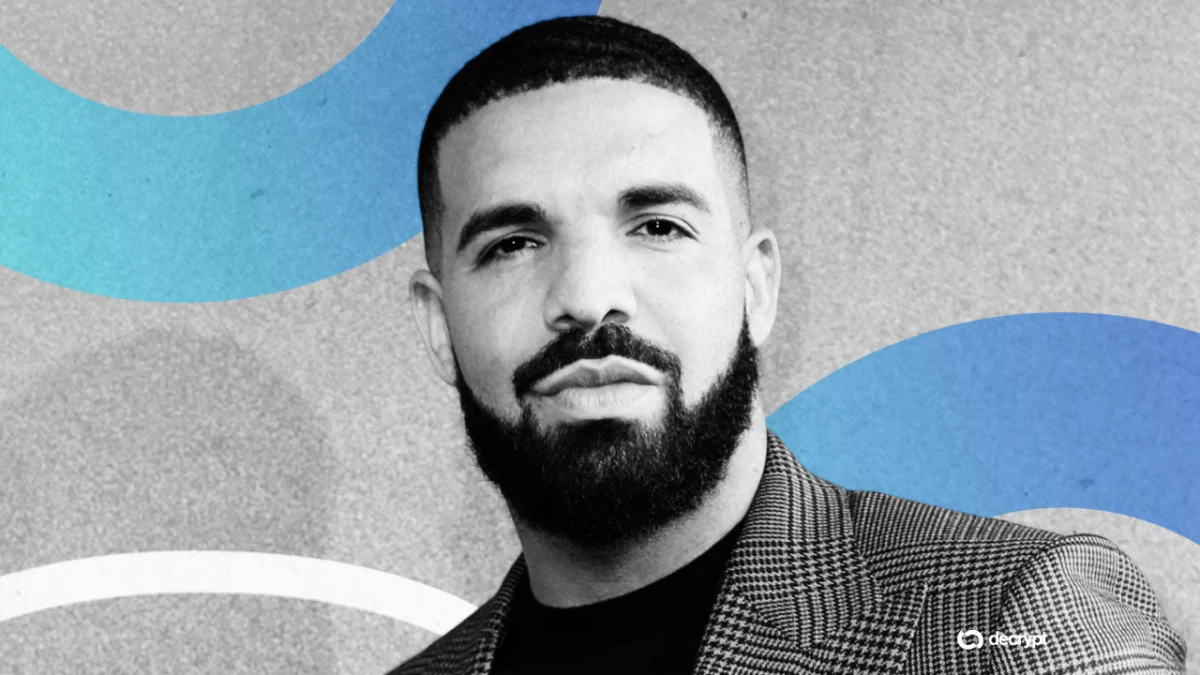
After a period of perceived retreat following an intense lyrical confrontation with rival Kendrick Lamar, multi-platinum recording artist Drake has made a dramatic return to the music scene, simultaneously releasing three new albums on Friday. This expansive musical offering, comprising 43 fresh tracks, has quickly become a focal point not just for its artistic content, which has drawn widespread critical scorn, but also for a highly unexpected and controversial lyrical appeal: a call for the pardon of Sam Bankman-Fried, the convicted founder of the collapsed cryptocurrency exchange FTX. The explicit reference appears on the track "Dust," from the album Iceman, where Drake raps, "An FTX penthouse high-riser, yeah, Samuel Bankman, free all my guys up, yeah." This surprising declaration immediately thrusts the rapper into the complex and politically charged debate surrounding Bankman-Fried’s incarceration and ongoing efforts to secure a presidential pardon, while also shining a spotlight on Drake’s own intricate and often litigious history within the cryptocurrency landscape.
Drake’s Expansive Comeback and Controversial Lyrical Stance
The Toronto-born superstar’s simultaneous release of Iceman, Maid of Honour, and Habibti Breakdown marks an ambitious, if critically polarizing, return. The albums were presented as a comprehensive artistic statement, a vast collection of new material intended to reassert Drake’s dominance after a period of relative quiet, punctuated by his high-profile feud with Kendrick Lamar. While the "rap battle" itself was largely metaphorical, involving a series of diss tracks exchanged earlier in the year, it generated significant public interest and placed immense scrutiny on both artists’ lyrical prowess and public image. Drake’s lyrical reference to Bankman-Fried, however, transcends typical hip-hop bravado, injecting a real-world legal and political issue into his artistic narrative.
Beyond the "free Sam Bankman" line, Drake further solidifies his connection to the digital asset world later in "Dust," proclaiming himself "a BTC crypto big-timer." This self-description, coupled with the explicit call for Bankman-Fried’s freedom, suggests a continued, perhaps even deepened, engagement with the cryptocurrency ecosystem, despite the sector’s volatile reputation and the legal troubles of some of its most prominent figures. The immediate critical reception to the triple album has been overwhelmingly negative, with numerous outlets panning the collection. The Guardian, for instance, famously dismissed it as a "boring, bloated disaster," a sentiment echoed by The Los Angeles Times and The Irish Times, which described it as "listless" and "forgettable." This critical reception, combined with the controversy surrounding his lyrics, ensures that Drake’s comeback is anything but understated.
The Saga of Sam Bankman-Fried and the FTX Collapse
To fully grasp the gravity of Drake’s lyrical intervention, it is essential to understand the monumental scale of Sam Bankman-Fried’s downfall and the subsequent legal ramifications. Bankman-Fried, once hailed as a wunderkind of the crypto world, founded FTX in 2019, rapidly transforming it into one of the world’s largest and most influential cryptocurrency exchanges. Headquartered in the Bahamas, FTX processed billions of dollars in trades daily, attracting millions of users globally and drawing significant investment from major venture capital firms. Bankman-Fried cultivated an image as a benevolent billionaire, a "effective altruist" who frequently testified before Congress and made substantial political donations, particularly to Democratic causes.
The facade crumbled dramatically in November 2022. A series of investigative reports and revelations regarding the financial health of Alameda Research, Bankman-Fried’s affiliated hedge fund, triggered a liquidity crisis at FTX. It quickly became apparent that customer funds deposited with FTX had been illicitly commingled with and siphoned off to prop up Alameda’s risky trading activities. The exchange declared bankruptcy, exposing a staggering multi-billion-dollar deficit and leaving millions of customers unable to access their assets. Bankman-Fried was arrested in the Bahamas a month later and extradited to the United States.
Following a high-profile trial in New York, Bankman-Fried was convicted on seven counts of fraud, conspiracy, and money laundering. Prosecutors argued that he had orchestrated one of the largest financial frauds in U.S. history, meticulously deceiving investors, lenders, and customers. On March 28, 2024, he was sentenced to 25 years in federal prison, a term currently being served at a federal correctional institution in California. The sentencing judge emphasized the immense financial and emotional toll on victims, estimated to be in the billions of dollars, underscoring the severity of his crimes. The case has become a cautionary tale for the burgeoning digital asset industry, highlighting the critical need for robust regulation and ethical conduct.
The Campaign for a Presidential Pardon
Drake’s call for Bankman-Fried’s freedom arrives amidst an already active, albeit largely unsuccessful, campaign by the former crypto mogul’s family and legal team to secure a presidential pardon. This concerted effort intensified significantly following the return of Donald Trump to the White House last year. Trump, known for his willingness to issue pardons and commutations during his previous term, and notably more crypto-friendly in his recent public statements, was seen by Bankman-Fried’s supporters as a potential avenue for clemency.
Reports from reliable sources indicated that Bankman-Fried’s parents, Joseph Bankman and Barbara Fried, both prominent Stanford Law professors, had embarked on an aggressive mission to lobby for their son’s pardon. Their efforts included engaging legal strategists and leveraging their extensive networks to reach out to influential figures within the Trump administration and Republican circles. Bankman-Fried himself, despite his incarceration, has reportedly been active on social media from prison in recent months, engaging with the crypto community and, notably, praising President Trump’s policy decisions and celebrating the achievements of the Washington crypto lobby. These posts, seemingly aimed at cultivating a favorable image with the current administration, were part of a broader strategy to demonstrate a perceived alignment with Trump’s political agenda and economic outlook.
However, the path to a pardon has proven to be fraught with obstacles. President Trump, in an interview with The New York Times earlier this year, explicitly stated that he had no plans to consider pardoning Sam Bankman-Fried. This declaration dealt a significant blow to the clemency campaign, suggesting that the political toxicity associated with Bankman-Fried’s name, coupled with the magnitude of his financial crimes, might be too great even for a president known for unconventional decisions.
Political Repercussions and Industry Backlash
The prospect of a presidential pardon for Sam Bankman-Fried has not only faced resistance from the White House but has also triggered a significant backlash from within the cryptocurrency industry itself and its allies in Congress. For an industry striving to shed its reputation for illicit activity and establish itself as a legitimate financial sector, the association with Bankman-Fried, who embodied the worst aspects of the "Wild West" era of crypto, is deeply problematic.
Many industry leaders and lobbyists in Washington have actively sought to distance themselves from Bankman-Fried’s politically toxic reputation. They argue that a pardon would undermine ongoing efforts to build trust with regulators, lawmakers, and the broader public. Senators and representatives who have been working to craft comprehensive crypto legislation and advocate for the industry’s growth have publicly rebuked any notion of supporting a pardon for Bankman-Fried. They fear that such an act would send a dangerous message, implying a lack of accountability for egregious financial misconduct and potentially jeopardizing future legislative progress. The industry’s current focus is on demonstrating maturity, compliance, and consumer protection, a narrative that clashes sharply with the legacy of FTX’s collapse.
Furthermore, victims of the FTX fraud continue to advocate for justice, making any move towards clemency for Bankman-Fried a politically perilous one. The memories of billions lost and lives disrupted are still fresh, and any perceived softening of his punishment would likely ignite widespread public outrage, particularly among the retail investors who bore the brunt of FTX’s fraudulent activities.
Drake’s Own Entanglements in the Crypto World
Drake’s surprising advocacy for Bankman-Fried is not his first foray into the controversial side of the cryptocurrency world. The musician himself has been embroiled in multiple lawsuits stemming from his years-long, high-profile promotion of Stake, an offshore, crypto-fueled online casino. These legal challenges highlight the financial and reputational risks associated with celebrity endorsements in the largely unregulated digital gambling and asset space.
Stake, founded in 2017, operates primarily in jurisdictions where traditional gambling regulations are less stringent or non-existent, leveraging cryptocurrencies for deposits and withdrawals. Drake’s partnership with Stake involved substantial promotional activities, including livestreamed gambling sessions where he often wagered millions of dollars in crypto, ostensibly from his own funds, and engaged with fans. These endorsements, widely disseminated across his immense social media platforms, exposed his vast audience, including many impressionable young followers, to the high-risk world of crypto gambling.
The lawsuits filed against Drake, some citing the RICO Act (Racketeer Influenced and Corrupt Organizations Act), allege that his promotion of Stake constituted an unlawful enterprise, encouraging illegal gambling and potentially misleading consumers about the risks involved. Plaintiffs argue that Drake’s celebrity status lent an unwarranted air of legitimacy to an operation that was, by its very nature, precarious and potentially predatory. While Drake’s legal team has contested these claims, the ongoing litigation underscores a pattern of engagement with the less conventional, and often legally ambiguous, aspects of the crypto economy. His public association with Stake, coupled with the current call for Bankman-Fried’s pardon, paints a picture of a celebrity deeply intertwined with the fortunes and misfortunes of the digital asset world, often on its more controversial fringes.
Analysis: The Interplay of Celebrity, Justice, and Digital Assets
Drake’s call to "free Sam Bankman-Fried" is more than just a passing lyrical mention; it’s a significant cultural moment that intertwines celebrity influence, the pursuit of justice, and the volatile landscape of digital assets. On one hand, it demonstrates the immense power of celebrity to amplify narratives and influence public perception. Drake’s millions of followers will now be exposed to a message advocating for a convicted fraudster, potentially shaping opinions or at least sparking conversation where none existed before. This raises questions about the responsibility of public figures when using their platforms to comment on serious legal matters.
From Bankman-Fried’s perspective, Drake’s unsolicited endorsement could be a double-edged sword. While any high-profile support might be welcomed by his legal team, the critical backlash against Drake’s albums and his own controversial history with crypto gambling might actually diminish the credibility of the appeal. It could also further alienate the mainstream crypto industry, which is desperately trying to distance itself from Bankman-Fried. For the industry, Drake’s intervention might reinforce negative stereotypes about crypto’s association with illicit activities and questionable figures, making it harder to lobby for favorable regulation and public acceptance.
Legally, Drake’s lyrical plea holds no direct sway over the pardon process. A presidential pardon is a discretionary executive act, typically influenced by complex political calculations, public sentiment, and official recommendations from the Justice Department. While celebrity endorsements can draw attention, they rarely override the fundamental legal and ethical considerations involved in such a high-profile case, especially one involving billions in fraud and a 25-year sentence. The strong resistance from President Trump himself, and the unified stance of the crypto lobby against a pardon, suggest that Drake’s words, while impactful culturally, are unlikely to alter Bankman-Fried’s immediate legal future.
Ultimately, this episode underscores the ongoing challenge of navigating the rapidly evolving digital asset space. It highlights how figures from disparate worlds—music, finance, and politics—are increasingly converging, often with unforeseen consequences. Drake’s artistic expression has inadvertently become a flashpoint for debates about financial accountability, celebrity ethics, and the future trajectory of cryptocurrency in the public imagination. As the legal battles for Bankman-Fried continue and Drake navigates the reception of his new work, the interplay between these complex spheres promises to remain a subject of intense scrutiny and discussion.














