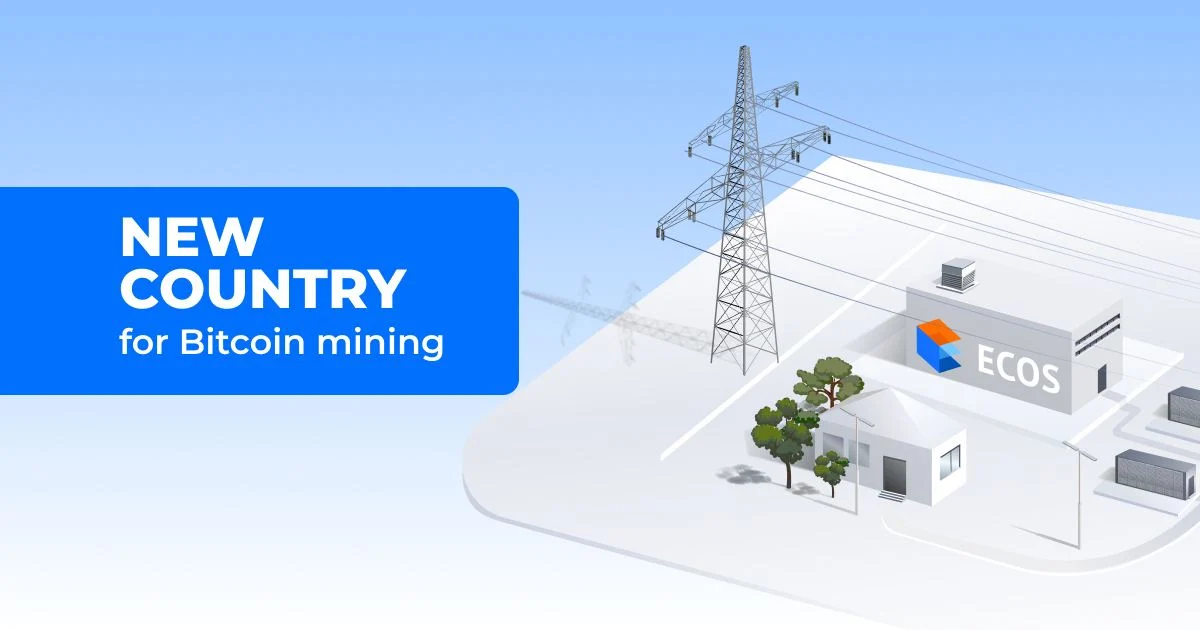
The landscape of international cryptocurrency mining has undergone a significant shift with the official commissioning of a new 60-megawatt (MW) data center in Hrazdan, Armenia, by ECOS, a leading infrastructure provider in the blockchain space. This facility represents a cornerstone of the Armenian government’s long-term strategy to establish the nation as a premier destination for high-technology industries and digital asset management. Operating within a specialized Free Economic Zone (FEZ), the data center leverages a unique public-private partnership designed to offer unprecedented fiscal incentives, stable energy supplies, and a robust legal framework for both institutional and retail miners worldwide.
The launch of this facility is the culmination of a multi-year development plan that began in 2018 when the Armenian government officially designated ECOS as the manager of a Free Economic Zone dedicated to the development of blockchain and high-tech infrastructure. Since that appointment, the company has scaled its operations to serve more than 250,000 users globally, offering a suite of services ranging from cloud mining to physical hardware hosting. The new 60 MW site is not merely an incremental expansion but a foundational piece of infrastructure that positions the Caucasus region as a formidable competitor to traditional mining hubs in North America and Central Asia.
A Strategic Partnership with the Armenian State
The genesis of the ECOS data center lies in the Armenian government’s proactive approach to the Fourth Industrial Revolution. In 2018, the state recognized that the burgeoning blockchain industry required more than just regulatory clarity; it required a physical and fiscal environment where companies could operate without the volatility of shifting tax policies or unreliable utility grids. By entrusting ECOS with the management of the FEZ, the government created a "sandbox" with significant sovereign backing.
Under the terms of the FEZ agreement, the ECOS data center and its partners benefit from a comprehensive tax holiday that is scheduled to last for 25 years. This includes 0% corporate income tax, 0% Value Added Tax (VAT) on services and imports, and 0% import and export duties on hardware. Furthermore, property and real estate taxes are waived, allowing the company to reinvest capital directly into infrastructure and technology rather than administrative overhead. These incentives are specifically designed to attract foreign direct investment (FDI) and to stabilize the operational costs of mining, which are often subject to the whims of local taxation in other jurisdictions.
Technical Specifications and Infrastructure Resilience
The newly inaugurated site spans 2.2 hectares of land in the industrial corridor of Hrazdan. The facility currently has the capacity to house more than 20,000 high-performance mining devices, such as the Bitmain Antminer series. However, the site was engineered with scalability in mind; the existing 60 MW capacity is merely the first phase of a broader development plan that includes the potential to expand to 200 MW in the coming years.
One of the most critical factors for any large-scale mining operation is the stability of the electrical grid. The ECOS data center is connected directly to high-voltage networks, ensuring a consistent and reliable flow of electricity. According to technical specifications provided by the company, the facility boasts nearly 100% uptime, a metric that is vital for the profitability of Proof-of-Work (PoW) mining, where every minute of downtime translates into lost revenue. The energy sourced for the facility is described as clean and affordable, taking advantage of Armenia’s diverse energy mix, which includes significant contributions from nuclear and hydroelectric power.
Beyond the electrical capacity, the facility is equipped with a comprehensive end-to-end service infrastructure. This includes on-site warehouses for the storage of hardware, a dedicated service center for the repair and maintenance of ASIC (Application-Specific Integrated Circuit) miners, and a consistent supply chain for spare parts. To protect the high-value assets housed within the zone, ECOS has implemented a 24/7 security protocol involving armed guards and a permanent staff of specialized technicians and servicemen who monitor the hardware around the clock.
Environmental and Geographical Advantages
The selection of Hrazdan as the site for the data center was a calculated decision based on climatic data. Mining hardware generates significant heat, and cooling costs can often account for a substantial percentage of a facility’s total energy consumption. In Hrazdan, the average annual temperature is approximately 4.8°C (40.6°F). This cool climate allows ECOS to utilize natural air cooling for much of the year, drastically reducing the need for expensive air conditioning systems and improving the overall Power Usage Effectiveness (PUE) of the data center.
By minimizing the energy required for thermal management, the facility not only lowers its operational costs but also reduces its carbon footprint. In an era where the environmental impact of cryptocurrency mining is under intense scrutiny by regulators and ESG (Environmental, Social, and Governance) investors, the ability to operate in a naturally cool climate provides a significant competitive advantage.
The ECOS Service Ecosystem: Bridging the Gap for Investors
While the physical infrastructure is impressive, ECOS has focused heavily on the user experience, aiming to lower the barrier to entry for cryptocurrency mining. The company’s "end-to-end" service model handles the entire lifecycle of a mining operation on behalf of the client. This begins with the procurement of the latest hardware directly from manufacturers like Bitmain. By leveraging its position as a major industrial player, ECOS can secure hardware at prices and delivery timelines that are often unavailable to individual retail investors.
Once the hardware is purchased, ECOS technicians handle the installation, configuration, and ongoing maintenance. For those who do not wish to own physical hardware, the company offers cloud mining contracts, allowing users to rent hash power. For those who do own hardware, the hosting service provides a "turnkey" solution where the equipment is managed in the Armenian FEZ while the owner monitors performance via a mobile application. This app-centric approach allows investors to track their daily earnings, monitor device health, and manage their assets from anywhere in the world, effectively turning a complex industrial process into a manageable digital investment.
Ilya Goldberg, Managing Partner at ECOS, emphasized the importance of this simplicity during the launch event. "We have come a long way from legalizing mining in Armenia to launching our own energy infrastructure that is ready for scaling," Goldberg stated. "We want to offer our partners simplicity in everything: from launching your mining business on our data center to daily monitoring of the result in the application without leaving your home. Our bundled product is made to serve both institutional and retail clients from any part of the world."
Chronology of Development and Future Implications
The development of the Hrazdan data center follows a clear timeline of legislative and industrial milestones:
- Late 2017: The Armenian government begins exploring blockchain technology as a means of economic diversification.
- 2018: A landmark government decree establishes the Free Economic Zone. ECOS is selected as the designated organizer and operator.
- 2019–2021: Initial infrastructure development begins, including the establishment of primary power connections and the first phase of cloud mining operations.
- 2022–2023: Despite the challenges of the "crypto winter" and global supply chain disruptions, ECOS continues the construction of the 60 MW facility and secures high-voltage power agreements.
- 2025: The official launch of the 60 MW data center, signaling the start of a new phase of institutional-grade mining in the region.
The implications of this launch extend beyond the borders of Armenia. As traditional mining hubs like Kazakhstan and parts of the United States face increasing regulatory pressure or energy grid constraints, Armenia’s stable, state-backed environment offers a compelling alternative. The 0% tax regime for 25 years provides a level of fiscal certainty that is rare in the volatile world of digital assets.
Furthermore, the launch coincides with a period of renewed interest in Bitcoin and other PoW assets. Analysts suggest that as the market moves out of its cyclical downturns, the demand for efficient, low-cost mining hosting will reach new heights. ECOS’s ability to offer a "bundled" product—combining hardware, cheap energy, tax-free status, and mobile management—positions it to capture a significant share of the global hash rate.
Broader Economic Impact and Industry Sentiment
For Armenia, the ECOS FEZ is a flagship project that demonstrates the country’s readiness for high-tech investment. By creating jobs for technicians, engineers, and security personnel, and by fostering a local ecosystem of blockchain expertise, the project contributes to the national goal of becoming a "Silicon Valley of the Caucasus."
Industry reactions to the launch have been largely positive, with many viewing the Armenian model as a blueprint for how governments can successfully integrate the crypto industry into their national economies. By providing a clear legal status and tangible infrastructure, Armenia has mitigated the "gray area" risks that have plagued mining operations in other emerging markets.
As the ECOS data center begins its full-scale operations, the focus will likely shift to its expansion plans. With the potential to reach 200 MW, the Hrazdan site could eventually become one of the largest single-site mining operations in the world. For now, the successful deployment of 60 MW stands as a testament to the viability of public-private partnerships in the blockchain sector and the growing importance of strategic geography in the digital economy.