


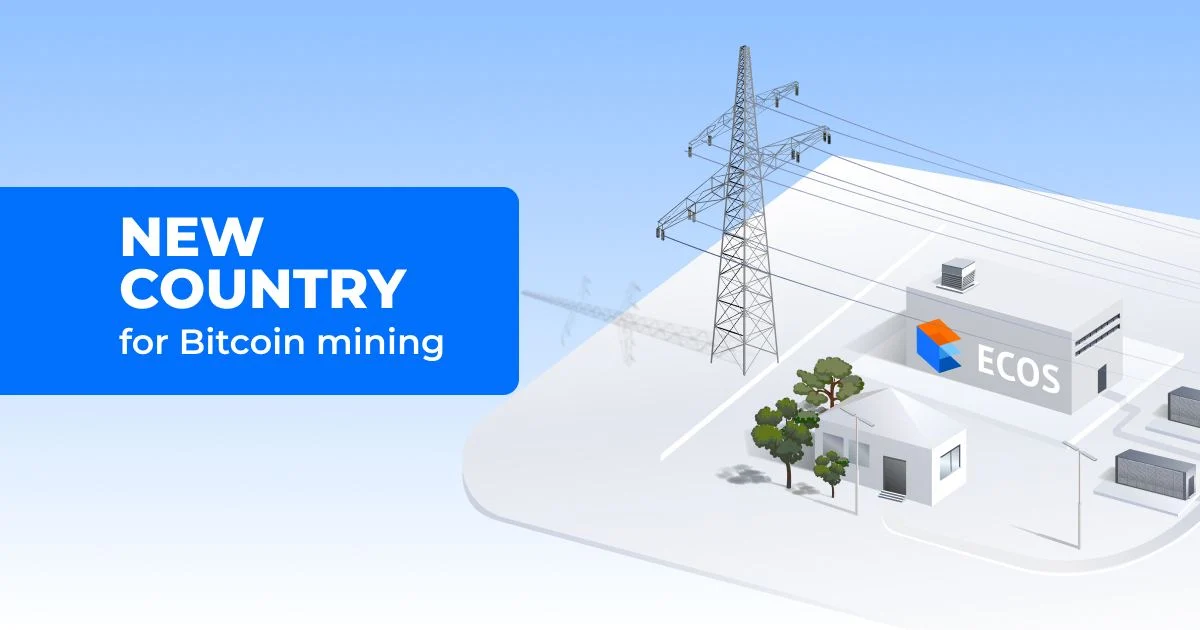
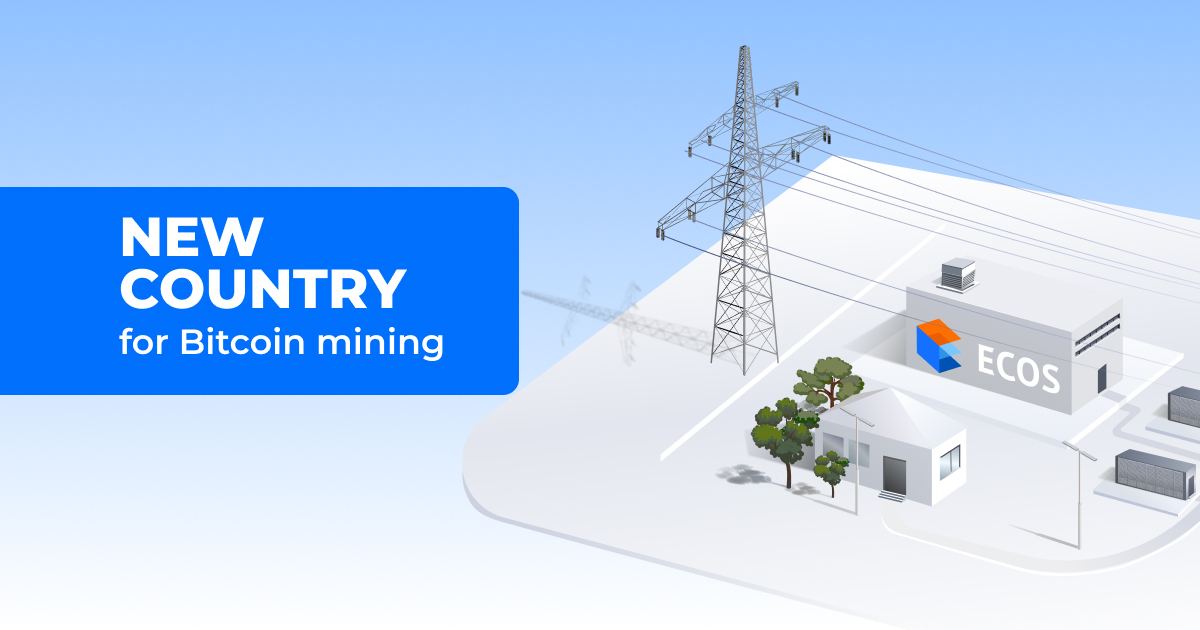
The landscape of global cryptocurrency infrastructure has witnessed a significant shift with the official commissioning of a new 60-megawatt (MW) data center by ECOS, located within a specialized Free Economic Zone (FEZ) in Armenia. This development represents a culmination of a multi-year strategic partnership between the Armenian government and the private sector, aimed at positioning the Caucasus nation as a primary hub for high-technology industries and blockchain development. The facility, situated in the city of Hrazdan, is designed to leverage Armenia’s unique regulatory environment and climatic advantages to provide highly efficient, large-scale Bitcoin mining operations for both institutional and retail clients worldwide.
The launch of this facility marks a critical milestone in the roadmap established in 2018, when the Armenian government formally entrusted ECOS with the management of a Free Economic Zone dedicated specifically to the advancement of distributed ledger technology (DLT) and hardware manufacturing. By integrating state-backed incentives with industrial-grade infrastructure, the project seeks to address the growing global demand for stable, low-cost, and legally compliant mining environments.
Historical Context and the Evolution of Armenia’s Blockchain Strategy
The journey toward the establishment of the Hrazdan data center began over five years ago. In 2018, the Armenian government passed legislation to create a framework for Free Economic Zones, recognizing the potential for digital asset mining to stimulate foreign direct investment and technological modernization. Unlike many jurisdictions that have fluctuated in their stance toward cryptocurrency—ranging from total bans to heavy taxation—Armenia adopted a proactive, patronizing stance toward the sector.
The appointment of ECOS as the FEZ organizer was a strategic move to centralize the industry’s growth under a single, regulated umbrella. Since its inception, ECOS has grown its user base to over 250,000 individuals who utilize its suite of cloud mining and hosting services. The new 60 MW facility is the physical manifestation of this growth, moving beyond virtual services into a massive industrial presence. This chronology reflects a broader trend of "mining migration," where operators have sought refuge in stable jurisdictions following the 2021 crackdown on mining in China and the subsequent energy volatility in other major hubs like Kazakhstan and parts of the United States.
Technical Specifications and Infrastructure Capabilities
The newly launched data center occupies a 2.2-hectare plot within the Hrazdan FEZ, a location chosen specifically for its proximity to high-voltage electrical networks. The 60 MW of power currently available is sourced from clean and stable energy grids, ensuring nearly 100% electricity up-time—a critical metric for mining profitability. The site is engineered for scalability, with the potential to expand its total power capacity to 200 MW as demand grows.
In terms of hardware capacity, the current 2.2-hectare area is equipped to accommodate more than 20,000 individual mining units. To support this volume of hardware, ECOS has established an end-to-end infrastructure on-site. This includes:
- Service and Maintenance Centers: A dedicated facility for the repair and testing of Application-Specific Integrated Circuits (ASICs).
- Supply Chain Integration: Warehouses stocked with a consistent supply of spare parts to minimize downtime.
- Security and Staffing: 24/7 armed security and a round-the-clock team of technicians and engineers to monitor hardware performance.
- Logistical Support: Direct partnerships for the procurement of equipment from leading manufacturers such as Bitmain, facilitating seamless setup for new clients.
One of the most significant operational advantages of the Hrazdan location is its climate. Cryptocurrency mining generates immense heat, often requiring expensive cooling systems that can consume up to 30% of a facility’s total energy. In Hrazdan, the average annual temperature is approximately 4.8°C (40.6°F). This natural "free cooling" allows ECOS to eliminate the need for costly industrial air conditioning, significantly reducing the carbon footprint and operational expenses of the facility.
The Economic Framework: FEZ Benefits and Tax Incentives
The primary draw for international investors to the ECOS facility is the suite of fiscal incentives provided by the Armenian government. Under the FEZ regulations, companies operating within the zone are granted a 25-year window of tax-exempt status. This legal framework is designed to maximize the revenue on capital for participants by eliminating the traditional tax burdens associated with industrial operations.
The specific benefits include:
- 0% Corporate Income Tax: Profits generated from mining and related activities are not subject to standard corporate levies.
- 0% Value Added Tax (VAT): All services and transactions within the FEZ are exempt from VAT, reducing the cost of equipment acquisition and operational overhead.
- 0% Import and Export Duties: This is particularly relevant for the constant rotation of mining hardware, allowing for the duty-free entry of the latest ASICs.
- 0% Property and Real Estate Taxes: The physical infrastructure and land use are shielded from local and national property taxes.
By removing these financial barriers, Armenia has created one of the most competitive "all-in" costs for Bitcoin production globally. This regulatory stability is increasingly rare in a global market where tax laws regarding digital assets are in a state of constant flux.
Official Perspectives and Strategic Vision
The leadership at ECOS emphasizes that the new data center is not merely about power capacity, but about the democratization of mining. Ilya Goldberg, Managing Partner at ECOS, noted that the company’s mission is to simplify the entry process for both institutional and retail investors. He highlighted that the transition from legalizing mining in 2018 to launching a full-scale energy infrastructure represents a significant achievement for the region.
"We want to offer our partners simplicity in everything," Goldberg stated. "From launching your mining business on our data-center to daily monitoring of the result in the application without leaving your home." He further clarified that the bundled product—combining hardware procurement, hosting, and digital monitoring—is tailored to serve a global clientele, regardless of their technical expertise.
Industry analysts suggest that the timing of this launch is strategic. With the "crypto winter" or the bear market cycle showing signs of transition, historical data indicates that the most significant returns on investment in mining are often achieved by those who establish their infrastructure during periods of market consolidation. By launching 60 MW of capacity now, ECOS is positioning itself and its clients to benefit from the next potential upward cycle in Bitcoin’s valuation.
Broader Implications for the Global Mining Industry
The emergence of Armenia as a mining powerhouse through the ECOS facility has several implications for the broader cryptocurrency ecosystem. First, it contributes to the further decentralization of the Bitcoin hash rate. Following the 2021 migration out of China, the hash rate became heavily concentrated in the United States and Russia. The development of high-capacity centers in the Caucasus provides a necessary geographical hedge, ensuring that the network remains resilient against regional regulatory shifts or energy crises.
Second, the project serves as a blueprint for how smaller nations can utilize their energy surpluses and mountainous climates to attract high-tech investment. Armenia’s ability to provide "clean, affordable, and stable electricity" from high-voltage networks suggests a focus on energy efficiency that aligns with global ESG (Environmental, Social, and Governance) trends.
Furthermore, the integration of a mobile application for real-time asset management reflects the modernization of the mining industry. Traditionally, hosting required complex contracts and manual oversight. The ECOS model shifts this toward a "Mining-as-a-Service" (MaaS) approach, where the end-user can manage physical hardware with the same ease as a digital portfolio.
Conclusion and Future Outlook
The launch of the 60 MW ECOS data center in Hrazdan represents more than just a physical expansion; it is a testament to the viability of state-supported blockchain initiatives. By combining a 25-year tax holiday with the natural cooling properties of the Armenian highlands and a robust 200 MW expansion potential, the facility is set to become a cornerstone of the global mining infrastructure.
As the industry moves forward, the relevance of such stable and affordable energy solutions will only increase. With global energy prices remaining volatile and regulatory scrutiny intensifying in traditional financial hubs, the Armenian Free Economic Zone offers a rare combination of legal certainty and operational efficiency. For the 250,000 existing ECOS users and the new wave of institutional investors, the Hrazdan facility provides a clear pathway to participating in the digital economy through a secure, industrial-grade platform. The transition from the "crypto winter" to a more mature market phase will likely see this facility playing a pivotal role in the next generation of Bitcoin mining.














