


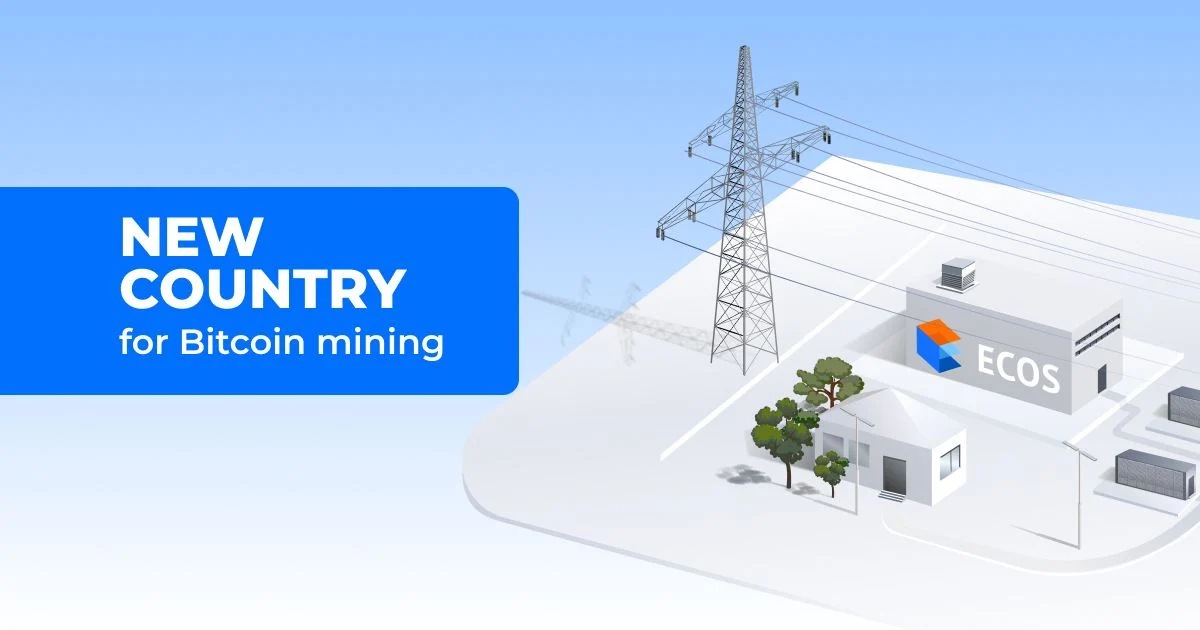
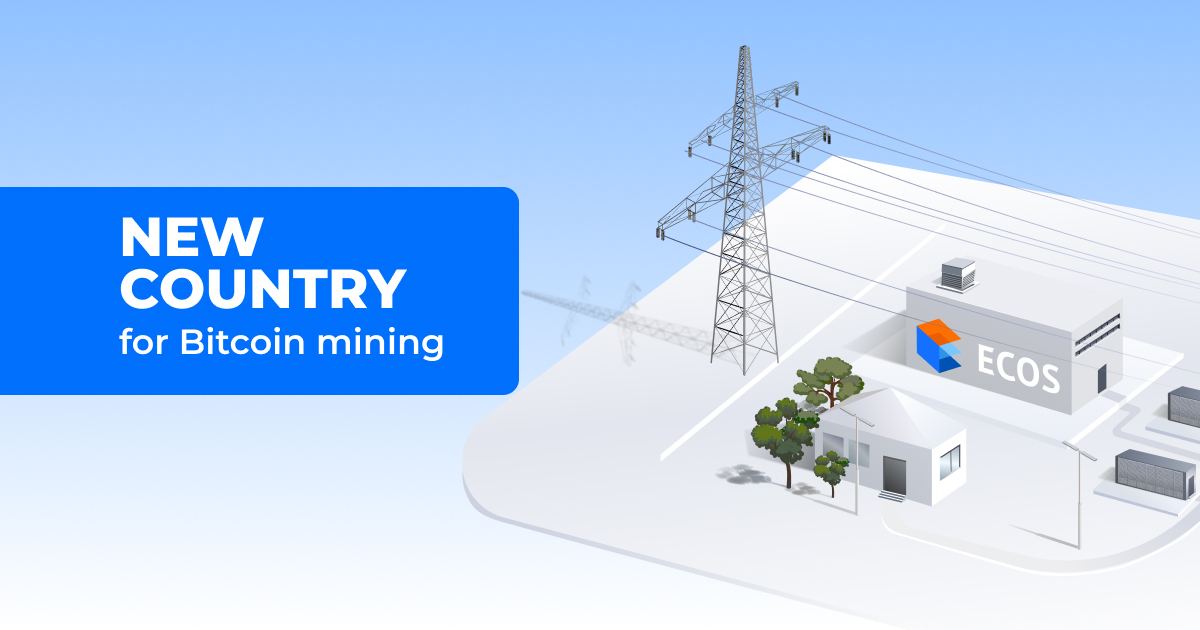
The digital asset mining landscape has reached a significant milestone with the official inauguration of a new 60 MW data center in Hrazdan, Armenia, managed by ECOS, the designated operator of the country’s specialized Free Economic Zone (FEZ). This strategic expansion marks a pivotal moment for the South Caucasus nation as it seeks to solidify its position as a global hub for blockchain technology and high-tech industrial development. The facility, which integrates advanced power infrastructure with a comprehensive suite of mining services, is designed to provide institutional and retail investors with a stable, tax-optimized environment for cryptocurrency production. By leveraging a direct connection to high-voltage power networks and the unique legal protections offered by the Armenian government, the ECOS data center addresses the two most critical challenges currently facing the global mining industry: energy price volatility and regulatory uncertainty.
Strategic Foundation and the Evolution of Armenias Blockchain Policy
The launch of the 60 MW facility is the culmination of a long-term strategic partnership between the Armenian government and ECOS that began in 2018. During that year, the Armenian Cabinet of Ministers issued a landmark decree appointing ECOS as the organizer of a Free Economic Zone specifically dedicated to the development of high technologies, including distributed ledger technology (DLT) and artificial intelligence. This was not merely a local initiative but a calculated move to diversify the national economy and attract foreign direct investment by creating a "crypto-haven" with a robust legal framework.
Since its inception, ECOS has transitioned from a visionary project to a major infrastructure provider, now serving over 250,000 users globally through its cloud mining and hosting platforms. The development of the Hrazdan site has followed a rigorous timeline of infrastructure deployment, starting with the establishment of primary power substations and moving toward the sophisticated, end-to-end service model seen today. The government’s role has remained consistent, providing the legislative stability necessary for long-term capital expenditure in an industry often characterized by rapid shifts in policy.
Technical Specifications and Infrastructure Capabilities
The new data center occupies a 2.2-hectare plot within the industrial district of Hrazdan, a location chosen specifically for its existing energy infrastructure and favorable climatic conditions. The 60 MW capacity currently online represents only the first phase of a broader expansion plan, with the site engineered to support a total load of up to 200 MW as demand grows.
At its current capacity, the facility can house more than 20,000 latest-generation ASIC (Application-Specific Integrated Circuit) mining devices. To ensure maximum operational efficiency, ECOS has implemented a comprehensive infrastructure stack on-site:
- Power Reliability: The data center is fed directly from high-voltage networks, bypassing many of the instabilities associated with local residential grids. This allows ECOS to guarantee nearly 100% uptime, a critical metric for mining profitability where every minute of downtime translates into lost revenue.
- Logistics and Maintenance: The territory includes specialized warehouses for equipment storage and a dedicated service center staffed 24/7. This center is equipped to handle everything from routine cleaning to complex component repairs, utilizing a steady supply of spare parts kept on-site to minimize "mean time to repair" (MTTR).
- Security Protocols: Given the high value of the hardware, the facility is protected by armed guards and advanced surveillance systems, operating around the clock to ensure the physical integrity of the assets.
The Hrazdan Advantage: Climate and Energy Efficiency
One of the most significant operational advantages of the ECOS data center is its geographical location. Cooling represents one of the largest overhead costs in crypto mining, often consuming up to 30% of a facility’s total energy budget in warmer climates. Hrazdan, situated at a high altitude, offers a natural solution to this problem.
The average annual temperature in the Hrazdan region is approximately 4.8°C (40.6°F). This cool mountain air allows the data center to utilize high-efficiency air-cooling systems rather than expensive, energy-intensive refrigeration or liquid cooling units. By harnessing the local climate, ECOS significantly reduces the Power Usage Effectiveness (PUE) ratio of the facility, ensuring that a higher percentage of the 60 MW load is dedicated to actual computation rather than environmental control. This efficiency directly enhances the "hashrate per watt" for clients, making the Armenian site one of the most cost-competitive locations in the global market.
The Free Economic Zone: A 25-Year Tax Sanctuary
Beyond the physical infrastructure, the primary draw for international investors is the Free Economic Zone (FEZ) status of the ECOS facility. Under the Armenian Law on Free Economic Zones, companies operating within this perimeter are entitled to extraordinary fiscal incentives that are virtually unmatched in the European or North American markets.
The FEZ framework provides a 25-year guarantee of the following benefits:
- 0% Corporate Income Tax: Allowing companies to reinvest 100% of their mining profits into hardware upgrades or expansion.
- 0% Value Added Tax (VAT): Applicable to both services rendered within the FEZ and the acquisition of equipment.
- 0% Import and Export Duties: This is particularly vital for miners who need to import thousands of high-value ASIC units from manufacturers like Bitmain or MicroBT.
- 0% Property and Real Estate Taxes: Reducing the fixed costs associated with large-scale industrial footprints.
These incentives are designed to provide a "maximum revenue on capital" environment. In an era where many jurisdictions are introducing "hash taxes" or increasing electricity levies on miners, Armenia’s commitment to a 25-year stable tax regime offers a rare level of predictability for institutional financial modeling.
End-to-End Service Model and Institutional Integration
ECOS has positioned itself not just as a landlord, but as a full-service infrastructure partner. The company’s "bundled product" approach is intended to lower the barrier to entry for both retail investors and large-scale institutional funds. This model covers the entire lifecycle of a mining operation:
- Procurement: ECOS manages the direct purchase of hardware from leading manufacturers like Bitmain, leveraging bulk-buying power to secure lower prices for clients.
- Logistics and Installation: The company handles the international shipping, customs clearance within the FEZ, and the physical installation of the devices.
- Operational Management: Equipment is monitored 24/7 by on-site technicians. Users can track their hashrate, power consumption, and daily earnings in real-time through a dedicated mobile application, providing a "hands-off" experience for owners located anywhere in the world.
Ilya Goldberg, Managing Partner of ECOS, emphasized the importance of this simplicity during the launch event. "We have come a long way from legalizing mining in Armenia to launching our own energy infrastructure that is ready for scaling," Goldberg stated. "We want to offer our partners simplicity in everything: from launching your mining business on our data-center to daily monitoring of the result in the application without leaving your home."
Broader Economic Impact and Industry Context
The launch of the 60 MW center comes at a critical juncture for the cryptocurrency industry. As the "crypto winter" transitions into a new phase of market growth, the demand for "clean" and "stable" mining locations has surged. Armenia’s energy mix, which includes significant contributions from nuclear and hydroelectric power, allows ECOS to provide relatively "green" energy compared to coal-dependent mining hubs.
The expansion also has significant implications for Armenia’s national economy. By hosting one of the most advanced data centers in the region, Armenia is successfully branding itself as a destination for high-tech industrialization. The project creates high-skilled jobs for local engineers and technicians and integrates Armenia into the global digital economy.
Furthermore, the stability of the Armenian grid is a major selling point. While traditional mining hubs like Kazakhstan and parts of the United States have faced challenges ranging from grid instability to sudden regulatory crackdowns, the Armenian government has maintained a supportive stance. This "patronage" of the blockchain sector is seen as a key differentiator that could attract miners looking to relocate from less stable jurisdictions.
Analysis of Implications for the Global Hashrate
The addition of 60 MW—and the potential for 200 MW—represents a non-trivial contribution to the global Bitcoin hashrate. As mining difficulty continues to adjust and the "halving" cycles pressure profit margins, the industry is seeing a flight to quality. Miners are increasingly seeking locations where the "all-in" cost of production (electricity + taxes + cooling + maintenance) is minimized.
The ECOS facility in Hrazdan meets all these criteria. By combining low-cost electricity with a 0% tax rate and a naturally cold climate, the facility offers a buffer against Bitcoin price volatility. For institutional investors, the ability to operate within a government-sanctioned Free Economic Zone provides a layer of "legal de-risking" that is often missing in the cryptocurrency space.
In conclusion, the new ECOS data center is more than just a collection of servers; it is a sophisticated industrial ecosystem. As the company continues to scale toward its 200 MW target, it is likely to play an increasingly prominent role in the global distribution of hashrate, further establishing Armenia as a cornerstone of the modern digital financial infrastructure. With the facility now fully operational, the focus shifts to the rapid onboarding of hardware and the continued evolution of the ECOS mobile ecosystem, which aims to make Bitcoin mining as accessible as traditional stock market investing.














