


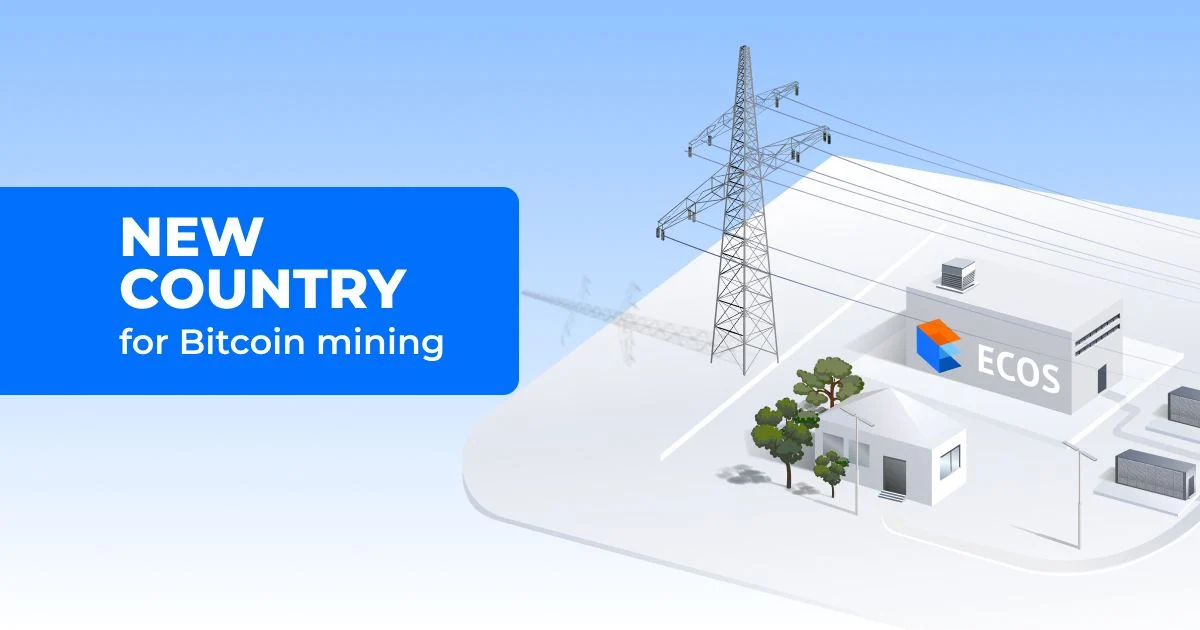
The global cryptocurrency mining landscape has witnessed a significant shift with the official inauguration of a new 60 MW data center by ECOS, a leading international blockchain infrastructure provider. Situated within a specialized Free Economic Zone (FEZ) in Hrazdan, Armenia, this facility represents a strategic expansion of the country’s high-tech capabilities and a major milestone for the company’s global operations. The launch is the culmination of a multi-year partnership between ECOS and the Armenian government, designed to establish the Caucasus nation as a premier hub for digital asset mining and blockchain development.
The new data center is not merely a localized expansion but a cornerstone of a broader infrastructure project that has been in development since 2018. At that time, the Armenian government officially designated ECOS as the managing company of the Free Economic Zone, granting it the authority to develop a comprehensive ecosystem for high-tech industries. This latest 60 MW installation significantly boosts the company’s capacity to serve its growing user base, which currently exceeds 250,000 clients utilizing cloud mining and hosting services worldwide.
Strategic Location and Climatic Advantages
The choice of Hrazdan as the site for the new data center was dictated by both logistical and environmental factors. One of the most critical challenges in industrial-scale cryptocurrency mining is heat dissipation. Mining rigs, particularly the high-performance Application-Specific Integrated Circuits (ASICs) used for Bitcoin mining, generate immense amounts of thermal energy. In many jurisdictions, cooling costs can account for a substantial percentage of total operational expenditures.
Hrazdan offers a natural solution to this problem. With an average annual temperature of approximately 4.8°C (40.6°F), the region provides an ideal environment for "free cooling" techniques. By leveraging the naturally cool air of the Armenian highlands, ECOS is able to maintain optimal operating temperatures for its hardware without the massive electricity overhead typically required for industrial air conditioning units. This climatic advantage directly translates into higher efficiency and increased profitability for both the operator and its clients.
The facility occupies a 2.2-hectare plot of land, specifically engineered to accommodate more than 20,000 mining devices. While the current operational capacity stands at 60 MW, the site has been designed with future-proofing in mind. The infrastructure is built to scale, with the potential to expand to a total capacity of 200 MW as global demand for hosting services continues to rise.
The Free Economic Zone: A Regulatory Safe Haven
The launch of the Hrazdan data center is deeply rooted in the Armenian government’s progressive stance toward blockchain technology. In 2018, the country passed landmark legislation to legalize and regulate the cryptocurrency sector, aiming to diversify its economy and attract foreign direct investment. The creation of the Free Economic Zone (FEZ) provided a legal and fiscal framework that is among the most competitive in the world.
Under the terms of the FEZ, companies operating within the zone—including ECOS and its partners—benefit from a 25-year tax holiday. This includes:
- 0% Income Tax: Companies are exempt from corporate taxes on profits generated within the zone.
- 0% Value Added Tax (VAT): No VAT is applied to services or products within the FEZ.
- 0% Import and Export Duties: This is particularly significant for mining operations, as it allows for the cost-effective importation of expensive hardware, such as Bitmain’s latest ASIC models.
- 0% Property and Real Estate Taxes: Reducing the long-term overhead of maintaining physical infrastructure.
These incentives are designed to provide a stable and predictable environment for institutional and retail investors alike. In a global market where regulatory uncertainty in countries like the United States, China, and Kazakhstan has caused significant volatility in the mining sector, Armenia’s codified state support offers a rare degree of jurisdictional security.
Technical Infrastructure and Energy Stability
Beyond the fiscal benefits, the ECOS data center is characterized by its robust technical specifications. The facility is connected directly to high-voltage power networks, ensuring a stable and continuous supply of electricity. In the mining industry, "up-time" is the primary metric of success; even minor power fluctuations or outages can lead to significant revenue loss. ECOS has claimed an almost 100% up-time rate, supported by the proximity to the Hrazdan Thermal Power Plant and modern electrical grid infrastructure.
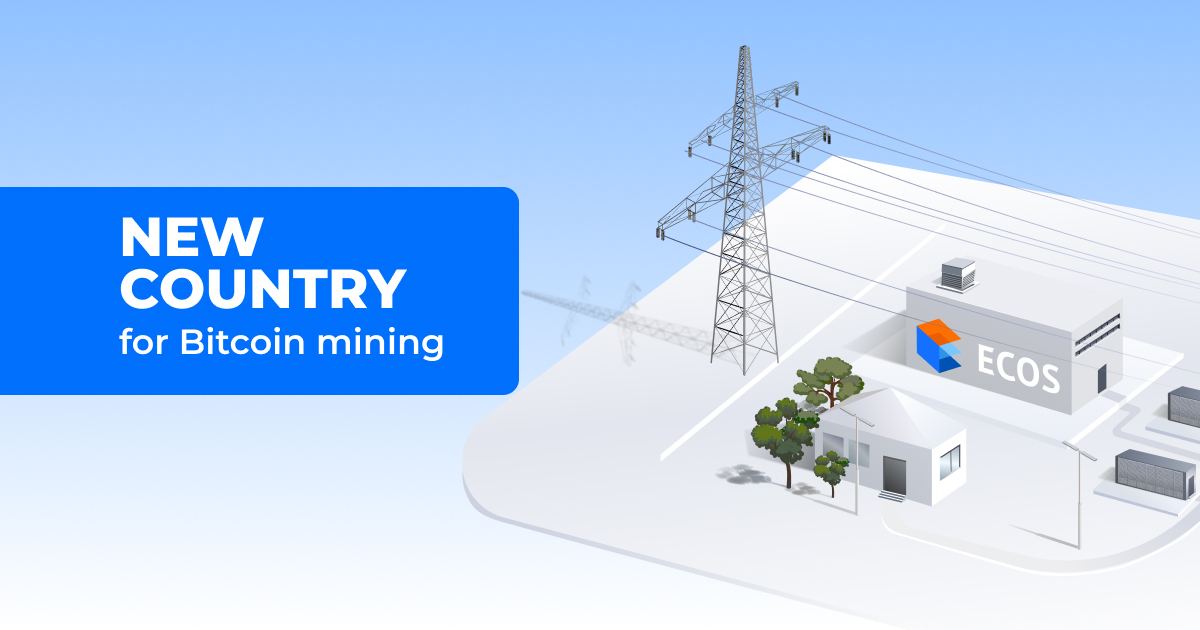
The power used is described as clean and affordable, a crucial factor as the global mining industry faces increasing scrutiny over its environmental impact. By integrating with Armenia’s established energy grid, which utilizes a mix of thermal, hydroelectric, and nuclear power, ECOS provides a more sustainable alternative to coal-heavy mining hubs.
The data center functions as an end-to-end service hub. This "turnkey" approach means that ECOS manages the entire lifecycle of the mining process. This includes the direct procurement of equipment from leading manufacturers like Bitmain, the physical installation of the rigs, 24/7 technical maintenance, and armed security. The facility includes on-site warehouses and a dedicated service center equipped with a constant supply of spare parts, ensuring that any hardware failures are addressed in real-time.
A Chronology of Development
The journey to the 60 MW launch follows a clear chronological path of institutional and infrastructural growth:
- 2018: The Armenian government passes legislation to regulate the blockchain industry and appoints ECOS as the organizer of the Free Economic Zone.
- 2019-2020: Initial infrastructure development begins in Hrazdan. ECOS launches its cloud mining platform, allowing users to rent computing power without owning hardware.
- 2021: Despite global supply chain disruptions, ECOS expands its partnership with hardware manufacturers and begins scaling its physical hosting capabilities.
- 2022-2024: Construction of the new 60 MW wing of the data center is prioritized to meet the rising demand from institutional investors seeking stable jurisdictions.
- 2025: Official launch of the 60 MW facility, marking the transition to a large-scale industrial operation with 200 MW potential.
Leadership and Market Vision
Ilya Goldberg, Managing Partner of ECOS, emphasized that the new data center is the result of years of legal and technical preparation. "We have come a long way from legalizing mining in Armenia to launching our own energy infrastructure that is ready for scaling," Goldberg stated. He noted that the company’s goal is to demystify the mining process, offering a "bundled product" that serves both institutional and retail clients.
The integration of a mobile application allows investors to monitor their assets in real-time. This transparency is a response to the historical "black box" nature of remote mining, where users often had little insight into the actual performance of their hardware. Through the ECOS app, users can track hashrates, daily earnings, and equipment status from any location globally.
Broader Implications for the Crypto Industry
The opening of the Hrazdan facility comes at a pivotal moment for the cryptocurrency market. Following the "crypto winter" of previous years, the industry is seeing a resurgence in Bitcoin’s price and a corresponding increase in network hashrate. As the "halving" cycles of Bitcoin continue to reduce block rewards, the industry is moving toward a model where only the most efficient, low-cost operators can survive.
Armenia’s emergence as a mining powerhouse reflects a broader trend of "jurisdictional arbitrage," where mining operations migrate to countries that offer a combination of cheap energy, cool climates, and friendly regulations. By providing a state-backed Free Economic Zone, Armenia is positioning itself to capture a larger share of the global hashrate, which has traditionally been concentrated in North America and Central Asia.
Analysts suggest that the success of the ECOS FEZ could serve as a blueprint for other developing nations looking to integrate blockchain technology into their economic portfolios. The combination of infrastructure investment and legislative clarity provides a "moat" against the volatility of the global crypto market.
Conclusion
The launch of the 60 MW ECOS data center in Armenia marks a significant evolution in the industrialization of cryptocurrency mining. By combining the natural advantages of the Hrazdan climate with a 25-year tax-free regulatory framework, ECOS has created a highly resilient operational model. As the facility moves toward its 200 MW potential, it stands as a testament to the viability of state-supported blockchain initiatives and the growing importance of the Caucasus region in the global digital economy. For investors, the facility offers a bridge between the digital world of Bitcoin and the physical world of industrial-grade energy infrastructure, all managed through a simplified, mobile-first ecosystem.














