


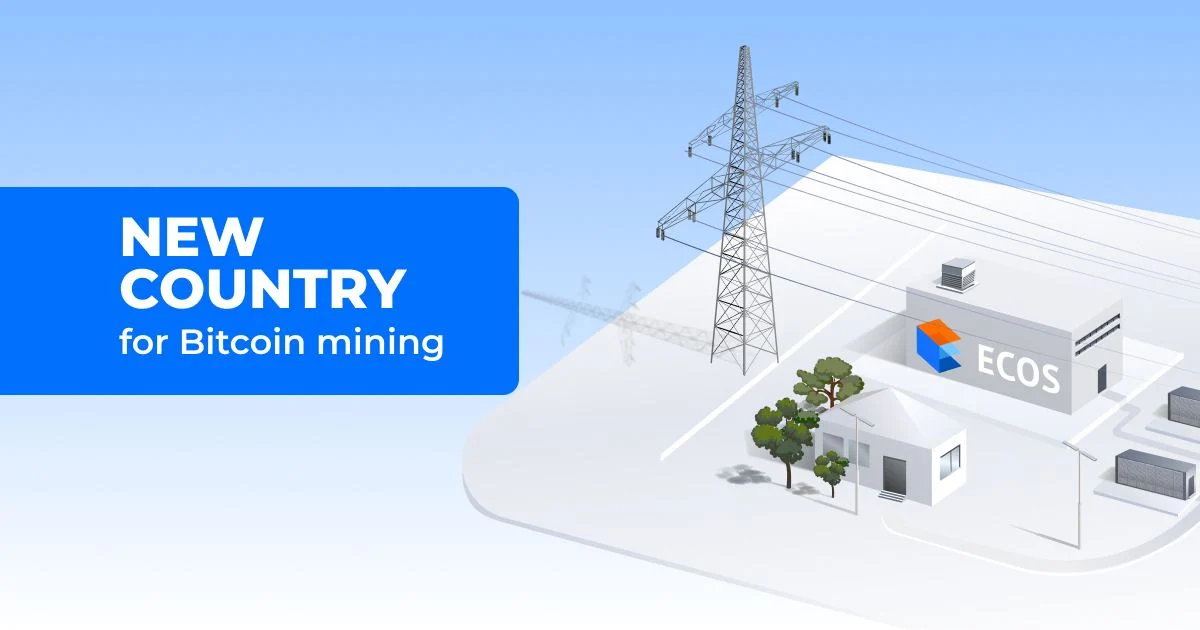
The global cryptocurrency mining landscape has witnessed a significant shift toward jurisdictions that offer not only regulatory clarity but also subsidized infrastructure and fiscal incentives. In a major development for the Eastern European blockchain sector, ECOS, a prominent crypto-infrastructure provider, has officially inaugurated a new 60-megawatt (MW) data center in Hrazdan, Armenia. This facility represents a cornerstone of the Armenian government’s long-term strategy to position the nation as a regional hub for high-technology and decentralized finance. The launch is the culmination of a multi-year partnership between the Armenian state and private enterprise, designed to capitalize on the country’s surplus energy and favorable climatic conditions.
The new data center is situated within a designated Free Economic Zone (FEZ), a status granted to ECOS by the Armenian government in 2018. This designation allows the facility to operate under a unique legal and fiscal framework, providing institutional and retail miners with a competitive edge that is increasingly rare in the volatile global energy market. With an initial capacity of 60 MW and the infrastructure already in place to scale up to 200 MW, the Hrazdan site is poised to become one of the most significant mining hubs in the Caucasus region.
Historical Context and the Evolution of Armenia’s Crypto Framework
The journey toward the launch of the Hrazdan data center began in late 2017 and early 2018, when the Armenian government sought ways to diversify its economy through high-tech industrialization. In 2018, the government issued a landmark decree entrusting ECOS with the creation and management of a Free Economic Zone specifically tailored for the development of blockchain technologies. This move was strategic; while other nations were hesitant or outright hostile toward cryptocurrency mining, Armenia recognized the potential for foreign direct investment (FDI) and the utilization of its robust electrical grid.
Historically, Armenia has maintained a complex energy infrastructure, featuring a mix of nuclear, thermal, and hydroelectric power. The Hrazdan area, in particular, is an industrial heartland, hosting the Hrazdan Thermal Power Plant and being well-connected to high-voltage transmission lines. By situating the FEZ in this location, the government and ECOS ensured that the data center would have access to stable, high-capacity power without straining the residential grid. Over the past five years, ECOS has grown its user base to over 250,000 individuals globally, transitioning from a cloud mining startup to a comprehensive ecosystem offering hosting, hardware procurement, and asset management.
Technical Specifications and Environmental Advantages
The newly launched facility spans approximately 2.2 hectares, an area sufficient to house more than 20,000 latest-generation mining devices, such as the Bitmain Antminer S19 and S21 series. The infrastructure is built to industrial standards, featuring high-voltage transformers and a direct connection to the Armenian national grid, which ensures nearly 100% uptime. In the world of Proof-of-Work (PoW) mining, where every minute of downtime translates to lost revenue, this level of electrical stability is a critical performance metric.
Beyond electrical capacity, the geographic choice of Hrazdan provides a natural operational advantage. Cryptocurrency mining rigs generate immense amounts of heat, necessitating expensive cooling systems in warmer climates. However, Hrazdan sits at an elevation of approximately 1,675 meters above sea level, contributing to an average annual temperature of just 4.8°C (40.6°F). This cool temperate climate allows for highly efficient air-cooling systems, significantly reducing the "Power Usage Effectiveness" (PUE) ratio of the data center. By minimizing the energy spent on cooling, ECOS can pass these savings on to its clients, making the cost of production per Bitcoin lower than in traditional mining hubs like Texas or Kazakhstan.
The Free Economic Zone: A Fiscal Sanctuary for Mining
Perhaps the most significant draw for investors is the comprehensive tax holiday afforded by the Free Economic Zone status. Under the current Armenian legislation governing the ECOS FEZ, companies and individual partners operating within the zone are entitled to:
- 0% Income Tax: Profits generated from mining activities are exempt from corporate and personal income taxes.
- 0% Value Added Tax (VAT): All services provided within the zone and the sale of mined assets are VAT-exempt.
- 0% Import and Export Duties: Mining hardware, which often carries heavy tariffs in other jurisdictions, can be imported into the FEZ without customs duties.
- 0% Property and Real Estate Taxes: The physical infrastructure and land use are not subject to local property taxes for the duration of the FEZ’s 25-year mandate.
These incentives are designed to provide a "safe harbor" for capital. In a global environment where the United States is debating excise taxes on mining electricity and European nations are tightening environmental regulations, Armenia’s 25-year guarantee of fiscal stability offers a rare level of predictability for institutional miners looking to recoup hardware investments over multi-year cycles.
End-to-End Infrastructure and Operational Security
The ECOS Hrazdan data center is not merely a warehouse for servers; it is a full-service industrial complex. The company has implemented an end-to-end service model that handles the entire lifecycle of a mining operation. This includes the direct purchase of equipment from manufacturers like Bitmain, logistics, installation, and 24/7 technical maintenance.
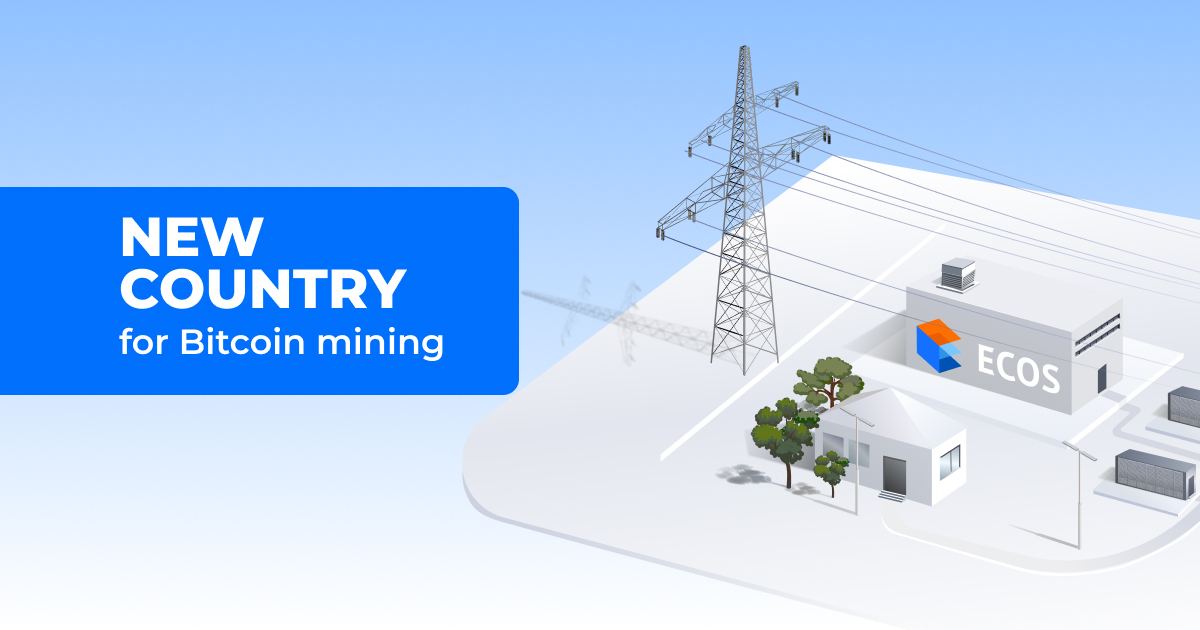
Security is a paramount concern for high-value data centers. The ECOS facility is equipped with 24/7 armed guards, advanced biometric access controls, and comprehensive video surveillance. Furthermore, the site includes on-site warehouses for spare parts and a dedicated service center staffed by specialized technicians. This ensures that if a hashboard or power supply unit fails, it can be repaired or replaced immediately without the need to ship the unit back to the manufacturer, thus minimizing "hashrate decay."
For the retail investor, ECOS has integrated this physical infrastructure into a digital platform. Users can monitor their hardware’s performance, electricity consumption, and daily earnings through a mobile application. This "hosting-as-a-service" model democratizes access to industrial-scale mining, allowing individuals who cannot afford to build their own data centers to benefit from the same economies of scale and tax advantages as institutional players.
Leadership Perspective and Strategic Vision
Ilya Goldberg, Managing Partner of ECOS, emphasized the significance of this launch in the context of the company’s long-term evolution. "We have come a long way from legalizing mining in Armenia to launching our own energy infrastructure that is ready for scaling," Goldberg stated. "We want to offer our partners simplicity in everything: from launching your mining business on our data center to daily monitoring of the result in the application without leaving your home."
Goldberg further noted that the facility was designed with a dual-purpose focus, serving both large-scale institutional clients and smaller retail participants. By bundling hardware procurement with professional hosting and tax-free operations, ECOS aims to lower the barrier to entry for Bitcoin mining. This is particularly relevant as the industry moves out of the "crypto winter" phase, a period Goldberg identifies as the most opportunistic time for capital deployment. Historically, investments made during market troughs have yielded the highest returns when the Bitcoin network enters its next bullish cycle.
Broader Industry Implications and Regional Impact
The expansion of ECOS in Armenia comes at a time of significant upheaval in the global hashrate distribution. Since China’s ban on mining in 2021, the industry has sought stability. While the United States currently leads in total hashrate, rising energy costs and legislative pressure in states like New York have led miners to seek alternatives. Armenia, with its surplus of baseload power from the Metsamor Nuclear Power Plant and its strategic desire to integrate into the global digital economy, presents a compelling alternative.
The 60 MW launch is expected to have a tangible impact on the local economy. Beyond the immediate construction and engineering jobs created, the FEZ fosters a secondary economy of software developers, blockchain researchers, and logistics providers. It also demonstrates a successful model of Public-Private Partnership (PPP), where the state provides the regulatory framework and the private sector provides the capital and technical expertise.
Analysis of the current mining market suggests that "stable" jurisdictions are becoming the most prized asset for miners. The Armenian FEZ offers a level of legal protection that is often missing in other emerging markets. By codifying the tax exemptions into law for 25 years, the Armenian government has mitigated the "sovereign risk" that often plagues large-scale energy projects.
Conclusion and Future Outlook
The launch of the 60 MW ECOS data center in Hrazdan marks a definitive milestone in Armenia’s bid to become a global leader in the blockchain infrastructure space. By combining state-backed tax incentives, a cold climate, and stable industrial power, ECOS has created a facility that addresses the primary pain points of the mining industry: high taxes, cooling costs, and regulatory uncertainty.
As the facility prepares for its potential expansion to 200 MW, the focus remains on maintaining the "end-to-end" simplicity that has defined the ECOS brand. For the broader cryptocurrency market, the success of the Hrazdan FEZ serves as a blueprint for how national governments can successfully integrate decentralized technologies into their industrial strategies. With the next Bitcoin halving cycles always on the horizon, the efficiency and fiscal advantages provided by this Armenian hub may well determine the profitability and survival of many mining operations in the years to come. In an industry defined by volatility, ECOS and the Armenian government have built a foundation of stability.














