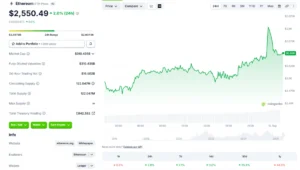
Ethereum (ETH), the second-largest cryptocurrency by market capitalization, has experienced a period of price consolidation over the past two weeks, trading primarily between $1,840 and $1,953 before settling near the $1,908 mark. This relatively stable price action, however, belies a series of underlying structural shifts in its market dynamics, most notably a sharp reversal in stablecoin liquidity on the Binance exchange and a weakening Coinbase premium. These indicators collectively suggest a transitional phase for Ethereum, characterized by reduced short-term trading interest and a cautious sentiment among market participants, even as the network’s staking rate continues its steady ascent, signaling long-term conviction.
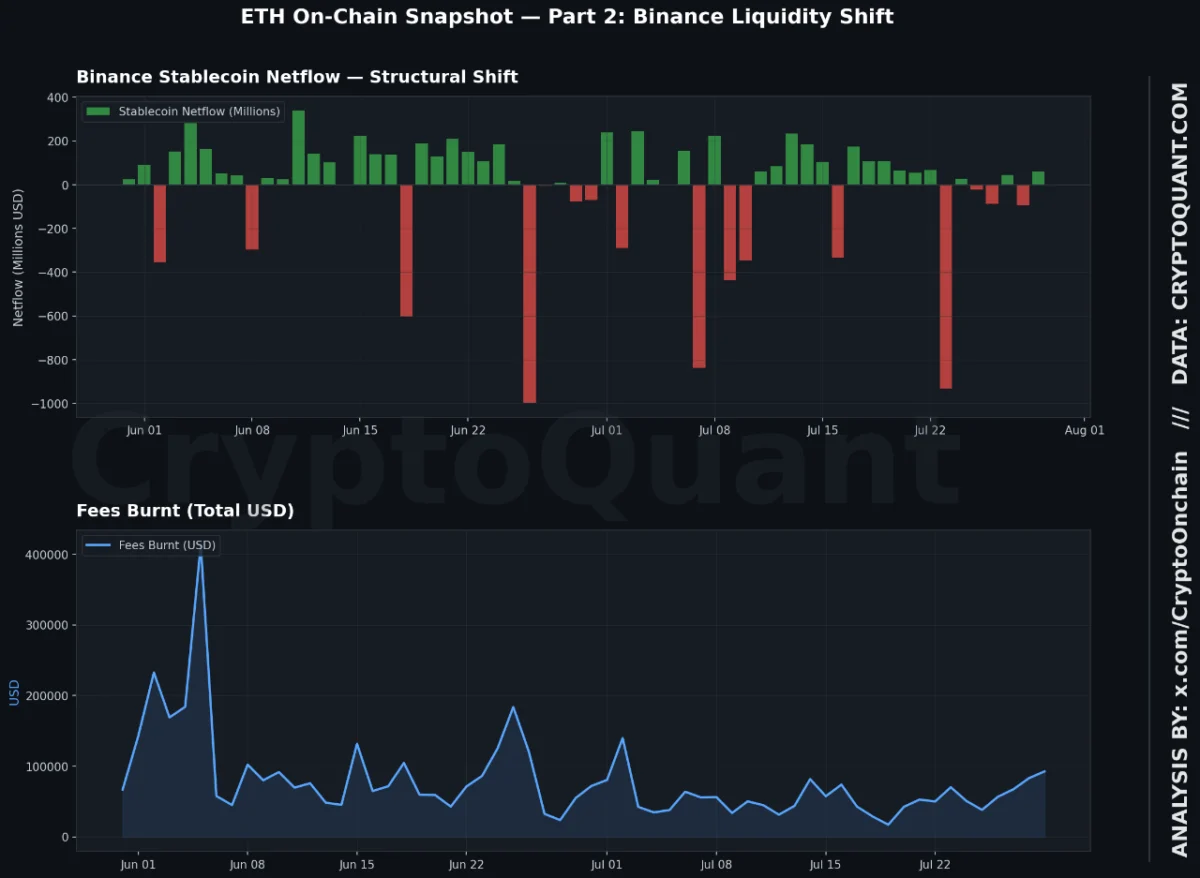
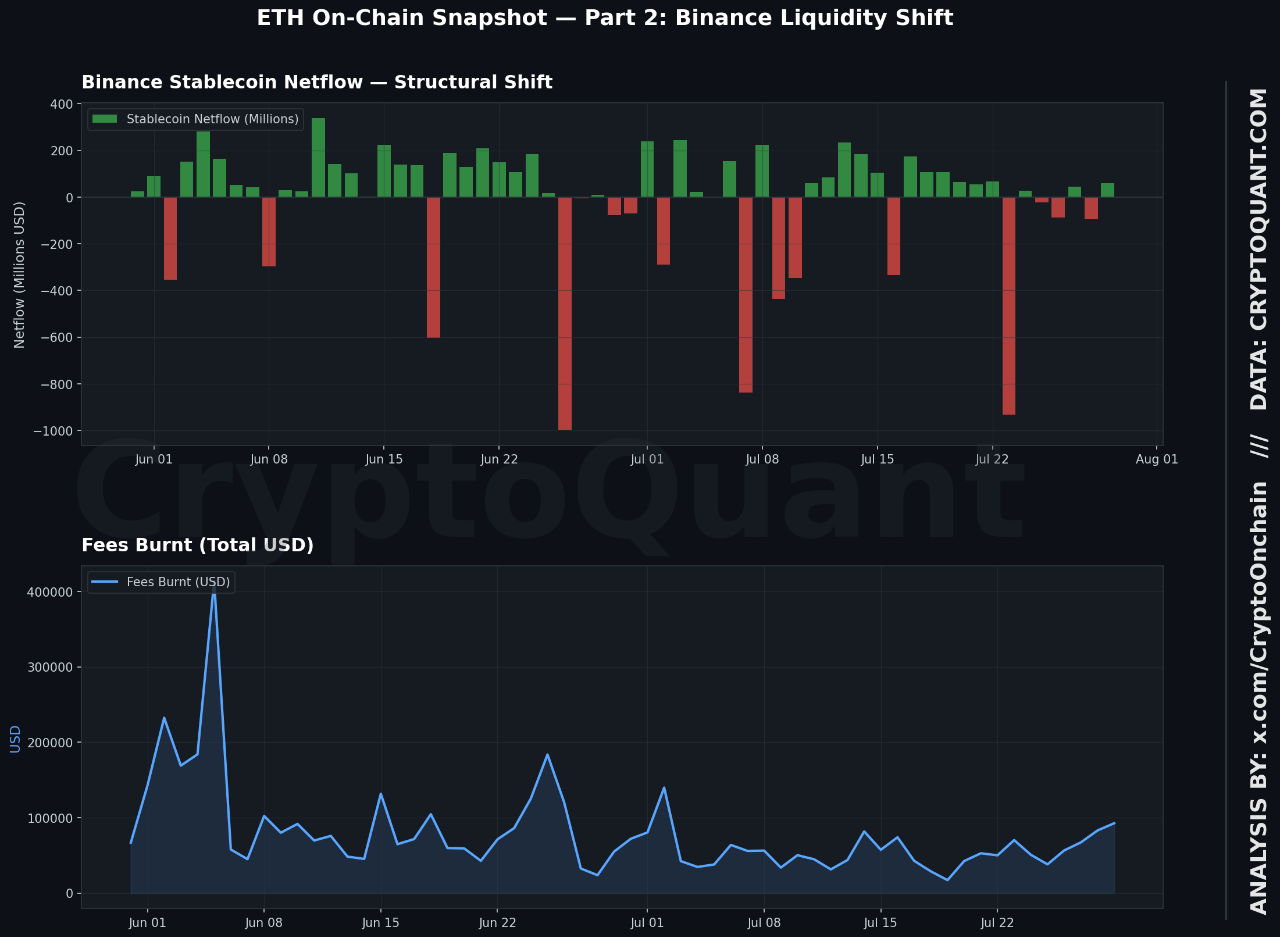
The most striking development in Ethereum’s recent market behavior is the profound decline in stablecoin liquidity on Binance, which has been identified as one of the most significant structural shifts among 148 tracked metrics. Stablecoin netflow on Binance plummeted by an astounding 518% week-over-week. This dramatic reversal was not an isolated incident, extending across broader timeframes with a 347% drop compared to its monthly baseline and an even more substantial 728% decline against the quarterly baseline. This extensive reduction in stablecoin liquidity, which represents the available capital for trading pairs, signifies a significant outflow of capital from the exchange’s Ethereum ecosystem.
Binance holds a pivotal position in the cryptocurrency market, often serving as the deepest venue for stablecoin settlement and a primary hub for large-volume trades. Consequently, shifts in its order book are closely monitored by analysts and traders as potential leading indicators for broader market repositioning. The magnitude of this particular stablecoin outflow, standing out among a vast array of market metrics, points to a substantial change in trader behavior or capital allocation. Market observers often interpret such widespread and severe reductions in stablecoin liquidity as a precursor to either reduced buying pressure or a reallocation of funds away from riskier assets, signaling a potential cooling off in immediate demand for Ethereum.

Accompanying the stablecoin outflow is a weakening Coinbase premium index, which has slipped further into negative territory, reaching approximately -0.12. The Coinbase premium, calculated as the difference between Ethereum’s price on Coinbase (a prominent U.S.-based exchange favored by institutional investors) and other global exchanges, serves as a proxy for U.S. spot demand. A negative premium typically indicates that ETH is trading at a discount on Coinbase compared to other platforms, suggesting softer demand from U.S.-based investors, particularly institutional ones. This trend, when combined with overall negative aggregate exchange netflows for Ethereum on most recent days, reinforces the narrative of diminished immediate buying interest, especially from a demographic often associated with significant capital inflows. Historically, such patterns have often preceded periods of price consolidation or minor corrections for major digital assets.
Despite these cautionary signals emanating from exchange liquidity and demand indicators, the Ethereum network’s fundamental health, particularly its staking ecosystem, continues to exhibit robust growth. The network’s staking rate has climbed steadily from 33.44% to 33.90% over the past two weeks. This incremental increase in the percentage of total ETH supply locked up in staking contracts points to a gradual but persistent trend of asset lock-up. Staking on Ethereum, which transitioned to a Proof-of-Stake (PoS) consensus mechanism with the Merge upgrade in September 2022, involves users locking their ETH to secure the network and earn rewards. The consistent rise in the staking rate, even amidst short-term market uncertainty, underscores a strong long-term conviction among a significant portion of ETH holders. This commitment to staking not only removes supply from active circulation, potentially reducing selling pressure in the long run, but also signifies confidence in Ethereum’s future scalability, security, and utility. It represents a dichotomy in the market, where short-term trading dynamics suggest caution, while long-term fundamental engagement remains strong.
Further insights into market activity reveal a mixed picture. Weekly transaction fees burnt on the Ethereum network registered an increase of approximately 48%. This rise indicates an uptick in network utilization and transaction volume during the period. However, despite this weekly surge, the total fees remain about 54% below their 90-day average. This gap suggests that while there was a recent spike in activity, the network has not yet fully recovered to its prior levels of sustained engagement. Transaction fees are a crucial metric for network health, as they reflect demand for block space and contribute to the network’s security budget through the burning mechanism (EIP-1559). A sustained recovery in fees would signal a more robust and organic demand for Ethereum’s decentralized applications and services.
Another area signaling reduced short-term trading interest is the activity of large holders, often referred to as "whales." Data tracking top-ten inflow and outflow figures for large holders indicates a declining trend across weekly, monthly, and quarterly windows. Reduced participation from these significant market players on exchanges typically reflects lower short-term trading interest and a decreased appetite for near-term repositioning. Whales, with their substantial capital, can significantly influence market movements, and their reduced activity often points to a wait-and-see approach, potentially anticipating clearer directional signals before re-engaging with high-volume trades. This trend aligns with the broader cautious sentiment observed through stablecoin flows and the Coinbase premium.
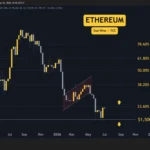
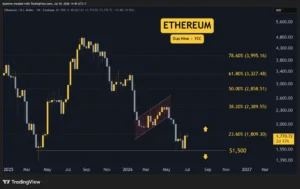
From a technical analysis perspective, Ethereum’s recent price movements have been interpreted as a corrective rally within a larger bearish higher timeframe structure. According to Crypto Patel, a prominent analyst, Ethereum recently filled a fair value gap (FVG) between $1,954 and $1,892. An FVG represents an imbalance in the market where price moved quickly in one direction, leaving a gap in liquidity. Prices often return to "fill" these gaps. While this movement signifies a recovery from recent June lows, the broader technical outlook remains bearish until key resistance levels are reclaimed. The current rally is reportedly testing a previously respected bearish order block, a price zone where significant selling interest previously emerged. This suggests that the upward movement is encountering strong resistance.
For Ethereum to confirm a shift to a bullish structure, a daily close above $2,150 would be necessary. This level represents a critical inflection point, and a decisive break above it would signal a potential reversal of the prevailing bearish trend. Conversely, failure to reclaim this level could see Ethereum retreat towards the $1,700 mark, which has historically provided support. Should selling pressure intensify further, the $1,500 level remains a major downside liquidity target, indicating a significant area where buyers might step in or where prior accumulation occurred. The primary bearish order block on the daily chart is identified within the $2,046 to $1,975 range. As long as Ethereum trades below the $2,150 threshold, the ongoing recovery is largely viewed as corrective rather than a confirmed reversal of the downtrend. Traders are closely monitoring this zone for the next directional move, understanding that a break below current support levels could reopen prior liquidity zones further downward, potentially exacerbating selling pressure.
In conclusion, the Ethereum market is navigating a complex and transitional period. While the consistent growth in staking rates highlights long-term confidence in the network’s fundamentals and future, short-term trading dynamics, particularly the sharp decline in Binance stablecoin liquidity and a weakening Coinbase premium, signal increased caution among market participants. Reduced large-holder activity and still-recovering transaction fees further underscore a temporary lull in immediate trading enthusiasm. Technically, Ethereum faces significant resistance levels, and its ability to decisively break above these will determine whether the current rally evolves into a sustained bullish trend or remains a corrective move within a larger bearish structure. The confluence of these on-chain and technical indicators suggests that market participants are in a phase of re-evaluation, positioning for clearer signals before committing to a definitive long-term direction, thus shaping a cautious yet evolving outlook for Ethereum in the immediate future.