The cryptocurrency market is experiencing a significant surge in institutional interest, particularly surrounding Ethereum (ETH), as major financial players continue to make substantial moves. BlackRock’s recently launched spot Ethereum Exchange Traded Fund (ETF) has quietly accumulated over $1 billion worth of Ether in just nine days, with no instances of net selling reported during this period. This remarkable accumulation, highlighted by the on-chain intelligence platform Arkham on the social media platform X (formerly Twitter), signals a robust confidence in Ethereum as a foundational asset rather than a fleeting speculative trade.
Arkham’s report, disseminated via an X post, detailed the significant inflows into BlackRock’s Ethereum ETF. The data indicated that the asset manager acquired Ether at an estimated average price of approximately $3,060 per coin. This sustained and consistent buying pressure from one of the world’s largest asset managers is a powerful endorsement of Ethereum’s long-term potential within the evolving financial landscape.

The Significance of BlackRock’s Accumulation
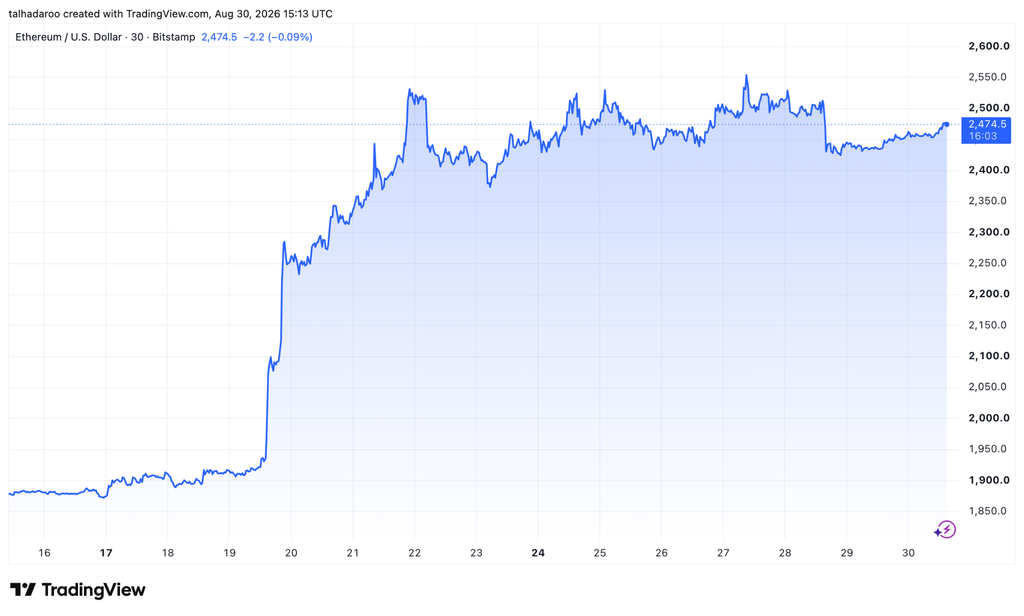
BlackRock’s unbroken streak of purchasing Ether is particularly noteworthy in the often volatile cryptocurrency market. In an environment characterized by rapid price fluctuations and opportunistic profit-taking, the commitment of over a billion dollars to Ether represents a substantial declaration of belief from a major institutional player. This consistent accumulation is especially striking given Ethereum’s recent price performance, which has seen a notable recovery of over 28% in the preceding two weeks. This resilience in the face of market uncertainties underscores the growing maturity of Ethereum as an investment vehicle.
The sustained buying activity suggests that BlackRock views its Ethereum ETF holdings not as a short-term play, but as a strategic, core component of its investment portfolio. This perspective is critical, as it implies a long-term outlook on Ethereum’s technological advancements, its role in decentralized finance (DeFi), and its potential to onboard traditional finance into the digital asset ecosystem.
A Deeper Dive into the Data
The data presented by Arkham provides a granular view of BlackRock’s engagement with the Ethereum market. The absence of any net selling days during the nine-day accumulation period is a key indicator of a deliberate and sustained acquisition strategy. This contrasts with the behavior often seen in more speculative trading, where assets are frequently bought and sold to capitalize on short-term price movements.

The average acquisition price of around $3,060 per Ether also offers insight into BlackRock’s entry strategy. This price point suggests that the asset manager was willing to invest during a period of price recovery, indicating a belief that Ethereum’s upward trajectory would continue. The sheer volume of capital deployed, exceeding $1 billion, further amplifies the significance of this accumulation. It signifies a substantial commitment that could influence market dynamics and investor sentiment.
The Broader Context: The Race for Spot Ether ETFs
BlackRock’s move is part of a larger trend of increasing institutional adoption of digital assets, particularly in the wake of the successful launch of spot Bitcoin ETFs. Following the U.S. Securities and Exchange Commission’s (SEC) approval of spot Bitcoin ETFs in January 2024, the financial industry has been keenly observing the potential for similar products for other major cryptocurrencies.
Fidelity, another major financial services giant, has also publicly expressed its intention to launch a spot Ether ETF, submitting its application to the SEC. This parallel pursuit by multiple leading financial institutions highlights a growing consensus within traditional finance that cryptocurrencies, particularly those with robust technological underpinnings like Ethereum, warrant inclusion in mainstream investment products.

The timeline leading up to these applications has been marked by intense scrutiny and debate within the regulatory and financial communities. The SEC’s initial reluctance to approve spot cryptocurrency ETFs, citing concerns about market manipulation and investor protection, has gradually given way to a more accommodating stance, influenced by legal challenges and the undeniable demand from institutional investors. The approval of spot Bitcoin ETFs has undoubtedly paved the way for further exploration of Ether-based products.
Analyzing the Implications
The substantial inflows into BlackRock’s Ethereum ETF carry several significant implications for the cryptocurrency market:
- Legitimization and Mainstream Adoption: The involvement of a firm like BlackRock lends significant legitimacy to Ethereum and the broader digital asset space. It signals that cryptocurrencies are moving beyond niche investments and are being recognized as viable asset classes by traditional financial institutions. This can attract a wider range of investors, including retail investors who may feel more comfortable investing in a product offered by a well-known financial provider.
- Increased Liquidity and Price Stability: The influx of institutional capital can contribute to increased liquidity in the Ether market. Greater liquidity generally leads to more stable prices and reduced volatility, making Ether a more attractive investment for a broader audience.
- Potential for Further Innovation: The success of spot Ether ETFs could spur further innovation in the development of cryptocurrency-linked financial products. This could include other types of ETFs, futures contracts, and structured products that offer diverse ways for investors to gain exposure to digital assets.
- Regulatory Scrutiny: The growing institutional interest also brings heightened regulatory scrutiny. As more capital flows into cryptocurrencies, regulators will likely pay closer attention to market practices, investor protection, and the potential for illicit activities. The SEC’s decision-making process regarding Ether ETFs will be closely watched for insights into its evolving approach to digital asset regulation.
- Impact on Ethereum’s Ecosystem: Increased investment in Ether could translate into greater resources for the development and expansion of the Ethereum ecosystem. This could accelerate innovation in areas such as scalability, security, and decentralized applications, further strengthening Ethereum’s position as a leading blockchain platform.
Reactions from the Crypto Community
The news of BlackRock’s significant accumulation has generated a spectrum of reactions within the cryptocurrency community on social media platforms like X. While some express optimism and view it as a clear indicator of Ethereum’s bullish future, others remain cautiously observant, drawing parallels to past market cycles.
One user, identified as @ValeriusLabs, offered a cautionary perspective, suggesting that the current order book activity might be misleading and that speculators should exercise prudence. This sentiment reflects a historical awareness within the crypto space of how market rallies can attract inexperienced traders, who then face substantial losses during subsequent downturns. The history of the cryptocurrency market is replete with examples of rapid price increases followed by sharp corrections, underscoring the importance of understanding market dynamics beyond immediate price action.
Conversely, another user, @zxcVika_ell, described the activity as a "quiet accumulation phase." This perspective suggests that sophisticated investors might be strategically acquiring assets during periods of price consolidation or recovery, aiming to benefit from a potential future rally without drawing excessive attention. This type of "under the radar" buying is often associated with investors who possess a deep understanding of market cycles and are looking to maximize returns by positioning themselves ahead of significant price movements.
Looking Ahead: The Future of Ethereum and Institutional Investment
The current market sentiment suggests a growing belief that the digital currency market, bolstered by recent price recoveries, is poised for further gains. However, the inherent volatility and historical tendency of the market to surprise participants necessitate a grounded approach. Accessing authentic news from credible sources and employing robust on-chain analytics are crucial for comprehending significant market movements before they fully unfold.

The sustained accumulation of Ether by BlackRock, coupled with Fidelity’s pursuit of a spot Ether ETF, signifies a pivotal moment for Ethereum. It marks a transition from being primarily an asset for crypto enthusiasts to a recognized investment instrument within the traditional financial system. The SEC’s ultimate decision on these ETF applications will be a critical determinant of the pace and extent of institutional adoption in the coming years.
The implications of these developments extend beyond mere price speculation. They represent a fundamental shift in how institutional capital is engaging with digital assets, driven by a recognition of blockchain technology’s potential and the growing maturity of the cryptocurrency market. As the digital asset landscape continues to evolve, the actions of major financial players like BlackRock and Fidelity will undoubtedly play a significant role in shaping its future trajectory. The ongoing developments surrounding Ether ETFs are not just about a single asset class; they are indicative of a broader integration of digital assets into the global financial architecture.