


Ethereum (ETH) experienced a period of sideways trading on Saturday, following a week characterized by significant volatility across the broader cryptocurrency market. Despite the general downturn, ETH demonstrated resilience, registering a modest gain of approximately 1% over the preceding seven days, indicative of underlying robust demand amidst prevailing selling pressures on major digital assets. This period of consolidation has been punctuated by notable activity from large-scale holders, commonly referred to as "whales," whose transactions are drawing considerable attention from market observers.
Whale Activity Sparks Market Intrigue
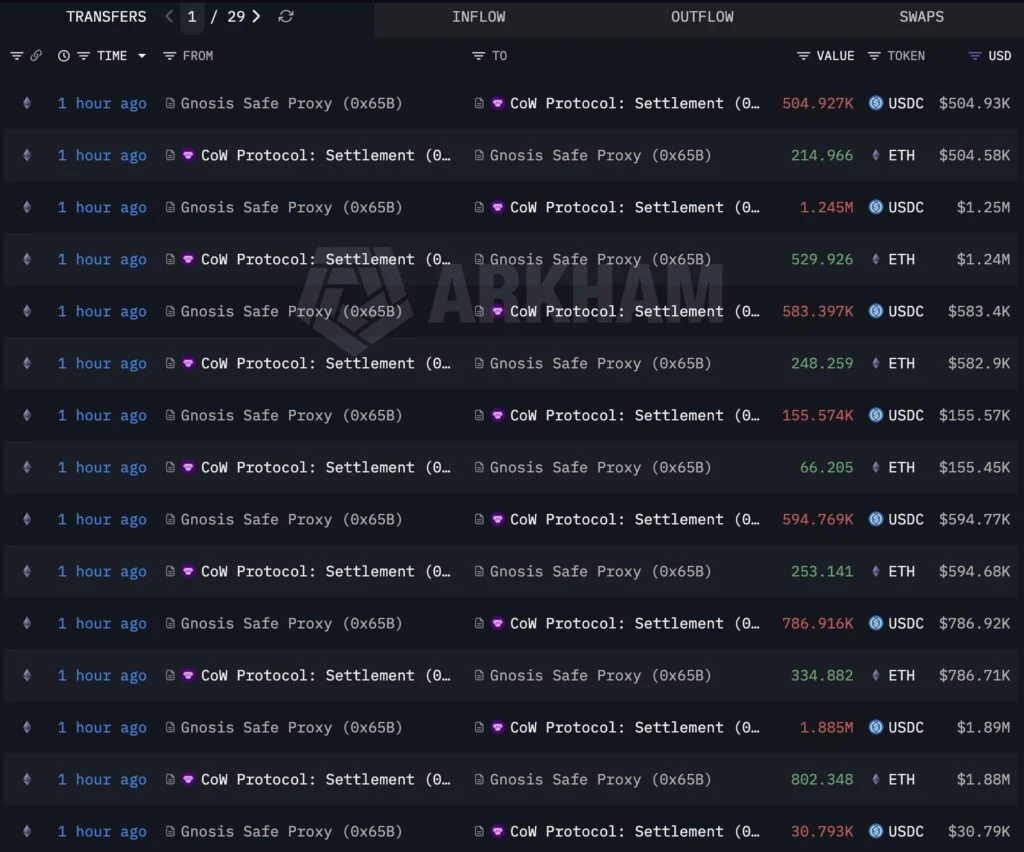
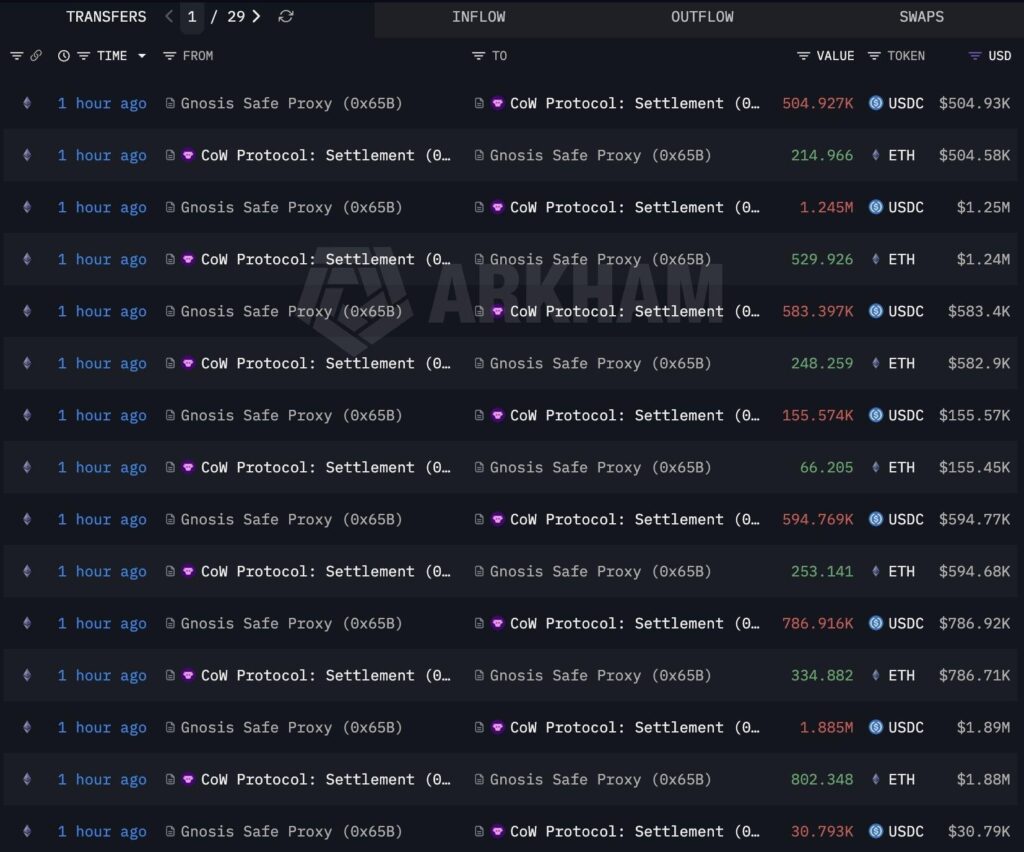
On-chain analytics firm Lookonchain reported a significant series of transactions originating from a wallet identified by the code "0x65B4." This entity executed 10,829 individual transactions, offloading approximately 10,829 ETH, valued at around $24.91 million at the time, with each ETH token trading at approximately $2,300. The scale of this divestment, though substantial, represented a fraction of the total Ethereum supply.
However, the narrative surrounding this whale took an immediate turn. Within a remarkably short timeframe, the same wallet re-entered the market, engaging in a buying spree of 7,448 ETH. This repurchase was executed at a slightly higher price point, averaging $2,350 per ETH, amounting to an investment of roughly $17.5 million. This rapid pivot from selling to buying has been interpreted by many traders and analysts not as a definitive exit from the market, but rather as a strategic repositioning or a tactical maneuver to capitalize on short-term price fluctuations. The quick turnaround suggests an attempt to maintain significant exposure to Ethereum while potentially profiting from intra-day or intra-week price volatility, rather than a display of bearish conviction.
Large-Scale Transfers from Custodial Wallets Signal Long-Term Holding Intentions
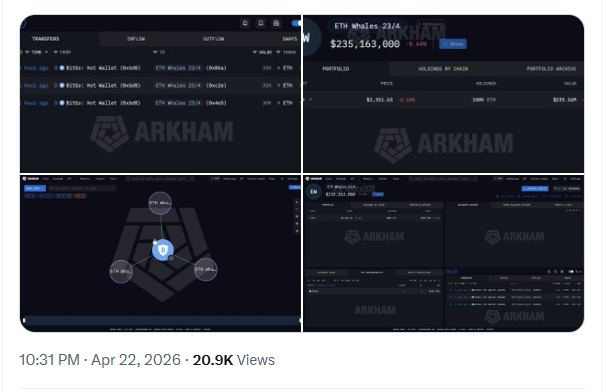
Adding another layer of complexity to the Ethereum market landscape, data from blockchain intelligence firm Arkham revealed that three distinct whale addresses collectively moved an impressive 100,000 ETH. This significant transfer, valued at approximately $234 million, originated from BitGo wallets, a prominent cryptocurrency custodian.
The movement of such substantial quantities of cryptocurrency from custodial services, particularly from exchanges or platforms known for facilitating trading, is often interpreted by the market as a strong indicator of long-term holding intentions. When large holders withdraw their assets from easily accessible trading venues and move them into self-custody or less liquid wallets, it suggests a strategic decision to secure their holdings for an extended period. This behavior can have a reassuring effect on the market, as it reduces the immediate potential for large sell-offs and can contribute to easing downward pressure on prices.
The identities behind these large movements are often subject to intense speculation within the crypto community. While specific names are rarely confirmed without explicit disclosure, market participants frequently ponder whether prominent figures or investment funds are involved. The sheer volume of the transaction necessitates a careful watch on any associated public statements or future actions that might shed light on the underlying strategy.
High-Leverage Positions Underscore Conviction and Risk
Further illuminating the intricate strategies of major Ethereum holders, analyst Gordon, founder of Crypto Crib, highlighted the establishment of an aggressive long position in ETH by a whale. This particular trade involved a substantial $90.9 million investment, amplified by a 20x leverage. While the use of high leverage amplifies potential gains, it equally magnifies the risk of liquidation.
This specific leveraged trade has reportedly demonstrated a history of profitability, having generated approximately $16.6 million for the holder over the preceding months. However, the inherent risk associated with such a position is considerable. A significant downturn in Ethereum’s price, specifically a drop to around $1,392, would trigger a liquidation of this massive leveraged bet. While this threshold is currently well below the prevailing market price, it represents a critical level to monitor, particularly in scenarios of sudden and sharp market declines.

Analyst CryptoJack echoed these observations, emphasizing that the $90 million leveraged position serves as a testament to the strong conviction held by some large players regarding the continued upward trajectory of Ethereum. However, he also issued a stark warning about the precarious nature of such highly leveraged trades. CryptoJack pointed out that a sudden adverse price movement could lead to one of the most substantial liquidations witnessed in recent market history, with potentially cascading effects on market liquidity and price stability.
Broader Market Context and Ethereum’s Performance
The observed whale activities are taking place against a backdrop of broader market consolidation and cautious sentiment. The cryptocurrency market, after periods of significant rallies, has entered a phase where investors are reassessing their positions and the overall economic environment. Factors such as inflation concerns, interest rate policies, and regulatory developments continue to influence investor appetite for risk assets, including cryptocurrencies.
Ethereum, as the second-largest cryptocurrency by market capitalization, plays a pivotal role in the digital asset ecosystem. Its performance is often seen as a bellwether for the broader altcoin market. The network’s ongoing development, particularly the transition to Ethereum 2.0 (now referred to as the consensus layer upgrades), continues to be a significant driver of long-term investor interest. These upgrades aim to enhance scalability, security, and sustainability, which are crucial for the widespread adoption of decentralized applications (dApps) and decentralized finance (DeFi) protocols built on the Ethereum blockchain.
At the time of reporting, ETH was trading at approximately $2,318, reflecting a marginal decline of 0.48% over the preceding 24 hours. This trading range suggests a period of price discovery as the market digests recent volatility and evaluates the implications of large holder movements.
Implications for the Ethereum Market
The complex interplay of whale activities, including strategic offloading and rapid repurchasing, significant withdrawals from custodial services, and aggressive leveraged trades, presents a multifaceted picture of market sentiment and strategy.
- Tactical Trading vs. Long-Term Holding: The actions of the "0x65B4" wallet suggest a more active, perhaps short-term oriented trading strategy, contrasting with the implied long-term holding strategy of whales moving assets from BitGo. This divergence in behavior highlights the varied motivations and risk appetites present within the large holder segment of the Ethereum market.
- Reduced Selling Pressure: The substantial movement of ETH out of BitGo wallets can be interpreted as a positive signal for price stability. By securing these assets, whales are reducing the immediate supply available for sale, potentially mitigating downward price pressure. This is particularly relevant in a market that is sensitive to large sell orders.
- Leverage as a Double-Edged Sword: The high-leverage long position underscores a strong bullish conviction from some market participants. However, it also introduces a significant element of systemic risk. A sharp price correction could trigger a cascade of liquidations, potentially exacerbating a downturn and creating a more volatile market environment. The $1,392 liquidation level for this specific trade will be closely watched by technical analysts and traders.
- Market Sentiment Indicator: The overall behavior of these large holders serves as an important indicator of market sentiment. Their actions, whether perceived as defensive accumulation or aggressive speculation, can influence the behavior of smaller investors and shape broader market trends. The resilience of ETH despite broader market weakness, coupled with these complex whale activities, suggests a market that is still finding its footing, with underlying support from substantial players.
As the cryptocurrency market continues to evolve, the strategies and actions of large Ethereum holders will remain a critical focus for investors and analysts seeking to understand the underlying dynamics and future trajectory of this key digital asset. The coming weeks will likely provide further clarity on whether these complex maneuvers signal a sustained bullish outlook or merely a temporary pause before further market adjustments.














