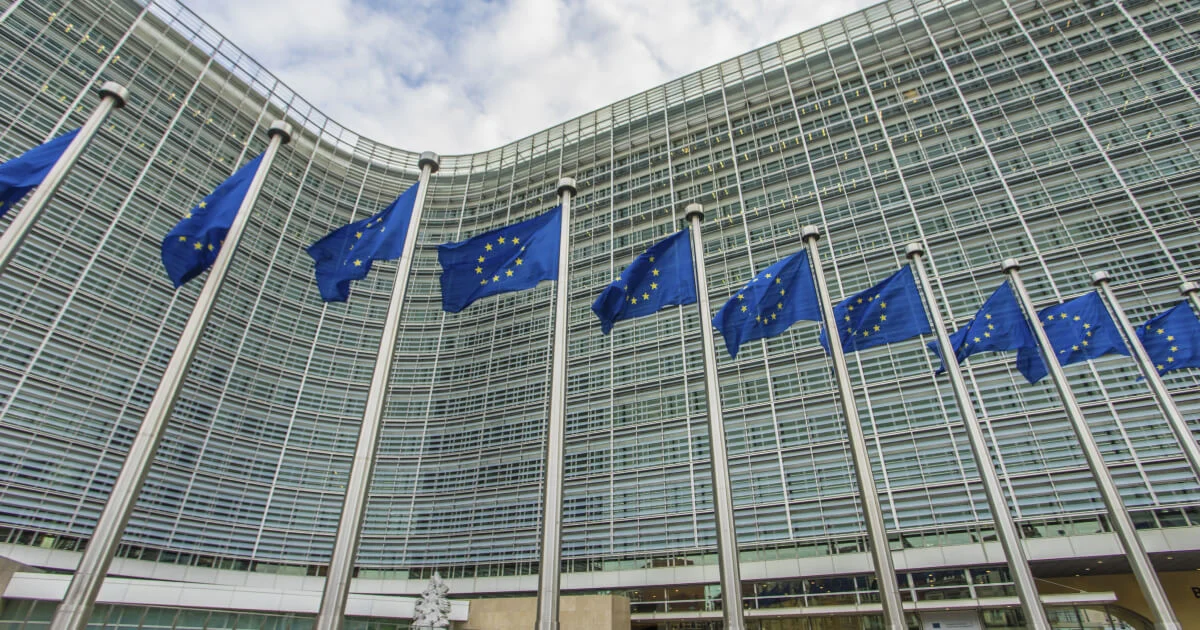
On July 23, 2026, the European Union adopted its 21st sanctions package against Russia, marking the largest single round of designations in four years and signaling a significant shift in the bloc’s strategy to dismantle the financial mechanisms sustaining Moscow’s war economy. This latest legislative action includes 218 new designations, bringing the total number of sanctioned entities and individuals to unprecedented levels. The package is characterized by its surgical focus on the intersection of traditional finance and the burgeoning crypto-asset sector, which European officials argue has become a primary conduit for sanctions evasion. By targeting over 100 banks and 14 specific crypto-asset service providers (CASPs), the EU aims to close the loopholes that have allowed the Russian Federation to maintain international trade and military procurement despite years of Western pressure.
The Evolution of Financial Isolation: A Four-Year Chronology
Since the escalation of the conflict in February 2022, the European Union has moved through several phases of economic warfare. Initially, sanctions focused on high-level oligarchs and the immediate freezing of central bank assets. By 2023 and 2024, the focus shifted toward dual-use technologies and the energy sector. However, as the Russian economy proved resilient through the use of "shadow" financial networks and alternative payment systems, the EU’s 2025 and 2026 packages have become increasingly focused on the technical infrastructure of money movement.
The 21st package represents a culmination of this strategy. It follows the 20th package, which introduced stricter reporting requirements, by moving into active "jurisdictional targeting." The timeline of this specific package began in early 2026, following intelligence reports suggesting that Russian entities were increasingly utilizing decentralized finance (DeFi) and offshore crypto exchanges to facilitate the purchase of restricted military components. The adoption on July 23 serves as a legal threshold, establishing new mechanisms that will govern EU financial interactions for years to come.
Decisive Strike on Crypto-Asset Service Providers
A centerpiece of the 21st package is the extension of a transaction ban to 14 crypto-related service platforms. These entities, while operating outside the European Union, have been identified by the European Council as essential conduits for Russian capital. The designated platforms are headquartered across six distinct jurisdictions: Georgia, Panama, the United Arab Emirates (UAE), the Marshall Islands, Kyrgyzstan, and Belarus.
According to the Council’s findings, these platforms allowed Russian users to convert rubles into stablecoins or other digital assets, which were then moved into the global financial system to pay for sanctioned goods. By listing these 14 entities, the EU has effectively prohibited any EU-based person, bank, or company from conducting transactions with them. This "blacklisting" forces European financial institutions to update their automated screening systems immediately to block any transfers originating from or destined for these specific CASPs.
Furthermore, the package introduces a groundbreaking legal mechanism: the third-country ban for crypto services. This "first-of-its-kind" tool allows the EU to go beyond targeting individual companies. If the EU determines that a specific nation is systematically hosting crypto providers used by Russia to evade sanctions, the Union can now impose a blanket ban on all crypto-asset services involving that entire jurisdiction. While this mechanism has not yet been triggered against a specific country, its existence serves as a powerful diplomatic and economic deterrent, pressuring third-country regulators to align their oversight with international anti-money laundering (AML) and sanctions standards.
Financial Infrastructure and the SWIFT Disconnect
Beyond the digital asset space, the 21st package delivers a heavy blow to Russia’s traditional banking sector. The EU has imposed asset freezes on 94 additional banks and major financial institutions. Perhaps more significantly, the transaction ban has been extended to 33 additional Russian credit and financial institutions, effectively disconnecting them from the SWIFT international payment messaging system.
The EU’s strategy has also evolved to target Russia’s domestic alternatives to Western systems. For the first time, a Kyrgyz bank has been sanctioned specifically for its connection to Russia’s System for Transfer of Financial Messages (SPFS), which Moscow developed as a replacement for SWIFT. This move signals that the EU will no longer tolerate third-country banks acting as "bridges" between the Russian SPFS and the global financial community.
Energy and the Military-Industrial Complex
While the financial sector is the primary focus, the 21st package also addresses the persistent issue of Russian oil revenue and drone production. The EU has frozen the oil price cap at $44.10 per barrel, a measure that will remain in effect until at least July 15, 2027. This move is designed to maintain downward pressure on Russian export profits while ensuring global market stability. To enforce this, the EU has sanctioned an additional 41 vessels belonging to the so-called "shadow fleet"—older tankers with opaque ownership structures used to transport oil above the price cap.
On the military front, the package includes 56 new listings tied to the Russian military-industrial complex. Notably, 37 of these listings are directly linked to the production of long-range drones, which have been a critical component of Russia’s aerial campaign. By targeting the manufacturers and the procurement officers involved in these programs, the EU hopes to degrade Moscow’s ability to replenish its arsenal.
Implications for Global Compliance and the Crypto Industry
For the global crypto industry, the 21st sanctions package represents a watershed moment. It clarifies that the era of "regulatory arbitrage"—where platforms could operate with lax oversight in offshore jurisdictions—is effectively over if those platforms interact with the European market.
Industry analysts suggest that the new third-country ban mechanism will force a realignment of the crypto sector. Crypto-Asset Service Providers (CASPs) operating in the EU must now perform even more rigorous due diligence on their counterparties. Under the EU’s Transfer of Funds Regulation (TFR), which works in tandem with the Markets in Crypto-Assets (MiCA) regulation, CASPs are required to identify and verify the originators and beneficiaries of transfers. The 21st package raises the stakes, as a failure to identify a sanctioned platform could result in severe penalties or the loss of an operating license within the EU.
Compliance experts at Chainalysis and other blockchain analytics firms have already begun labeling the newly designated entities within their software suites. This allows exchanges and financial institutions to monitor for "indirect exposure"—cases where a user might send funds through multiple intermediary wallets to disguise the fact that the money originated from a sanctioned platform in Panama or the UAE.
Official Responses and Geopolitical Reactions
The announcement has drawn a range of reactions from the international community. High Representative of the Union for Foreign Affairs and Security Policy, in a statement accompanying the release, noted: "Today’s package is a testament to our resolve. We are closing the digital backdoors that Moscow has used to bypass our restrictions. Our message to third countries is clear: facilitating sanctions evasion will have direct consequences for your access to the European market."
While Moscow has dismissed the sanctions as "illegal" and "ineffective," the inclusion of banks from Kyrgyzstan and platforms in the UAE suggests that the EU is willing to risk diplomatic friction to achieve its economic goals. Observers in the Middle East and Central Asia are closely watching how these jurisdictions will respond. There is growing pressure on these nations to implement more robust "Know Your Customer" (KYC) and "Travel Rule" protocols for crypto transactions to avoid being the first targets of the EU’s new third-country ban mechanism.
Analysis: A Shift from MiCA to Sanctions Enforcement
It is crucial to distinguish these new measures from the broader MiCA framework. While MiCA provides the regulatory structure for the legal operation of crypto businesses within the EU, the 21st package is a tool of foreign policy and security. It demonstrates that the EU views the crypto ecosystem not just as a financial innovation to be regulated, but as a potential security vulnerability to be defended.
The focus on the "shadow fleet" and SPFS connectivity indicates a move toward "secondary sanctions" logic—a strategy long used by the United States but historically approached more cautiously by the EU. By targeting the facilitators of trade rather than just the end-users, the EU is attempting to create a "chokepoint" that makes it prohibitively expensive or risky for any international entity to assist Russia’s war efforts.
Conclusion: The Road Ahead
As the July 2026 package begins to take full effect, the global financial landscape will likely see increased fragmentation. Russian entities will continue to seek even more obscure methods of value transfer, possibly moving deeper into the "dark web" or utilizing non-standard barter arrangements. However, the EU’s 21st package significantly raises the "cost of doing business" for Moscow.
For European and international businesses, the mandate is clear: compliance is no longer a matter of checking a simple list. It requires deep-dive forensics into the digital and physical supply chains of finance. The introduction of the third-country mechanism ensures that the responsibility for sanctions enforcement is now shared by sovereign governments worldwide, who must decide between maintaining financial ties with Russia or preserving their standing in the European economy. The 21st package is not merely an update; it is a fundamental redesign of the EU’s economic defensive perimeter.