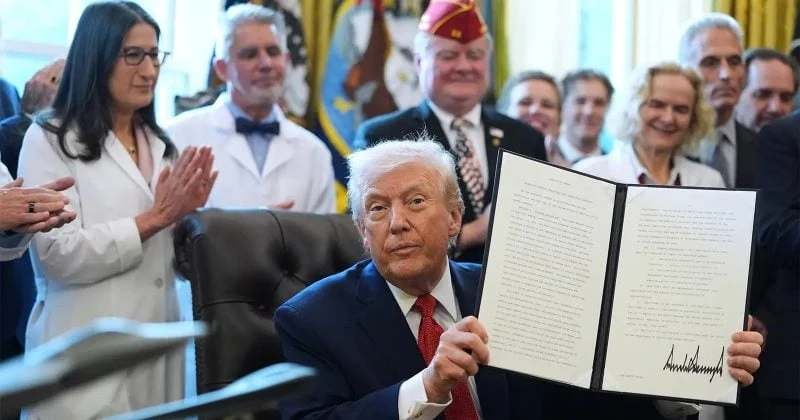
The Trump administration has initiated a transformative shift in federal drug policy by authorizing a pilot program that integrates hemp-derived CBD products into the Medicare framework. This landmark decision marks the first time in United States history that the federal government has moved to subsidize cannabinoid products for the nation’s senior population, a demographic that is both the largest consumer of prescription medications and the most medically vulnerable. Operated through the Centers for Medicare & Medicaid Services (CMS), the program provides eligible beneficiaries with access to specific CBD products at zero out-of-pocket cost. This initiative is inextricably linked to a broader executive order that reclassifies marijuana from a Schedule I to a Schedule III controlled substance, fundamentally altering the legal and medical landscape of cannabis in America.
The reclassification represents a departure from over five decades of federal policy. Since the enactment of the Controlled Substances Act in 1970, marijuana has been classified alongside heroin and LSD as a Schedule I substance, defined as having a high potential for abuse and no accepted medical use. By moving the substance to Schedule III, the federal government has placed it in the same category as prescription medications such as anabolic steroids and Tylenol with codeine. This shift signals a formal federal acknowledgment that cannabis and its derivatives possess "accepted medical use," providing a new level of legitimacy to a multi-billion dollar industry that has long operated in a legal gray area.
The Mechanics of the CMS Pilot Program
The pilot program is designed to be rigorous yet accessible, targeting a specific segment of the Medicare population to gauge the efficacy and safety of CBD as a therapeutic tool. Currently, the program covers approximately 34 million enrollees within Medicare Advantage plans. Medicare Advantage, also known as Medicare Part C, allows private insurance companies to provide Medicare benefits, often including supplemental coverage that traditional Medicare does not offer.
To participate in the program, beneficiaries must obtain a formal recommendation from a licensed physician. This requirement serves as a clinical gatekeeper, ensuring that CBD use is monitored by healthcare professionals who can track potential drug interactions—a critical concern for seniors who are often on complex medication regimens. The products covered under this pilot are strictly limited to hemp-derived CBD, which contains less than 0.3% THC (tetrahydrocannabinol), the psychoactive component of cannabis. By eliminating out-of-pocket costs, the administration aims to remove financial barriers for seniors seeking alternative treatments for chronic pain, inflammation, and sleep disorders.
Regulatory Adjustments and the FDA’s Role
The implementation of this program required significant coordination between the executive branch and the Food and Drug Administration (FDA). Historically, the FDA has maintained a strict stance on CBD, particularly regarding its inclusion in dietary supplements and food products. However, to facilitate the CMS pilot, the agency issued a memorandum outlining "enforcement discretion."
In this memo, the FDA stated it would not enforce certain legal provisions that typically prohibit the marketing of orally administered hemp-derived CBD products, provided these products adhere to strict quality control, labeling, and safety standards. This regulatory "clearing of the underbrush" is essential for the pilot’s success, as it allows manufacturers to provide products to the Medicare system without the immediate threat of federal seizure or prosecution. While this discretion does not constitute a permanent rule change or a full FDA approval of CBD for all uses, it creates a temporary safe harbor for the duration of the pilot program.
A Chronology of Cannabis Reform
To understand the magnitude of this shift, one must look at the timeline of federal cannabis policy over the last decade. The road to the current pilot program has been marked by incremental legislative and administrative changes:
- The Agricultural Act of 2014 (The 2014 Farm Bill): This legislation allowed for small-scale pilot programs for industrial hemp research, marking the first time the federal government distinguished hemp from high-THC marijuana.
- The Agriculture Improvement Act of 2018 (The 2018 Farm Bill): This landmark bill officially removed hemp and hemp derivatives (including CBD) from the Controlled Substances Act, provided they contained less than 0.3% THC. However, the FDA retained authority over CBD in food and drugs.
- The 2022 HHS Review Request: The Biden administration directed the Department of Health and Human Services (HHS) and the Department of Justice (DOJ) to review the scheduling of marijuana.
- 2024 Reclassification Proposal: Following the HHS recommendation that marijuana has a "currently accepted medical use," the DEA moved forward with the proposal to reclassify it to Schedule III.
- The Trump Administration Executive Order: The current administration accelerated the integration of these changes into the federal healthcare system, culminating in the CMS pilot program for seniors.
Economic Implications and Market Reaction
The announcement of the Medicare pilot and the reclassification to Schedule III sent ripples through global financial markets. On Wall Street, public cannabis stocks experienced a significant surge. Investors viewed the move as a harbinger of broader federal legalization and a sign that the "Green Rush" could finally enter a more stable, institutionalized phase.
Beyond stock prices, the shift to Schedule III carries profound tax implications for cannabis businesses. Currently, under Internal Revenue Code Section 280E, businesses involved in the "trafficking" of Schedule I or II substances are prohibited from deducting ordinary business expenses from their federal taxes. This has resulted in effective tax rates as high as 70% to 80% for many dispensaries and cultivators. By moving to Schedule III, cannabis companies may finally be able to claim standard business deductions, potentially injecting billions of dollars of liquidity back into the industry and encouraging further capital investment.
Impact on the Crypto and Blockchain Ecosystems
The intersection of the cannabis industry and the digital asset space has historically been one of necessity. Because marijuana remained a Schedule I substance, traditional banks—fearing federal money laundering charges—largely refused to service cannabis-related businesses (CRBs). This "unbanked" status forced many operators to turn to cryptocurrency payments and blockchain-based financial solutions to manage payroll, vendor payments, and retail transactions.
The reclassification to Schedule III could paradoxically disrupt this relationship. If traditional banks feel more comfortable providing services to the cannabis industry under the new classification, the reliance on "crypto rails" for basic banking may diminish. However, experts suggest that the role of blockchain may simply pivot from financial workarounds to data management and supply chain integrity.
In a pilot program involving 34 million patients, the generation of health data will be unprecedented. Federal agencies and healthcare providers will require secure, transparent, and immutable systems to track clinical outcomes, product efficacy, and adverse reactions. Blockchain-based health data platforms are uniquely positioned to handle this volume of sensitive information while maintaining patient privacy and data integrity. Furthermore, blockchain remains the gold standard for "seed-to-sale" tracking, ensuring that the CBD products subsidized by Medicare meet the strict "hemp-derived" criteria required by federal law.
Professional and Medical Community Responses
The medical community has reacted with a mixture of optimism and cautious skepticism. Proponents of the move, such as various chronic pain advocacy groups, argue that seniors have been using CBD for years without professional guidance, often purchasing unregulated products of dubious quality. Bringing CBD under the Medicare umbrella, they argue, ensures that seniors receive tested, standardized products and that their usage is supervised by a doctor.
Conversely, some medical professionals express concern over the lack of long-term clinical trials specifically targeting the geriatric population. While CBD is generally considered safe, its interaction with common medications like blood thinners (e.g., Warfarin) or heart medications is a point of concern. Organizations like the American Medical Association (AMA) have historically called for more research before widespread clinical adoption, a need that this pilot program is directly intended to address.
Industry advocates, including the National Cannabis Industry Association (NCIA), have lauded the move as a "common-sense approach" to federal drug policy. They argue that the federal government is finally aligning its regulations with the reality of state-level legality and public opinion.
Analysis of Risks and Long-Term Viability
While the pilot program is a historic milestone, its long-term viability is not guaranteed. As a program initiated via executive order and administrative discretion, it is subject to the whims of future political cycles. A change in administration could lead to a reversal of the executive order or a narrowing of the FDA’s enforcement discretion.
Furthermore, the "pilot" nature of the program means that its continuation depends entirely on the data it produces. If the clinical outcomes do not demonstrate a clear benefit, or if the costs to the Medicare system outweigh the therapeutic advantages, the program could be shuttered. There is also the "Schedule III" middle ground to consider: while it eases many restrictions, it does not fully legalize marijuana at the federal level. It remains a controlled substance, meaning that unauthorized production and distribution are still federal crimes.
Conclusion: A New Era for Federal Healthcare
The Trump administration’s decision to put CBD on Medicare’s tab represents more than just a policy change; it is a cultural and legal pivot that would have been unthinkable a decade ago. By subsidizing cannabinoid products for 34 million seniors, the federal government is effectively ending the era of total prohibition and entering an era of regulated, medical integration.
The implications for the economy, the healthcare system, and the technology sector are vast. From the potential tax relief for businesses to the massive influx of clinical data that could validate or debunk the therapeutic claims of CBD, the stakes are high. As the pilot program rolls out, all eyes will be on the Medicare Advantage enrollees and their physicians to see if this "green" experiment provides the relief that millions of American seniors have been seeking. The success or failure of this program will likely dictate the trajectory of federal cannabis policy for decades to come, potentially serving as the final stepping stone toward comprehensive national reform.