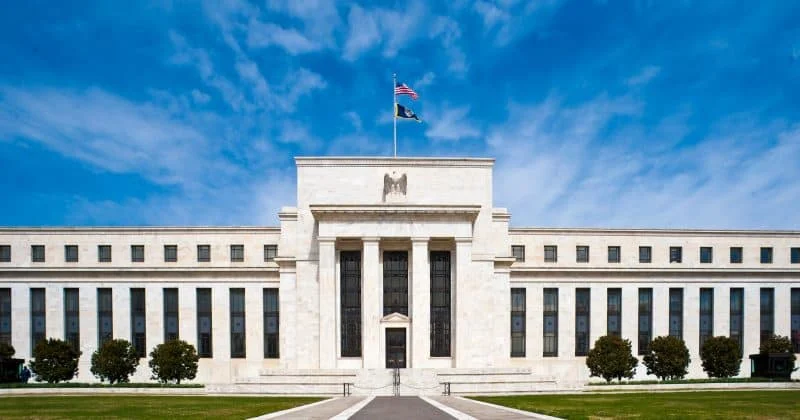
The Federal Reserve Board, in coordination with the Office of the Comptroller of the Currency (OCC) and the Financial Crimes Enforcement Network (FinCEN), has formally introduced a proposal that would require certain payment stablecoin issuers to implement rigorous customer identification programs (CIP). This regulatory move, announced on Thursday, represents a significant step toward integrating the rapidly growing digital asset sector into the established framework of the United States financial system. By mirroring the requirements currently imposed on traditional banks and credit unions, the proposal seeks to close perceived loopholes in the oversight of digital dollar equivalents and fortify the nation’s defenses against money laundering, terrorist financing, and other forms of illicit finance.
The proposed rule is specifically designed to implement key provisions of the Guiding and Establishing National Innovation for US Stablecoins (GENIUS) Act. Under this framework, entities designated as Permitted Payment Stablecoin Issuers (PPSIs) would be legally obligated to maintain effective customer identification programs. These programs would necessitate the collection and verification of identifying information for all account holders, ensuring that the identity of individuals and entities interacting directly with the issuer is known and recorded. This alignment with the Bank Secrecy Act (BSA) standards is intended to provide regulators with the same level of transparency in the stablecoin market that they currently enjoy in the commercial banking sector.
The Regulatory Framework and the GENIUS Act
The GENIUS Act serves as the legislative backbone for this proposal, reflecting a broader bipartisan effort in Washington to provide a clear legal structure for digital assets. For years, the stablecoin market operated in a perceived "gray area," where the lack of specific federal mandates allowed for varying degrees of compliance regarding Know Your Customer (KYC) and Anti-Money Laundering (AML) protocols. The act seeks to define "Permitted Payment Stablecoin Issuers" as a specific class of financial institution, thereby bringing them under the direct supervision of federal banking regulators.
The primary objective of the new proposal is to ensure that stablecoin issuers are not used as conduits for anonymous financial activity. In the traditional banking world, Section 326 of the USA PATRIOT Act requires financial institutions to implement a CIP that includes, at a minimum, the collection of a customer’s name, date of birth, address, and an identification number (such as a Social Security number or taxpayer ID). By extending these requirements to PPSIs, the Federal Reserve and its partner agencies are signaling that stablecoins intended for use as a means of payment must meet the same "safety and soundness" standards as the US dollar deposits they often represent.
Governor Michael Barr’s Perspective and Secondary Market Concerns
While the proposal marks a milestone in digital asset regulation, Federal Reserve Governor Michael Barr has expressed tempered optimism, highlighting significant gaps that the current framework may not yet address. In a statement accompanying the release, Barr emphasized that while the proposal is an "important step," the focus on primary issuers may leave a vast portion of the stablecoin ecosystem unmonitored.
Barr’s primary concern centers on secondary market transactions—trades and transfers that occur between private digital wallets or on decentralized platforms after the stablecoin has been issued. "I remain concerned, however, that the GENIUS Act regulatory framework does not do enough so far to address the risks of illicit finance conducted through secondary market transactions in payment stablecoins," Barr stated. He noted that while many centralized digital asset service providers (VASPs) are subject to AML requirements in their respective jurisdictions, the decentralized and borderless nature of blockchain technology makes it "far too easy for bad actors to evade these restrictions."
The Governor indicated that the Federal Reserve would actively seek public input on whether identification requirements should be expanded beyond the initial issuers to include other participants in the stablecoin lifecycle. This suggests that future iterations of the rule could potentially target wallet providers, decentralized finance (DeFi) protocols, or other intermediaries that facilitate the movement of stablecoins once they enter general circulation.
Chronology of Stablecoin Oversight and Legislative Milestones
The path to the current proposal has been marked by several years of increasing scrutiny from US financial authorities. The timeline below outlines the critical events leading to the implementation of the GENIUS Act provisions:
- November 2021: The President’s Working Group on Financial Markets (PWG) releases a report on stablecoins, urging Congress to pass legislation that would require stablecoin issuers to be insured depository institutions. This report set the stage for the debate on how to regulate "payment stablecoins."
- May 2022: The collapse of the TerraUSD (UST) algorithmic stablecoin sends shockwaves through the global market, resulting in tens of billions of dollars in losses. While UST was different from the fiat-backed stablecoins targeted by the GENIUS Act, the event accelerated the push for consumer protection and reserve transparency.
- 2023: Various legislative drafts, including the Lummis-Gillibrand Responsible Financial Innovation Act and the McHenry-Waters stablecoin bill, circulate in Congress. These drafts contribute to the eventual synthesis of the GENIUS Act, focusing on creating a federal floor for stablecoin regulation.
- Early 2024: The GENIUS Act gains traction as a viable framework for balancing innovation with national security. The act establishes the category of Permitted Payment Stablecoin Issuers (PPSIs).
- June 2024: The Federal Reserve, FinCEN, and the OCC issue the joint proposal to mandate CIP for PPSIs, opening a 60-day window for public commentary.
Supporting Data: The Scale of the Stablecoin Market and Illicit Finance
The urgency behind this proposal is driven by the sheer scale and utility of the stablecoin market. As of mid-2024, the total market capitalization of stablecoins exceeds $160 billion, with the two largest players—Tether (USDT) and USD Coin (USDC)—accounting for the vast majority of that value. Stablecoins have evolved from mere "on-ramps" for cryptocurrency trading into global settlement layers, facilitating billions of dollars in daily transaction volume.
However, this growth has been shadowed by data regarding illicit finance. According to reports from blockchain analytics firms like Chainalysis and TRM Labs, stablecoins have become the preferred medium for illicit actors in the digital asset space, surpassing Bitcoin in total illicit volume. In 2023, it was estimated that stablecoins were involved in over 60% of all illicit transaction volume, driven largely by their price stability and the ease with which they can be moved across borders.
Specific data points highlighting the risk include:
- Sanction Evasion: Stablecoins have been frequently cited in OFAC (Office of Foreign Assets Control) enforcement actions related to entities in sanctioned jurisdictions.
- Scams and Fraud: The majority of "pig butchering" scams and investment frauds now utilize stablecoins for the laundering of victim funds.
- Market Dominance: Because the US dollar is the world’s reserve currency, dollar-pegged stablecoins carry systemic importance. Regulators argue that any instability or misuse of these assets could have "spillover effects" into the broader US financial system.
Implications for the Industry and Innovation
The introduction of mandatory CIP for stablecoin issuers carries profound implications for the industry. For established players like Circle (the issuer of USDC), which already maintains high compliance standards, the proposal may offer a path toward greater institutional legitimacy and access to the federal safety net. For newer or more offshore-focused issuers, the requirements could represent a significant barrier to entry or a forced migration toward more transparent business models.
From an innovation perspective, the proposal is a "double-edged sword." On one hand, clear regulatory guidelines provide the certainty that large-scale financial institutions—such as JPMorgan or PayPal—require to fully integrate stablecoins into their payment stacks. On the other hand, privacy advocates and proponents of decentralized finance argue that mandating identity verification at the protocol or issuer level undermines the pseudonymity that is a core feature of blockchain technology.
There is also the question of "regulatory arbitrage." If US requirements become too stringent without global coordination, issuers may simply move their operations to jurisdictions with more lenient AML/KYC laws. This is likely why the Federal Reserve is emphasizing the GENIUS Act as a "national" standard, hoping to set a precedent that other G20 nations might follow, similar to the European Union’s Markets in Crypto-Assets (MiCA) regulation.
Public Comment and Next Steps
The Federal Reserve has opened a 60-day window for public comment, beginning from the date of the proposal’s publication in the Federal Register. This period is crucial for stakeholders—including fintech companies, privacy groups, and traditional banks—to voice their concerns or support.
Key areas where the agencies are seeking feedback include:
- The technical feasibility of implementing CIP for issuers who may not have a direct relationship with every "holder" of the token.
- The definition of "account" in the context of a digital wallet.
- Whether the 60-day window is sufficient for issuers to adapt their internal systems to meet these new standards.
- The potential impact on the competitiveness of US-based stablecoin issuers in the global market.
Conclusion and Fact-Based Analysis
The joint proposal by the Federal Reserve, FinCEN, and the OCC represents the most assertive move to date by US regulators to bring the stablecoin "Wild West" into the fold of the regulated financial economy. By focusing on the GENIUS Act’s provisions, the government is attempting to strike a balance between fostering domestic innovation and mitigating the very real risks of financial crime.
However, as Governor Barr noted, the "secondary market" remains the ultimate challenge. If the goal is to eliminate illicit finance, monitoring the "minting" and "burning" of stablecoins at the issuer level is only half the battle. The true test of this regulatory framework will be its ability to adapt to the peer-to-peer nature of the blockchain without stifling the efficiency and speed that make stablecoins attractive in the first place.
As the 60-day comment period progresses, the industry will be watching closely to see if the final rule includes expanded definitions that touch the secondary market or if the focus remains strictly on the gatekeepers of the stablecoin supply. Regardless of the outcome, the era of "anonymous" large-scale stablecoin issuance in the United States appears to be drawing to a close, replaced by a new regime of transparency and institutional accountability.