The Federal Reserve’s Federal Open Market Committee (FOMC) concluded its two-day policy meeting on Wednesday with a decisive but not unanimous vote to maintain the federal funds rate at a range of 3.75% to 4.00%. The 10-to-2 decision signals a cautious pause in the central bank’s tightening cycle as policymakers attempt to navigate a complex economic landscape defined by robust domestic growth and inflation that, while cooling from its historic peaks, remains stubbornly above the long-term 2% target. The move was widely anticipated by financial markets, though the emergence of two dissenting votes—favoring an immediate 25-basis-point increase—underscored a growing debate within the Fed regarding whether current borrowing costs are sufficiently restrictive to tame price pressures.
Immediately following the announcement, Bitcoin (BTC) exhibited characteristic volatility, initially dipping before rallying to reclaim the $81,000 level. This upward movement came after the premier cryptocurrency traded near the $80,000 mark for much of the morning session. In contrast, traditional equity markets reacted with a degree of trepidation; the S&P 500 edged lower as investors parsed the Fed’s official statement for clues regarding the trajectory of interest rates heading into the final month of the year. The divergence between digital assets and traditional equities highlights the unique position Bitcoin currently occupies in the global macro environment, serving as both a high-risk asset and a potential hedge against long-term monetary debasement.
The FOMC Decision and Internal Dissent
The Federal Reserve’s decision to hold rates steady follows a period of aggressive policy adjustments. In September, the committee raised the benchmark rate by a quarter point, bringing it to the current 3.75% to 4.00% range. While the majority of the committee felt that a pause was appropriate to assess the cumulative impact of previous hikes, two members—Lisa D. Cook and Beth M. Hammack—voted against the majority. Both Cook and Hammack expressed a preference for an immediate 25-basis-point increase, suggesting that the risk of inflation becoming entrenched outweighs the potential risks to economic expansion.
This level of dissent is relatively rare for the FOMC, which typically strives for consensus to project stability to the global markets. The presence of two hawkish dissenters suggests that the "higher for longer" narrative remains a potent force within the central bank. It also indicates that the threshold for further rate hikes in December remains low if upcoming consumer price index (CPI) or personal consumption expenditures (PCE) data shows a re-acceleration of inflation.
In its official policy statement, the Fed characterized the U.S. economy as expanding at a "strong pace." This assessment is supported by several key pillars: resilient domestic spending, robust capital investment by the private sector, and significant gains in productivity. These factors have allowed the economy to absorb higher borrowing costs more effectively than many analysts had predicted at the start of the year.
Economic Resilience and Labor Market Stability
A central theme of the Fed’s current stance is the surprising durability of the American consumer and the labor market. Despite interest rates sitting at multi-year highs, job gains have continued to keep pace with the growth of the workforce. The unemployment rate has remained remarkably stable, hovering near historic lows, which has provided the Federal Reserve with the "policy space" to keep rates elevated without immediately triggering a recessionary spiral.
The committee’s statement noted that while the labor market is no longer "overheated" in the way it was during the immediate post-pandemic recovery, it remains tight enough to contribute to wage growth, which in turn fuels domestic spending. However, the Fed remains laser-focused on its dual mandate of maximum employment and price stability. With the employment side of the mandate currently looking secure, the focus has shifted almost entirely to the 2% inflation target.
"The Committee will deliver price stability," the Fed stated emphatically in its release, reiterating that it remains "highly attentive to inflation risks." This language serves as a reminder to markets that the central bank is prepared to resume rate hikes if the downward trend in inflation stalls. The Fed’s cautious approach reflects the lessons learned from the 1970s, where premature rate cuts led to secondary waves of inflation that required even more drastic measures to correct.
Bitcoin and the Digital Asset Reaction
Bitcoin’s climb back toward $81,000 in the wake of the Fed’s decision illustrates the asset’s increasing sensitivity to macroeconomic policy. As the Federal Reserve maintains high interest rates, Treasury yields remain elevated, providing a "risk-free" alternative for investors. Traditionally, high yields on government debt are a headwind for non-yielding assets like Bitcoin and gold. However, the current cycle has seen Bitcoin decouple from this traditional correlation at various intervals.
Jatin Wahal, Head of Treasury at Xapo Bank, noted that the market is now looking past the current pause and toward the December meeting. "Bitcoin has become increasingly sensitive to these monetary policy expectations, remaining vulnerable to broader swings in risk appetite as long as Treasury yields stay elevated and government debt competes with speculative assets," Wahal told Crypto Briefing.
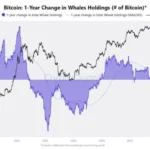
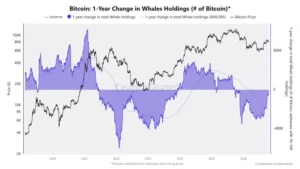
Despite this sensitivity to short-term interest rate fluctuations, Wahal pointed to underlying strength in the Bitcoin market. He noted that internal data shows consistent accumulation among long-term holders, regardless of the Fed’s immediate policy path. "Our data continues to point toward consistent accumulation despite volatility, highlighting that Bitcoin is not simply an asset to trade around market cycles, but one to passively accumulate as a long-term store of value," he added. This suggests that while the Fed’s "hawkish pause" may create short-term price swings, the structural demand for Bitcoin as a decentralized alternative to fiat systems remains robust.
Market Expectations and the CME FedWatch Tool
The Fed’s decision was almost entirely priced in by market participants before the announcement. Data from the CME FedWatch Tool, which tracks the probabilities of FOMC rate moves based on Fed Funds futures pricing, showed a 93% likelihood that the central bank would maintain the current rate. Only a small minority of traders—roughly 7.2%—had bet on a 25-basis-point increase.
The alignment between the Fed’s action and market expectations helped prevent a major sell-off in equities, although the S&P 500’s slight decline suggests that investors are wary of the hawkish tone struck by the dissenters. The "muted" reaction in traditional finance reflects a market that is currently in a "wait-and-see" mode. Investors are now shifting their focus to the upcoming "dot plot" revisions and the December meeting, where the Fed will provide updated economic projections for 2025 and 2026.
Chronology of Federal Reserve Policy in 2024
To understand the significance of Wednesday’s decision, it is necessary to look at the trajectory of Fed policy over the last several months:
- Early 2024: The Fed maintained rates at a plateau, waiting for definitive evidence that inflation was moving sustainably toward 2%.
- Mid-Year: As inflation data showed signs of cooling, discussions shifted from "how high" to "how long" rates should stay at restrictive levels.
- September Meeting: The Fed implemented a 25-basis-point increase, raising the range to 3.75% to 4.00%. This was seen as a "insurance hike" to prevent any potential rebound in price growth amid strong GDP numbers.
- October/November Meeting: The current decision to hold rates steady at 3.75% to 4.00%, with a 10-2 vote. This marks a transition into a data-dependent phase where each subsequent meeting is "live" for a potential move.
This chronology demonstrates a central bank that is moving with extreme deliberation. Unlike the rapid-fire 75-basis-point hikes seen in 2022 and 2023, the current phase of the cycle is characterized by smaller adjustments and frequent pauses to allow the economy to "catch up" to the policy changes.
Implications for the December Meeting and 2025
The primary question facing investors is whether the Fed will hike one last time in December or if the current 4.00% ceiling marks the peak of this cycle. The two dissenting votes from Cook and Hammack suggest that the internal debate is far from settled. If the next two months of labor and inflation data show continued strength in the economy alongside sticky service-sector inflation, the case for a December hike will strengthen significantly.
Furthermore, geopolitical developments remain a "wild card" for the FOMC. Disruptions in global energy markets or shifts in international trade policy could introduce new inflationary shocks that are outside the Fed’s direct control. In Wednesday’s statement, the committee explicitly acknowledged that "uncertainty remains elevated" due to these external factors.
For the cryptocurrency market, the Fed’s commitment to "price stability" is a double-edged sword. On one hand, a successful "soft landing"—where inflation returns to 2% without a recession—could fuel a massive rally in risk assets, including Bitcoin. On the other hand, if the Fed is forced to keep rates above 4% for an extended period to combat persistent inflation, the resulting "liquidity crunch" could limit the upside for speculative assets.
Conclusion: A Delicate Balancing Act
The Federal Reserve’s decision to maintain borrowing costs at 3.75% to 4.00% reflects a central bank that is confident in the economy’s current strength but remains wary of the "last mile" of the inflation fight. By holding steady, the Fed is buying time to observe how the lag effects of its previous hikes permeate through the financial system.
For Bitcoin investors, the reclamation of the $81,000 level serves as a testament to the asset’s resilience. However, as Jatin Wahal and other analysts suggest, the road ahead remains tied to the Fed’s December guidance. As the committee continues to weigh resilient economic growth against persistent inflation pressures, the global financial markets—both traditional and digital—will remain on high alert for the next signal from the world’s most influential central bank. The 10-2 split is a clear indicator that the path to 2% inflation is rarely a straight line, and the debate over the "correct" interest rate is only just beginning.