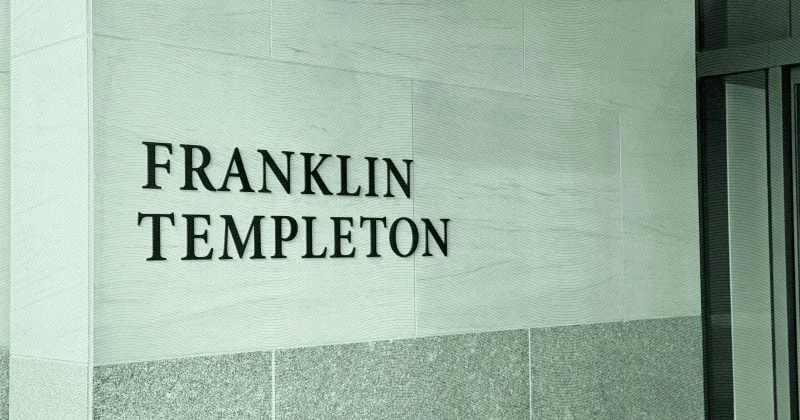
Franklin Templeton, one of the world’s largest asset management firms, is preparing to bridge the gap between decentralized finance and traditional investment vehicles by integrating tokenized assets into its conventional mutual funds and exchange-traded funds (ETFs). This strategic pivot follows a significant regulatory milestone: a "no-action letter" issued by the United States Securities and Exchange Commission (SEC) staff. The relief allows Franklin Templeton’s traditional funds to invest in shares of its own blockchain-based money market fund, marking a pivotal moment for the institutional adoption of Real-World Asset (RWA) tokenization.
The SEC Division of Investment Management communicated its position in an August 12 letter, stating that it would not recommend enforcement action against Franklin Templeton funds that utilize Franklin Templeton Investor Services as a custodian for investments in the Franklin OnChain U.S. Government Money Fund (FOBXX). This relief is subject to a specific set of conditions designed to ensure investor protection and operational transparency. While the SEC was careful to note that the letter reflects a staff position on enforcement rather than an official Commission approval or a definitive legal conclusion, the move provides the necessary regulatory clarity for Franklin Templeton to proceed with its integration plans.
The Regulatory Framework: SEC Staff Relief and Its Parameters
The SEC’s no-action letter serves as a crucial green light for the asset manager to utilize its proprietary tokenized fund for internal cash management. Traditionally, mutual funds and ETFs manage their "sweep" cash—the liquidity held for daily operations, redemptions, and collateral—through standard institutional money market funds or bank deposits. By allowing its conventional funds to invest in the OnChain Fund, Franklin Templeton can now streamline its internal liquidity structures.
The relief specifically addresses the custody requirements of the Investment Company Act of 1940. Under Section 17(f) of the Act, investment companies are required to maintain their assets with qualified custodians. Franklin Templeton’s model uses a unique hybrid recordkeeping system where blockchain networks record transactions and anonymous shareholder information, while Franklin Templeton Investor Services maintains the official "master record" of ownership. The SEC’s willingness to permit this arrangement suggests a growing regulatory comfort with hybrid ledger systems that combine the transparency of public blockchains with the accountability of traditional transfer agents.
However, the SEC’s conditions are stringent. The relief is predicated on the fund maintaining rigorous oversight of the blockchain’s integrity and ensuring that the official record of ownership remains the ultimate source of truth in the event of a discrepancy between the blockchain and the transfer agent’s ledger.
Technological Infrastructure: The Role of the Stellar Blockchain and BENJI Tokens
At the heart of this initiative is the Franklin OnChain U.S. Government Money Fund, which was the first U.S.-registered mutual fund to use a public blockchain to process transactions and record share ownership. Launched in 2021, the fund utilizes the Stellar network as its primary public blockchain, though the firm has recently expanded its reach to other networks, including Polygon, Arbitrum, Avalanche, and Aptos.
The fund’s shares are represented by the BENJI token. Unlike many digital assets that operate in unregulated environments, the BENJI token is a digital representation of a share in a fund that is fully registered under the Investment Company Act of 1940. Each token maintains a stable $1.00 net asset value (NAV) and invests at least 99.5% of its total assets in Government securities, cash, and repurchase agreements collateralized fully by Government securities or cash.
The "integrated recordkeeping system" mentioned by the firm is a sophisticated blend of legacy and modern technology. While the Stellar blockchain provides a transparent, immutable log of every transaction, the firm’s internal systems act as the primary legal record. This dual-layered approach allows the fund to benefit from the speed and efficiency of blockchain technology while remaining compliant with the high standards of institutional finance.
Operational Efficiency and Liquidity Management
The integration of tokenized assets into traditional portfolios is not merely a technological experiment; it is driven by clear economic and operational incentives. Sandy Kaul, Franklin Templeton’s head of digital assets and innovation, has emphasized that the firm aims to manage cash with greater precision.
In a traditional fund environment, net asset values are typically calculated once per day at the close of the market. This creates a "lag" in liquidity management, as fund managers must estimate their cash needs for the following day. The OnChain Fund, however, offers the potential for hourly NAV calculations and intraday trading. This capability allows fund managers to capture yield on cash balances that might otherwise sit idle in non-interest-bearing accounts for several hours.
Furthermore, the use of blockchain technology facilitates faster transaction processing. Traditional settlement cycles (T+1 or T+2) can be compressed toward T+0, or near-instantaneous settlement. For a large-scale asset manager, the ability to move collateral and settle trades intraday can significantly reduce the amount of "buffer" liquidity required, thereby increasing the overall capital efficiency of the fund.
Lower costs are another anticipated benefit. By automating many of the administrative functions associated with transfer agency and recordkeeping through smart contracts and distributed ledgers, Franklin Templeton believes it can reduce the operational overhead of managing cash vehicles. These savings, if realized, could eventually be passed down to investors in the form of lower expense ratios.
Chronology of Franklin Templeton’s Tokenization Strategy
Franklin Templeton’s journey into the digital asset space has been a multi-year effort characterized by a cautious yet persistent approach to innovation.
- September 2019: Franklin Templeton filed a preliminary prospectus with the SEC for a government money market fund that would use a blockchain for recordkeeping, signaling its early intent to explore the technology.
- April 2021: The Franklin OnChain U.S. Government Money Fund (FOBXX) officially launched on the Stellar network. It was a landmark event, representing the first time a traditional asset manager had successfully registered a blockchain-integrated fund with the SEC.
- 2022–2023: The firm focused on building the "Benji Investments" platform, a mobile app and institutional interface that allows users to invest directly in the tokenized fund. During this period, the firm also began exploring multi-chain compatibility.
- Early 2024: Franklin Templeton expanded the availability of the BENJI token to the Polygon blockchain, followed by announcements regarding Arbitrum, Avalanche, and Aptos. This diversification reduced "platform risk" and allowed the firm to tap into different decentralized finance (DeFi) ecosystems.
- April 29, 2024: The firm reported that its broader BENJI suite, which includes the OnChain Fund and related digital asset initiatives, reached approximately $1.98 billion in assets under management (AUM).
- August 12, 2024: The SEC Division of Investment Management issued the no-action letter, providing the regulatory bridge needed for internal fund integration.
- Q4 2024 (Projected): Franklin Templeton expects to begin utilizing the tokenized fund within its conventional portfolios, pending approval from individual fund boards.
Supporting Data: The Growth of Tokenized Real-World Assets
The move by Franklin Templeton comes amid a broader surge in the tokenization of Real-World Assets. According to data from industry analytics platforms, the market for tokenized government securities has grown from near zero in early 2023 to over $2 billion in 2024.
While Franklin Templeton was a pioneer, it now faces stiff competition. BlackRock, the world’s largest asset manager, launched its own tokenized fund, the BlackRock USD Institutional Digital Liquidity Fund (BUIDL), on the Ethereum blockchain in early 2024. BUIDL quickly attracted hundreds of millions of dollars in capital, highlighting the intense institutional demand for high-quality, liquid assets that can operate on-chain. Other players, such as WisdomTree and Fidelity, are also exploring similar products.
As of late August 2024, the Franklin OnChain U.S. Government Money Fund maintains a significant position in this market, with an AUM specifically for FOBXX hovering around $420 million. The broader $1.98 billion figure cited by the firm includes the total ecosystem of assets managed via their blockchain-integrated infrastructure. By integrating these assets into their traditional $1.6 trillion AUM ecosystem, Franklin Templeton is positioning itself to be a dominant force in the "hybrid" era of finance.
Official Responses and Market Implications
While Franklin Templeton has expressed optimism, the firm remains focused on the governance requirements of this transition. Individual fund boards must approve the use of the OnChain Fund as a cash management vehicle. These boards are tasked with ensuring that the shift is in the best interest of shareholders and that the operational risks associated with blockchain technology—such as network outages or smart contract vulnerabilities—are adequately mitigated.
The broader market implications are profound. If Franklin Templeton successfully integrates tokenized assets into its ETFs and mutual funds, it sets a precedent for the entire industry. It moves blockchain technology away from being a "niche" or "crypto-adjacent" experiment and places it at the very core of the global financial plumbing.
Market analysts suggest that this integration could lead to the development of "tokenized share classes" for existing funds. Instead of launching entirely new funds, asset managers could simply offer a tokenized version of their most popular ETFs, allowing those shares to be used as collateral in DeFi protocols or settled instantly on private or public ledgers.
Future Outlook: Toward a Tokenized Mutual Fund Industry
The SEC’s no-action letter is likely just the beginning. Franklin Templeton has indicated plans to develop additional tokenized products that could serve as collateral across its entire fund lineup. This suggests a future where the distinction between a "digital asset" and a "traditional asset" becomes increasingly blurred.
As more asset managers seek similar relief from the SEC, we may see a standardized framework emerge for how blockchain-based funds can interact with the broader financial system. The benefits of such a system—increased transparency, reduced settlement risk, and 24/7 liquidity—align with the long-term goals of both regulators and market participants.
In the near term, the industry will be watching Franklin Templeton’s fourth-quarter rollout closely. The success of this initiative will depend on the firm’s ability to maintain the high levels of security and reliability that investors expect from a century-old institution, while simultaneously leveraging the disruptive potential of the blockchain. If they succeed, the traditional mutual fund structure, which has remained largely unchanged for decades, may be on the verge of its most significant evolution since the introduction of the ETF.