On October 27, 2026, the United States Attorney’s Office for the Eastern District of Virginia, in coordination with the Federal Bureau of Investigation (FBI) Washington Field Office, announced the court-authorized seizure of virtualine.net, the primary web domain of Virtualine, a notorious "bulletproof" hosting (BPH) provider. This international enforcement action marks a significant blow to the digital infrastructure that facilitates high-level cybercriminal activities, including ransomware distribution, financial fraud, and the dissemination of illicit content. The operation was the result of a multi-jurisdictional investigation involving Germany’s Polizei Hessen, the Netherlands’ Politie Midden-Nederland, and the United Kingdom’s National Crime Agency (NCA).
The seizure of the Virtualine domain is part of a broader, ongoing effort by Western law enforcement to target the "infrastructure-as-a-service" (IaaS) model that underpins the modern cybercrime economy. By providing a safe haven for malicious actors, bulletproof hosting services like Virtualine allow criminal syndicates to operate with a degree of perceived immunity from legal requests and digital takedowns. The investigation also saw unprecedented support from the private sector, specifically through intelligence provided by the blockchain analysis firm Chainalysis and OverRIPE, a coalition of independent security researchers dedicated to identifying and mitigating malicious hosting threats.
The Role of Bulletproof Hosting in Modern Cybercrime
To understand the impact of the Virtualine seizure, it is necessary to define the function of bulletproof hosting within the criminal underworld. Unlike legitimate web hosting companies—such as Amazon Web Services, Google Cloud, or GoDaddy—which strictly enforce terms of service and comply with Digital Millennium Copyright Act (DMCA) notices and law enforcement subpoenas, BPH providers deliberately market themselves as being above the law. These providers often locate their physical servers in jurisdictions with lax cybercrime regulations or limited extradition treaties with Western nations.
BPH providers like Virtualine offer more than just server space; they offer persistence. By ignoring abuse complaints from security researchers and refusing to cooperate with police, they ensure that a criminal’s command-and-control (C2) servers, phishing sites, and malware repositories remain online even after they have been identified as malicious. This persistence is critical for ransomware groups, which require stable infrastructure to manage encryption keys and negotiate ransoms with victims over extended periods.
Virtualine operated under several aliases to obscure its activities and maintain a diverse digital footprint, including names such as Secury, Massgod, Spamhouse (not to be confused with the anti-spam project), Lanedo, and Omegatech. By rotating these identities, the provider attempted to evade blacklisting by cybersecurity firms and maintain a veneer of availability on various underground forums.
A Chronology of Malicious Intent: The Rise of Virtualine
The investigation into Virtualine revealed a brazen history of marketing directly to the most destructive elements of the cybercrime community. As early as September 2024, Virtualine representatives were active on Exploit.in, a premier Russian-language cybercrime forum. In response to a user inquiry regarding the types of content allowed on their servers, Virtualine explicitly stated: “You can use Virtualine for all illegal/black hat activities (including phishing, carding, email spam, port scanning and all others) except for child contents and terrorism activities.”
This public admission of criminal facilitation continued into 2025. In June of that year, a Virtualine account on HackForums—a popular English-language site for aspiring and professional hackers—boasted of the company’s refusal to cooperate with authorities, stating that “Virtualine ignored more abuse than your last three therapists.” Such rhetoric was designed to build trust within the criminal community, positioning Virtualine as a reliable partner for those seeking to avoid the reach of international law.
By March 2026, the provider sought to innovate its criminal service offerings by introducing an “additional protection plan.” This premium service promised that if Virtualine received a legitimate law enforcement request or a credible threat of a physical server seizure, they would proactively migrate the customer’s data and infrastructure to a shell company unaffiliated with the Virtualine brand. Once the migration was complete, the server would be reactivated, effectively creating a "shell game" that made it nearly impossible for investigators to maintain a chain of evidence or achieve a permanent takedown.
Allegations of Child Exploitation and Hack-for-Hire Services
While Virtualine publicly claimed to prohibit the hosting of child sexual abuse material (CSAM) to avoid the specific heat associated with such crimes, federal prosecutors in the Eastern District of Virginia allege a different reality. The investigation found that Virtualine knowingly hosted an expansive criminal forum that served as a marketplace for sexually explicit images and videos involving both minors and adults.
Furthermore, the platform allegedly promoted "hack-for-hire" services. These services were used by individuals to illicitly gain access to the private social media and cloud storage accounts of victims to steal intimate content. This content was then frequently used for extortion or sold on the very forums Virtualine hosted. These allegations elevate the case from one of mere technical facilitation to one involving significant human harm, a factor that likely accelerated the international coordination required for the domain seizure.

On-Chain Intelligence and Financial Laundering
A critical component of the Virtualine investigation involved tracking the flow of funds. Traditional hosting services require credit cards or bank transfers, which leave a clear paper trail for investigators. Virtualine, however, utilized cryptocurrency to maintain the anonymity of its clientele and its own operators. The provider accepted direct Bitcoin payments through "unhosted" or self-custody wallets.
By using unhosted wallets, Virtualine bypassed the Anti-Money Laundering (AML) and Know Your Customer (KYC) protocols required by regulated cryptocurrency exchanges. This allowed criminals to pay for hosting services using the proceeds of their crimes—such as stolen funds from "carding" (credit card fraud) or ransomware payouts—without triggering alerts.
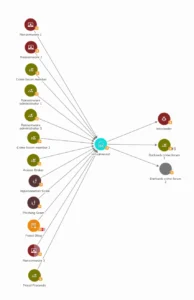
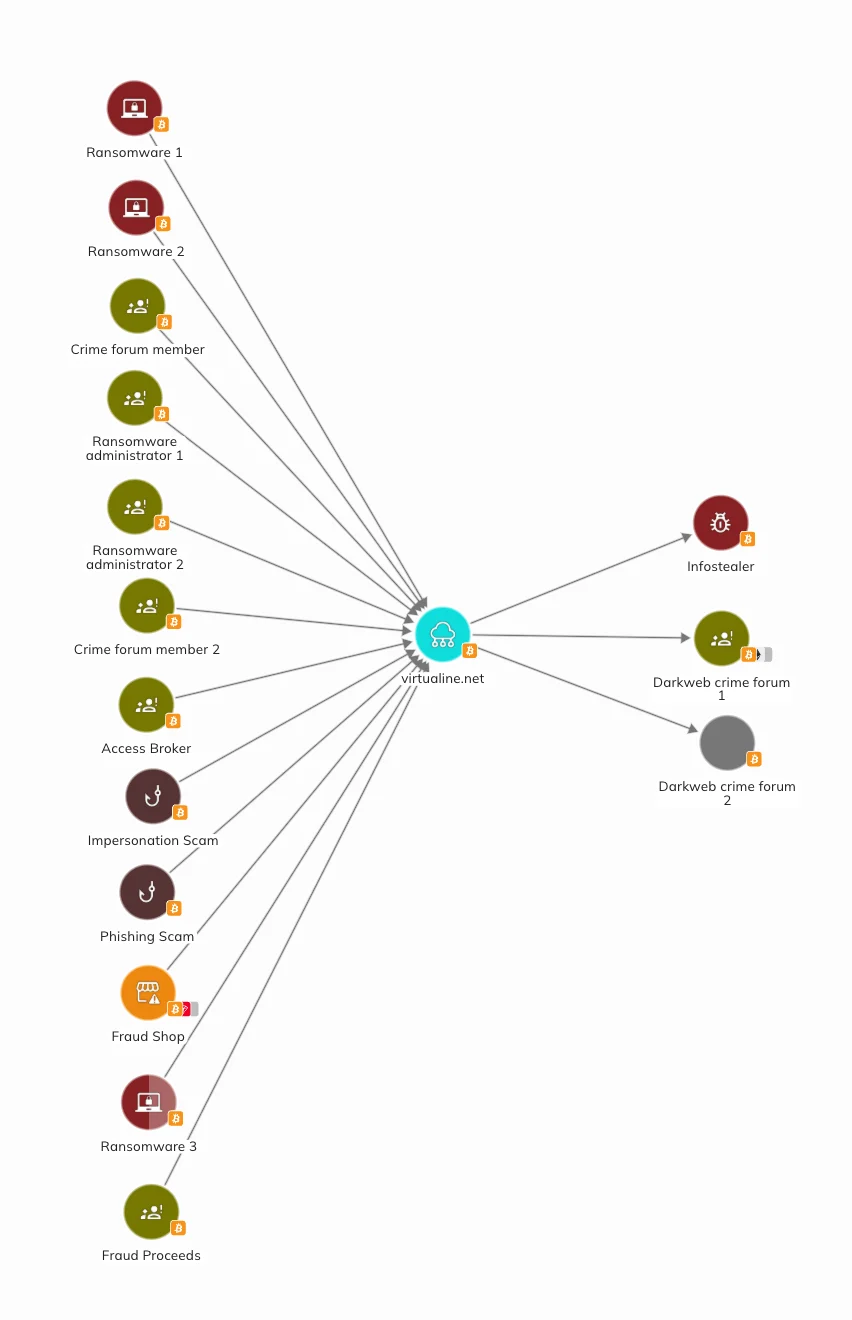
Analysis provided by Chainalysis Reactor revealed a complex web of financial exposure. Virtualine’s payment addresses were directly linked to:
- Ransomware Operators: Multiple wallets associated with major ransomware strains were found to be sending funds to Virtualine for C2 infrastructure.
- Infostealer Logs: Addresses linked to the sale of "logs" (stolen credentials from browsers) interacted frequently with the hosting provider.
- Illicit Marketplaces: Funds from Russian-language "darknet" shops and carding forums flowed into Virtualine’s accounts.
- Phishing Kits: The provider received payments from various scam and phishing campaigns targeting global banking institutions.
The Justice Department further alleges that Virtualine engaged in sophisticated laundering techniques to obscure the origin of these proceeds, moving funds through mixers and non-compliant nested exchanges before attempting to "cash out" into fiat currency.
Official Responses and International Cooperation
The seizure of virtualine.net is being hailed by officials as a testament to the power of international police cooperation. A spokesperson for the FBI’s Washington Field Office noted that "cybercriminals do not respect borders, and neither will the reach of law enforcement." The involvement of the UK’s National Crime Agency and police forces from Germany and the Netherlands underscores the global nature of the threat.
In a statement following the announcement, representatives from the UK’s National Crime Agency emphasized that targeting the providers of hosting services is a force multiplier. By taking down one major BPH provider, law enforcement can simultaneously disrupt hundreds of separate criminal operations that relied on that specific infrastructure.
The private sector’s role was also highlighted as a model for future operations. The collaboration between independent researchers in the OverRIPE coalition and professional analysts at Chainalysis allowed law enforcement to map out the Virtualine network with a level of precision that would have been difficult to achieve through traditional investigative means alone.
Broader Impact and Future Implications for Compliance
The fall of Virtualine sends a clear signal to the bulletproof hosting industry: technical obfuscation and jurisdictional arbitrage are no longer guaranteed protections. For the broader cybercrime ecosystem, this seizure creates an immediate "infrastructure vacuum." Criminals who relied on Virtualine must now scramble to migrate their data to other providers, a process that often leaves them vulnerable to detection and creates "fingerprints" that security researchers can follow.
For cryptocurrency exchanges and financial compliance teams, the Virtualine case provides a wealth of actionable data. Chainalysis has already labeled the cryptocurrency addresses associated with Virtualine in its software suite. Compliance officers are now being urged to treat any interaction with these addresses as a high-risk signal. Because BPH providers are the "foundational layer" of cybercrime, a wallet that touches a BPH provider today is highly likely to be involved in a ransomware attack or a major fraud campaign tomorrow.
This operation also highlights the evolving legal landscape regarding "infrastructure as a service." Prosecutors are increasingly holding service providers accountable for the content they host, especially when there is documented evidence that the provider marketed itself specifically for illegal use.
Conclusion
The seizure of Virtualine.net is a landmark event in the fight against organized cybercrime. It demonstrates that while the digital underworld continues to innovate, law enforcement agencies are becoming equally adept at leveraging blockchain forensics and international partnerships to dismantle the core pillars of the criminal economy. As the investigation moves into the next phase—likely involving the pursuit of the individual operators behind the Virtualine aliases—the message to the "bulletproof" industry is clear: the armor is cracking. The dismantling of Virtualine is not just the end of a single company; it is a significant disruption to the global flow of ransomware, fraud, and exploitation.