Global financial markets demonstrated remarkable resilience on Friday, largely dismissing a significant military confrontation between the United States and Iran in the strategic Strait of Hormuz. Instead, investor attention swiftly refocused on impending crucial employment statistics, pushing stock futures into positive territory and signaling a broader return to risk appetite despite escalating geopolitical tensions. This measured reaction underscored a prevailing market sentiment that prioritizes economic fundamentals over regional flashpoints, provided they do not portend widespread disruption to global trade or energy supplies.
Contracts tied to the S&P 500 index advanced by 0.5% in pre-market trading, reflecting an optimistic outlook. Nasdaq 100 futures, representing the technology-heavy segment, saw even stronger gains, climbing 0.7%. Dow Jones Industrial Average futures increased by 0.3%, equating to an approximate rise of 137 points. These gains followed a retreat on Thursday, during which all three benchmark indices experienced declines, with the Dow briefly surpassing the psychologically significant 50,000-point threshold before settling below it for the second consecutive session. The market’s ability to quickly rebound from a significant geopolitical event highlights an underlying confidence, or perhaps a practiced indifference, to regional volatility that has become a recurring feature in the Middle East.
Chronology of the Strait of Hormuz Confrontation
The military engagement unfolded on Thursday in the Strait of Hormuz, a vital maritime chokepoint connecting the Persian Gulf to the open ocean, through which roughly one-fifth of the world’s total petroleum consumption passes daily. Iranian military forces executed a series of coordinated attacks targeting US warships positioned within the strait. These operations reportedly involved a multi-pronged assault utilizing missiles, unmanned aerial vehicles (UAVs), and small, agile naval vessels, designed to overwhelm and harass the larger American naval assets.
According to statements from the US Central Command (USCENTCOM), the Iranian strikes were characterized as "unprovoked." USCENTCOM further emphasized that American forces, while responding defensively, did not seek further escalation of the conflict. This measured diplomatic stance, issued almost immediately after the incident, was critical in shaping market perceptions and signaling that Washington aimed to de-escalate rather than broaden the confrontation.
In response to the Iranian offensive, American forces swiftly retaliated, targeting Iranian military installations identified as being connected to the aggressive operations. These counter-strikes were described by US officials as precise and proportionate, aimed at neutralizing immediate threats and deterring further aggression without triggering a wider conflict.
President Donald Trump, communicating via his Truth Social platform, provided an immediate assessment of the situation from the American perspective. He confirmed that three "World Class American Destroyers" successfully transited the Strait of Hormuz "under fire" without sustaining any damage. President Trump further characterized the US response as "measured" and asserted that "great damage" was inflicted upon the Iranian attackers, stating they were "completely destroyed along with numerous small" vessels, implying significant losses for the Iranian side. His messaging also sought to downplay the severity of Iran’s actions, referring to them as "trivial" and reiterating that a bilateral ceasefire agreement between the two nations remained "operational." This communication from the highest levels of the US government appeared instrumental in easing market concerns, providing a narrative of containment rather than uncontrolled escalation.
Wall Street Maintains Composure Amid Geopolitical Flare-Up
The financial markets’ muted reaction to such a serious military incident was a focal point of analysis for strategists and economists globally. Henry Allen, a macro strategist at Deutsche Bank, acknowledged the "obvious escalation" inherent in the exchange of fire, yet observed that "financial markets were not incorporating a catastrophic outcome." This assessment encapsulated the prevailing sentiment: while the event was serious, investors did not perceive it as a precursor to a full-scale regional war that would severely disrupt global trade and economic activity.
A critical barometer for geopolitical tensions, particularly in the Middle East, is the energy market. Following the reports of hostilities, oil prices did climb, but their increase was notably stable and contained, rather than indicative of panic. Brent crude, the international benchmark, increased by 1.1% to reach $101.15 per barrel. West Texas Intermediate (WTI), the US benchmark, advanced 0.7% to $95.50 per barrel. The relatively moderate nature of these gains, especially when compared to historical oil price spikes during past Middle Eastern crises, strongly suggested that investors did not anticipate a significant interruption to global oil flows, particularly those transiting the Strait of Hormuz. The strategic importance of the Strait, as the gateway for vast quantities of oil from Saudi Arabia, Iran, Iraq, Kuwait, and the UAE, means any perceived threat to its navigability can send crude prices soaring. The market’s measured response indicated confidence in the ability of naval forces to maintain open shipping lanes or, at least, that the conflict would not escalate to a level that would jeopardize them.
Beyond commodities, other key financial indicators also reflected this composed market sentiment. The US dollar, often considered a safe-haven asset during times of global uncertainty, strengthened modestly, gaining 0.1% against a basket of major currencies. This slight uptick could be interpreted as a mild flight to quality, but not a panicked rush. Concurrently, the benchmark 10-year Treasury yield, which moves inversely to bond prices, declined by one basis point to 4.38%. A decrease in yields often signals increased demand for the perceived safety of government bonds, but a one-basis-point movement is minimal and more indicative of short-term adjustments based on de-escalation expectations rather than deep-seated fear.
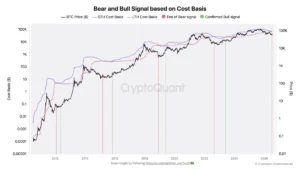
Conversely, Bitcoin, a volatile digital asset often considered a risk-on investment, retreated beneath the $80,000 threshold following the reports of the US-Iran military engagement. This decline in cryptocurrency markets, based on earlier trading session data, highlighted its sensitivity to geopolitical shocks, even as traditional equity markets demonstrated resilience. The divergence underscores the different risk profiles and investor bases between established financial instruments and newer digital assets.

Geopolitical Background: A Legacy of Tensions
The recent confrontation is not an isolated incident but rather the latest flare-up in a long-standing and complex adversarial relationship between the United States and Iran. Tensions have simmered for decades, punctuated by periods of heightened friction. A significant turning point in recent years was the US withdrawal from the Joint Comprehensive Plan of Action (JCPOA), commonly known as the Iran nuclear deal, in 2018. This move, followed by the re-imposition and escalation of crippling economic sanctions on Iran, led to a cycle of retaliatory actions and counter-actions.
Iran, for its part, has frequently used its naval and proxy forces to assert its influence in the Persian Gulf and the Strait of Hormuz, often engaging in provocative maneuvers near international shipping lanes and US naval vessels. Previous incidents have included attacks on commercial tankers, the seizure of vessels, and drone confrontations, all contributing to an environment of persistent low-level conflict. The strategic importance of the Strait of Hormuz to both global energy security and regional power dynamics ensures that any military action within its confines carries significant weight and the potential for broader implications. Both nations maintain a substantial military presence in the region, making direct confrontations a constant, albeit managed, risk.
Employment Data Commands Attention
Despite the dramatic events in the Middle East, the primary catalyst for market participants on Friday remained the release of April’s nonfarm payrolls data. This critical economic indicator, closely watched by the Federal Reserve and economists alike, provides a comprehensive snapshot of the health of the US labor market. Consensus estimates compiled by Bloomberg anticipated the creation of 65,000 positions during the month, a figure that would indicate continued, albeit moderated, job growth.
The jobless rate was projected to remain unchanged at 4.3%. Such an outcome would signal a resilient employment landscape, especially considering the persistent geopolitical headwinds and ongoing global economic uncertainties. A strong labor market is a cornerstone of economic stability, influencing consumer spending, inflation expectations, and ultimately, the Federal Reserve’s monetary policy decisions. Any significant deviation from these projections could trigger more substantial market reactions than the military incident. A stronger-than-expected jobs report might fuel concerns about inflation and potential interest rate hikes, while a weaker report could signal economic deceleration.
Corporate Earnings and Broader Market Context
Adding another layer of complexity to the market’s focus, Friday’s trading session also featured the scheduled release of quarterly financial results from several major corporations. Among them were global automotive giant Toyota Motor, technology conglomerate Sony, and diversified alternative asset manager Brookfield Asset Management. These earnings reports provide crucial insights into corporate profitability, consumer demand, and sector-specific trends, offering another data point for investors assessing the overall economic environment. Strong earnings can bolster market confidence, while disappointing results can amplify existing concerns.
The interplay between geopolitical stability, macroeconomic data, and corporate performance creates a dynamic and often unpredictable market environment. The market’s initial reaction to the US-Iran confrontation – a quick assessment of limited direct economic impact – allowed it to swiftly pivot back to the more immediate and tangible influence of economic fundamentals. If premarket momentum were to persist through the closing bell, the Dow, S&P 500, and Nasdaq would all be positioned for weekly gains, underscoring a market that, while attentive to global events, remains primarily driven by domestic economic health and corporate prospects.
Analysis of Investor Sentiment and Future Outlook
The market’s ability to "shrug off" the US-Iran military exchange reflects several factors. Firstly, there is a degree of desensitization to recurring geopolitical tensions in the Middle East. While serious, these incidents have, in recent history, often been contained, avoiding full-scale regional conflicts that would have catastrophic global economic consequences. Investors have learned to differentiate between skirmishes and wars. Secondly, the rapid and clear communication from the US administration, emphasizing de-escalation and minimizing the impact, played a crucial role in reassuring markets. This immediate narrative helped to prevent panic selling. Thirdly, the robust focus on economic data, particularly employment figures, highlights the market’s current preoccupation with domestic economic health and the Federal Reserve’s potential policy trajectory.
Looking ahead, while the immediate crisis appears contained, the underlying tensions between the US and Iran remain potent. The Strait of Hormuz will continue to be a flashpoint, and future incidents cannot be ruled out. However, the market’s response on Friday indicates a growing sophistication in risk assessment, where localized conflicts are weighed against broader economic indicators and official de-escalation efforts. The ongoing balancing act between geopolitical risks and economic fundamentals will continue to define market movements, with the former providing moments of volatility, and the latter typically dictating long-term trends.